 Email: support@vespaagogo.com

Saigon Travel
Binh Thanh District: Saigon’s Most Underrated Street Food Area on Ancient Ground
2025-12-19
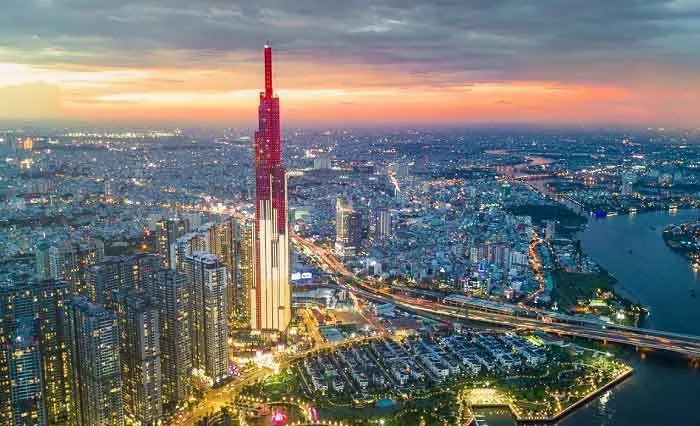
Most travelers come to Ho Chi Minh City knowing exactly one thing about Binh Thanh District: Landmark 81.
Vietnam’s tallest building rises clean and sharp above the Saigon River, modern, polished, and unmistakable.
What few realize is this: that tower stands on some of Saigon’s oldest ground.
Step just a few streets away from Landmark 81, and the city shifts. You’re no longer in postcard Saigon. You’re in a district shaped by ancient settlement, everyday worship, and a street food culture that still cooks for locals at local prices. Quietly, consistently, Binh Thanh District has become one of Saigon’s most underrated street food districts - not because it tries to be, but because it never needed to change.
This guide shows you how to experience Binh Thanh the right way: lightly on history, deeply on food, and practically enough that you can actually use it.
What District Is Binh Thanh - and Why This Land Mattered Long Before Landmark 81
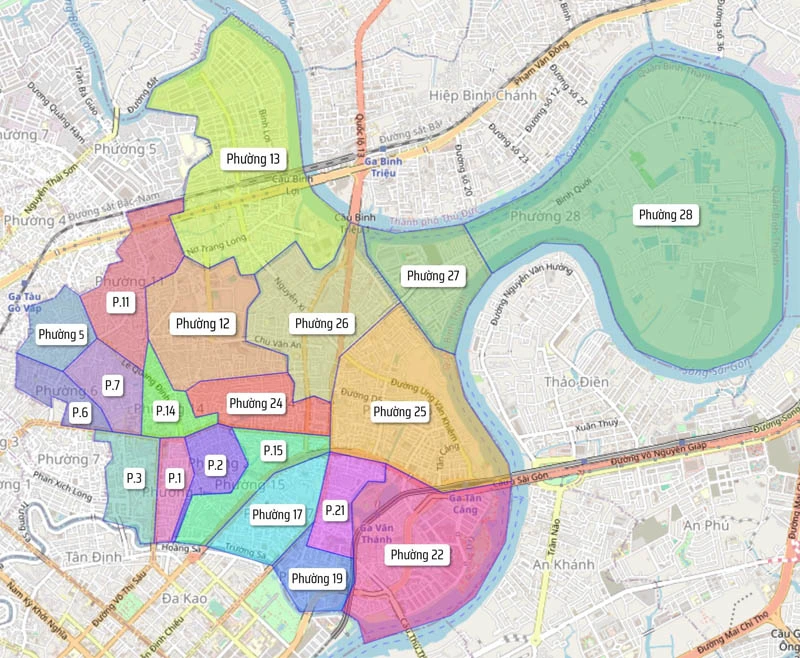
Binh Thanh District is next to D1 and D2, partially surrounded by Saigon River
Binh Thanh District sits immediately northeast of District 1, separated in parts by the Saigon River and bordered by major transport arteries that connect the old city to the eastern side of Saigon. Today, it feels close to everything - but historically, that position is exactly why it mattered.
Long before skyscrapers appeared, this area functioned as a transitional zone: river access, movement of people and goods, and early settlement outside the colonial core. Unlike districts planned primarily for administration or commerce, Binh Thanh evolved as a living district - homes, markets, places of worship, and food stalls growing together over generations.
That continuity explains why the district still feels grounded. Even as modern developments rise, daily life here hasn’t been replaced. It’s been layered.
Binh Thanh as Ancient Saigon Ground: Lăng Ông and the History Still in Daily Use
Binh Thanh is not a “heritage district” in the museum sense. Its history isn’t preserved behind ropes - it’s still in use.
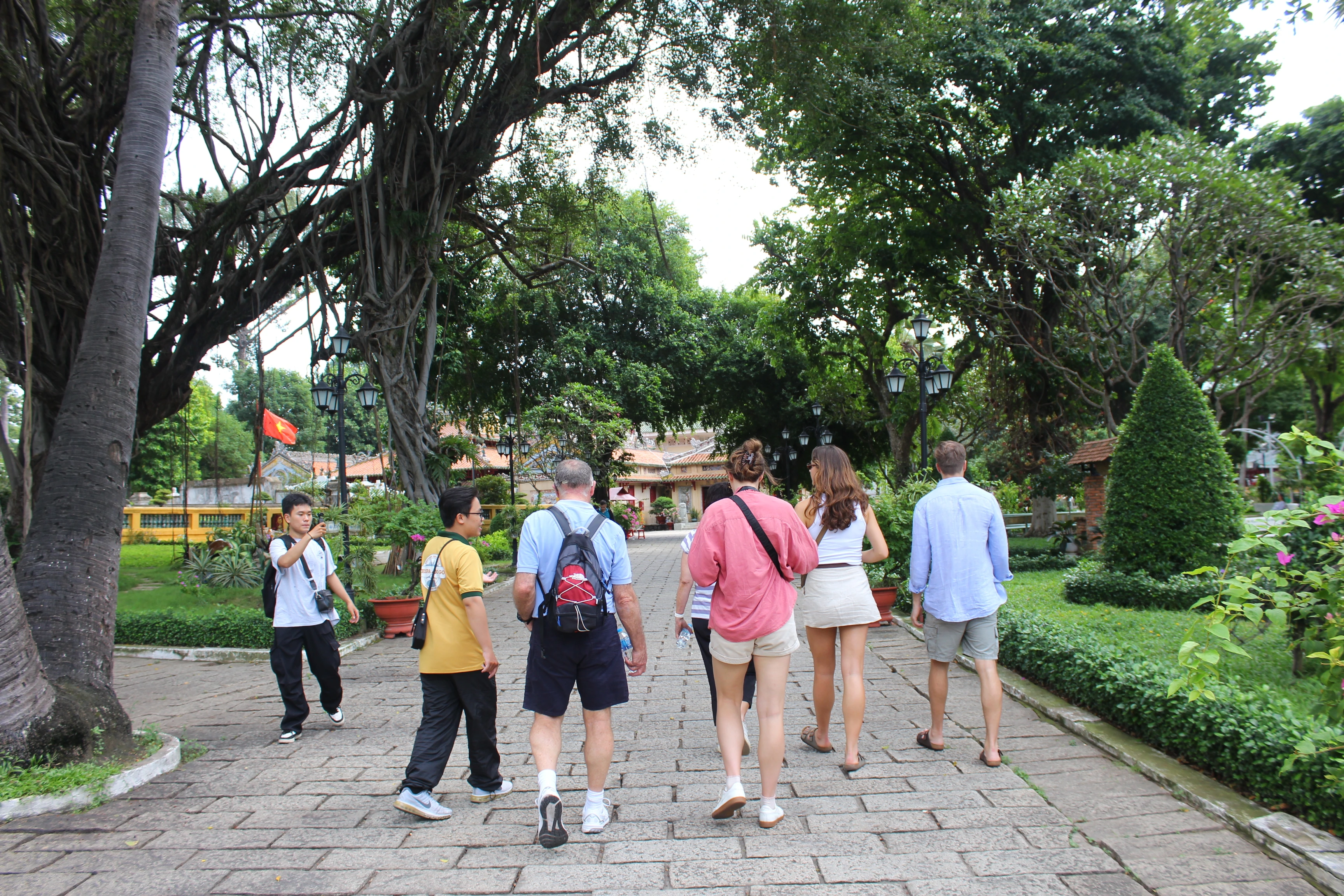
The most visible reminder is Lăng Ông (Tomb of Lê Văn Duyệt), one of the most important historical sites in the district. Rather than functioning as a tourist attraction, Lăng Ông remains a place of quiet respect, local worship, and everyday visits. People come here not to sightsee, but to pause.
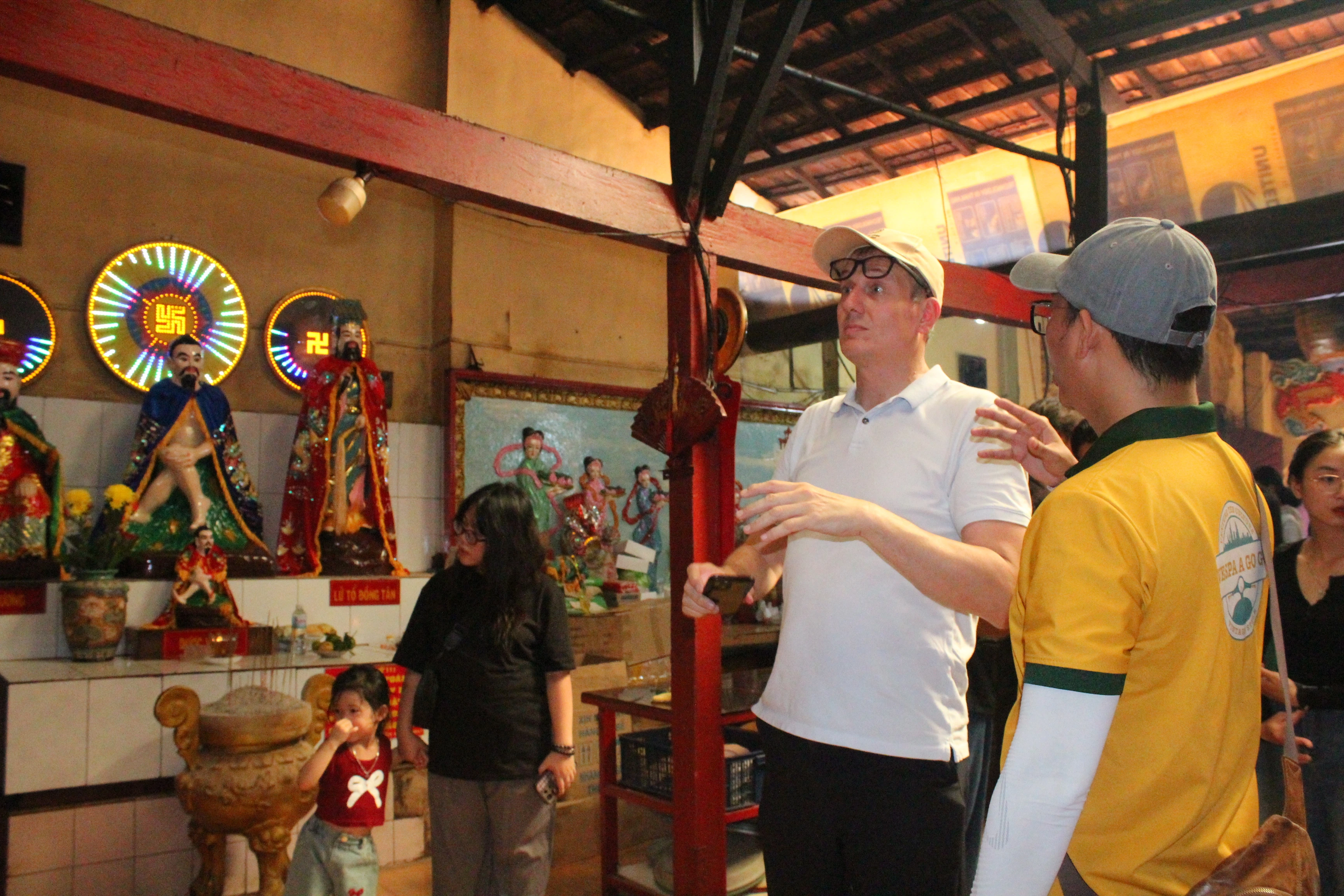
Scattered around Binh Thanh are smaller temples and pagodas that follow the same pattern. They don’t announce themselves loudly. They exist as part of the neighborhood rhythm — early morning incense, brief visits before work, elders sitting quietly in shaded courtyards.
This is ancient ground not because of monuments, but because nothing ever fully erased what came before.
Key historical & spiritual landmarks in Binh Thanh
- Lăng Ông (Tomb of Lê Văn Duyệt) - 1 Vu Tung street, Binh Thanh
- Chùa Diệu Pháp - Dieu Phap Pagoda, serene atmosphere by the riverside - 106/47/9 Bình Lợi, Phường 13, Bình Thạnh.
Landmark 81: A Modern Icon Rising from One of Saigon’s Oldest Districts
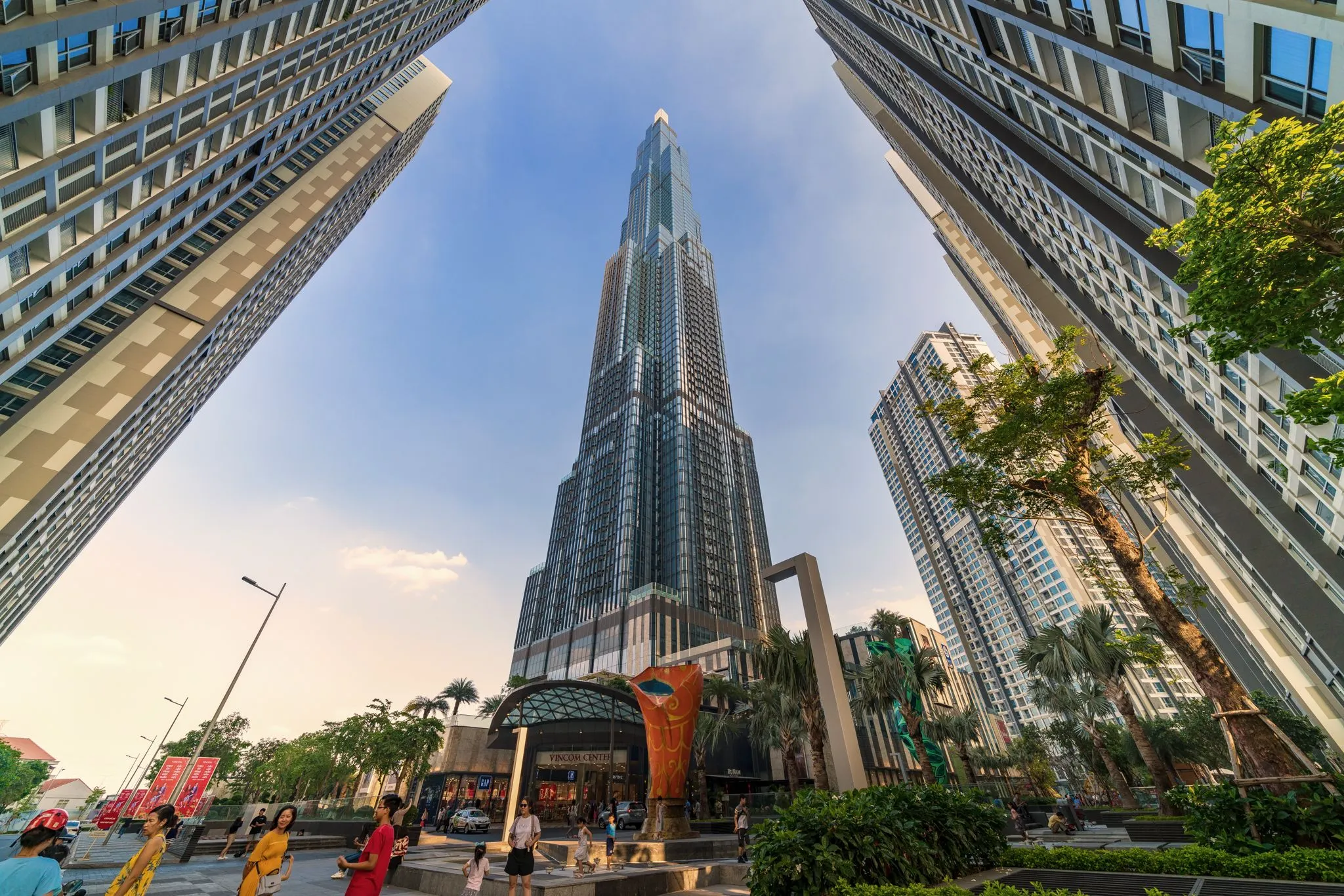
Landmark 81 (208 Nguyen Huu Canh, Ward 22, Binh Thanh District) dominates the skyline — but it doesn’t dominate the district.
Seen up close, the contrast becomes clear. Step out of the park area and you’re back among local houses, small eateries, and streets that never rebranded themselves. Landmark 81 feels less like a replacement and more like a modern layer placed carefully on top of old ground.
For travelers, that contrast is the point. Few places in Saigon show the city’s timeline so clearly in such a small area.
What to Eat in Binh Thanh: Street Food That Still Runs on Local Prices
Food is where Binh Thanh reveals itself most honestly.
This is not a district built for destination dining or social-media cafés. Most places here cook for neighbors, workers, and repeat customers — people who eat at the same stall three times a week and know the vendor by face, not by Google rating.
Because of that, prices stay grounded, portions stay practical, and menus stay focused.
Morning: food that fuels the day
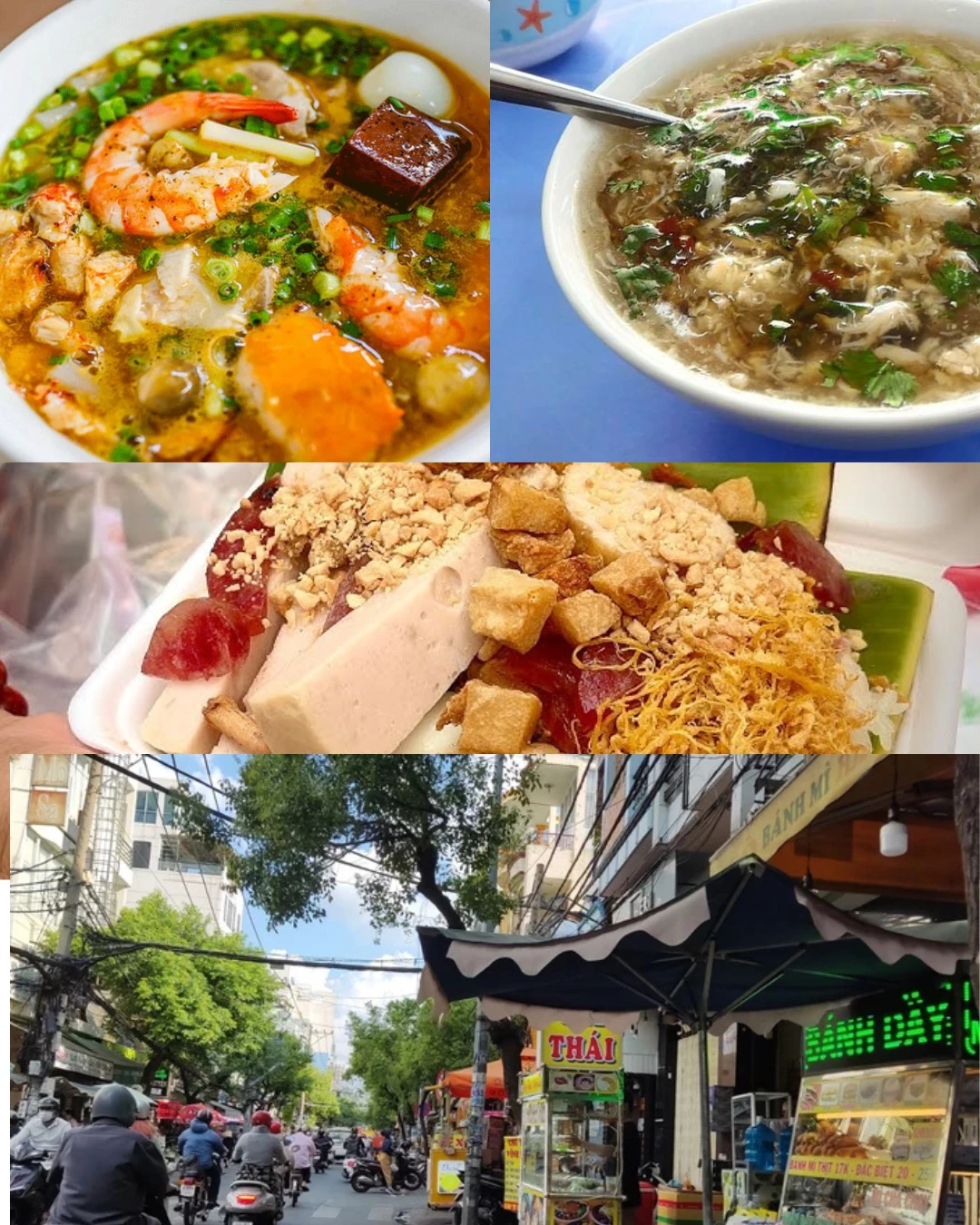
Early mornings in Binh Thanh belong to quick, efficient dishes - bowls, plates, and drinks designed to be eaten before work, not photographed. Plastic stools fill fast, conversations are short, and food arrives without ceremony.
If there’s one street that explains why Binh Thanh District is so strong on everyday food, it’s Vạn Kiếp.
This is not a curated food street. Most vendors here don’t even have shop names - just a handwritten sign with the dish name. Some places still don’t accept card or bank transfer, and many stalls open early, sell out fast, then disappear by late morning.
Vạn Kiếp Breakfast Stops
- Bánh Canh Cua Mạ Tôi – 55/5 Vạn Kiếp
Thick Vietnamese tapioca noodles served in a rich crab-based broth, topped with crab meat, pork, and quail egg. Heavy, comforting, and very Saigon. - Xôi Ngọc – 101 Vạn Kiếp
Sticky rice topped with savory options like pork floss, sausage, and fried shallots. A classic grab-and-go breakfast for locals who need something filling. - Súp Cua Trang – 210 Vạn Kiếp
A light but flavorful crab soup thickened with egg and starch, often eaten as a quick morning warm-up rather than a full meal. - Local Noodle Stalls (Phở, Bún Bò Huế, etc.) – Various spots along Vạn Kiếp
No specific names needed here. Morning noodle stalls line the street, serving everything from clear beef noodle soup (phở) to spicy central-Vietnam–style bún bò Huế. Pick the busy ones — that’s the rule. - Bánh Đúc Nóng Nguyên – 188 Vạn Kiếp
Warm rice flour pudding topped with minced meat, mushrooms, and savory sauce. Soft, comforting, and very traditional — not everyone’s first choice, but deeply local. - Bánh Cuốn Trứng Cô Tư – 55/8 Vạn Kiếp
Steamed rice rolls filled with minced pork and wood ear mushrooms, finished with a soft egg layer on top. Light, delicate, and ideal if you don’t want something heavy. - Bún Riêu – Canh Bún Cô Ba – 204 Vạn Kiếp
Tomato-based crab noodle soup with crab paste and fermented elements. Flavorful and bold, but be prepared — crab soup can upset sensitive stomachs if you’re not used to it.
Local tip: Bring cash, go early, and don’t expect English menus. Pointing, watching what others order, and keeping it simple works best on Vạn Kiếp.
Afternoon: In-door meals to cool down
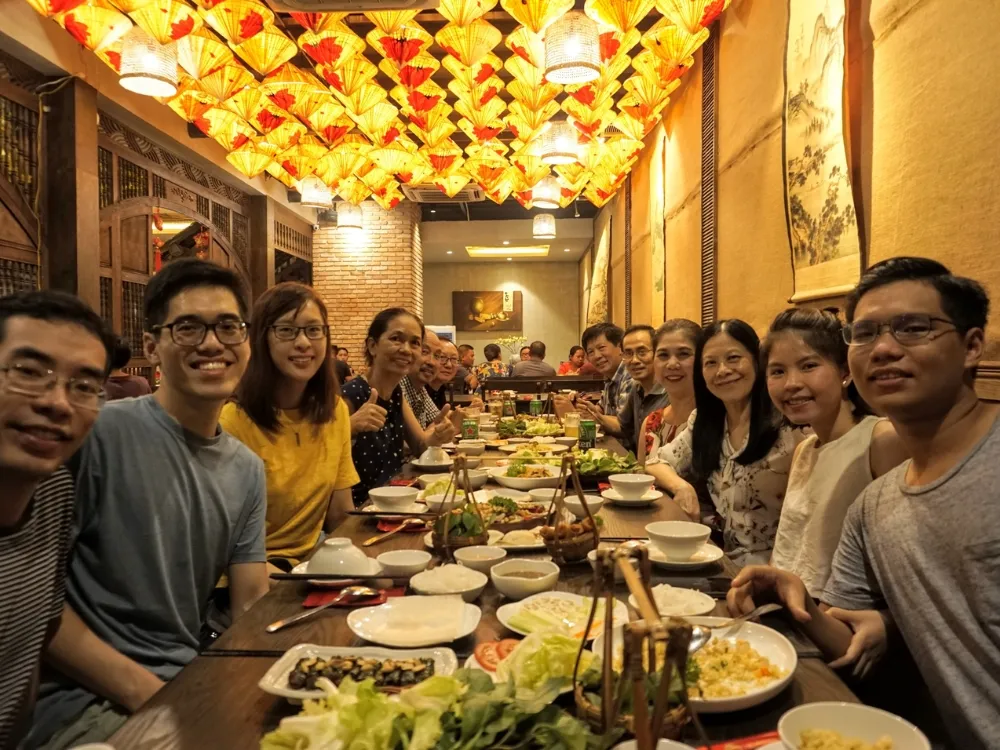
As the day stretches on, Saigon’s gonna be hotter. These are the hours for a hearty meal in an air-conditioned restaurant. Something sweet or savory to carry through the heat, often enjoy slowly to take shelter from the sun.
Indoor Lunch Options in Binh Thanh:
- Nhà hàng Hoàng Tâm - 352 Phan Xích Long
A polished, comfortable restaurant serving traditional Southern and Western Vietnamese cuisine. Good choice if you want classic flavors in a calm, slightly upscale setting. - Bún Bò Má Nấu - 42/45 Hoàng Hoa Thám
A cozy, homey bún bò Huế spot with a strong homemade feel. Ideal for lunch when you want something hearty but still relaxed and familiar. - Huế Mô Rứa - 45 Phan Xích Long
A traditional family-style restaurant specializing in Central Vietnamese cuisine, with recipes that lean authentic rather than modernized. - Tám Riêu - 235 Phan Xích Long
A fancier indoor restaurant focusing on Western Vietnamese dishes, presented in a more refined, sit-down dining format — good for a longer, more comfortable lunch break.
Evening & night: real dinner, local rhythm
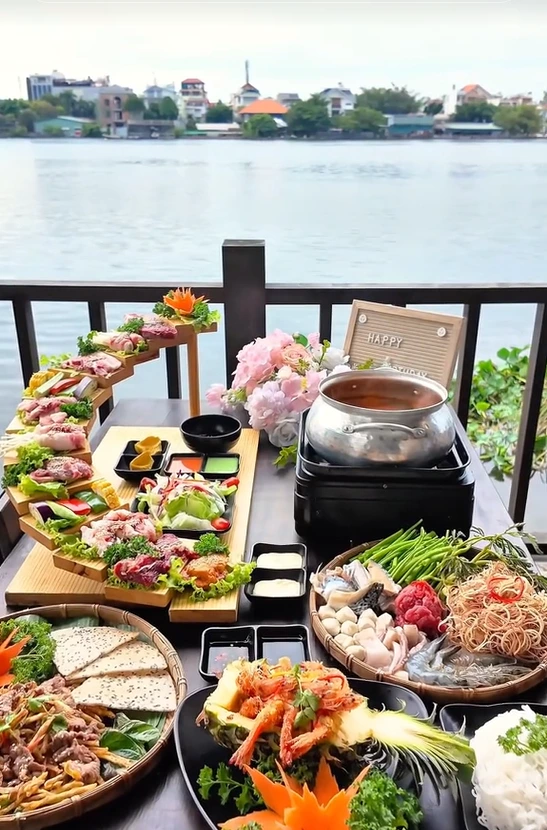
At night, Binh Thanh doesn’t turn trendy — it turns busy. Stalls reappear, grills come out, and whole streets smell like dinner being cooked for people who live nearby. Recommendations:
- The Bali Grill To Chill - 249 Bình Quới, Bình Thạnh
A grilled food restaurant with a riverside view, relaxed and breezy in the evening. More about atmosphere than speed. - Tiệm Ăn Gặm - 8/10 Nguyễn Thiện Thuật, Bình Thạnh
A small spot focusing on local bites and traditional Vietnamese dishes, cooked simply and served without fuss. - Nhà Hàng Hoàng Tâm – 352 Phan Xích Long
A comfortable indoor restaurant serving Southern and Western Vietnamese cuisine, suitable if you want a calmer, air-conditioned dinner after a long day.
Street food you should try in Binh Thanh
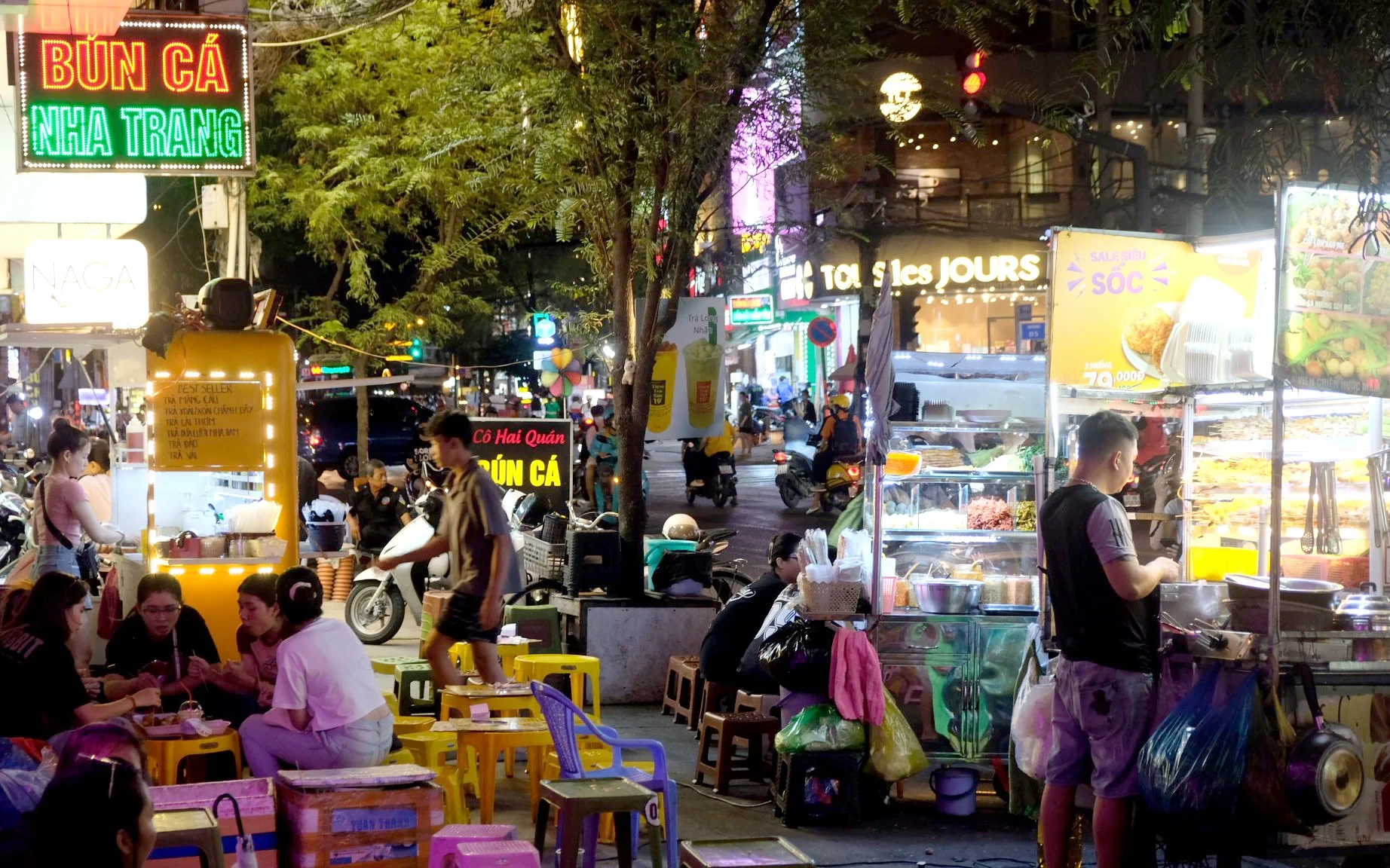 Two streets matter most if you want to eat like locals: Vạn Kiếp Street and Nguyễn Gia Trí Street.
Vạn Kiếp Street: Casual Snacks and Light Evening Bites
Vạn Kiếp doesn’t shut down after breakfast — it simply changes gears. In the evening, the street turns into a relaxed snack zone where people come for light eats, desserts, and casual international flavors rather than full meals.
Popular evening stops on Vạn Kiếp Street:
- Gỏi Cuốn - 81C Vạn Kiếp
Fresh Vietnamese spring rolls filled with herbs, rice noodles, and protein, served with peanut dipping sauce. Light, refreshing, and easy to share.
- Ăn Vặt, Sinh Tố – 33 Vạn Kiếp
A typical Vietnamese snack stall offering mixed street snacks and fruit smoothies. Perfect if you want to graze rather than commit to one dish.
- Takoyaki Hatachi – 133 Vạn Kiếp
Japanese-style octopus balls, crispy on the outside and soft inside. A popular cross-cultural street snack among young locals.
- Chatuchak Ẩm Thực Thái Lan – 85 Vạn Kiếp
Casual Thai street food, usually quick stir-fried or grilled dishes with bold, familiar flavors.
- Milo Dầm Trân Châu Tin Tin – 248 Vạn Kiếp
A sweet local favorite: iced Milo chocolate mixed with chewy tapioca pearls. Dessert more than drink — very popular in the evening.
Vạn Kiếp works best if you want to walk, snack, and keep things informal.
Nguyễn Gia Trí Street: Heavier Dishes and Social Dining
Nguyễn Gia Trí Street feels louder and more social in the evening. This is where locals gather for proper dinners, shared dishes, and longer meals with friends.
Notable food spots on Nguyễn Gia Trí Street:
- Quán Cô Hồng – 157/2 Nguyễn Gia Trí
Specializes in gỏi cuốn (fresh spring rolls), done the traditional way and served quickly. Simple, reliable, and very local.
- Ốc Dì Toàn – 69/1/1 Nguyễn Gia Trí
A classic Vietnamese seafood (snail) restaurant.
Tip for visitors: stick to grilled clams, grilled scallops, or steamed clams — easier flavors if you’re new to Vietnamese shellfish. Some snails can be visually unfamiliar.
- Bò Nhúng Giấm Pong Quán – 168/73 Nguyễn Gia Trí
A traditional Vietnamese beef hotpot, where thin slices of beef are briefly cooked in a tangy vinegar-based broth, then wrapped with herbs and dipped in sauce. Very social and filling.
- Japanese, Korean & Fast Food Options
Nguyễn Gia Trí also has a noticeable mix of Japanese, Korean restaurants and fast-food chains, making it an easy fallback if someone in your group wants something familiar.
This is where Binh Thanh quietly outperforms more famous districts: the food still belongs to the people who live here.
What to Do in Binh Thanh District: A One-Day Local Itinerary
Binh Thanh isn’t about chasing highlights. It’s about moving at the district’s natural pace.
Morning: history and calm
Start the day at Lăng Ông, when the space is quiet and the air still cool. This isn’t a long visit - it’s a grounding one. Nearby temples and pagodas offer the same atmosphere: brief, respectful, unforced.
Midday: eat nearby, not far
One of Binh Thanh’s strengths is proximity. Food stalls cluster naturally around residential areas, so there’s no need to travel far. Lunch here is about convenience, not planning. If you also enjoy going to the Vietnamese market, Bà Chiểu Market (location) is a monumental spot in Binh Thanh.
Afternoon: slow down
Afternoons are best kept simple. A quiet drink, watching daily life pass, or a short walk through residential streets where nothing is curated - just lived.
Evening: street food again
As the heat fades, vendors return. This is the best time to eat properly, sitting low, eating well, and letting the district do what it does best.
Night: rise above it briefly
End the day not in chaos, but above it - with a rooftop view that reminds you how layered this district really is.
Rooftop Bars in Binh Thanh: Ending the Day Above a Working District
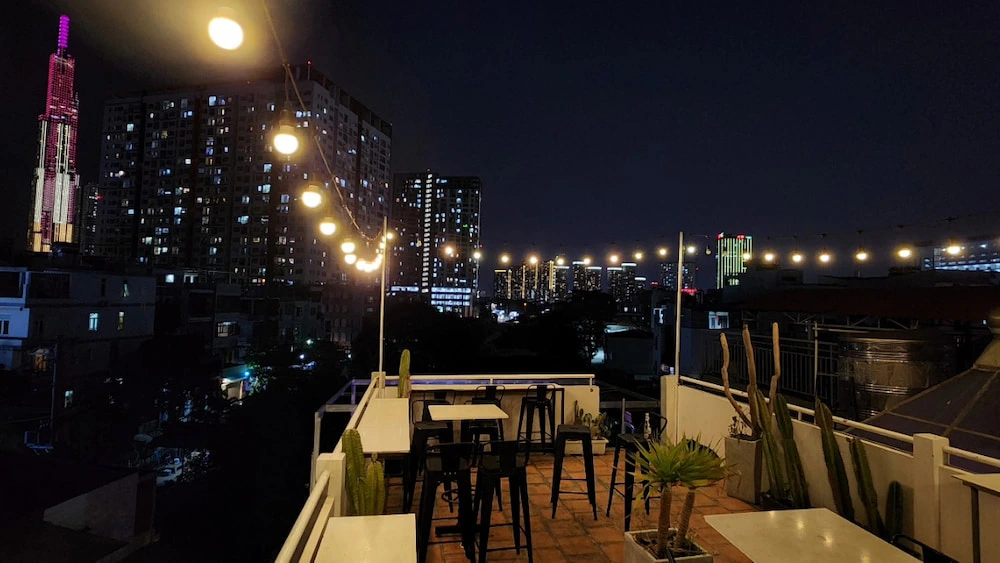
Rooftop bars in Binh Thanh aren’t about spectacle. They’re about distance.
From above, the district looks calm, dense, and functional — lights scattered across neighborhoods where people are still eating, talking, and living below.
Rooftop bars to end the night:
These are places to slow down, not turn up.
A simple Binh Thanh day plan
- Morning: Lăng Ông temple
- Quiet temple stop: Chùa Diệu Pháp pagoda
- Market visit: Chợ Bà Chiểu market
- Lunch (AC): Nhà Hàng Hoàng Tâm restaurant
- Afternoon break: Cafés around Phan Xích Long & the “Hoa” streets (Hoa Lan, Hoa Hồng, Hoa Đào…)
- Dinner: Street food walk on Vạn Kiếp or Nguyễn Gia Trí, then a hearty meal at The Bali Grill To Chill
- Night drink: Thoáng Rooftop - end the night from the rooftop watching the city and Landmark 81.
Why Binh Thanh District Still Feels Like Real Saigon
Binh Thanh District doesn’t advertise itself. It doesn’t package its history or reinvent its food for visitors. Ancient ground, everyday worship, and local street food simply coexist — the way they always have.
That’s why it remains overlooked, and why it matters.
If you want Saigon as it functions - not as it’s marketed - Binh Thanh quietly delivers. If you actually want to explore Binh Thanh, it’s actually our guests favorite spot on the See Saigon and City’s Codes: The Ancient Spell tour, come check it out!

Duy Le - Marketing Manager
I’m Duy Le, the Marketing Manager at Vespa A Go Go, with three years of experience in marketing and storytelling. My passion lies in helping both travelers and Vietnamese people discover the authentic value of our country’s history and culture. I believe Vietnam travel should be more than just sightseeing — it’s a way to truly connect with Vietnam’s heart and spirit. Through my work, I aim to inspire curiosity, respect, and appreciation for the stories that make Vietnam unique. When I’m not crafting campaigns, I love exploring Saigon’s hidden corners on my Vespa, always in search of the next story worth sharing.
Other tips
- Tailored Tour District 3 Ho Chi Minh
- Tailored Tour District 1 Ho Chi Minh
- New Ward Ho Chi Minh City
- Ultimate Guide to Every Hidden Gem in Ho Chi Minh City
- International Women's Day Vietnam 2026
- Best Beaches Near Ho Chi Minh City: Distances, Transport & Where to Stay
- Lunar New Year in Ho Chi Minh: What Tourists Need to Know Before Tet 2026
- Saigon During Tet
- Valentine in Vietnam 2026
- Best Travel Agency in Ho Chi Minh City Vietnam
- Can Gio Mangrove: The Definitive Expat Guide to Saigon’s "Green Lungs"
