 Email: support@vespaagogo.com

Scooter Life
Vietnam Scooter & Motorbike Culture: Learning to Ride the Flow (Safely) for the First Time
2026-02-26
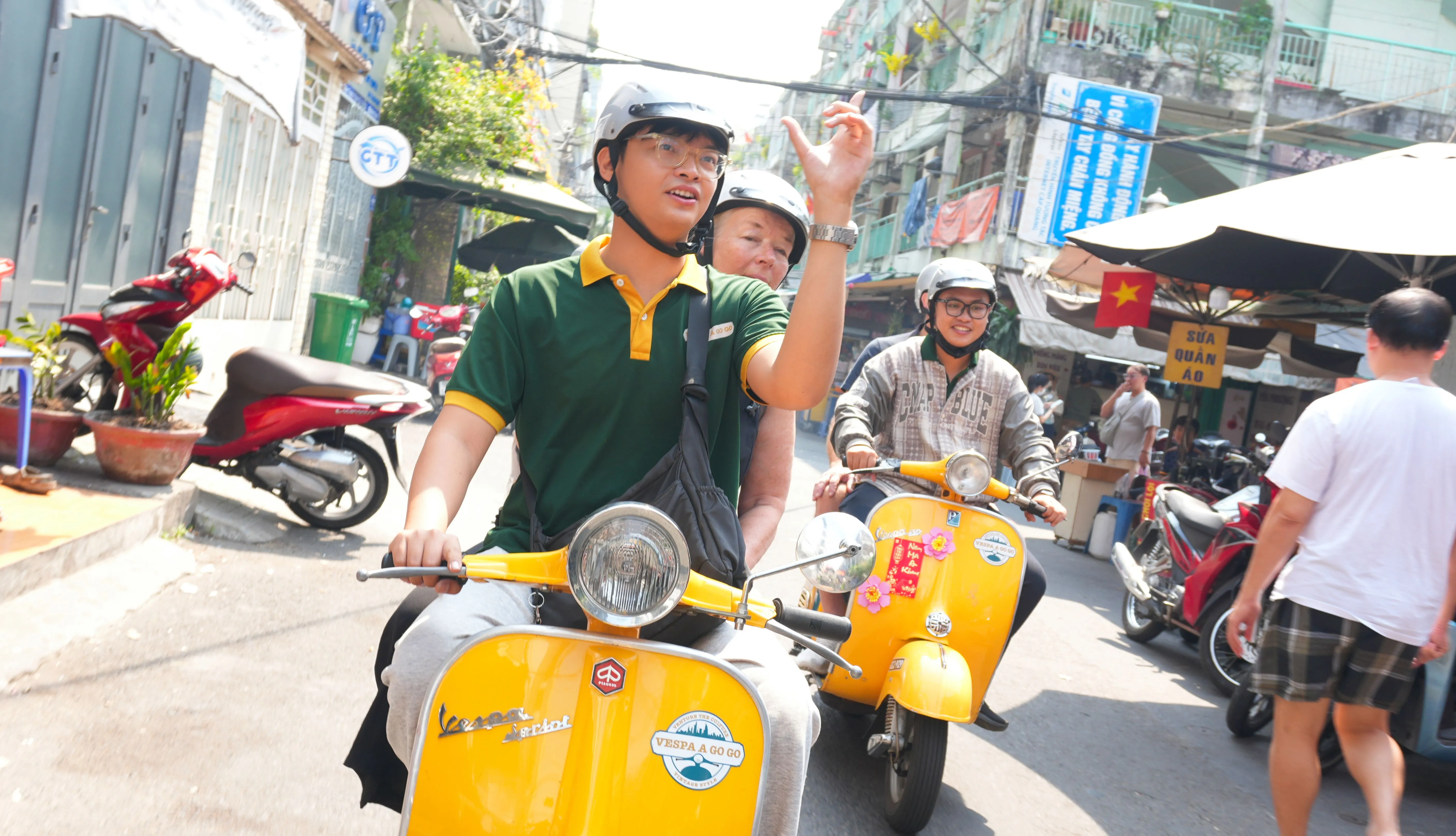
The first time I stood at a major intersection in Ho Chi Minh City, I genuinely thought I was witnessing something unravel.
Motorbikes were pouring in from every direction, weaving past one another without ever fully stopping, slipping into spaces that, by every rule I had grown up with, simply should not have existed. Helmets rose and dipped like a restless tide, while short, sharp honks stitched the air together into a kind of strange, mechanical symphony.
I remember thinking, there is no way this works.
And yet, somehow, it did.
That moment - the collision between disbelief and curiosity - is where most people begin their relationship with a Vietnam scooter. You either retreat into taxis and Grab cars for the remainder of your trip, relieved to observe from behind glass, or you lean forward and ask a far more interesting question:
What if this isn’t chaos at all? What if I simply don’t understand the system yet?
Because Vietnam’s motorbike culture is not lawless. It is layered, adaptive, and deeply intuitive, and for anyone considering riding for the first time, it demands both humility and awareness.
This isn’t merely a guide to renting a scooter in Vietnam. It is an attempt to uncover the rhythm beneath the noise - and to show you how to move through it safely.
Read until the end for beginner-friendly touring routes designed with scenic beauty and safety in mind, so you can experience Vietnam on two wheels without overwhelming yourself on day one.
Vietnam Scooter Culture Isn’t “Lawless” - It’s Flow-Based
When people talk about riding in Vietnam, they usually start with fear.
They talk about intersections that look like whirlpools. About crossing the street feeling like a trust exercise. About how every Western instinct screams “Stop!” while the entire city keeps rolling.
The mistake is assuming that because there are fewer visible rules, there are no rules.
The reality is more subtle.
Vietnam scooter traffic behaves less like a rigid grid and more like a living organism, constantly adjusting to itself. It moves like a school of fish, where each rider reacts to the subtle motion of those around them rather than relying on a single controlling force. There may be no obvious conductor, but there is constant micro-adjustment happening every second.
You don’t control the road here.
You join it.
That difference - that surrender of rigid control - is the psychological hurdle most first-time riders struggle with.

Flow Over Formality: The Unwritten Logic of the Road
In much of the Western world, safety is built on hierarchy and clearly defined structure. Traffic lights dictate right of way, painted lanes mark territorial boundaries, and stop signs demand obedience. The promise is simple: if everyone follows the system precisely, everyone remains protected.
In Vietnam, especially in major cities like Hanoi and Ho Chi Minh City, the system is more fluid. Yes, there are traffic lights and laws. But the true safety mechanism is dynamic awareness.
The most important principle of motorbike culture here is surprisingly simple:
Rule #1: Be Predictable, Not Polite
If you suddenly slam on your brakes to let a pedestrian cross, you may feel courteous. But behind you, a line of riders has already calibrated their speed to yours, adjusting subtly to your steady forward motion. When you abruptly change that motion, you disrupt a system that relies on continuity.
Predictability is not just helpful on a Vietnam scooter - it is an ethical obligation.
Move slowly. Move clearly. Signal your intentions early. Don’t make dramatic, last-second changes. If you do this, the swarm absorbs you. Riders flow around you like water around a stone.
It may feel wrong at first, as though you are violating ingrained driving habits, but you are not breaking rules - you are participating in a different set of them.
Rule #2: The Horn Is Communication, Not Aggression
Before I rode here, I thought honking meant anger.
In Vietnam motorbike culture, the horn is closer to a sonar ping than an expression of frustration.
A short, light beep usually translates to: “I’m here.” It’s an announcement of presence. A larger vehicle’s long honk often means: “I can’t maneuver easily. Please adjust.”
When you remove the emotional layer from the sound, it becomes information.
One of the first mental adjustments required when riding in Vietnam is learning to detach from the idea that noise implies confrontation. More often than not, it simply means communication.
Rule #3: The Subtle Art of Spatial Negotiation
One thing that surprised me was how little eye contact seemed to matter.
In some countries, drivers lock eyes to negotiate intersections. In Vietnam, riders often look past each other. They watch:
- front wheel direction
- shoulder angle
- body lean
- speed changes
Direct eye contact can actually introduce hesitation, and hesitation within a flow-based system can be more destabilizing than decisive movement.
Confidence doesn’t mean speed. It means clarity.
You do not need to dominate the road or assert territory. You simply need to commit to smooth, readable movement that others can anticipate.
Space in Vietnam is rarely owned. It is borrowed briefly, occupied for a few seconds, then relinquished as someone else slides into it. Once you accept this fluid exchange, much of the anxiety begins to dissolve.
The First Real Test: Turning Left
If there’s a moment that makes new riders question everything, it’s the first left turn across traffic.
In many parts of the world, you wait patiently for a clean gap before executing a sharp ninety-degree turn. In Vietnam, that perfect gap may never appear.
Instead, locals use what I’ve come to think of as the “gradual arc”:
- start angling left early
- drift smoothly
- keep moving
- let oncoming riders curve around you

Slowly. Predictably. Almost casually. Oncoming riders see this gradual movement and adjust their line to pass behind.
The first time you attempt this, your pulse will likely spike. It feels like stepping into a current and trusting it to bend around you rather than sweep you away.
The key lies in steady commitment - not aggressive cutting, not freezing mid-turn, but a calm and visible arc that signals your intention clearly.
Beginner move that saves you:
Follow someone local who is already turning. Let them act as your moving shield. You’ll feel the flow wrap around you instead of crashing into you.
Roundabouts, Gravel, and the Little Things That Matter
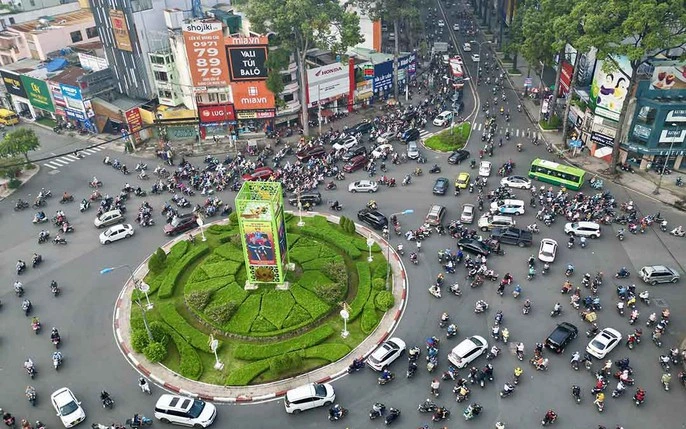
Roundabouts in Vietnam feel like centrifuges. They spin continuously, and the single most dangerous reaction inside one is stopping abruptly.
Maintain a slow, consistent pace, remain near the outer edge if you plan to exit soon, and only move inward if you can comfortably match the flow around you.
Then there are the surface hazards that no romantic blog post talks about.
Sand gathers quietly in corners, oil lingers invisibly on damp asphalt, potholes appear without warning, and painted lines can become slick during rain. When encountering gravel or uneven terrain, your instinct may be to brake sharply. Resist that urge.
Braking sharply on loose surfaces is one of the quickest ways to lose front-wheel traction. Instead, keep the bike upright. Maintain steady throttle. Coast smoothly through the patch.
Momentum stabilizes.
And then there are the dogs.
Dogs dart unpredictably across roads, and first-time riders frequently react by swerving violently. Unfortunately, that reaction can create greater danger than the animal itself.
Slow down steadily, maintain your line, and allow the dog to calculate its own escape path. It feels counterintuitive, but abrupt swerving is often what leads to loss of control.
The Legal Reality of Riding a Scooter in Vietnam
Let’s pause the romance for a moment.
If you’re going to ride a Vietnam scooter, understand the legal framework.
Officially, foreign riders should have a valid motorcycle license from their home country and an International Driving Permit recognized by Vietnam. There is confusion globally about different IDP conventions, and many travelers ride without fully compliant documentation.
You need to know that if you ride without proper licensing, your travel insurance may not cover you in the event of an accident. That is not a scare tactic. It’s a practical consideration.
Vietnam also enforces a 0.0% alcohol policy for riders. Not “a little is fine.” Not “one beer won’t matter.” Zero means zero.
Police checkpoints are common, especially near major city exits and tourist areas. If you plan to ride, do so sober. Completely.
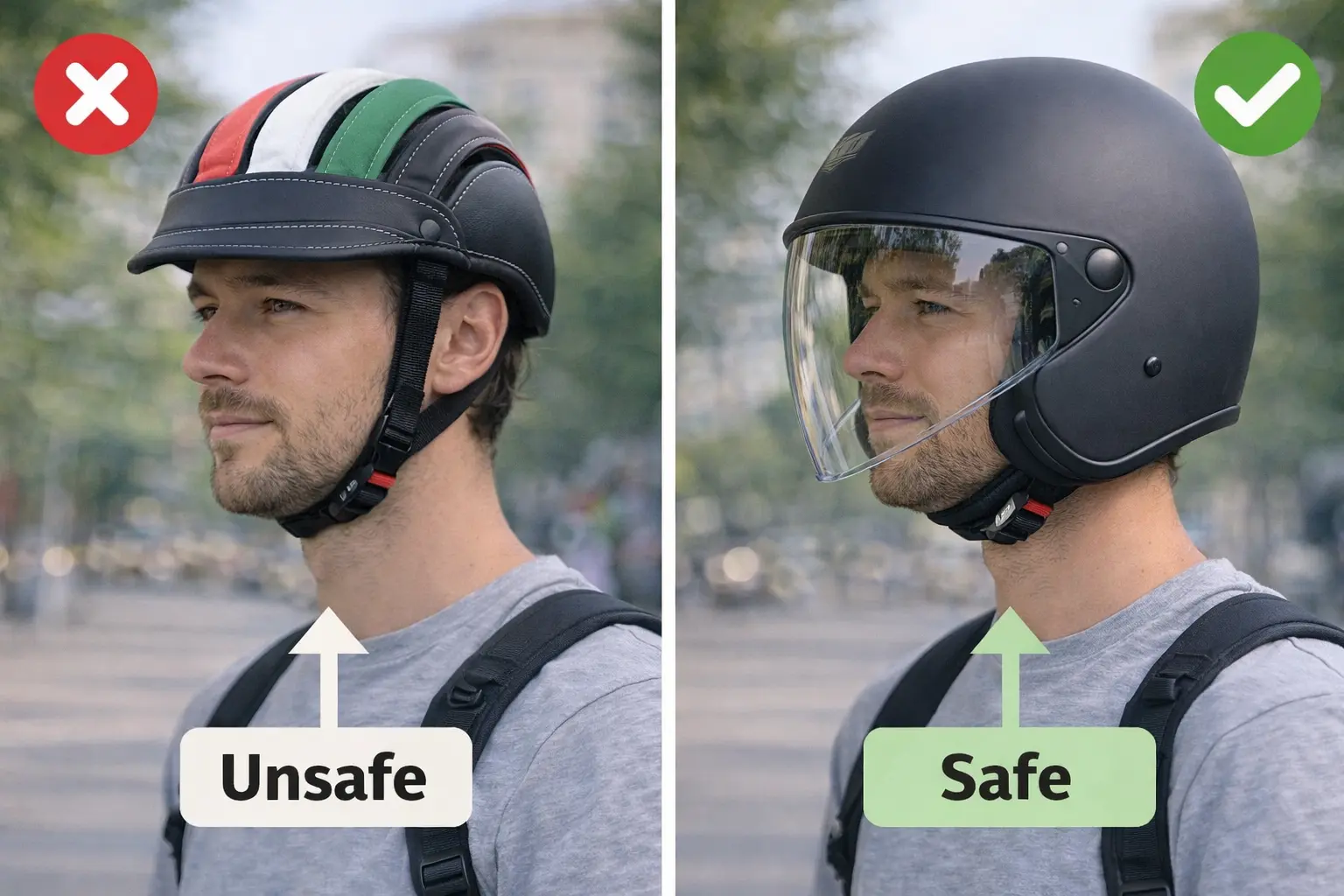
And please - wear a real helmet. The thin plastic “fashion helmets” sold cheaply everywhere may meet minimal standards, but investing in a sturdy 3/4 or full-face helmet is a simple, smart choice.
Your head deserves better than aesthetic compliance.
Renting Your First Vietnam Scooter
The first time I rented a scooter in Vietnam, I felt like I was signing up for a small leap of faith.
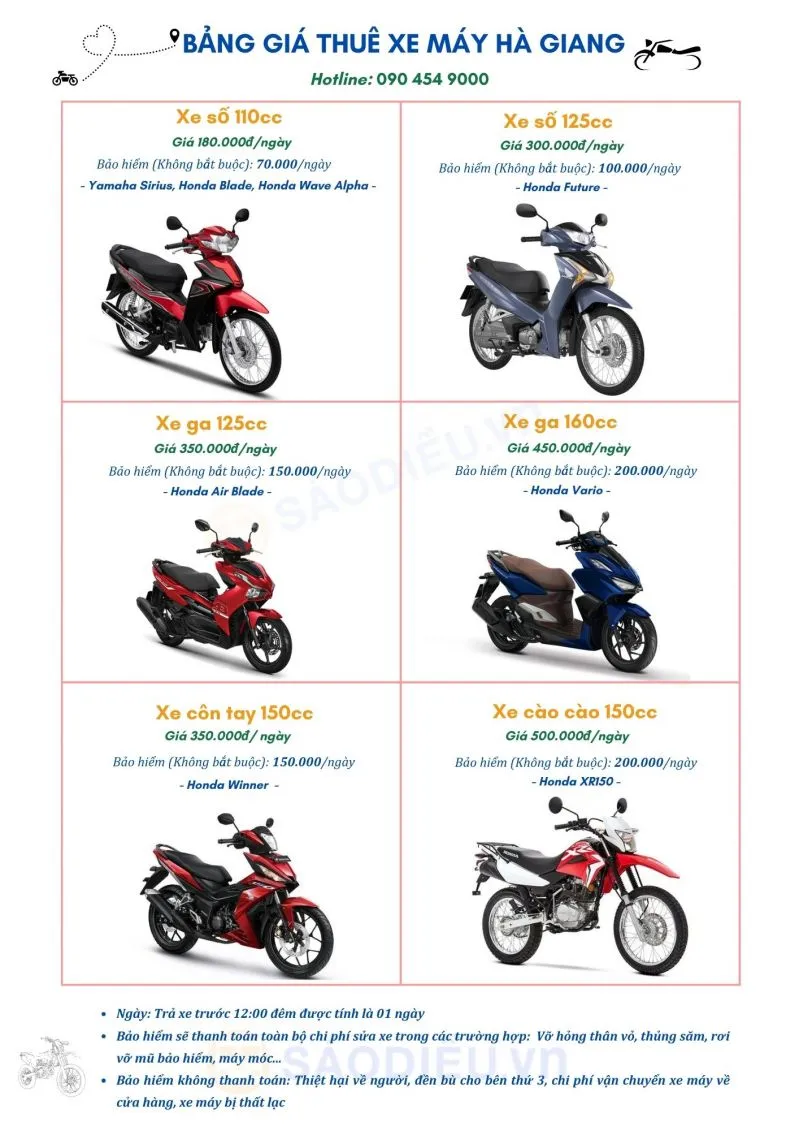
You’ll be offered automatic scooters and semi-automatic bikes. Automatic models are twist-and-go and reduce cognitive load, which can be helpful when you’re already processing unfamiliar traffic patterns.
Semi-automatic bikes offer a bit more throttle control, which some riders find reassuring. There’s no clutch to manage, but you do shift gears with your foot.
For most beginners, an automatic is fine - provided you practice in a quiet area before plunging into busy streets.
Before leaving the shop, test the brakes, horn, lights, and tires. Photograph existing scratches, and clarify procedures in case of a flat tire.
These small precautions make the difference between an adventure and a headache.
Vietnam scooter rental checklist:
- Choose automatic if you’re overwhelmed (twist-and-go)
- Consider semi-automatic if you want more throttle control (which means you can control the gear shifts)
- Photograph the bike before leaving (scratches, mirrors, tires)
- Confirm what happens if you get a flat (who pays, who helps)
Weather: The Invisible Risk
Vietnam’s tropical climate adds another layer to motorbike culture.
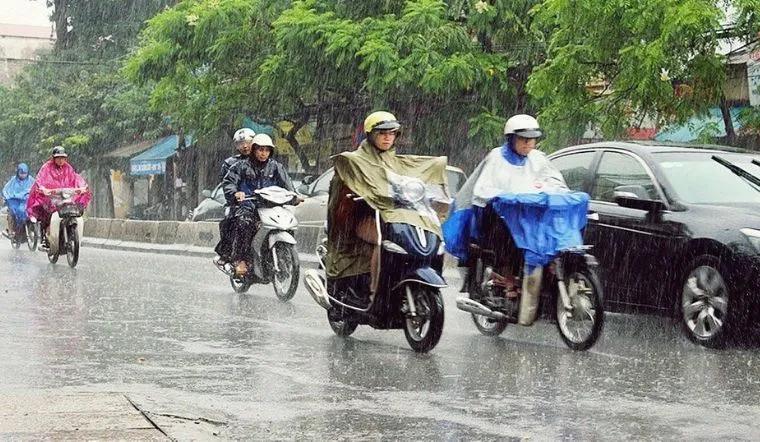
In the South, the rainy season can transform roads within minutes. The first fifteen minutes of heavy rain are the most dangerous because oil and dust mix with water to create a slick surface.
If a downpour begins, consider pulling over for a short break. Let the rain wash the road clean.
Heat is another underestimated hazard. Riding under intense sun for extended periods can cause fatigue and slow reaction times. Long sleeves, sunscreen, and hydration matter more than most people realize.
Night riding introduces its own challenges: reduced visibility, unpredictable animals in rural areas, and occasional poorly lit stretches. If you’re new, stick to daylight rides until you’re confident.
Scenic Routes for Beginners: Ride for Beauty, Not Adrenaline
If city traffic intimidates you, don’t let that stop you from experiencing motorbike travel in Vietnam.
Start somewhere forgiving.
Hanoi to Ninh Binh (Easy Roads, Big Reward)

From Hanoi, the ride to Ninh Binh is a revelation. Flat terrain stretches into fields of rice, punctuated by limestone mountains rising abruptly from the earth. Avoid the largest highways and opt for smaller parallel roads when possible. Once you reach the countryside, the pace slows and the scenery softens everything.
Key Landmarks and Itinerary
A typical one-day or two-day itinerary from Hanoi includes:
- Trang An Landscape Complex: A UNESCO site where the roads wind between limestone towers and rivers.
- Hang Mua (Mua Caves): While the "cave" is at ground level, the famous viewpoint requires a 500-step climb on foot, but the ride to the base is through idyllic lotus ponds and rice fields.
- Bai Dinh Pagoda: A massive Buddhist complex with wide, asphalted entrance roads that are very safe for novice maneuvering.
|
Metric |
Detail |
|
Total Distance |
90–110 km |
|
Average Speed |
30–40 km/h |
|
Terrain Type |
Level, paved delta plains |
|
Traffic Density |
High (exit from Hanoi), Low (in Ninh Binh) |
|
Recommended Time |
2 days, 1 night |
Why it works for beginners:
- mostly flat terrain
- calmer roads once you’re out of Hanoi
- lots of scenic payoff without technical riding
Best approach:
- avoid the biggest truck-heavy highways when possible
- ride in daylight
- stay slow and steady through towns
Da Nang to Hoi An (The Heritage Coast Starter Ride)

From Da Nang, the coastal road to Hoi An is one of the most beginner-friendly stretches in the country. Wide lanes, ocean breeze, and clear navigation make it ideal for a first longer ride. You feel the sea air on your skin and realize why so many people fall in love with two wheels here.
Cultural Integration and Landmarks
- Marble Mountains (Ngũ Hành Sơn): Located roughly halfway between the two cities, these five limestone peaks are easily accessible from the main road. The parking areas are organized and beginner-friendly.
- An Bang Beach: Just before entering Hoi An, this coastal village offers quiet, sandy streets and beachfront cafes.
- Hoi An Ancient Town: It is important to note that motorbikes are banned from the historical center after 4:00 PM (and throughout much of the day).19 Beginners should plan to park their bikes in designated lots on the periphery and explore the town on foot.
|
Metric |
Detail |
|
Total Distance |
30 km |
|
Average Speed |
30–40 km/h |
|
Terrain Type |
Flat, best-maintained asphalt roads |
|
Recommended Time |
Half-day |
Why it works:
- flat coastal roads
- wide lanes (less stressful)
- simple navigation
- frequent stops (beach, viewpoints)
Practical note for motorbike culture in Hoi An:
You’ll need to park outside the Ancient Town and walk in during restricted hours
Ho Chi Minh City to Ben Tre (Mekong Delta Beginner Route)
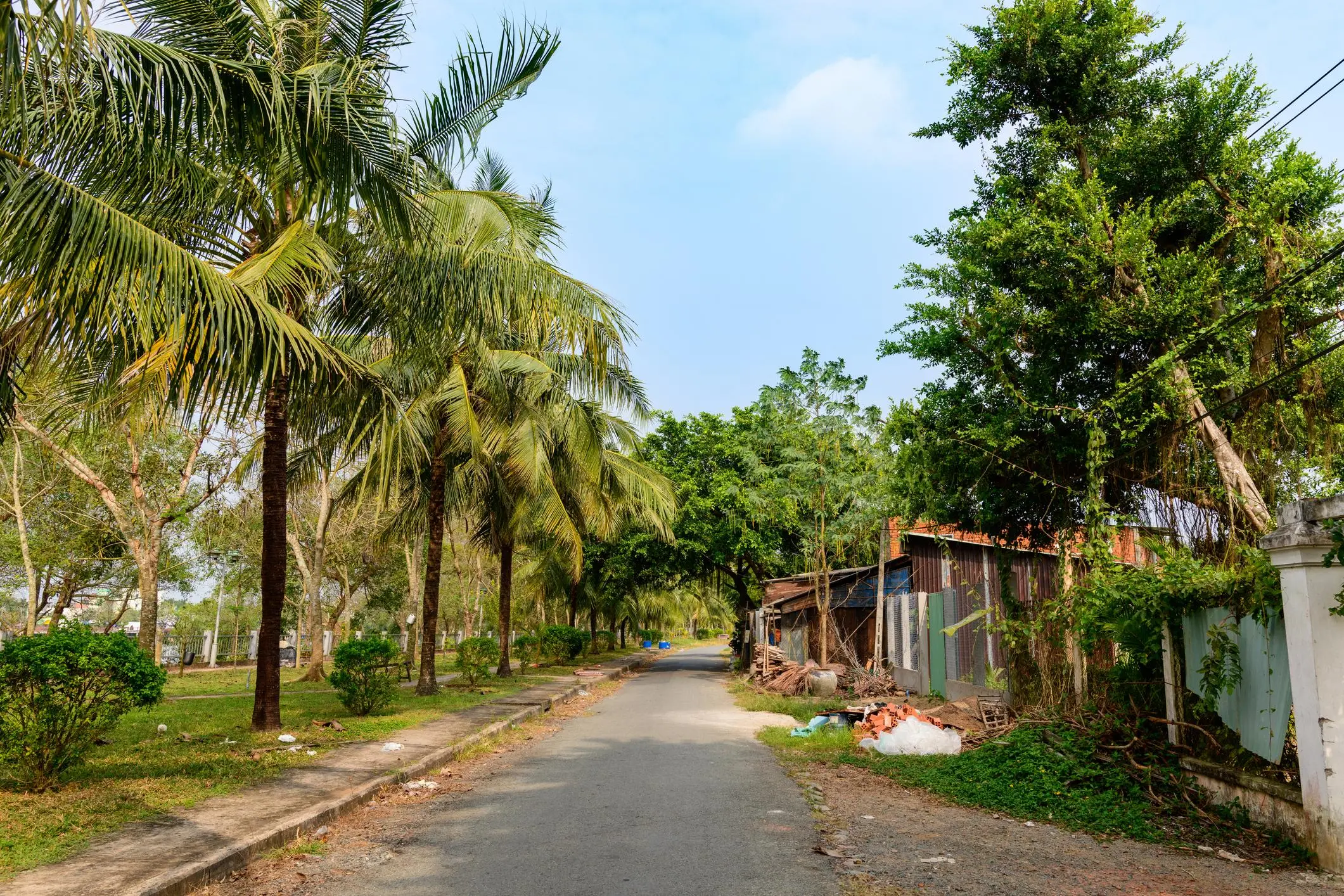
From Ho Chi Minh City, riding toward Ben Tre in the Mekong Delta introduces you to a gentler world. Palm-lined roads, narrow village paths, and the hum of river life replace urban density. Leave early to avoid heavy outbound traffic, and the journey becomes meditative.
These routes aren’t extreme. They’re not mountain passes carved into cliffs. They are introductions - safe harbors where you can learn to trust the rhythm.
Cultural Integration and Landmarks
- Rach Mieu Bridge - panoramic view of the Tien river and boat traffic
- Coconut plantation along the way and in Ben Tre Inner Roads
- Mostly a serene scooter experience
|
Metric |
Detail |
|
Total Distance |
85 km |
|
Average Speed |
30–40 km/h |
|
Terrain Type |
Level ground |
|
Recommended Time |
Half-day |
Ben Tre is ideal because:
- flat terrain
- palm-lined village roads
- slower local traffic
- classic Mekong “water world” scenery
This is where Vietnam scooter riding turns from scary to addictive.
Vietnam Scooter Culture and “Phượt”: What It Really Means
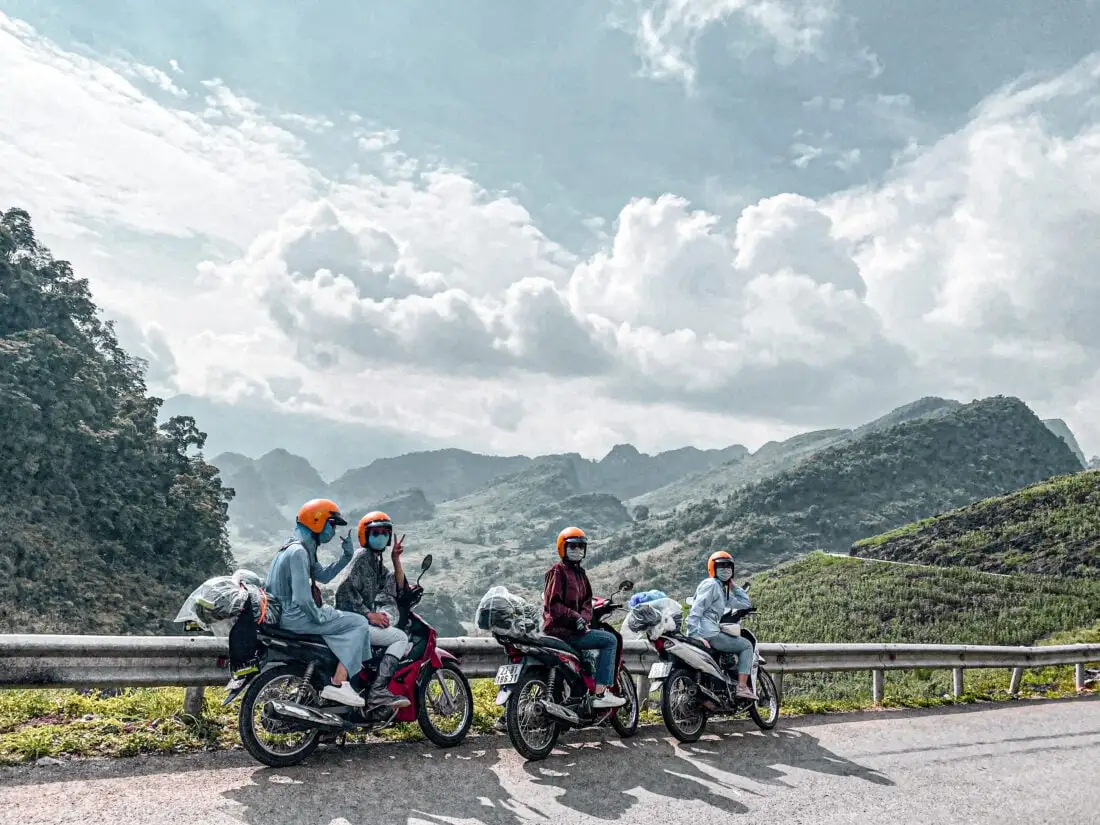
In Vietnam, long-distance motorbike travel is called phượt.
It is less about speed and more about presence.
Phượt means stopping for roadside coffee because the view feels right, chatting with strangers curious about your journey, or pulling over simply because the light over a rice field demands attention.
Motorbike culture here is woven into daily life because scooters are not luxuries; they are infrastructure. Families commute together, vendors transport goods, workers navigate entire cities on two wheels.
When you ride, you’re not performing an exotic activity. You’re participating in everyday movement.
That realization changes everything.
So, Should You Ride?
Here’s the balanced answer.
If you are sober, patient, and willing to adapt, riding a Vietnam scooter can be one of the most exhilarating ways to experience the country.
If you are anxious, rushed, or trying to dominate traffic instead of joining it, it may not be for you - at least not yet.
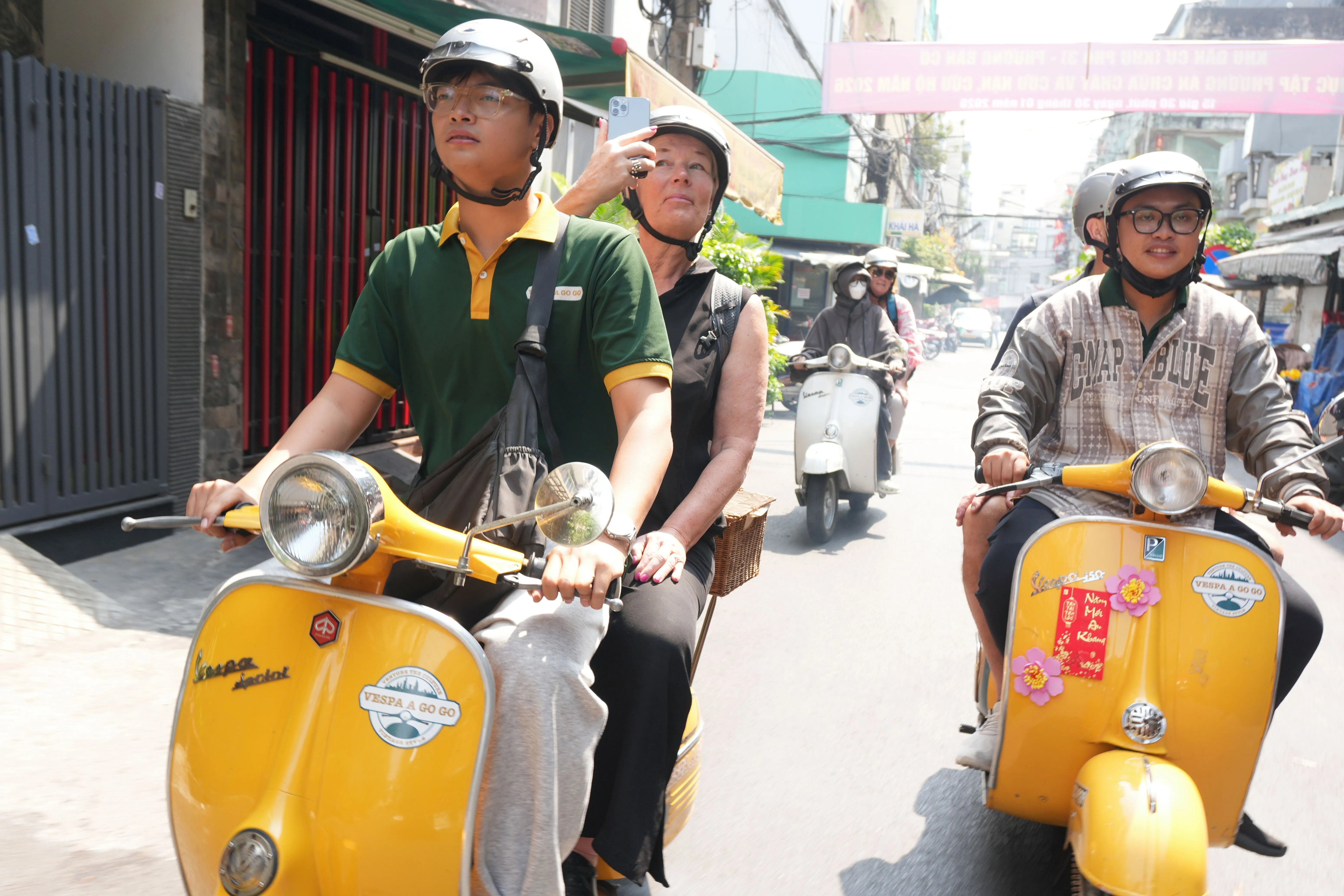
There is no shame in starting slowly. Practice in quiet neighborhoods. Ride at off-peak hours. Observe before acting. Consider riding with a local first, feeling the flow from the back seat before taking control yourself.
Vietnam’s motorbike culture is not about bravado.
It’s about harmony.
The chaos you see from the sidewalk is choreography once you understand it. The noise becomes language. The swarm becomes community.
And the moment you stop fighting the flow and start moving with it, the road stops being something you fear - and becomes something you understand.
And if you’d rather feel that rhythm before navigating it yourself, joining a guided Vespa A Go Go tour with experienced local riders is one of the safest and most immersive ways to understand Vietnam’s motorbike culture from the inside.
Other tips
- Vietnam Scooter & Motorbike Culture: Learning to Ride the Flow (Safely) for the First Time
- Saigon Street Life: A Visual Journey Through Transport in the 1990s
- Traffic in Ho Chi Minh City: A Survival Guide to Saigon Traffic (2025)
- Vintage Vespa: How to Ride, Weight & 2-Stroke Basics
- The History of the Vespa in Vietnam: A Cultural Icon on Two Wheels
- Saigon Motorbike Tour: An Authentic Way to Experience Saigon
