 Email: support@vespaagogo.com

Scooter Life
Vintage Vespa: How to Ride, Weight & 2-Stroke Basics
2025-12-16
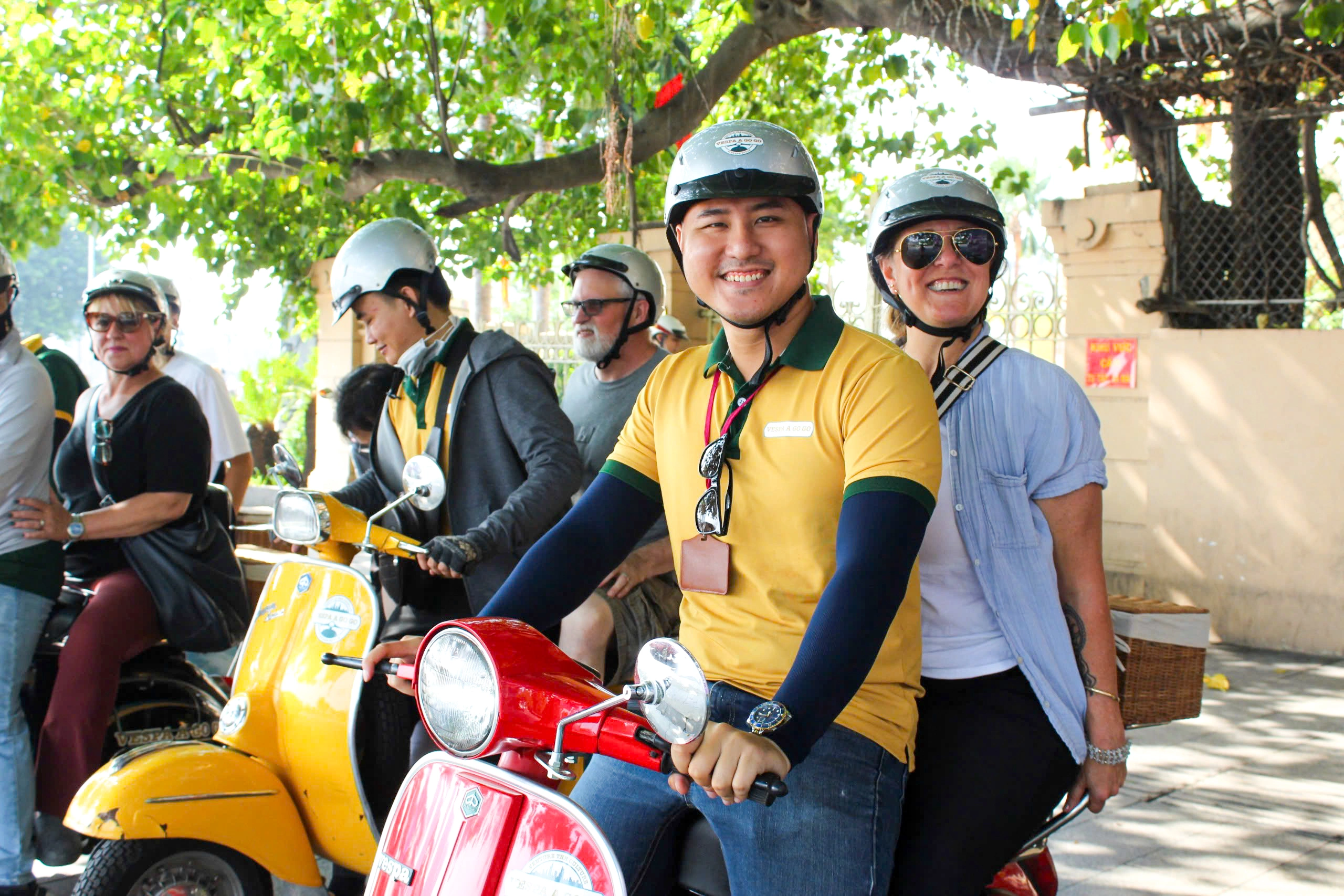
If you’ve only ridden modern automatics, a vintage Vespa feels like a different species: heavier in the hands, louder in the lane, and way more “alive” under you. It’s not just nostalgia - it’s the steel body, manual shifting, and (often) the unmistakable Vespa 2 stroke character that changes how you ride on a Vespa in real traffic. This guide breaks down the practical stuff people actually search for - weight, oil, models, and how to ride - written from the perspective of a tour garage that keeps these machines moving every day.
Vintage Vespa: What Makes It Different (and Why It Feels So Good)
A vintage Vespa isn’t “a scooter with retro styling.” It’s typically a steel monocoque body (the frame is the body), a tighter wheelbase feel, and a riding position that’s upright and calm - until you roll on the throttle and it wakes up. Compared with modern scooters, you’ll notice more mechanical feedback: more vibration, more sound, and more “communication” through the bars.
Two practical differences matter most when you’re riding a Vespa:
- Manual shifting (on many classic models) changes how you accelerate, merge, and climb.
- Older braking + suspension means you ride smoother, earlier, and with more anticipation than you would on a new bike.
How Much Does a Vintage Vespa Weigh?
Here’s the truth: the Vespa weight number matters less than where that weight sits. A vintage Vespa can feel heavier at walking speed because of steering geometry, narrow tires, and the way you balance it when you stop - but once rolling, it often feels surprisingly stable.
To give you realistic reference points, dry weight examples from well-known classic models commonly fall around:
- Vespa PX125: roughly 95–97 kg dry (depending on source/version).
- Vespa 150 Super: often listed around ~98 kg dry on spec aggregators.
- Vespa 150 GS: commonly listed around ~100 kg dry (some model databases list higher “empty” weights depending on definition).
Why your Vespa can feel heavier than the numbers:
- Front-mounted spare wheel adds steering inertia (you feel it most during slow U-turns).
- A full tank, rear rack, baskets, and tour gear make “real weight” higher than dry specs.
- Low-speed balance is technique-heavy: your body position matters more than horsepower.
Vintage Vespa 2 Stroke Basics (What You’re Actually Feeling While Riding)
Many classic bikes people call vintage Vespa are 2-stroke machines - meaning oil and fuel are part of the same combustion story, and the engine character is punchier and more immediate than a mellow commuter four-stroke. Model databases for classic GS-era bikes explicitly classify them as 2-stroke internal combustion engines, and that aligns with what riders experience: lively low-to-mid pull and that classic exhaust note.
What this means for real riding:
- You get a snappy throttle response - great for quick gaps, but it rewards smooth hands.
- You’ll notice more smell/smoke than modern scooters (even on “low-smoke” oils).
- Heat + stop-go traffic can be tougher on older setups, so maintenance discipline matters.
Best 2 Stroke Oil for Vintage Vespa: What We Actually Use (and Why)
You asked for the best 2 stroke oil for vintage Vespa, so I’ll be direct: “best” depends on climate, riding style, and engine condition - but consistency matters more than hype. In hot cities with stop-go traffic (hello, Saigon), you want an oil that burns cleanly, protects well at heat, and doesn’t turn your exhaust into a mosquito fogger.
In our garage, we use: Amtecol Super Life 5500-2T – Premium Low Smoke 2-Stroke Motorcycle Oil.

That gives us two practical advantages:
- Predictable burn and less visible smoke day-to-day (especially helpful when you’re riding in a group).
- It’s clearly labeled for 2-stroke motorcycle use (not a random multi-purpose oil).
If you’re choosing an alternative, here’s a simple buyer checklist (works for any vintage Vespa):
- Pick a reputable 2T motorcycle oil (avoid mystery bottles with no clear labeling).
- If your engine is older/worn, prioritize protection and consistency over “ultra-racing” marketing.
- Don’t switch oils every week - stable habits make tuning and maintenance easier.
Vintage Vespa Models in Our Garage (Not a Museum List)
Most online lists of vintage Vespa models are collector catalogs. Useful, but not the same as “what runs reliably in real traffic, with real passengers, day after day.” These are what we actually have in our Vespa Tour fleet, that’s been used daily cruising around Ho Chi Minh City, giving tourists the best city experiences.
Vespa GS (Gran Sport)

This is the icon - the one people recognize even if they don’t know the name. It’s a true vintage profile, and it rides with that classic “solid steel + lively engine” feel that makes riders grin at the first clean pull.
Vespa Sprint
The Sprint is a sweet spot: classic styling, large frame stability, and a ride that feels planted once you’re moving. For tours, it’s the kind of bike that looks romantic in photos but still behaves like a practical daily rider.
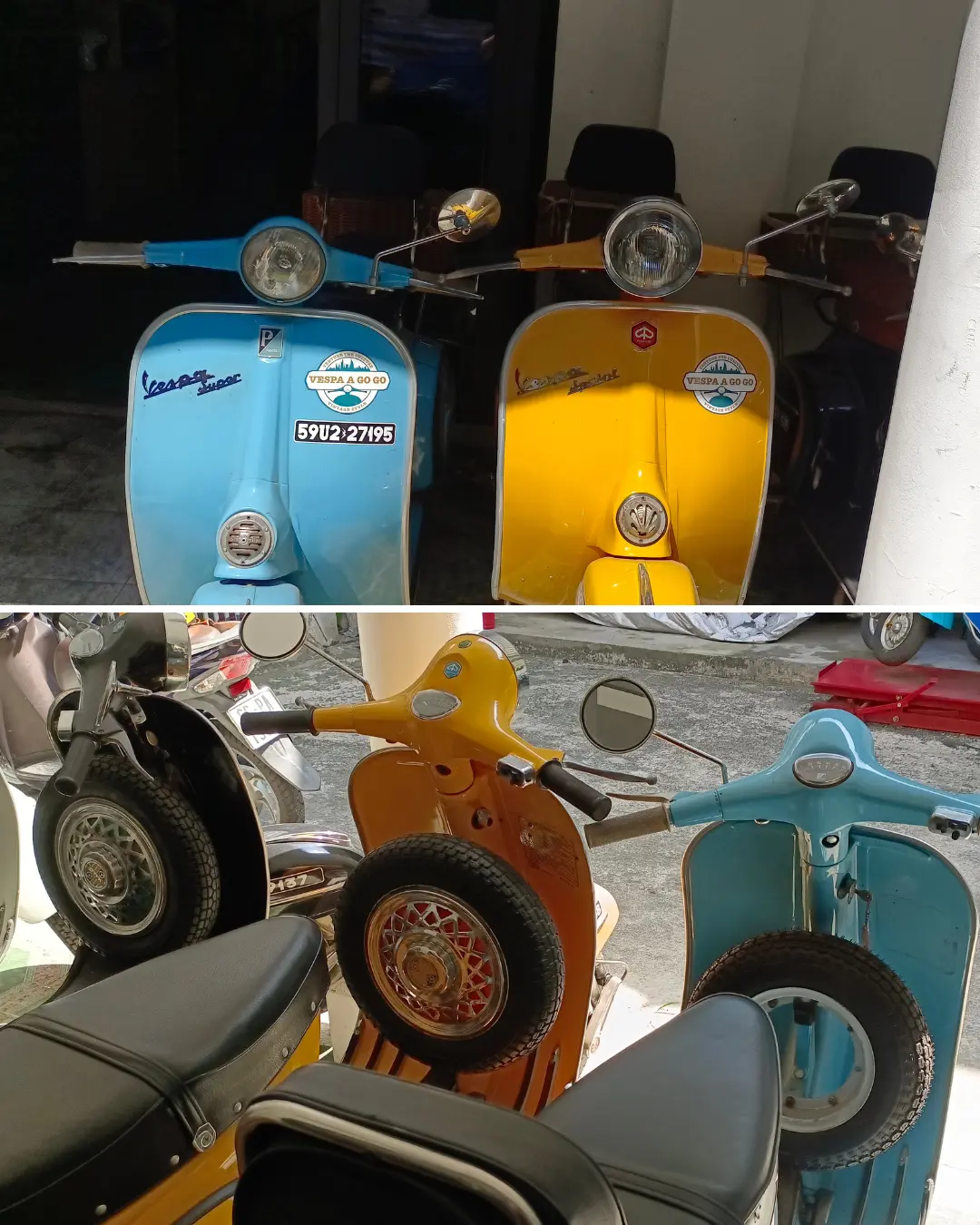
Vintage Vespa Sprint (yellow) next to a Vespa Super
Vespa Super
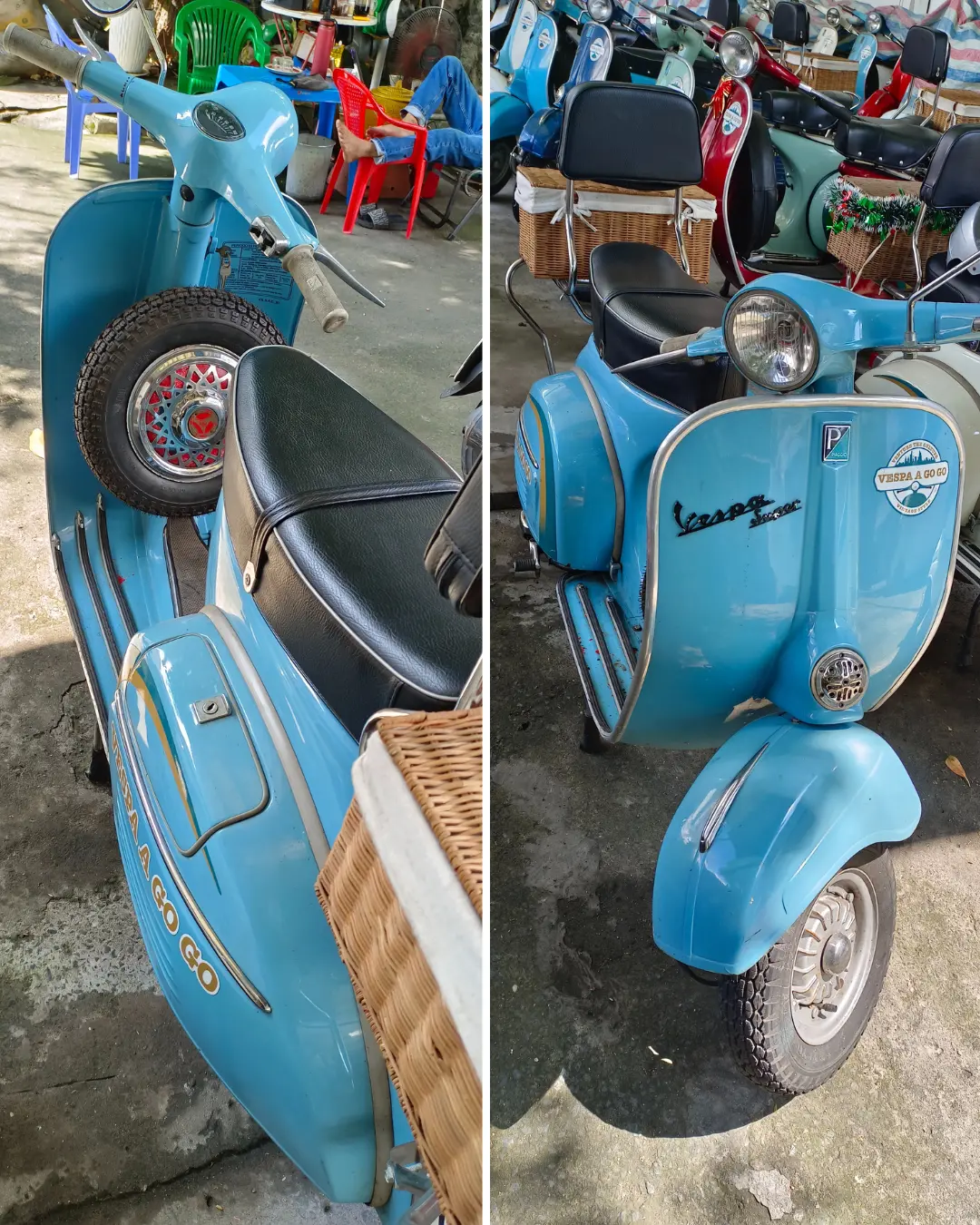
Notice how we equip a basket for raincoats, helmets and a back rest for our guests comfort
The Super is a fan favorite because it feels straightforward and honest. It’s not trying to be a race bike — it’s the kind of vintage vespa that teaches you smoothness and good habits.
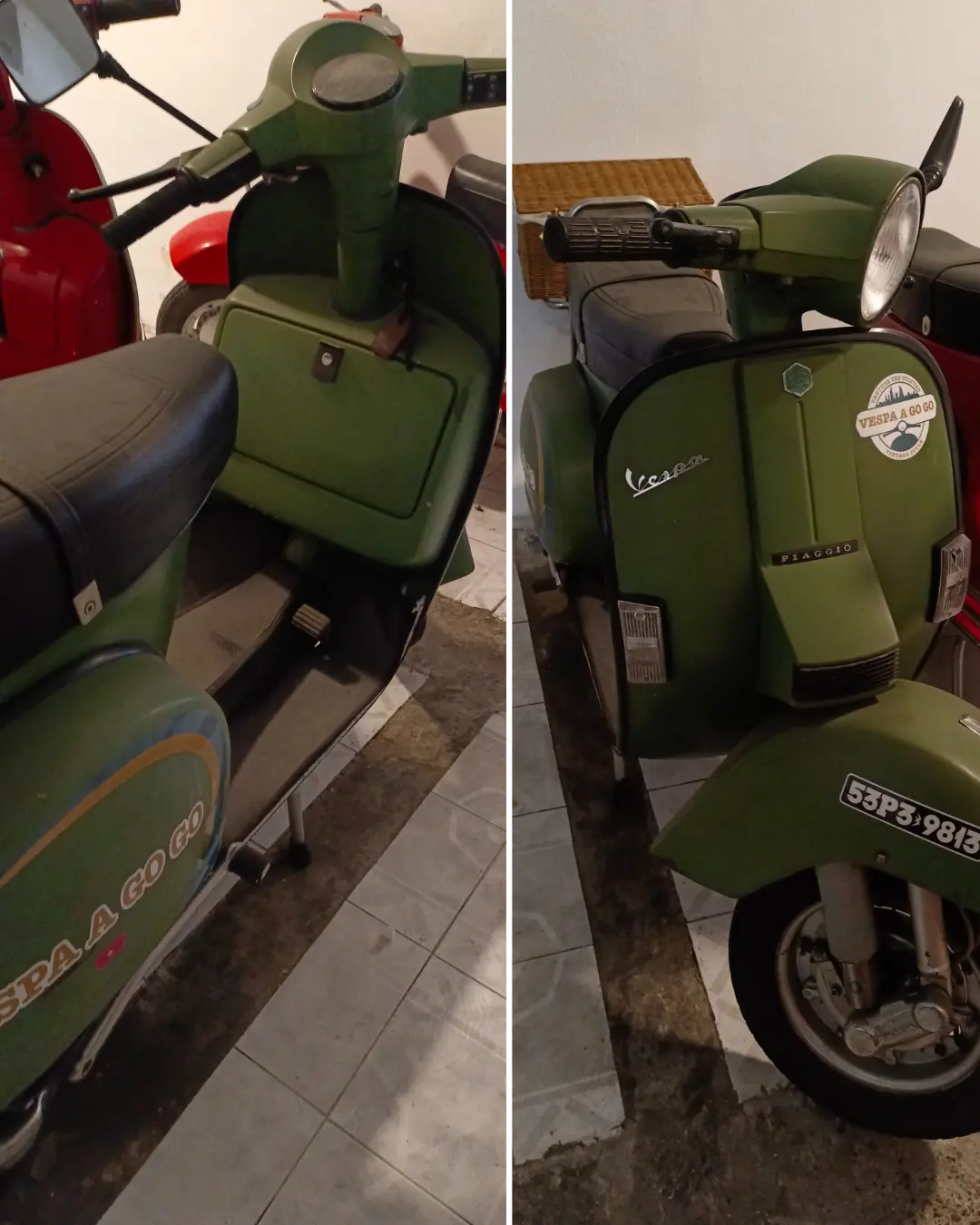
Vespa PX series (PX-type largeframe)
PX bikes are the “workhorse classic” in many fleets because they’re built for real use. Specs vary by exact version, but the PX125 is commonly listed around 95–97 kg dry, which helps explain why it feels stable at speed while still manageable at stops.
How to Ride a Vintage Vespa
If you’ve only ridden automatics, learning how to ride a vintage Vespa is mostly about coordination - not courage. You’re training your left hand and your left wrist to work together: clutch control + twist shifting, then throttle.

A beginner-friendly way to learn:
- Find the friction zone first. Before you chase speed, master smooth take-off without revving the engine to the moon.
- Shift early, ride torquey. Most new riders over-rev because they’re nervous; a vintage ride is calmer when you shift sooner.
- Use your knees. Lightly grip the scooter with your legs so your arms stay relaxed - this instantly improves balance.
- Plan your stops. Drum brakes and older tires mean you ride with more space and earlier braking.
Two common mistakes when riding a Vespa:
- Death grip on the bars (makes the bike wobble more).
- Snapping the throttle mid-turn (on a vespa 2 stroke, that can feel jerky fast).
Riding a Vintage Vespa in Real Traffic (How to Ride on Vespa Smoothly)
The fastest way to look like you’ve never ridden before is to fight the bike at 5 km/h. The fastest way to look like a local is to relax, scan ahead, and let the scooter roll.
Here are the habits that make you safer when you ride on Vespa:
- Look far, not near. Your bike goes where your eyes go.
- Keep a “buffer lane”. Don’t ride glued to car doors or buses; give yourself an escape line.
- Stay smooth in crowds. Smooth throttle + smooth clutch beats “fast hands” every time.
- Respect the weight feel at stops. That’s where most beginner drops happen, not at speed - especially if your setup carries a front spare.
Conclusion: Vintage Vespa Is a Skill - and That’s the Point
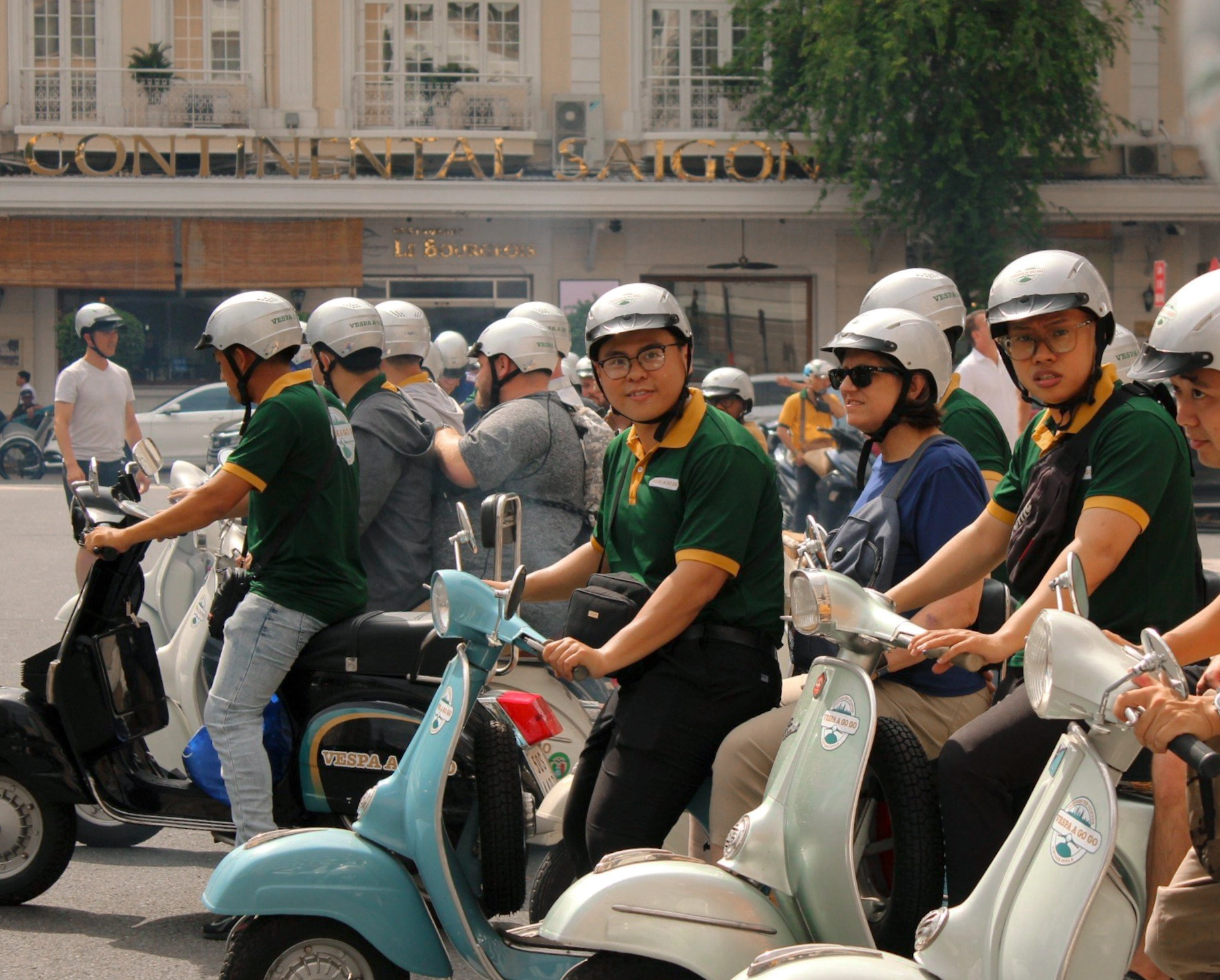
A vintage Vespa isn’t difficult because it’s “old.” It’s different because it asks you to be present: smoother hands, smarter braking, and a better understanding of balance, vespa weight, and how a vespa 2 stroke behaves in the real world. Once you get it, you stop “operating a scooter” and start riding a machine with personality.
If you want to experience a vintage Vespa the easy way - with well-maintained bikes and riders who do this daily - come ride with Vespa A Go Go in Saigon. It’s the simplest way to feel what these classics are meant to do: cruise, turn heads, and make the city feel cinematic without you having to learn everything the hard way on day one.
Other tips
- Vietnam Scooter & Motorbike Culture: Learning to Ride the Flow (Safely) for the First Time
- Saigon Street Life: A Visual Journey Through Transport in the 1990s
- Traffic in Ho Chi Minh City: A Survival Guide to Saigon Traffic (2025)
- Vintage Vespa: How to Ride, Weight & 2-Stroke Basics
- The History of the Vespa in Vietnam: A Cultural Icon on Two Wheels
- Saigon Motorbike Tour: An Authentic Way to Experience Saigon
