 Email: support@vespaagogo.com

Vietnam Travel
Best Beaches in Vietnam: How the Coast Actually Works (and How to Choose the Right One)
2026-01-21
Vietnam is rarely the first country people think of when planning a beach holiday in Southeast Asia. Thailand, Indonesia, and the Philippines tend to dominate that conversation. Yet Vietnam stretches along more than 3,200 kilometers of coastline, touching multiple seas, climate zones, and ecosystems. The reason Vietnam’s beaches feel confusing to many travelers is not because they are bad, but because they are highly uneven, seasonal, and tightly linked to how they are managed.
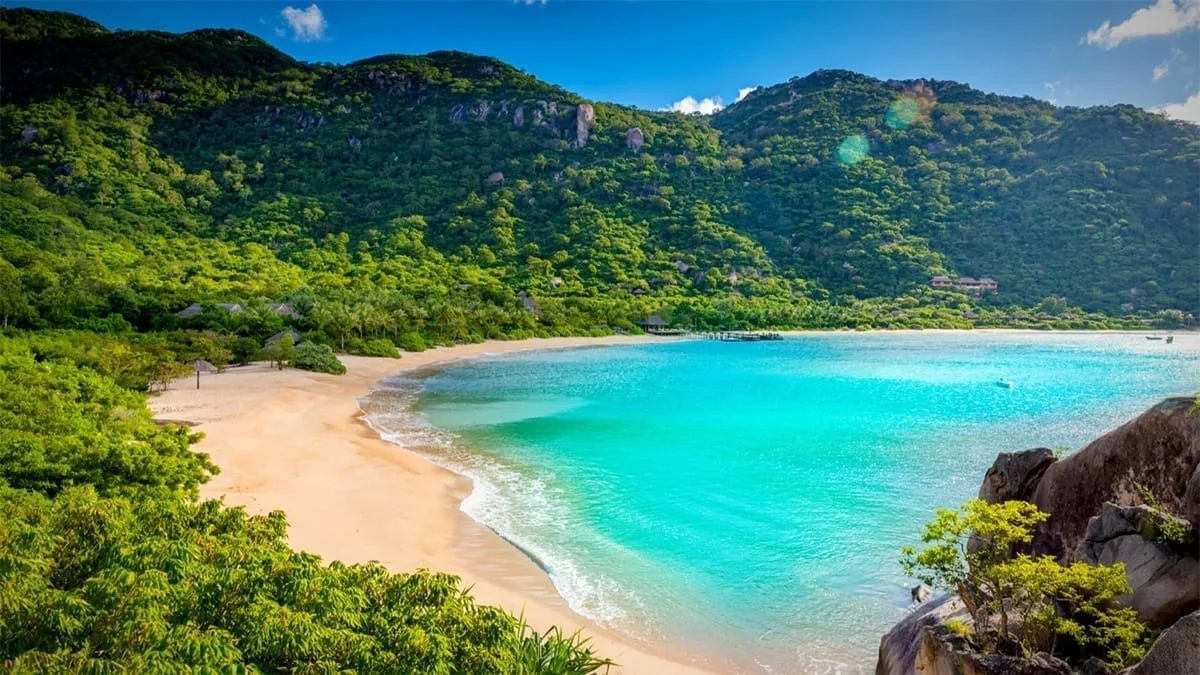
This is why travelers repeatedly ask the same core questions:
- Does Vietnam have a beach worth traveling for?
- Are Vietnam beaches clean?
- What is the best beach resort in Vietnam if comfort matters?
Those questions cannot be answered with a simple list. The best beaches in Vietnam depend on timing, expectations, and understanding how beach tourism actually developed here. This guide is written to explain that system clearly, so you can choose a destination that matches how you travel, not how brochures sell it.
Does Vietnam Have a Beach Destination Comparable to Thailand or Bali?
Yes, but not in the same way.
Vietnam does not have one single, dominant “default” beach destination like Phuket or Bali. Instead, it has several distinct beach regions, each serving a different travel style. Some are resort-first. Some are nature-first. Some are practical, not pretty.
The key difference is that Vietnam’s beach tourism developed later and more centrally planned than in many neighboring countries. Large resorts were often built before beach towns grew organically around them. This has shaped everything from cleanliness to atmosphere.
In practical terms:
- Vietnam excels at resort-based beach holidays
- Public beaches vary widely in quality
- Island beaches are generally calmer and cleaner
- Planning around seasonality is essential
Once this is understood, Vietnam’s coastline becomes much easier to navigate.
How Vietnam’s Coastline Is Structured (Why One Beach Can Be Great and Another Isn’t)
Vietnam’s geography explains most beach confusion. The country is long and narrow, meaning coastal conditions can change dramatically over short distances. Rainfall, wave exposure, and even water temperature differ between regions.
Broadly, Vietnam’s coastline can be divided into:
1. Southern island coast (Gulf of Thailand)
Calmer seas, more tropical feel, strong resort development.
2. Central mainland coast (East Sea)
Long sandy beaches, strong seasonality, mixed public quality.
3. Wind-exposed south-central coast
Strong winds, water sports, fewer “swimming beaches.”
4. Low-density luxury zones
Protected or semi-protected areas chosen specifically for privacy.
Each of these regions behaves differently. Choosing the wrong one at the wrong time is the most common reason travelers leave disappointed.
Are Vietnam Beaches Clean? A Realistic, Ground-Level Answer
This is one of the most searched and most misunderstood questions about Vietnam’s beaches.
Are Vietnam beaches clean?
Yes, many are, but cleanliness is uneven and conditional.
Cleanliness depends on three factors:
- Management
- Population pressure
- Seasonality
Where Vietnam beaches are usually clean
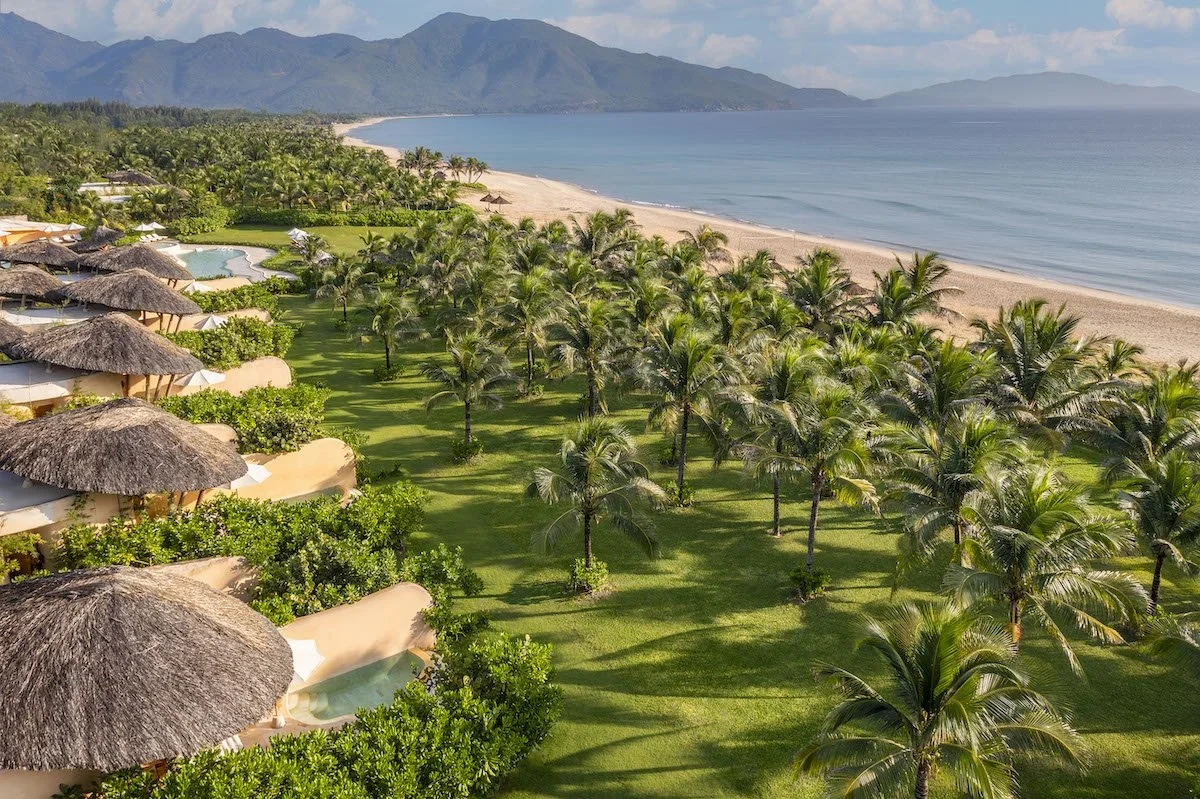
Beaches that consistently meet expectations tend to be:
- Island beaches with limited permanent population
- Resort-managed beachfronts
- Beaches near protected or controlled zones
In these areas, sand is cleaned daily, trash collection is systematic, and swimming zones are monitored. This is particularly noticeable at mid-range to luxury resorts, where beachfront maintenance is built into operating costs.
Where cleanliness can be inconsistent
Issues are more common at:
- Urban public beaches near large cities
- Fishing towns without tourism infrastructure
- Central coast beaches immediately after storms
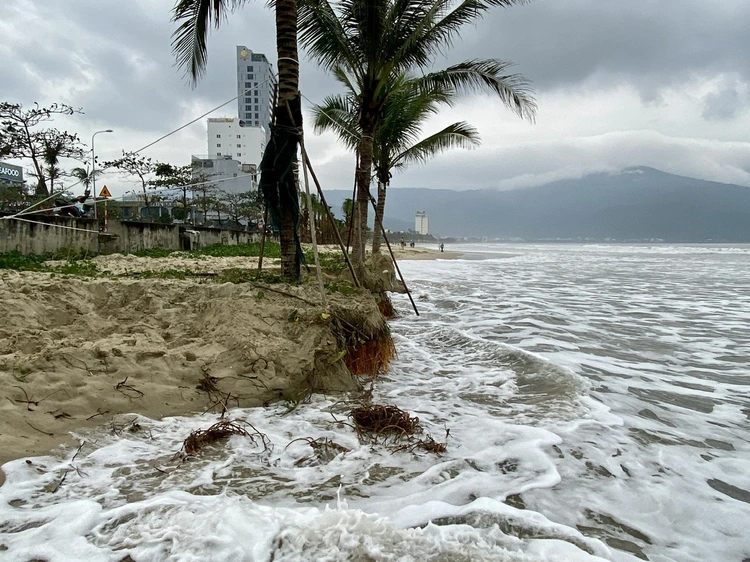
Seasonal storms, especially in central Vietnam from roughly October to November, can wash natural debris ashore. This is weather-related rather than neglect, and conditions often improve quickly once storms pass.
Key takeaway:
In Vietnam, choosing the right accommodation often matters more than choosing the right beach name.
Southern Vietnam: Island Beaches With the Most Reliable Conditions
Southern Vietnam benefits from calmer seas and more predictable beach seasons. This region answers “does Vietnam have a beach?” most clearly for first-time visitors.
Phú Quốc – Vietnam’s Most Fully Formed Island Beach Destination
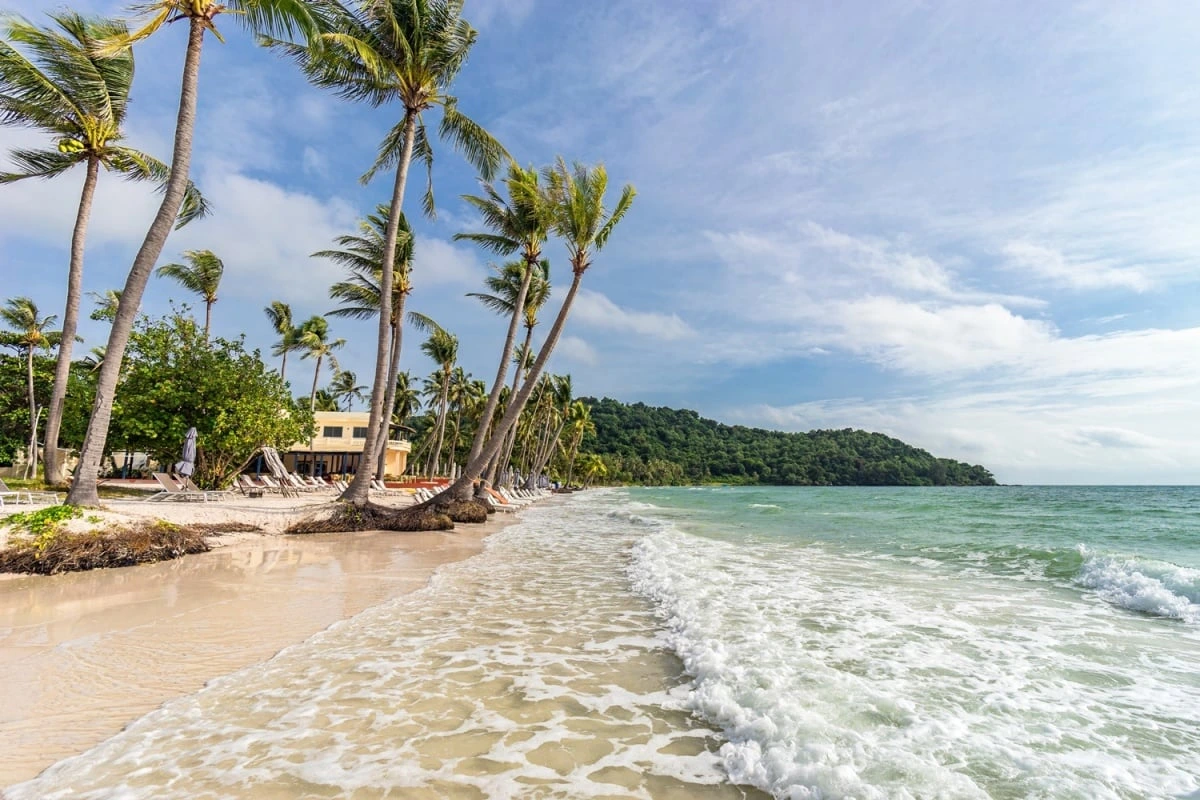
Phú Quốc is Vietnam’s largest island and its most developed beach destination. Located in the Gulf of Thailand, it experiences gentler wave conditions than much of the central coast. This makes it particularly attractive to travelers who prioritize swimming and relaxed beach time.
The west coast is the main tourism zone. During the dry season (roughly November to April), the sea is calm, water clarity is decent, and sunsets are consistent. This is why most major resorts are concentrated along Long Beach and nearby stretches.
Resort-managed beaches on Phú Quốc are generally clean and well maintained. Private beachfronts are cleaned daily, and access is controlled, which significantly improves the experience compared to public areas closer to town centers.
Phú Quốc works best for:
- First-time Vietnam visitors
- Travelers seeking predictable beach conditions
- Families and couples prioritizing comfort
Local insight note:
Phú Quốc has developed rapidly. A future expansion could separate older fishing areas from newer resort corridors to help travelers avoid overbuilt zones.
Côn Đảo – Protected, Quiet, and Environment-First
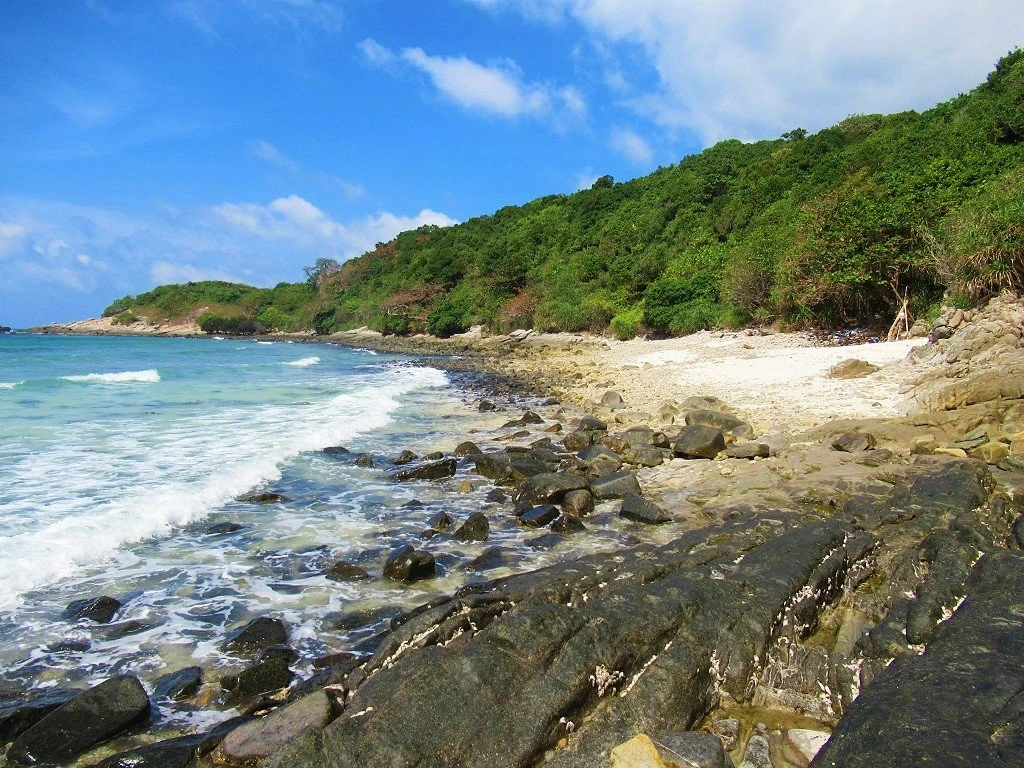
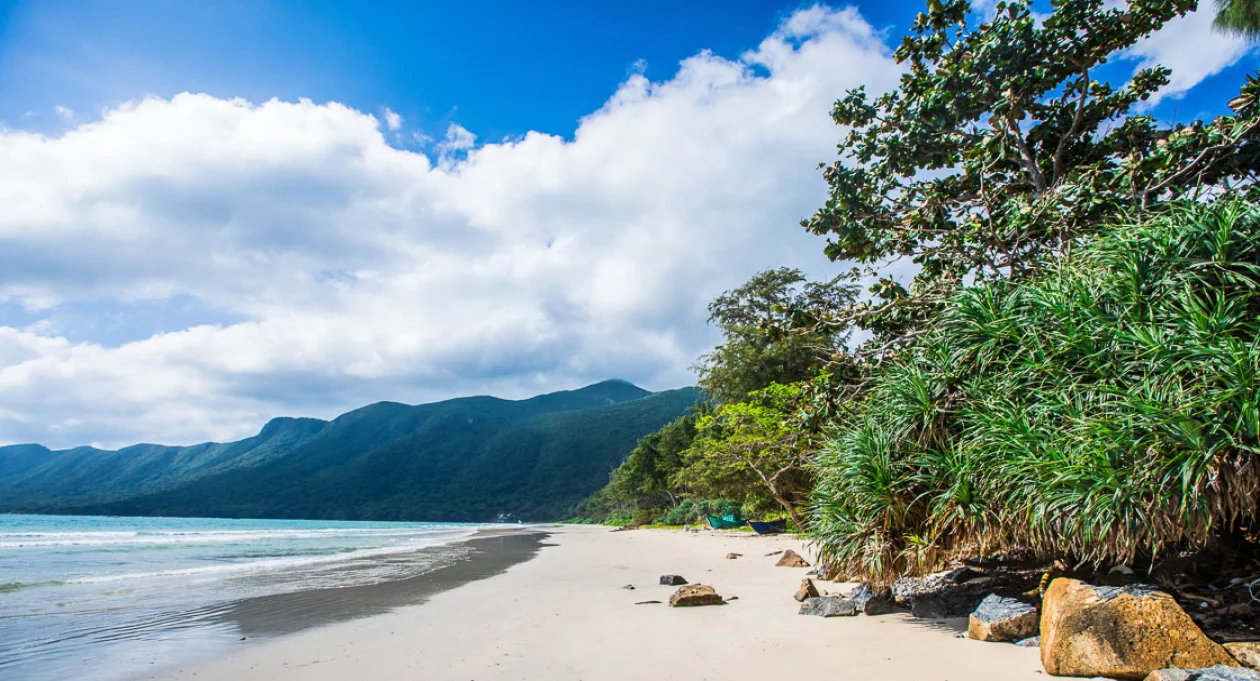
Côn Đảo sits at the opposite end of the spectrum. Much of the archipelago is protected as a national park, which strictly limits development. As a result, water quality is among the best in Vietnam, and beaches feel quiet and undeveloped.
Beaches here are smaller and more rugged than those on Phú Quốc. Swimming conditions vary depending on currents, so visitors often swim within managed zones rather than roaming freely along the coast.
Côn Đảo suits:
- Travelers seeking tranquility
- Couples prioritizing privacy
- Visitors comfortable with limited nightlife and dining options
This is not a destination for beach hopping or nightlife. It is a destination for staying still.
Central Vietnam: Long Beaches, Big Payoff — If You Choose the Right Season
Central Vietnam has some of the country’s longest sandy beaches, but also the most pronounced seasonality. This region rewards good planning and punishes guesswork.
Đà Nẵng – The Most Balanced Beach City in Vietnam
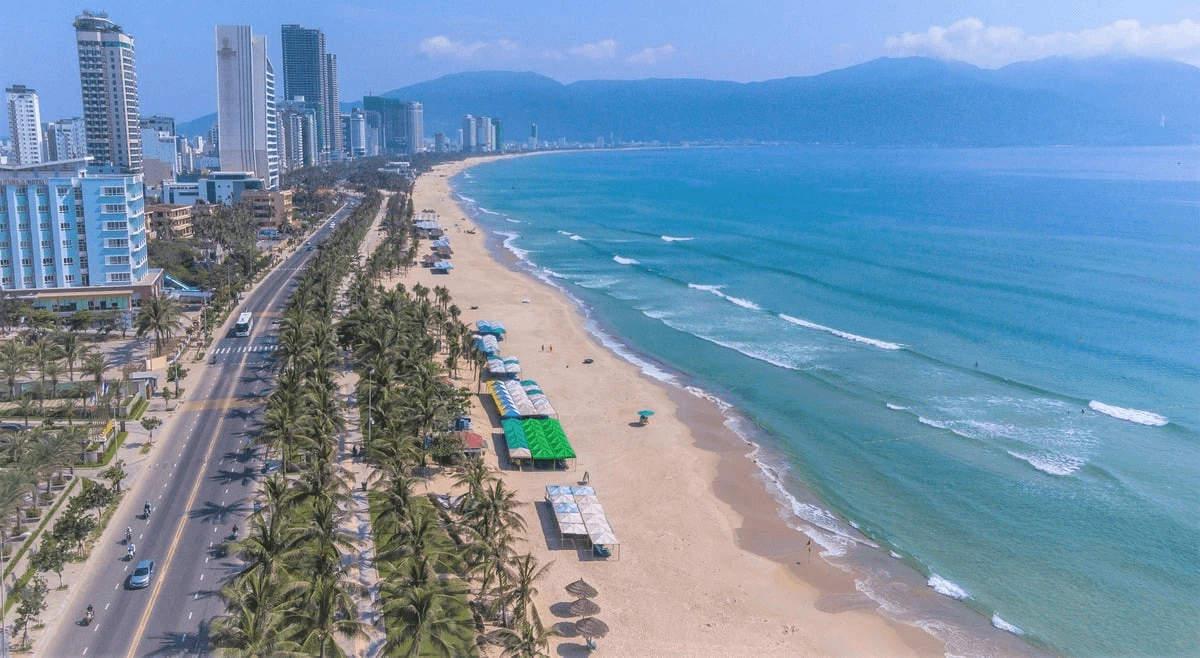
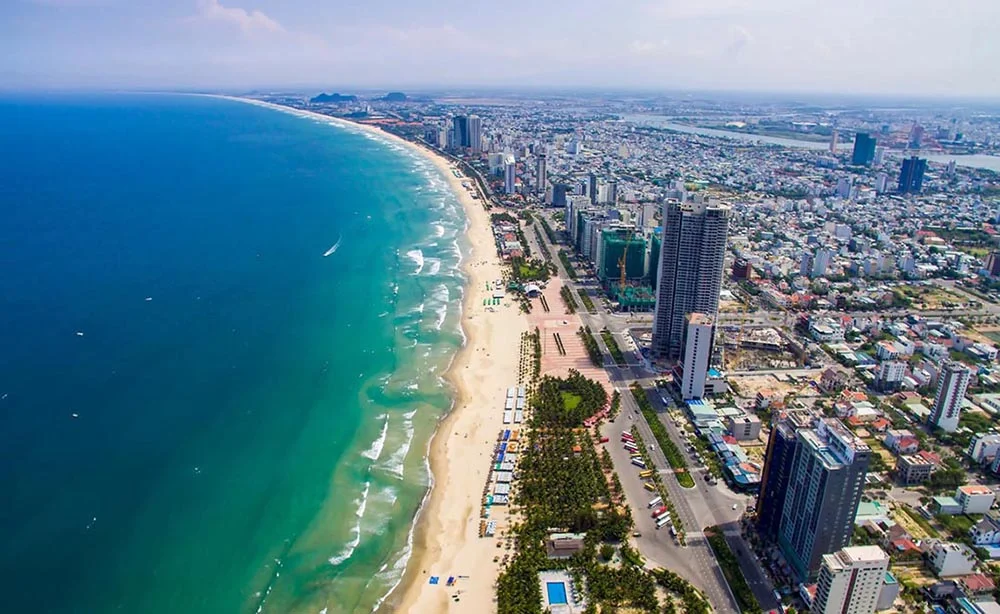
Đà Nẵng is widely regarded as one of Vietnam’s most livable cities, and its beaches are a major reason why. My Khe Beach and Non Nuoc Beach are wide, sandy, and regularly maintained, making them among the cleanest urban beaches in the country.
Unlike many Southeast Asian city beaches, Đà Nẵng’s coastline feels open rather than boxed in by dense development. Swimming is generally safe during the dry season, and lifeguards operate in designated areas.
Importantly, Đà Nẵng offers balance: beach access, modern infrastructure, and proximity to cultural sites like Hội An. This makes it a strong choice for travelers who do not want to isolate themselves at a resort.
Đà Nẵng is ideal for:
- Travelers combining beach and city life
- Short stays with easy logistics
- Visitors exploring central Vietnam
Nha Trang – City Beach With Better Offshore Options

Nha Trang’s city beach is long and scenic but can feel busy due to its central location. The main advantage of Nha Trang lies offshore, where nearby islands offer clearer water and better snorkeling conditions.
Many travelers choose island-based or semi-private resorts to avoid the density of the city shoreline. These areas tend to be cleaner and quieter, especially during peak season.
Nha Trang works best for:
- Travelers interested in island hopping
- Diving and snorkeling
- Resort-based stays with optional city access
Accuracy note:
Water clarity varies year to year. Current snorkeling conditions should be checked locally.
Hội An’s Beaches – Secondary, Not Central
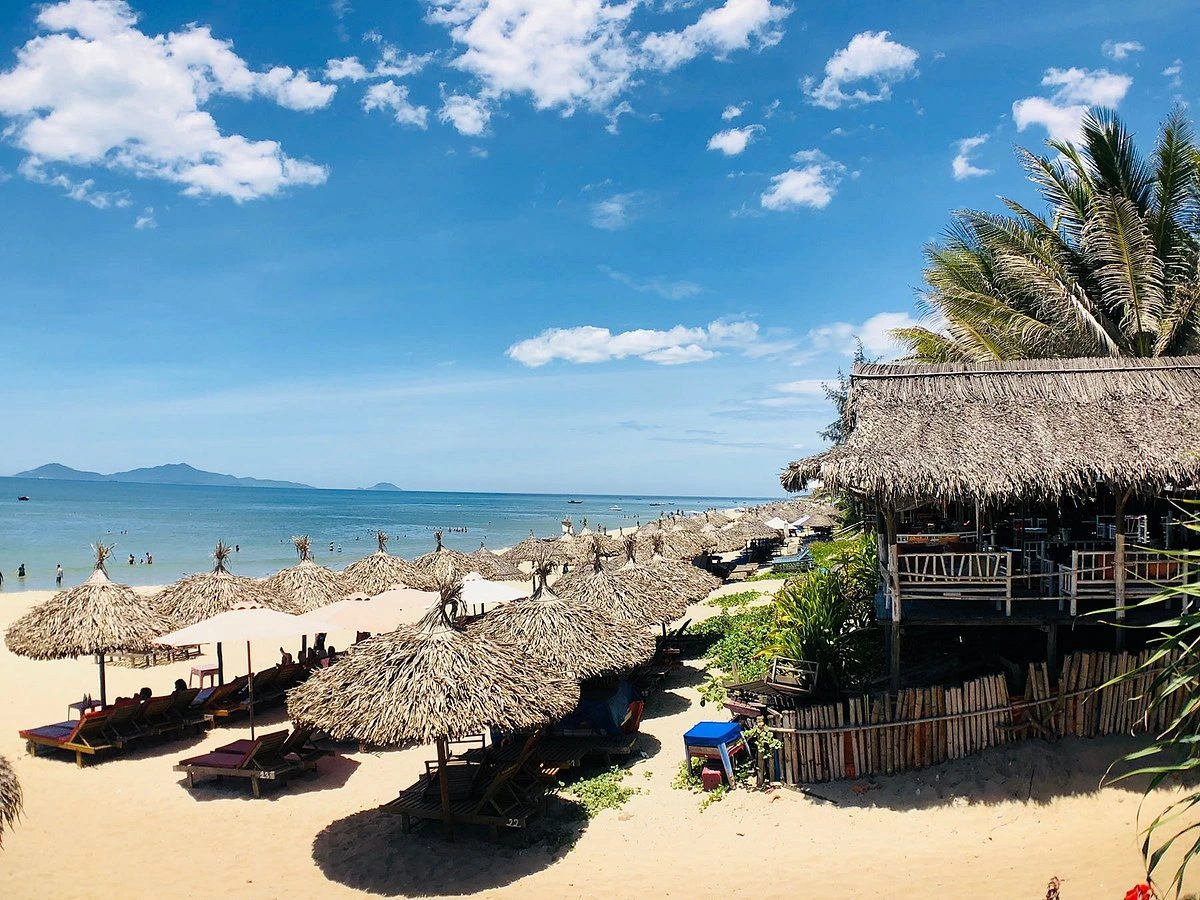
Hội An is often associated with beaches, but it is not a beach town. Coastal access comes via nearby An Bang Beach and Cua Dai Beach, both of which are short drives from the old town.
Beach conditions here vary seasonally, particularly after storms. Resort-managed sections remain the most reliable options.
Hội An appeals to travelers who:
- Prioritize culture over swimming
- Want occasional beach access, not daily beach life
- Prefer atmosphere over pristine conditions
Why Resorts Matter More in Vietnam Than in Many Other Countries
One of the most important and least discussed aspects of Vietnam’s beach experience is the outsized role resorts play.
Because many beaches developed before towns, resorts often:
- Maintain the sand daily
- Control waste management
- Mark swimming zones
- Limit overcrowding
This means two beaches just minutes apart can offer dramatically different experiences depending on who manages them.
In Vietnam, asking “what is the best beach resort in Vietnam?” is often more useful than asking for the best beach.
Wind-Exposed Beaches: When Vietnam Is Better for Boards Than Swimming
Not all beaches in Vietnam are designed for relaxed swimming. Parts of the south-central coastline experience strong, consistent winds for much of the year. These conditions are not a flaw, they are precisely why certain destinations have become hubs for specific water sports.
Mũi Né – Wind, Sand, and Kitesurfing Culture
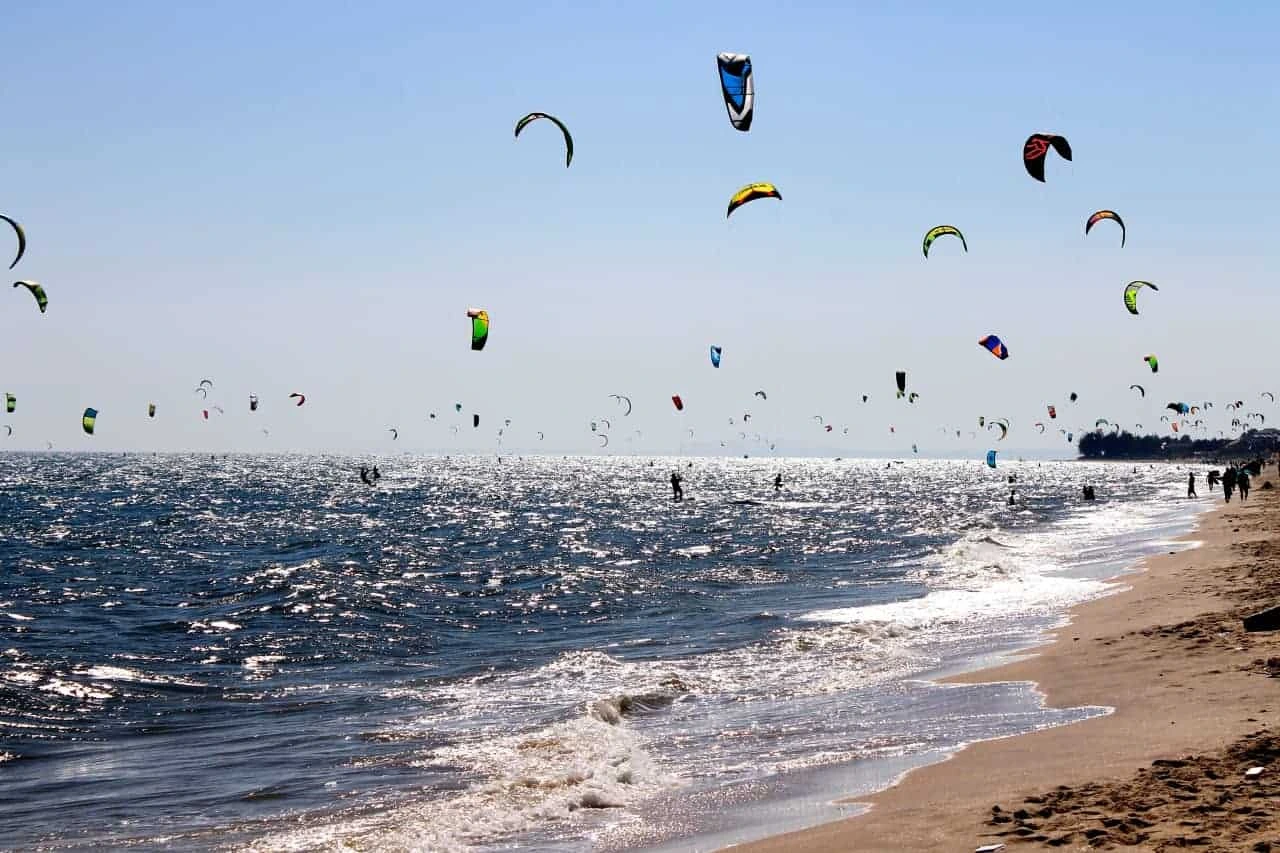
Mũi Né is often misunderstood by travelers expecting calm tropical swimming beaches. In reality, it is a wind-driven destination. From roughly November to March, strong and reliable winds make the area one of Southeast Asia’s most established kitesurfing spots.
The coastline here is long and sandy, but the sea is frequently choppy. Swimming is possible on calm days, but it is not the primary draw. The beach experience is more about space, breeze, and activity than glassy water.
Resort-managed sections tend to be cleaner and better organized than public areas, which can feel utilitarian. Accommodation ranges from budget guesthouses to higher-end resorts, allowing long stays for active travelers.
Mũi Né is best for:
- Kitesurfers and wind-sport travelers
- Long, budget-friendly stays
- Visitors who prioritize activity over swimming
It is not ideal for travelers seeking calm water or classic resort lounging.
Luxury-Only Coastlines: When Isolation Is the Point
Vietnam has a small number of coastal areas that were not developed for public tourism at all. These zones were selected specifically for privacy, landscape, and environmental control, and they function very differently from mainstream beach destinations.
Ninh Thuận – Raw Landscape, Controlled Access
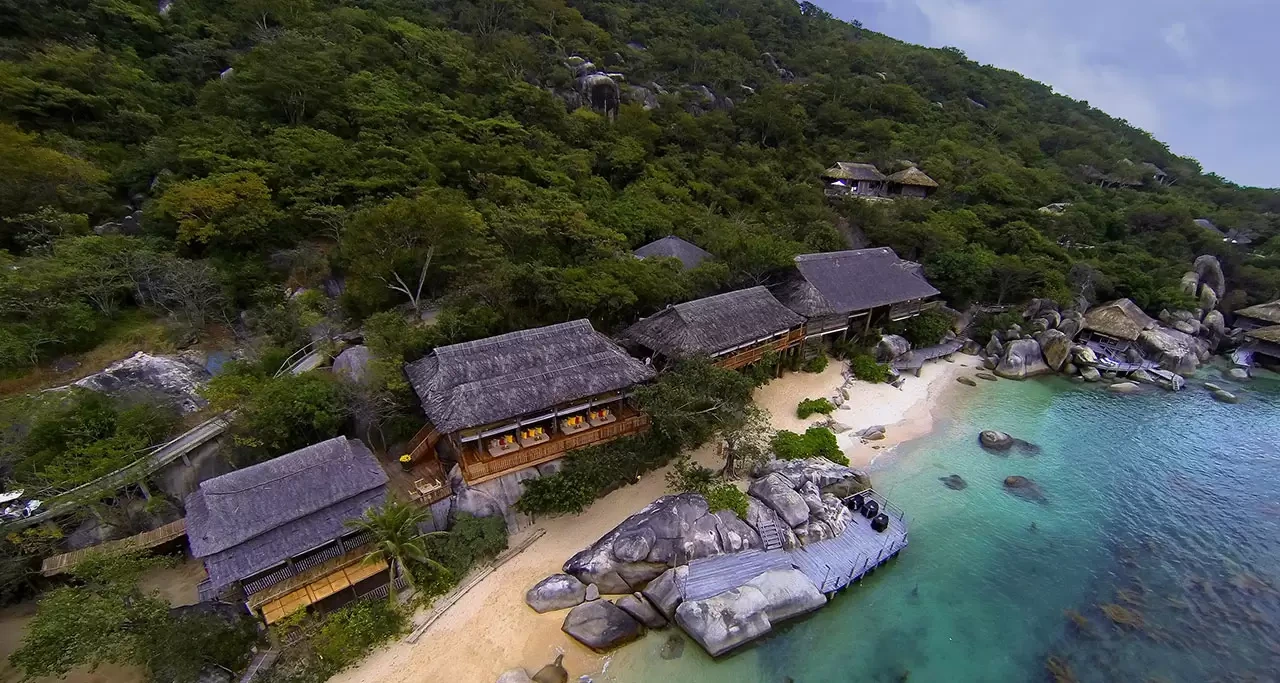
Ninh Thuận is one of Vietnam’s least populated coastal provinces. The landscape is dry, rocky, and exposed to wind, with minimal public beach infrastructure. On its own, this would not attract mass tourism, which is precisely why it appealed to ultra-luxury developers.
The most prominent property here is Amanoi, frequently cited in discussions about what is the best beach resort in Vietnam. The resort operates within a protected area and manages its own swimming zones, environmental impact, and guest movement.
This is not a destination for beach hopping, nightlife, or exploration. It is a destination designed for:
- Honeymooners
- Privacy-focused travelers
- Guests who are comfortable staying almost entirely on property
If you value variety, local dining, or independent exploration, Ninh Thuận is likely not a good fit.
Season-by-Season Logic: Choosing the Right Coast at the Right Time
Vietnam’s length means there is no single “best” beach season nationwide. Choosing the wrong region at the wrong time is the most common reason travelers feel disappointed by Vietnam’s beaches.
Southern Beaches (Phú Quốc, Côn Đảo)
- Best months: November to April
- Calmer seas, more stable weather
- Ideal for swimming and island stays
Central Mainland Beaches (Đà Nẵng, Hội An, Nha Trang)
- Best months: February to August
- Long sandy beaches perform best in summer
- October–November can bring storms and debris
Wind-Based Coasts (Mũi Né)
- Best months: November to March
- Wind sports thrive; swimming is secondary
Practical rule:
If your trip is fixed by date, choose the region that fits the month, not the destination name you recognize.
Who Should Not Choose Certain Beaches (Expectation Management)
One of the most useful ways to choose the best beaches in Vietnam is to understand who should avoid which destinations.
You should avoid Phú Quốc if:
- You dislike resort zones and planned developments
- You want vibrant local beach towns rather than curated spaces
You should avoid Côn Đảo if:
- You need nightlife, shopping, or variety
- You prefer independent exploration over staying put
You should avoid Mũi Né if:
- Calm swimming is a priority
- You want postcard-style tropical water
You should avoid Hội An’s beaches if:
- Beach time is the main purpose of your trip
- You expect pristine conditions year-round
Vietnam rewards realistic expectations more than impulse choices.
Safety, Swimming, and Practical Beach Awareness
Vietnam’s beaches are generally safe, but conditions change quickly.
- Always observe swimming flags and lifeguard guidance
- Expect stronger currents after storms, especially in central regions
- Resort beaches are typically safer due to monitored zones
- Sun exposure is intense year-round; shade and hydration matter
There is nothing unusually dangerous about Vietnam’s beaches, but ignoring local conditions is the fastest way to turn a good beach into a frustrating one.
So, What Are the Best Beaches in Vietnam?
After stripping away hype, the answer becomes clearer.
The best beaches in Vietnam are not defined by a single ranking or a single destination. They are defined by alignment:
- Phú Quốc for reliable island beaches and first-timers
- Côn Đảo for quiet, protected nature
- Đà Nẵng for balance between city and sea
- Nha Trang (offshore) for water activities
- Mũi Né for wind sports
- Ninh Thuận (resort-only) for privacy and luxury
Vietnam does not offer one perfect beach for everyone. It offers the right beach for specific travelers, often at better value and with fewer crowds than more famous destinations.
Final Synthesis: How to Choose Without Regret
If you take one thing from this guide, let it be this:
In Vietnam, beach quality is not just about the beach.
It is about management, timing, and expectations.
Travelers who choose beaches based on Instagram photos alone often leave disappointed. Travelers who understand how Vietnam’s coastline works often leave pleasantly surprised and eager to return.
Vietnam is not a “plug-and-play” beach destination. But for travelers willing to choose carefully, it is a genuinely rewarding one.
Experience Vietnam Beyond the Beach

Many travelers pair beach time with time in Vietnam’s cities, and that contrast often becomes the most memorable part of the trip.
If your journey includes Ho Chi Minh City, exploring the city on a vintage scooter with Vespa A Go Go offers a ground-level perspective you won’t get from cars or tour buses. It’s a way to experience local food, hidden neighborhoods, and everyday life, a natural complement to time spent on Vietnam’s beaches.

Anh Pham - General Manager
After exploring Ho Chi Minh City (or Saigon, as I love to call it) on a motorbike for over 10 years, these streets feel like my playground. I believe the best travel moments happen when you discover something unexpected. My goal is simple: to share my favorite parts of the city with you, so you can experience the real, everyday magic of my home.
Other tips
- 10 Best Vietnamese Clothing Brands & Local Brands Vietnam
- Beaches Near Hanoi: The Closest Beach Escapes for a Weekend Trip
- Hoi An Tailors: The Complete Insider Guide to Custom Clothes in Vietnam
- Best eSIM for Vietnam (2026 Guide from a Local Perspective)
- Da Nang International Airport Vietnam: A First-Timer Guide to Landing Calmly (DAD)
- Noi Bai International Airport Guide for First-Time Travelers to Vietnam (HAN)
- Traveling Vietnam as a Couple: What to Do, Where to Go, and How It Actually Feels
- Vietnamese Lunar New Year (Tết) 2026
- Vietnamese Mountain Guide
- Best Beaches in Vietnam: How the Coast Actually Works (and How to Choose the Right One)
- 15 Underrated Towns in Vietnam
