

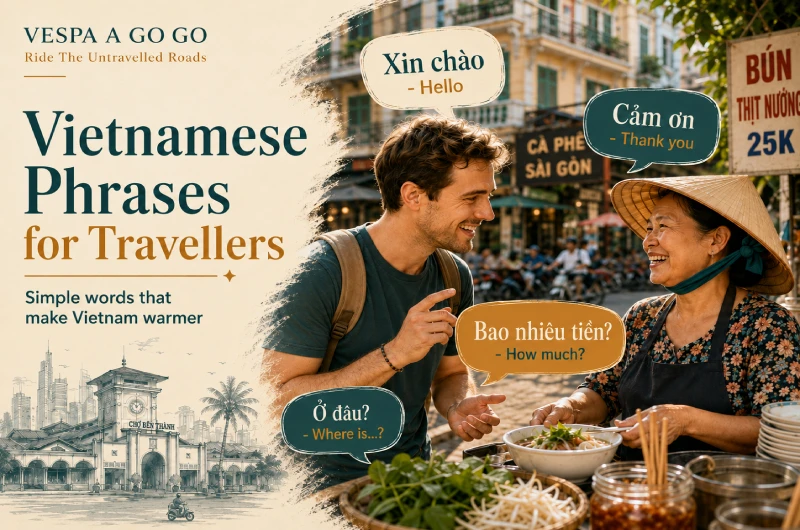
Vietnamese phrases can make a big difference when travelling around Vietnam, even if you only know a handful of them. A simple “xin chào” (hello) or “cảm ơn” (thank you) can spark a smile, break the ice and lead to warmer interactions with the people you meet. You do not need perfect pronunciation either – locals often appreciate visitors simply making the effort. In this guide, you’ll learn the most useful Vietnamese phrases for tourists, organised by everyday situations with easy pronunciation tips to help you speak with confidence from day one.
Why Should Tourists Learn a Few Vietnamese Phrases?
Quick answer: Learning a few Vietnamese phrases shows respect for the local culture and instantly warms locals to you, often leading to friendlier service, better market prices, and more genuine connections. While many people in tourist areas speak some English, a little Vietnamese helps enormously off the beaten path and makes everyday tasks like ordering food or asking directions smoother and more enjoyable.
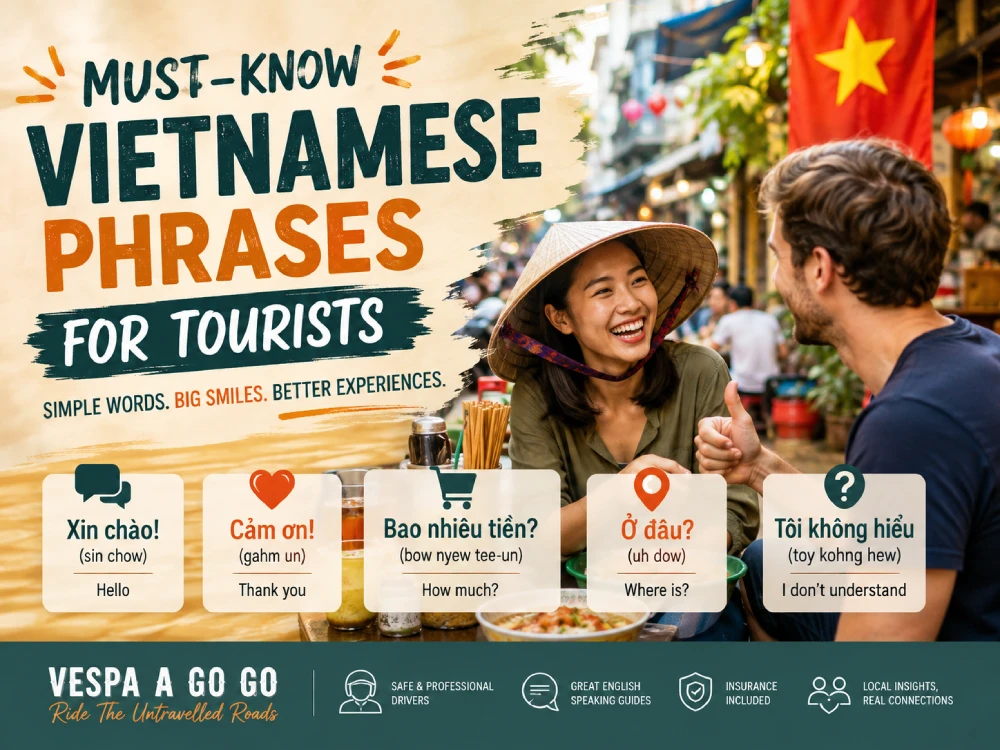
You absolutely don’t need to be fluent to enjoy Vietnam, and there’s no need to grind through a language app before you go. In major cities and tourist areas, many people, especially younger Vietnamese in tourism and hospitality, speak some English. But learning even a few basic phrases pays off in ways that go far beyond practicality.
The biggest reward is connection. Vietnamese people are known for their warmth and hospitality, and making the effort to speak their language, however imperfectly, shows respect and appreciation for their culture. This small gesture often earns big smiles, friendlier interactions, and sometimes even better deals when shopping. Practically, a few phrases also help you navigate more easily when you venture beyond the tourist hubs, where English is less common. In short, a little Vietnamese goes a long way.
How Do You Say Hello and Basic Greetings in Vietnamese?
Quick answer: The most important greeting is “xin chào” (pronounced “sin chow”), meaning hello, usable in almost any situation. To say goodbye, use “tạm biệt” (tam byet). These simple, friendly greetings are the perfect icebreakers and will immediately endear you to locals, setting a positive tone for any interaction.
Greetings are the foundation of any interaction, and Vietnamese ones are wonderfully simple to start with:
- Hello: Xin chào (sin chow). The all-purpose greeting, suitable for meeting someone new or simply passing a friendly face. It works in nearly any situation.
- Goodbye: Tạm biệt (tam byet). A warm way to end an interaction.
- Good morning: Chào buổi sáng (chow boy sang). A slightly more specific, polite greeting.
A simple “xin chào” delivered with a smile will almost always be returned with one, setting a friendly stage for whatever comes next. It’s the single most useful phrase to learn before you arrive.
How Do You Say Thank You and Be Polite in Vietnamese?
Quick answer: Say thank you with “cảm ơn” (pronounced “gahm un”), one of the most useful phrases you’ll use daily. For “you’re welcome,” say “không có chi” (kohng kaw chee). To say sorry or excuse me, use “xin lỗi” (sin loy). These polite phrases show respect and gratitude, and will endear you to locals everywhere you go.
Politeness and gratitude are universal, and a few key phrases let you express them warmly in Vietnamese:
- Thank you: Cảm ơn (gahm un). You’ll use this constantly. For extra warmth, add “rất nhiều” (zat nyew) to make “cảm ơn rất nhiều” (thank you very much).
- You’re welcome: Không có chi (kohng kaw chee). The perfect response when someone thanks you.
- Sorry / Excuse me: Xin lỗi (sin loy). Useful for apologising or getting someone’s attention politely.
Gratitude is shown warmly in Vietnam, and a simple “cảm ơn” for directions, service or kindness goes a long way. These small courtesies reflect the respect that’s so valued in Vietnamese culture, explored more in our guide to Vietnamese culture and what you should know.
What Vietnamese Phrases Help When Shopping and Bargaining?
Quick answer: The essential phrase is “bao nhiêu tiền?” (pronounced “bow nyew tee-un”), meaning “how much?” This is your go-to for prices at markets and street stalls, and pairs perfectly with friendly bargaining. Knowing “có” (yes) and “không” (no) helps you negotiate. Always haggle with a smile, and this phrase can lead to better deals and warmer exchanges.
Shopping in Vietnam’s markets is a cultural adventure, and a few phrases make it smoother and more fun, while helping you avoid overpaying:
- How much?: Bao nhiêu tiền? (bow nyew tee-un). The single most useful shopping phrase, for asking the price of souvenirs, street food or anything else.
- Yes: Có (caw) / No: Không (kohng). Essential for agreeing or declining during negotiations.
- Expensive: Đắt (dat). Useful to signal, with a smile, that you’d like a better price.
In local markets, prices are often negotiable, so asking “bao nhiêu tiền?” and haggling politely, always with a smile, is expected and can lead to a better deal. For a full breakdown of how to negotiate respectfully, see our guides to bargaining in Vietnam and the best souvenirs to buy in Ho Chi Minh City.
What Vietnamese Phrases Are Useful for Food and Directions?
Quick answer: For food, “ngon” (pronounced “ngon”) means delicious, and “cà phê” (cah-feh) means coffee, essential in Vietnam. For directions, “ở đâu?” (uh dow) means “where is?”, paired with a place like “nhà vệ sinh” (bathroom). And “tôi không hiểu” (toy kohng hew) means “I don’t understand,” a lifesaver when the language barrier strikes.
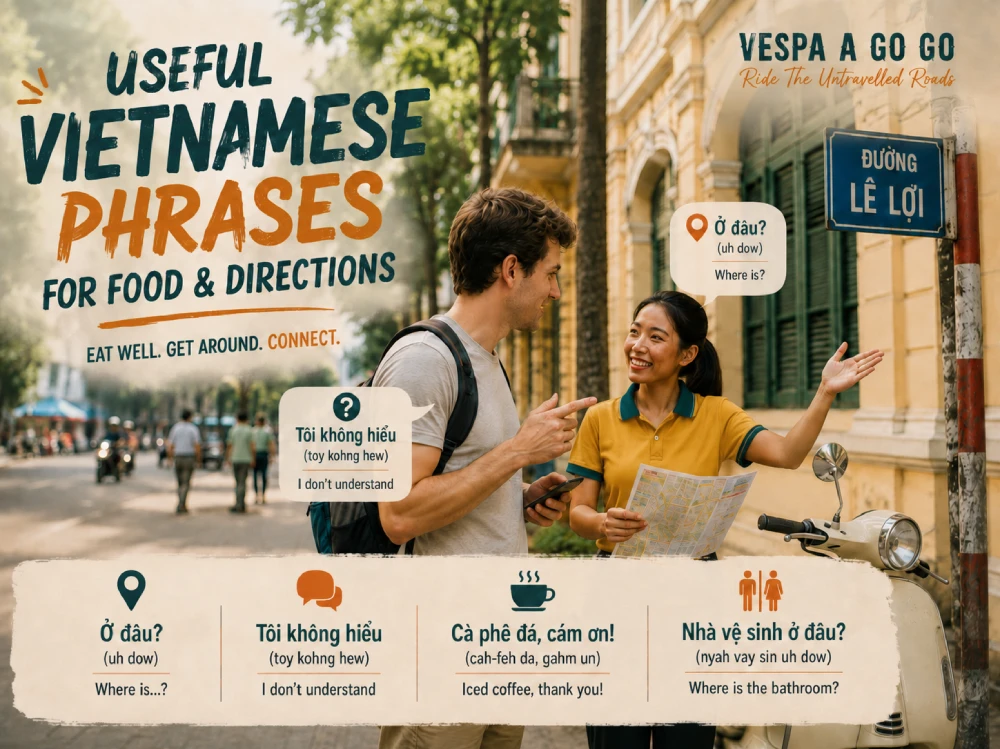
Two of the most common travel situations, eating and finding your way, are much easier with these phrases:
- Where is…?: Ở đâu? (uh dow). Pair it with a place, such as “nhà vệ sinh ở đâu?” (where is the bathroom?, pronounced “nyah vay sin uh dow”) or a bus stop, to get directions like a pro.
- I don’t understand: Tôi không hiểu (toy kohng hew). A polite, invaluable phrase when the conversation gets tricky; locals will usually slow down or switch to simple English.
- Delicious: Ngon (ngon). A lovely compliment to pay a cook or street vendor.
- Coffee: Cà phê (cah-feh). Essential in coffee-mad Vietnam. Add “đá” (da) for iced or “nóng” (nong) for hot.
These phrases cover the essentials of daily travel life. Trying them out, even imperfectly, as you explore the food scene in our guide to what to eat in Saigon will make every meal and journey more rewarding.
What Should You Know About Vietnamese Pronunciation?
Quick answer: Vietnamese is a tonal language with six tones, meaning the pitch of your voice can change a word’s meaning. This makes it tricky for beginners, but don’t stress: locals will usually understand you from context even if your tones are imperfect. Focus on being friendly and giving it a try, as the effort itself is what locals appreciate most.
One thing to know about Vietnamese is that it’s a tonal language, with six different tones. This means the same syllable can have completely different meanings depending on the pitch and inflection you use, which can feel intimidating at first. The classic example is that “ma” can mean several different things depending on the tone.
Here’s the reassuring news: you don’t need to master the tones to be understood. Locals are used to hearing foreigners speak, and will almost always grasp your meaning from context, especially with common phrases and a bit of pointing or gesturing. Pronunciation also varies by region, with the southern (Saigon) accent often considered the easiest for foreigners. So don’t let the tones put you off. The effort and friendliness you show matter far more than perfect pronunciation, and locals will appreciate every attempt you make.
The best way to practise your new Vietnamese phrases is with friendly locals who love to share their culture, exactly what you’ll find on a local-led Vespa tour. Connect with the real Saigon on the Saigon’s Untold Stories tour »
Frequently Asked Questions
What are the most important Vietnamese phrases for tourists? The most useful phrases are “xin chào” (hello), “cảm ơn” (thank you), “bao nhiêu tiền?” (how much?), “ở đâu?” (where is?), and “tôi không hiểu” (I don’t understand). Knowing “có” (yes) and “không” (no) also helps enormously. These cover greetings, gratitude, shopping and directions, the core of everyday travel.
How do you say hello in Vietnamese? You say hello with “xin chào,” pronounced “sin chow.” It’s the all-purpose Vietnamese greeting, suitable for almost any situation, whether meeting someone new or passing a friendly face. Delivered with a smile, it’s the single most useful phrase to learn and will immediately endear you to locals.
How do you say thank you in Vietnamese? Say thank you with “cảm ơn,” pronounced “gahm un.” You’ll use it constantly for service, directions and kindness. For extra warmth, add “rất nhiều” to make “cảm ơn rất nhiều” (thank you very much). To say you’re welcome in return, use “không có chi” (kohng kaw chee).
Is Vietnamese hard to pronounce for tourists? Vietnamese is a tonal language with six tones, so the pitch of your voice can change a word’s meaning, which makes it tricky at first. However, you don’t need perfect tones to be understood: locals usually grasp your meaning from context. The southern accent is often considered easiest for foreigners, and the effort is always appreciated.
Do I need to speak Vietnamese to travel in Vietnam? No, it’s not necessary. Many people in tourist areas and major cities speak some English, so you can get by without Vietnamese. However, learning a few basic phrases greatly enhances your experience, helps off the beaten path, and shows respect for the culture, often leading to warmer interactions and better connections with locals.