

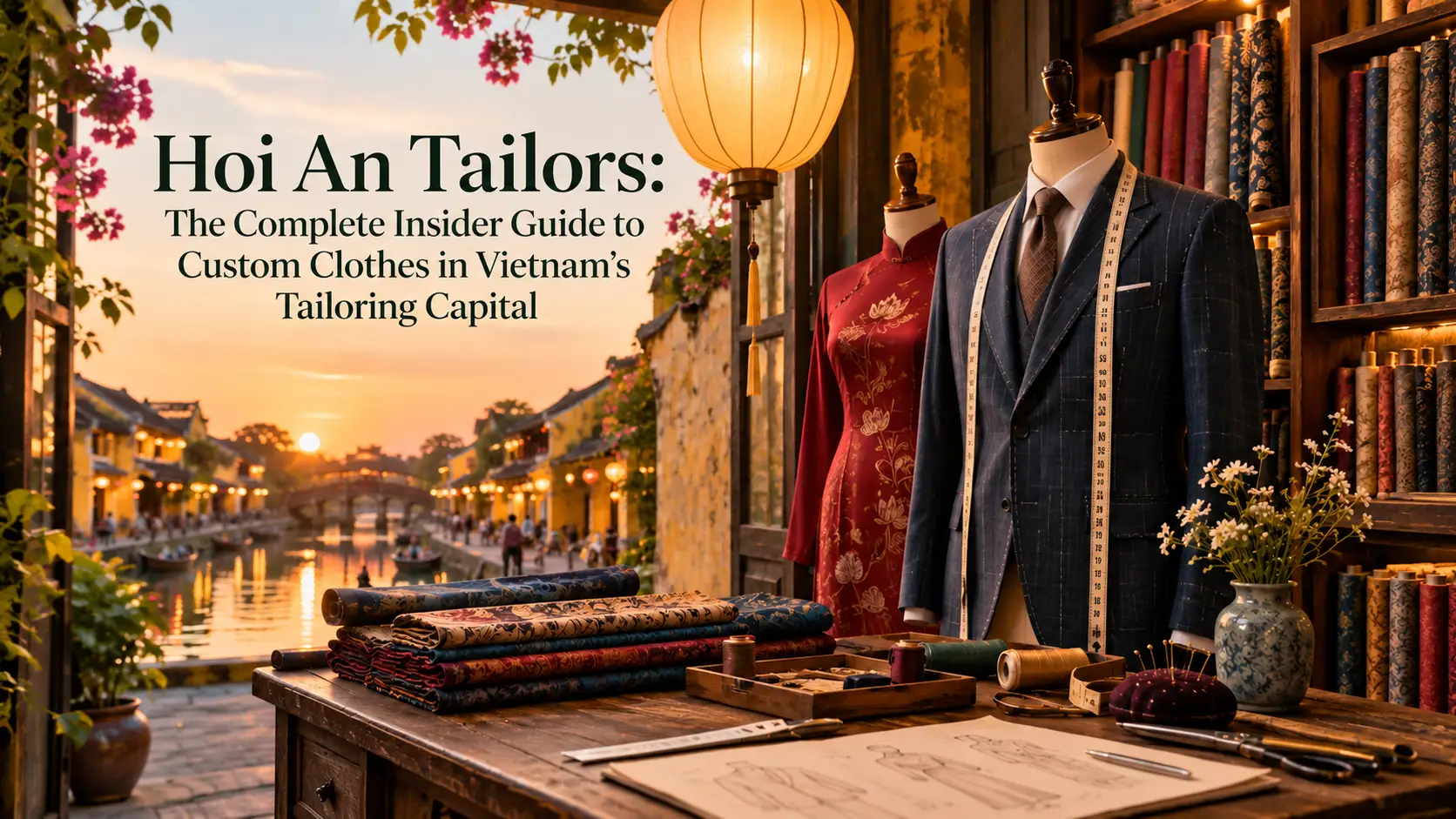
Hoi An tailors scene is a fascinating mix of tradition, craftsmanship, and modern tourism. Within a few lantern-lit streets, hundreds of workshops produce custom clothing for visitors from around the world. Many travellers arrive expecting lanterns, temples, and historic houses, yet they leave with something unexpected: clothing made specifically for them. For those who research carefully and allow time for fittings, the experience can produce something rare in modern travel: a garment designed entirely around you. This guide explains how the system works, what it costs, what to have made, and how to choose well.
Why Is Hoi An Famous for Tailoring?
Quick answer: Hoi An’s tailoring fame comes from history. Between the 16th and 19th centuries, it was one of Southeast Asia’s most important trading ports, where textiles and silk were key goods. Garment-making skills were passed down through generations, and when tourism boomed in the 1990s, this heritage turned into the town’s signature industry, with hundreds of tailor shops today.
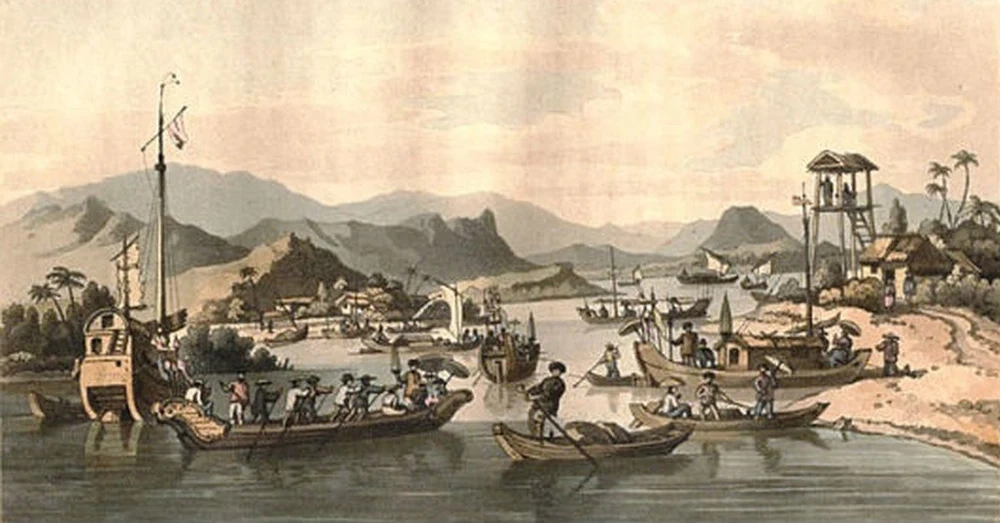
For such a small town, the sheer number of tailoring shops is surprising, and its past explains it. Between the 16th and 19th centuries, Hoi An was one of Southeast Asia’s most important international ports, drawing merchants from China, Japan, Europe and beyond. Among the many goods traded, textiles and silk were especially important, and as a result, sewing, clothing repair and garment-making became common local skills, passed down through generations.
When tourism to Vietnam began growing rapidly in the 1990s, this deep-rooted expertise found a new market. The modern tailoring boom took off, and today the town’s lantern-lit streets are lined with hundreds of workshops. This blend of inherited craft and tourist demand is exactly why Hoi An has become known as Vietnam’s tailoring capital, and one of its most famous experiences.
How Do Hoi An Tailors Work?
Quick answer: You choose a style and fabric, the tailor takes your measurements, and the garment is made over one to a few days with one or more fittings to perfect the fit. You can bring a reference garment or photos, select from sample books, and adjust details. Fittings are essential, so allow enough time before you leave town.
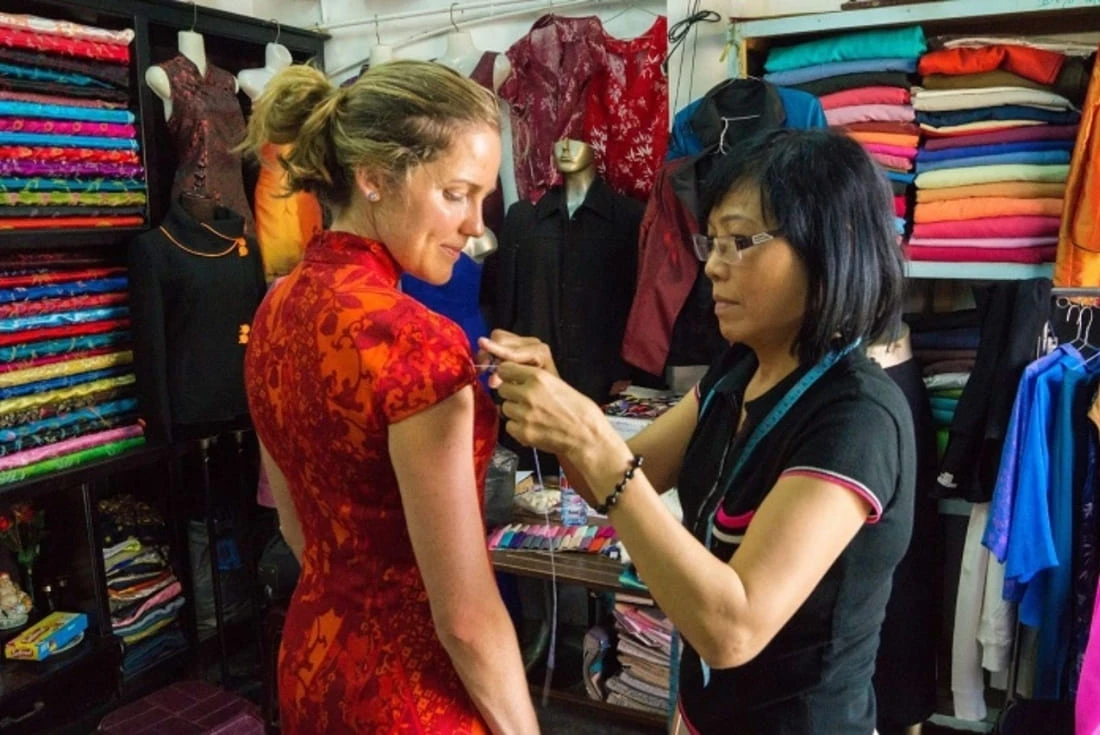
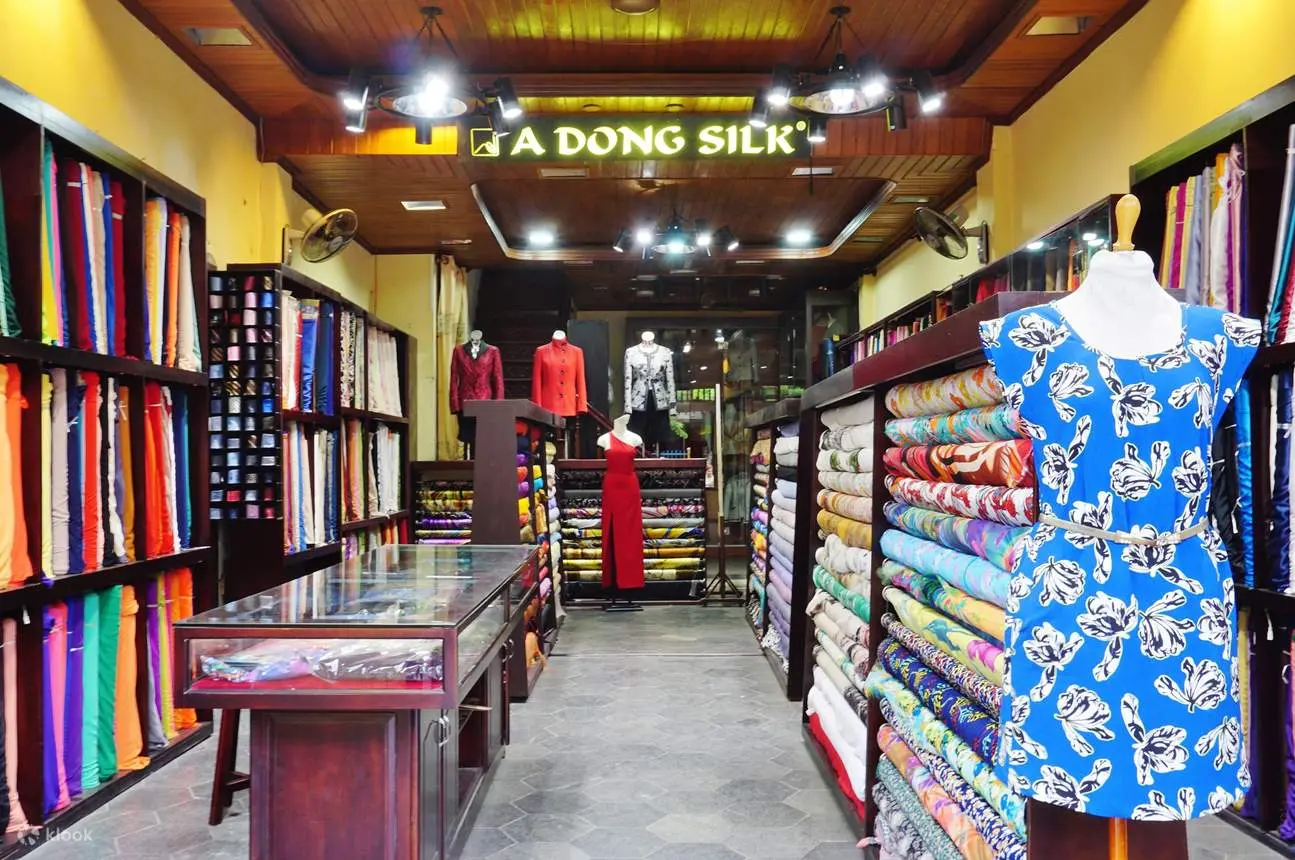
The process is straightforward but rewards preparation. After choosing a shop, you’ll discuss what you want to make, browse fabric options (often from extensive sample books), and have your measurements taken. The tailor then produces the garment, usually within one to a few days, depending on complexity and how busy they are.
The crucial element is the fitting. A good tailor rarely completes a garment without at least one fitting, and often more for complex pieces like suits. This is where the fit is checked and refined, so you should plan to be in Hoi An long enough to attend them. Bringing photos of the exact style you want, or a favourite garment that already fits you well, helps the tailor understand your expectations far more reliably than a verbal description alone.
How Should You Prepare Before Visiting a Hoi An Tailor?
Quick answer: Do a little homework first. Decide roughly what you want to make, gather reference photos of the styles you like, and ideally bring a garment that fits you well as a template. Research a few well-reviewed shops in advance, and plan your visit for early in your stay so there’s time for fittings.
A successful tailoring trip starts before you walk into a shop. A little preparation removes guesswork and dramatically improves your results:
- Know what you want. Decide in advance whether you’re after a suit, shirts, a dress or an áo dài, rather than browsing aimlessly once you arrive.
- Collect references. Save photos of the exact styles, cuts and details you like. Visual references are far clearer than trying to describe a look in words.
- Bring a template garment. A favourite item that fits you perfectly is the single most useful thing you can bring, as tailors can replicate a great fit from a physical example.
- Shortlist shops. Research a few well-reviewed tailors beforehand so you’re not choosing at random under pressure from street-front touts.
- Plan your timing. Arrange to visit on your first day in Hoi An, leaving room for the fittings that make all the difference.
The travellers who prepare are consistently the ones who leave happiest, with clothes that look exactly as they hoped.
How Do You Avoid Common Tailoring Pitfalls in Hoi An?
Quick answer: The main pitfalls are rushing the timeline, skipping fittings, choosing on price alone, and accepting low-grade fabric. Avoid shops that pressure you or promise flawless results with no fittings, insist on trying the garment on before final adjustments, and pay a little more for quality material you’ll be happy to wear.
Hoi An’s tailoring scene is wonderful, but its popularity means a few traps await the unwary. Steering clear of them is straightforward:
- Don’t rush. Allowing too little time is the most common mistake. Garments made overnight without fittings rarely fit as well.
- Never skip fittings. Always try the garment on and speak up about anything that feels wrong, this is your chance to perfect it.
- Don’t chase the lowest price. Suspiciously cheap quotes usually mean inferior fabric or hurried work. Balance cost against reviews and material quality.
- Inspect the fabric. Feel the material and ask what it is. Good fabric is the foundation of a garment you’ll actually want to wear.
- Resist pressure. Be wary of overly pushy sales tactics; a reputable tailor lets the quality of their work speak for itself.
A calm, informed approach, rather than grabbing the first or cheapest option, is what separates a treasured custom piece from a disappointing one.
How Much Do Hoi An Tailors Cost?
Quick answer: Prices vary widely by fabric and complexity, but Hoi An is generally affordable by Western standards. A custom shirt might cost from around $20 to $50, a dress from $40 to $100, and a tailored suit from roughly $150 to $400 or more for premium fabrics. Quality fabric drives both the price and the final result.
Hoi An offers tailoring at a range of price points, and understanding what drives cost helps you budget and choose well. The biggest factor is fabric: the difference between a basic synthetic and fine wool or pure silk can significantly affect both price and how the finished garment looks and lasts. As rough guidelines, simple garments like shirts sit at the affordable end, dresses in the middle, and suits at the higher end, with premium materials pushing prices up further.
A word of caution: the cheapest quotes often reflect lower-grade fabric or rushed work without proper fittings. The value in Hoi An is real, but the best results come from choosing quality material and a reputable shop rather than simply chasing the lowest price. When selecting silk, ask for “lụa tơ tằm” (pure silk) to ensure you’re getting the genuine article.
What Should You Get Made in Hoi An?
Quick answer: Popular choices include tailored suits and blazers, custom shirts, dresses and gowns, coats, and traditional Vietnamese áo dài. Suits offer the clearest value versus Western prices, shirts are quick and affordable, and an áo dài makes a uniquely Vietnamese keepsake. Focus on items you’ll genuinely wear and that benefit from a custom fit.
Deciding what to have made helps you make the most of your time. The most rewarding options:
- Suits and blazers. The classic Hoi An choice, offering excellent value against Western bespoke prices and a genuinely personal fit.
- Shirts. Quick and inexpensive, and a smart way to test a tailor’s quality before committing to a larger piece.
- Dresses and gowns. Custom-made to your exact measurements, from casual styles to formal evening wear.
- Coats and outerwear. Tailored wool coats can be a standout buy, especially if you’re heading somewhere cold.
- Áo dài. The elegant Vietnamese national dress makes a beautiful, meaningful souvenir, and its close fit is ideal for custom tailoring.
Think about what you’ll actually wear at home and what’s hard to get well-fitted there; that’s where custom tailoring delivers the most lasting value.
Should You Get an Áo Dài Made in Hoi An?
Quick answer: Absolutely. Hoi An, with its silk heritage and skilled tailors, is one of the best places to have a traditional áo dài made. Choose a shop experienced with the garment, opt for quality silk, and allow time for fittings, as the áo dài’s close fit demands precision. It makes a beautiful, uniquely Vietnamese keepsake.
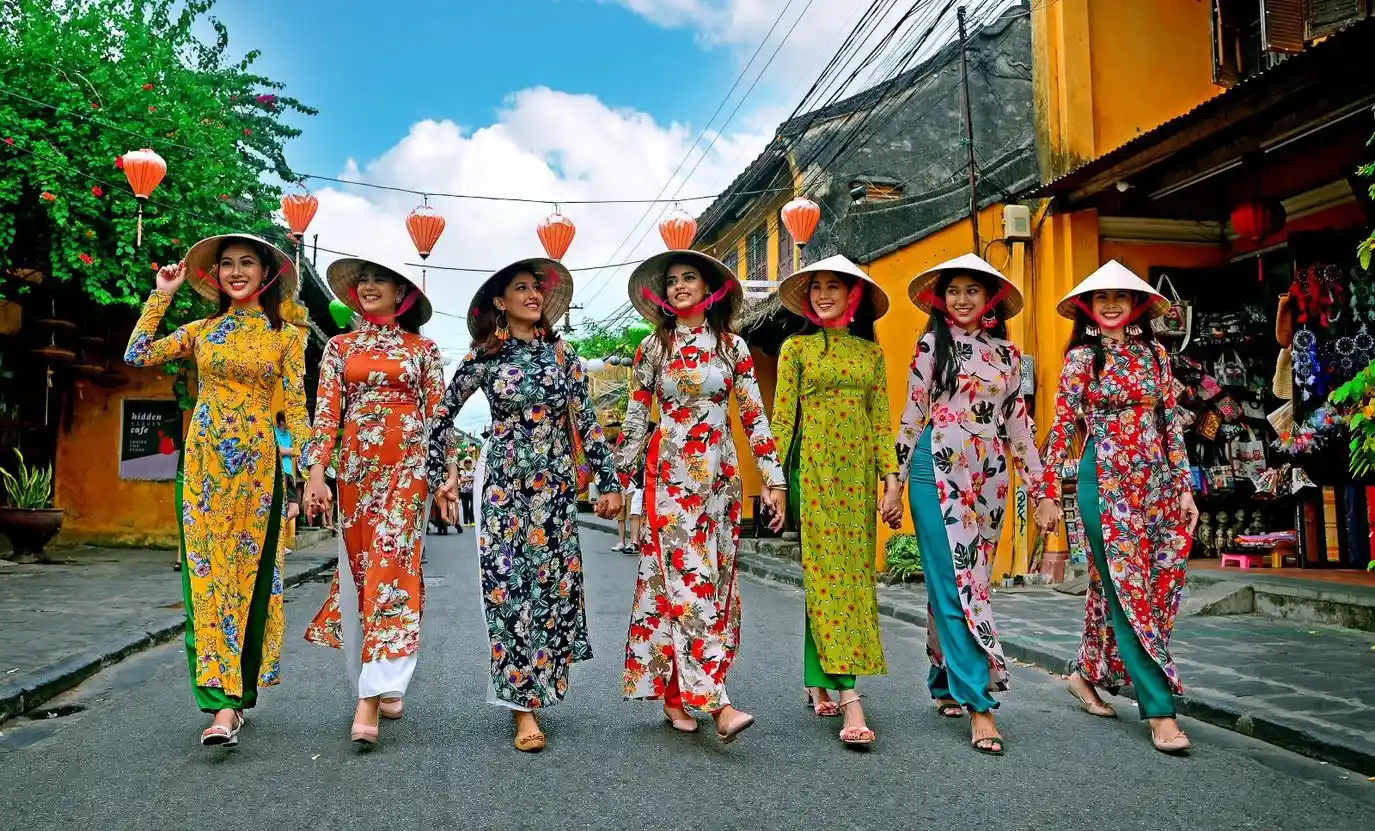
Given Hoi An’s deep connection to silk and textiles, it’s a wonderful place to have a traditional áo dài made, the elegant Vietnamese national dress of a long, fitted tunic over flowing trousers. Because the áo dài is defined by its precise, body-skimming fit, it’s a garment that truly benefits from custom tailoring rather than off-the-rack buying. A few pointers:
- Choose an áo dài specialist. Its distinctive cut requires specific skill, so pick a shop with clear experience and good reviews for it.
- Invest in good silk. Quality “lụa tơ tằm” (pure silk) gives the áo dài its signature graceful drape, and Hoi An’s silk heritage means plenty of beautiful options.
- Allow for fittings. The close fit means one or two fittings are important to get it right, so don’t rush.
- Traditional or modern. Decide between a classic style and a contemporary interpretation; many tailors happily create either.
A custom áo dài from Hoi An is more than clothing; it’s a wearable piece of Vietnamese culture and one of the most treasured souvenirs you can bring home. For more souvenir options besides áo dài, see our guide to Saigon’s souvenirs to bring home.
How Do You Find the Best Tailor in Hoi An?
Quick answer: With hundreds of shops, reviews are your best tool. Check recent reviews on platforms like Google Maps, where customers leave detailed feedback and photos of finished garments. Look for consistency across reviews, prioritise shops that insist on fittings, and be wary of any that promise perfect results overnight with no fittings.
Because Hoi An has so many tailoring shops, choosing well can feel overwhelming, but a careful approach makes it manageable. Reading reviews is one of the easiest ways to understand what other customers actually experienced:
- Use Google Maps. It’s often the first place to check, showing reviews directly when you search for a shop. Many reviewers upload photos of finished garments, giving you a clearer sense of quality. Because reviews are tied to real accounts and locations, it tends to offer a broad, reliable range of feedback.
- Look for patterns. One glowing or terrible review means little; consistent themes across many reviews reveal a shop’s true standard.
- Prioritise fittings. The best tailors insist on fittings. If a shop promises an extremely fast turnaround with no fitting, the final result may be less precise.
- Focus on detailed feedback. Reviews with photos and specific descriptions of the experience are far more useful than vague star ratings.
Taking a little time to research before committing is the single best thing you can do to ensure a happy result.
How Much Time Do You Need for Tailoring in Hoi An?
Quick answer: Allow at least 2 to 3 days. While some shops advertise garments in 24 hours, that leaves no room for fittings and adjustments. A couple of days lets you have measurements taken, attend one or two fittings, and collect a properly finished piece, so build tailoring into the start of your Hoi An stay.
Timing is the factor that most often makes or breaks a tailoring experience. Although Hoi An is famous for fast turnarounds, and some shops will promise a finished garment in a single day, rushing rarely produces the best fit. The sensible approach is to allow at least two to three days: this gives time for your initial consultation and measurements, one or two fittings to refine the garment, and any final adjustments before you collect it.
The practical takeaway is simple: start your tailoring at the very beginning of your time in Hoi An, not the day before you leave. This removes all the stress and gives both you and the tailor room to get it right. If you’re on a tight schedule, communicate that clearly upfront so the shop can plan accordingly.
Hoi An or Saigon: Where Should You Get Tailoring Done?
Quick answer: Both are excellent. Hoi An is the famous tailoring town, with hundreds of shops in a compact, atmospheric setting and a one-stop experience. Saigon offers comparable quality with more fabric variety, big-city convenience, and often better value. If you’re visiting both, Hoi An is the classic choice, but Saigon is just as capable.
Many travellers wonder whether to get their tailoring done in Hoi An or Ho Chi Minh City, and the honest answer is that both deliver great results. Hoi An is the iconic tailoring destination, with an unmatched concentration of shops and a charming, walkable setting that makes the whole experience feel like part of the holiday. Saigon, by contrast, offers the same craftsmanship with greater fabric variety, the convenience of a major city, and frequently better value with less tourist markup. If Hoi An is on your itinerary, it’s a wonderful place to do it.
Making the Most of Your Hoi An Tailoring Experience
Tailoring in Hoi An is one of those rare travel experiences that sends you home with something lasting, a garment made just for you, carrying the memory of the lantern-lit town where it was crafted. With a little research, clear communication, and enough time for fittings, you can leave with high-quality, personalised clothing that fits perfectly. And after picking up your custom clothes, there’s still much more of Vietnam waiting to be discovered, from the historic streets of Hoi An to the vibrant energy of Saigon further south.
After your Hoi An adventure, discover Saigon’s hidden corners from the back of a vintage Vespa with our Saigon’s Untold Stories tour.
Frequently Asked Questions
Why is Hoi An famous for tailoring? Hoi An was a major international trading port between the 16th and 19th centuries, where textiles and silk were key goods, so garment-making skills developed and passed down through generations. When tourism boomed in the 1990s, this heritage became the town’s signature industry, with hundreds of tailor shops today.
How much does a tailored suit cost in Hoi An? Prices vary by fabric and complexity, but a custom suit typically runs from around $150 to $400 or more for premium materials. Shirts are much cheaper, often $20 to $50. Fabric quality is the main price driver, and the cheapest quotes often mean lower-grade material or rushed work.
How long does tailoring take in Hoi An? Allow at least 2 to 3 days. While some shops promise garments in 24 hours, that leaves no room for fittings and adjustments. A couple of days lets you have measurements taken, attend one or two fittings, and collect a properly finished piece, so start your tailoring early in your stay.
How do I find the best tailor in Hoi An? With hundreds of shops, reviews are your best tool. Check recent reviews on Google Maps, where customers leave detailed feedback and photos of finished garments. Look for consistent patterns across many reviews, prioritise shops that insist on fittings, and avoid any promising perfect results overnight.
Is Hoi An or Saigon better for tailoring? Both are excellent. Hoi An is the famous, atmospheric tailoring town with hundreds of shops in a compact area, while Saigon offers comparable quality with more fabric variety, big-city convenience, and often better value. The best choice usually depends on which is already part of your itinerary.