 Email: support@vespaagogo.com

Saigon Travel
Can Gio Mangrove: The Definitive Expat Guide to Saigon’s "Green Lungs"
2026-01-19
Living in Ho Chi Minh City is an assault on the senses. For expats craving silence without the hassle of a flight, the answer lies just 40 kilometers southeast: the Can Gio Mangrove.
Far from being just "Monkey Island," this UNESCO World Biosphere Reserve is a complex ecosystem, a former guerrilla stronghold, and a seafood paradise. In this guide, we move beyond superficial reviews to explore Can Gio through three essential pillars:
- The Context: Ecology, History, and Geography.
- The Logistics: The brutal truth about Tours vs. DIY driving.
- The Experience: A step-by-step walkthrough of the attractions and food.
PILLAR 1: THE CONTEXT – ECOLOGY, HISTORY & GEOGRAPHY
Before you book a ticket or start your engine, you need to understand the immense biological and historical weight of the land you are about to step onto. You are not just visiting a park; you are visiting a miracle of recovery.
1.1. The "Ecocide" and The Resurrection
When you enter Can Gio today, you are surrounded by an endless ocean of green. It looks prehistoric, untouched, and eternal. But this is an illusion. Fifty years ago, this place was a graveyard.
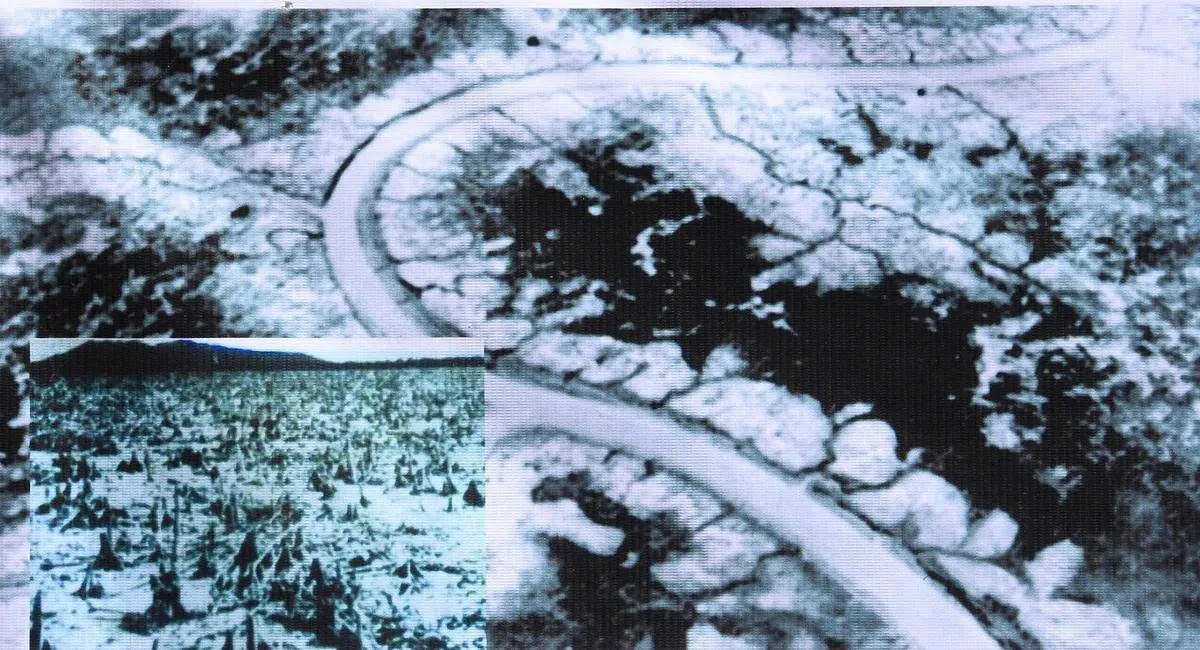
The War Years: During the Vietnam War (locally known as the American War), this region was the stage for one of the most devastating environmental destructions in military history. The dense mangroves provided perfect cover for the Rung Sac Special Task Force - Viet Cong water commandos who attacked ships navigating the Long Tau River to supply Saigon. To strip away this cover, the US military launched Operation Ranch Hand. Between 1966 and 1970, millions of gallons of herbicides, primarily Agent Orange, were sprayed over Can Gio. The result was "Ecocide." Over 57% of the mangrove forest was completely wiped out. By 1975, Can Gio was a moonscape - a barren wasteland of cracked, sun-baked mud where nothing could grow, and the silence was absolute.
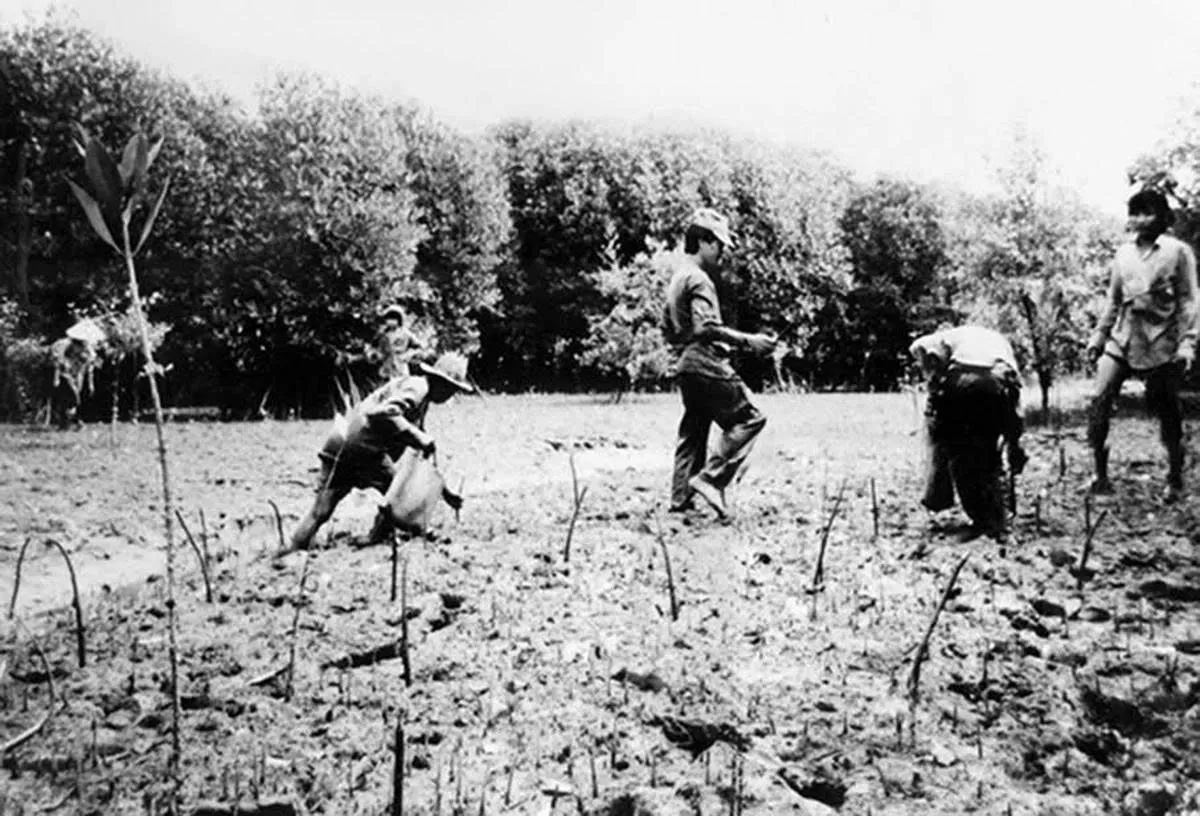
The Human Miracle: What you see now is arguably the world’s greatest mangrove rehabilitation success story. Starting in 1978, local Vietnamese people - often working barefoot in toxic mud up to their waists - replanted the forest by hand, tree by tree. In 2000, UNESCO recognized this miracle by designating Can Gio as Vietnam’s first World Biosphere Reserve.
1.2. Why It Matters: Lungs and Kidneys
The reserve covers 75,740 hectares, dominating the estuary where the Saigon, Dong Nai, and Vam Co rivers meet the East Sea. For an expat living in District 7 or Thao Dien, Can Gio is your life support system.
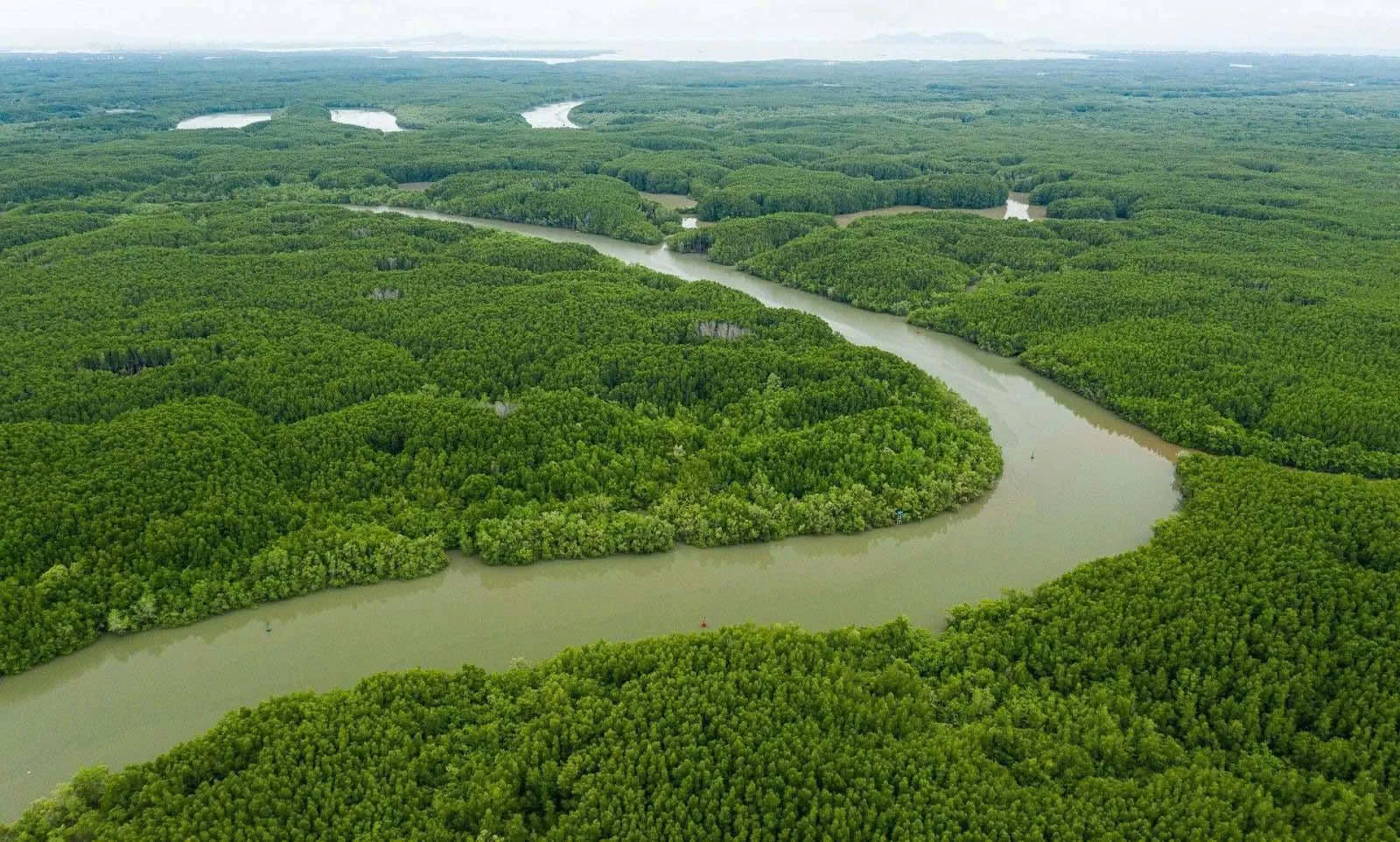
- The green lungs: the sheer density of the biomass here absorbs tons of carbon dioxide daily and releases fresh oxygen back toward the smoggy metropolis.
- The city’s kidney: this is the most crucial function. As the river water - laden with heavy metals, sediment, and pollution from the industrial zones of Binh Duong and Dong Nai - flows toward the sea, the mangrove root systems act as a massive natural filter. They trap sediments and break down pollutants, ensuring the water discharging into the East Sea is cleaner.
1.3. Flora Identification Guide
As you travel through, you will see two dominant tree types fighting for space in the brackish water. Knowing the difference changes how you see the landscape:
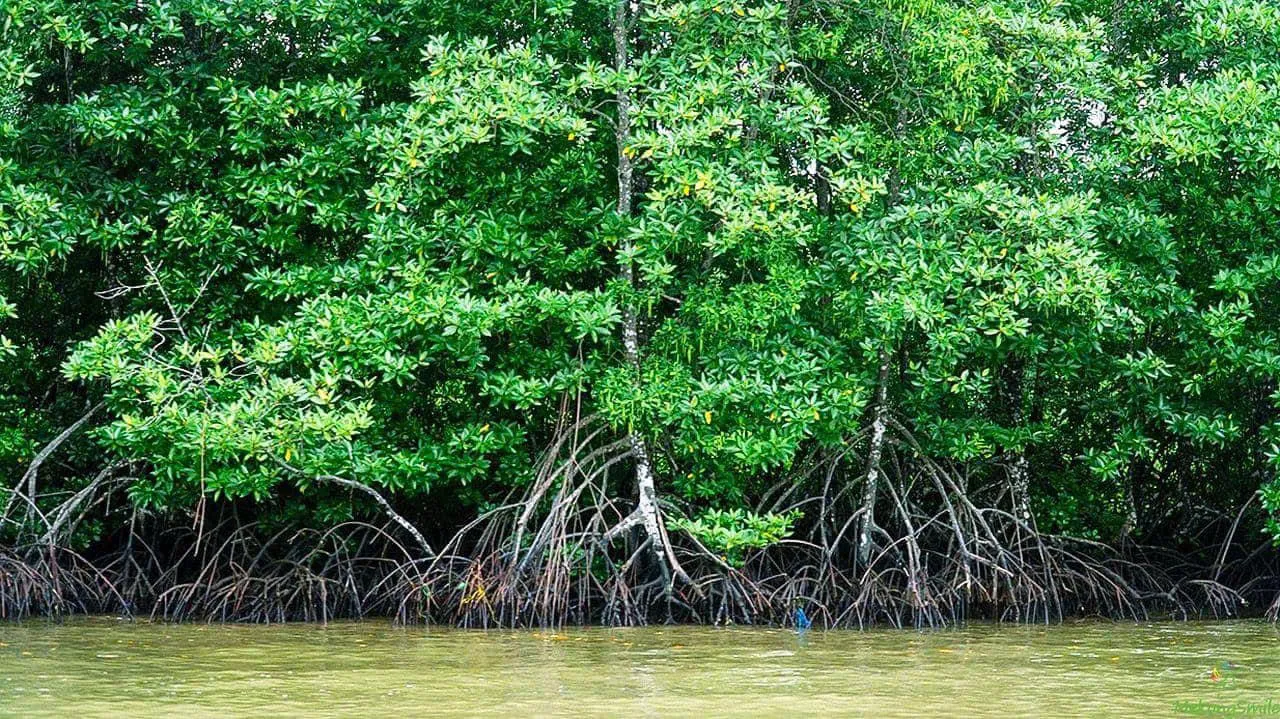
1. The Rhizophora (Cây Đước): these are the "Engineers." They are recognizable by their famous stilt roots that look like wooden cages arching into the water. These roots trap sediment and stabilize the riverbanks, preventing erosion.
2. The Avicennia (Cây Mắm): these are the "Pioneers." They have pneumatophores (breathing roots) that spike up vertically from the mud like thousands of little spears. They grow furthest out into the sea, reclaiming land inch by inch.
1.4. Geography: Dispelling the Mekong Myth
There is a persistent confusion among expats: "Is Can Gio in the Mekong Delta?" Ecologically, yes. Administratively, absolutely not.
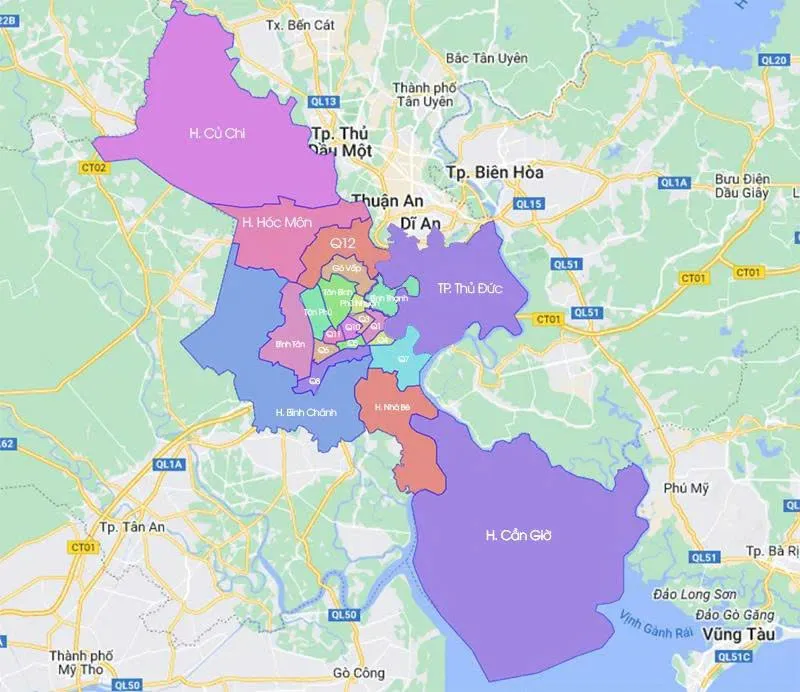
Can Gio is a district of Ho Chi Minh City. It is the city's only outlet to the sea.
- The isolation: despite being part of the city, it is an island district. It is separated from the mainland (Nha Be District) by the Soai Rap River and from Vung Tau by the Ganh Rai Bay.
- The connection: there is currently NO BRIDGE connecting Saigon to Can Gio (The Can Gio Bridge is a planned mega-project). This means the Binh Khanh Ferry is the umbilical cord connecting this nature reserve to the urban sprawl. This separation is exactly what has preserved its tranquility.
PILLAR 2: THE LOGISTICS – THE GREAT DEBATE (TOUR VS. DIY)
This is where most expats get stuck. Do you pay for convenience to avoid the heat, or do you risk the road for the sake of freedom? Let's break this down with brutal honesty using updated 2025 market data.
2.1. The Tour Route: A Detailed Comparison of Operators
Booking a tour removes the stress of logistics, but the quality varies wildly. Here is the deep-dive comparison of the three main tiers.
Option A: The Luxury River Route (Les Rives / Saigon River Express)
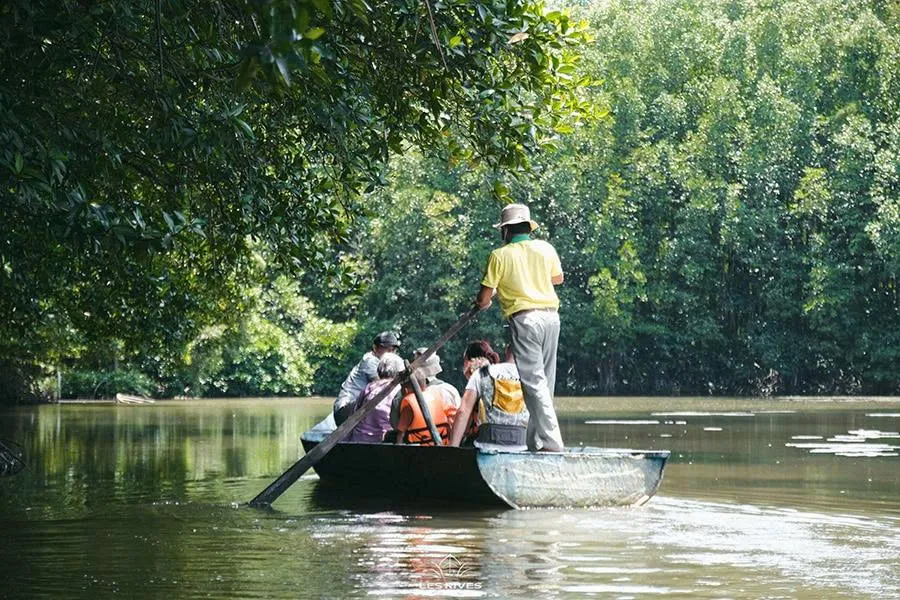
- The concept: you travel by high-speed canoe departing from Bach Dang Wharf (District 1).
- The experience: this is the "Gold Standard." The psychological effect of leaving the city by water is profound. You watch the skyscrapers of Vinhome Central Park fade into nipa palms. You skip the dust and traffic entirely.
- The exclusive edge: these tours typically include a sampan rowboat trip to the Giant Bat Lagoon (Đầm Dơi). This is a quiet, magical area inside the Vam Sat core zone. Most cheap bus tours skip this because it is expensive and time-consuming.
- The price tag: ~2,600,000 - 2,900,000 VND ($110 - $120 USD).
- Verdict: if you have the budget, or if you have guests visiting from overseas, this is the only way to go.
Option B: The Standard Bus Route (TNK Travel / Kim Travel)
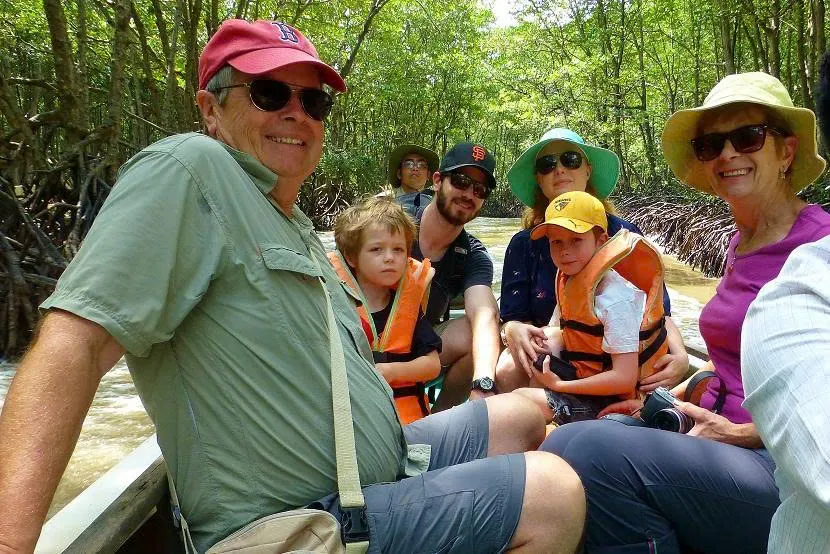
- The concept: pickup in the Backpacker District (Pham Ngu Lao) by AC minivan.
- The reality: you will sit in traffic on Huynh Tan Phat street until you pass the ferry. The drive takes about 1.5 - 2 hours each way.
- The value: the guides here are usually veterans of the route. They do an excellent job explaining the Rung Sac Guerrilla Base history, which is crucial because the museum signage is often poor in English.
- The price tag: ~950,000 - 1,100,000 VND ($40 - $45 USD).
- Verdict: the "safe bet" for solo travelers or families watching the budget.
Option C: the Budget Route (The Sinh Tourist)
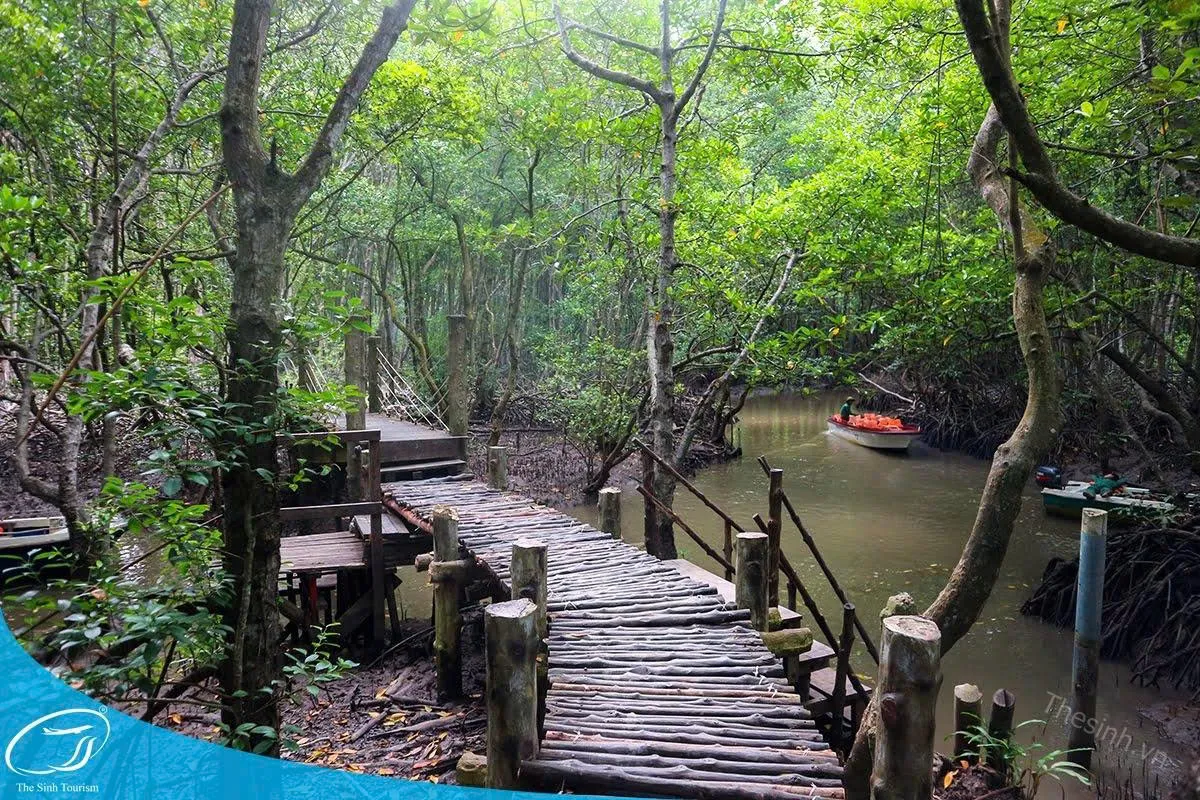
- The concept: large 29-45 seater bus. Mass tourism.
- The reality: expect a herd mentality. You move fast. You eat a basic lunch. It is efficient, but it lacks soul. The large buses often cannot enter the narrow paths, meaning more walking in the heat.
- The price tag: ~750,000 - 850,000 VND ($30 - $35 USD).
- Verdict: only choose this if cost is your sole priority.
2.2. The DIY Motorbike Route: The "Survival" Guide
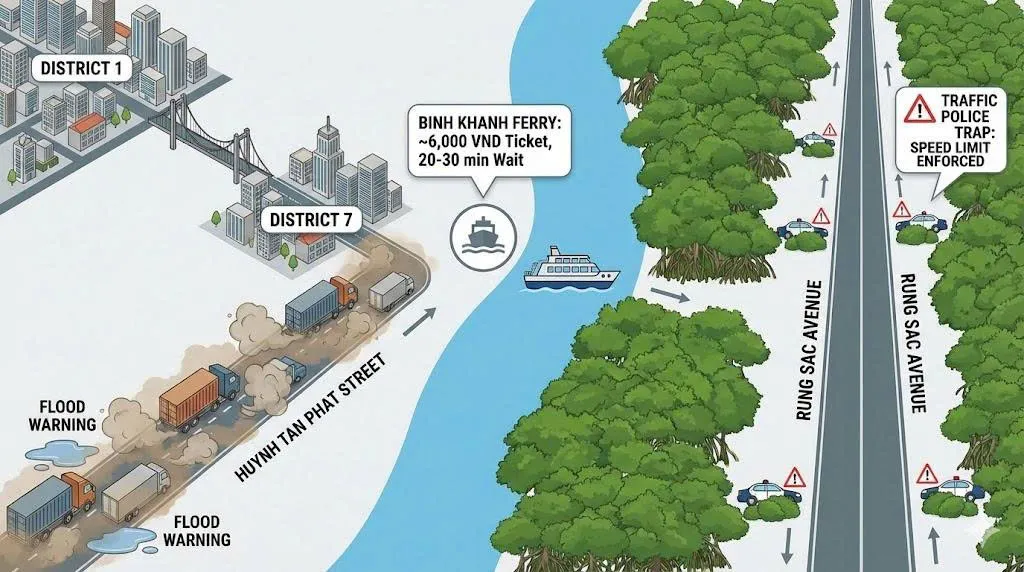
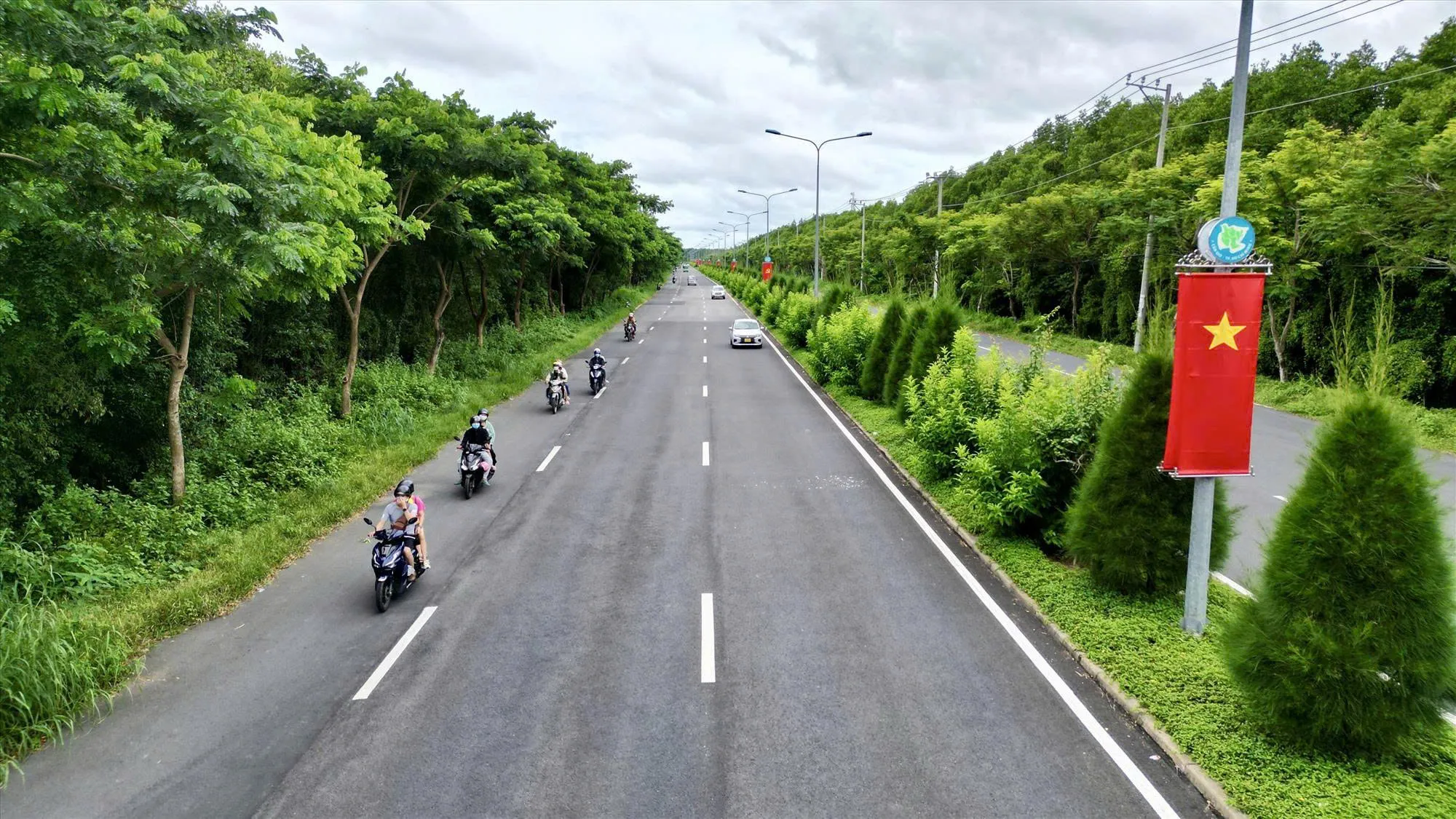
Driving yourself offers freedom, but Rung Sac Avenue is not a normal road. It is a 40km stretch of highway cutting through a jungle, and it is heavily policed.
The Route Blueprint:
1. D1 to Ferry: Cross Tan Thuan Bridge to District 7. Take Huynh Tan Phat Street.
- Warning: Huynh Tan Phat is notorious for dust, container trucks, and massive flooding during high tide. Check the tide forecast. Wear a mask and protective glasses.
2. The Ferry: Binh Khanh Ferry runs 24/7. The ticket is ~6,000 VND. Prepare small changes. Waiting times can be 20-30 minutes on weekends.
3. The Jungle Highway: Once off the ferry, you hit Rung Sac Road.
CRITICAL WARNING: THE TRAFFIC POLICE (CSGT) TRAP
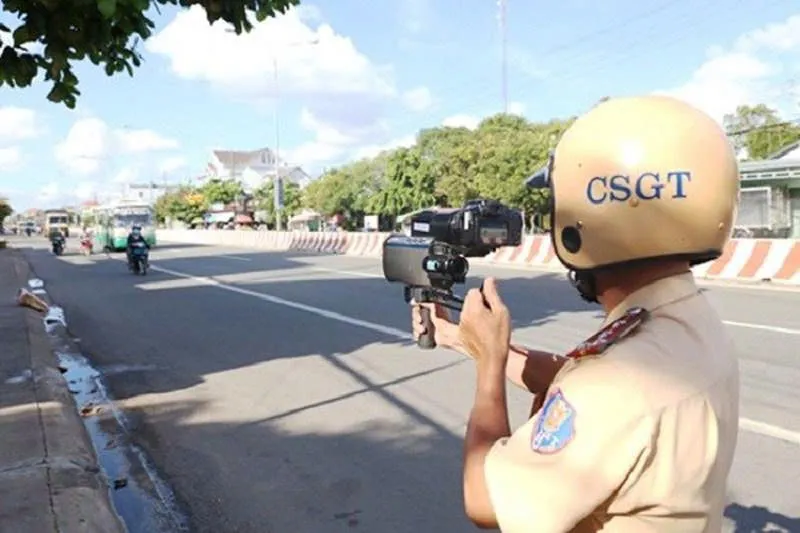
This is the most important paragraph in this guide for riders. The Can Gio road is famous among expats as a "speed trap."
- The tactic: police set up mobile speed traps. One officer hides in the bushes with a speed gun (often near the bridges); 2km later, a team pulls you over.
- The target: they specifically target foreigners. They know many expats drive without a valid Vietnamese Driving License (Note: International Driving Permits - IDP are often rejected if not the 1968 Vienna Convention version or accompanied by a notarized local translation).
- The speed limit: it is NOT consistent. It shifts from 60km/h to 50km/h and sometimes 40km/h near intersections.
- The consequence: if caught without a license, your bike can be impounded for 7 days.
- The defense:
- Drive exactly at the speed limit.
- Keep your headlights ON (Mandatory for motorbikes on highways/suburban roads).
- Use your indicator (blinker) for every lane change.
- Wear a helmet properly strapped.
PILLAR 3: THE EXPERIENCE – DEEP DIVE INTO ATTRACTIONS & FOOD
You’ve arrived. Now, what do you actually do? Here is the detailed breakdown of the experience, moving beyond the surface level to the textures, smells, and sights.
3.1. Vam Sat Ecopark: The Heart of the Biosphere
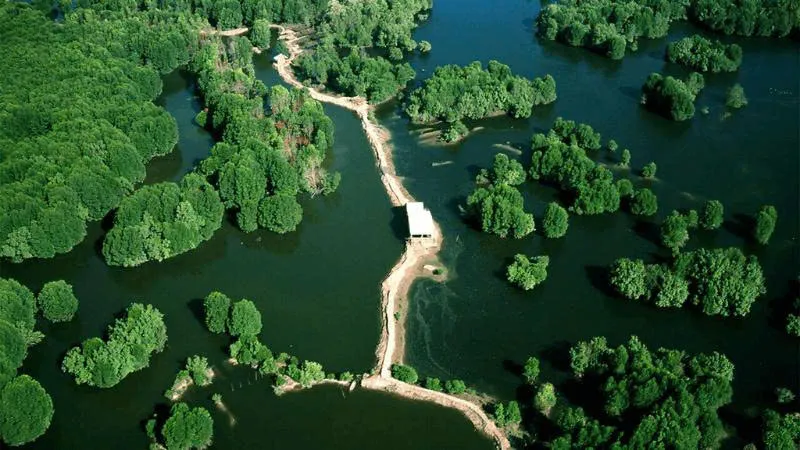
Note: This requires a separate 15km detour from the main road or a boat trip.
This is where the "Biosphere" title makes sense. Unlike the main road, this area feels wild.
- The Tang Bong Tower: standing in the center of the park is a 26-meter tower. The climb is a workout in the humidity, but the view is essential. From the top, you realize the scale of Can Gio. It isn't just a park; it’s a green ocean stretching to the horizon, broken only by winding brown rivers.
- The Bird Sanctuary (Sân Chim): if you visit between April and October, you are in for a spectacle. This is the breeding season. Walk up the bamboo paths. You will see thousands of storks, herons, and cranes covering the treetops like white blossoms. The noise of the fledglings begging for food is deafening and incredible.
- The Crocodile Boat: unlike the silly "fishing" game at Monkey Island, here you can take a caged boat into the crocodile swamp. Seeing a 3-meter saltwater crocodile lunge at the boat cage is a primal thrill.
3.2. The Rung Sac Guerrilla Base: Life in the Swamp
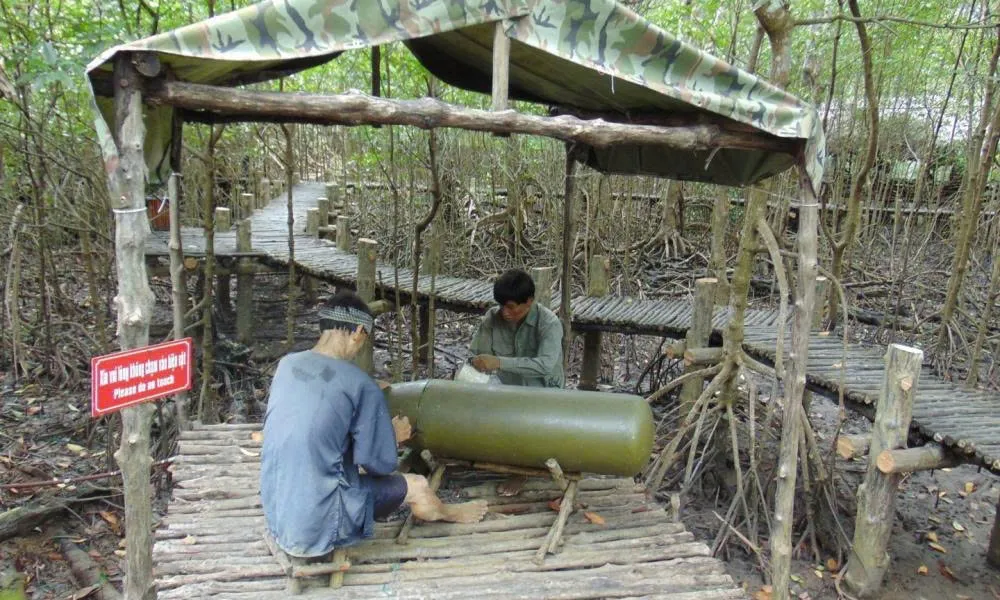
Located within the Monkey Island complex, accessible by canoe (included in most tours) or a wooden walkway.
- The Atmosphere: as the canoe weaves through the narrow canals, notice the root systems. This was the exact view American patrol boats had 50 years ago, scanning for an invisible enemy.
- The Exhibits: the reconstructed base is haunting. Lifelike statues depict soldiers living submerged in water for days to avoid detection, performing surgeries in muddy water, and fighting off crocodiles with knives.
- The Hoang Cam Stove: look for the exhibits of the "Hoang Cam Stove." This was a system of underground trenches used to channel smoke into the earth, cooling it and dispersing it so it wouldn't rise and reveal their position to American bombers. Standing there, surrounded by mosquitoes, you gain a profound respect for human endurance.
3.3. Monkey Island: A Warning, Not a Recommendation
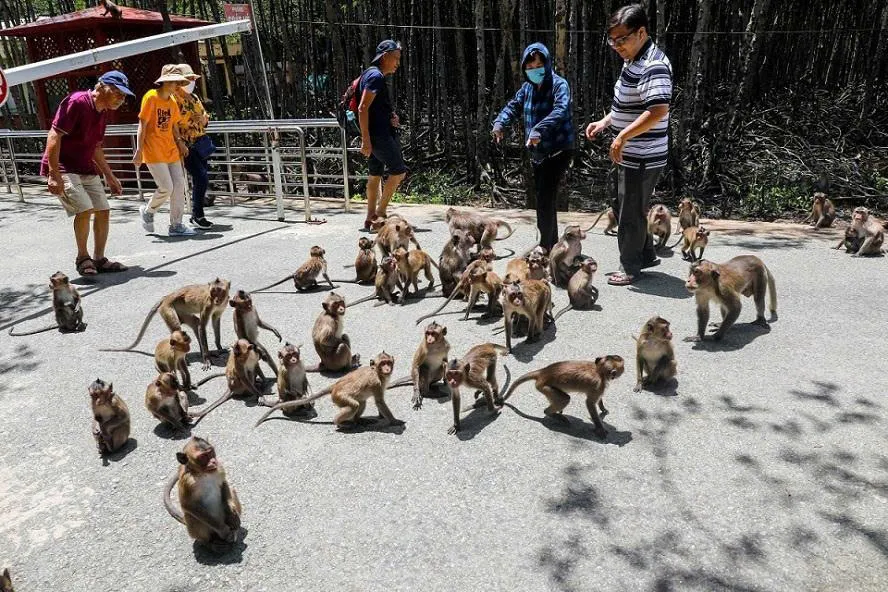
I will be blunt: The monkeys here (Long-tailed Macaques) are aggressive. They have lost their fear of humans and associate us with food.
- The Scenario: you walk in. A monkey spots a water bottle in your hand. It hisses. You freeze. Another one jumps on your backpack from a tree.
- The Strategy: treat this like a security zone.
- NO food or drinks visible.
- NO loose sunglasses or hats.
- NO touching them.
- Keep your backpack on your chest (front-carry).
- If they jump on you, keep walking calmly. Do not scream. They are looking for food, not a fight.
3.4. Hang Duong Market: The Seafood Pilgrimage
For many Saigonese, this market is the only reason to visit Can Gio. It is located at the very end of Rung Sac Road, near the beach in Can Thanh Town.
The Insider's Guide to Buying Seafood:
- The entry: ignore the dry seafood stalls at the front. Walk deep into the market until the floor becomes wet. Look for the ladies with plastic basins on the ground.
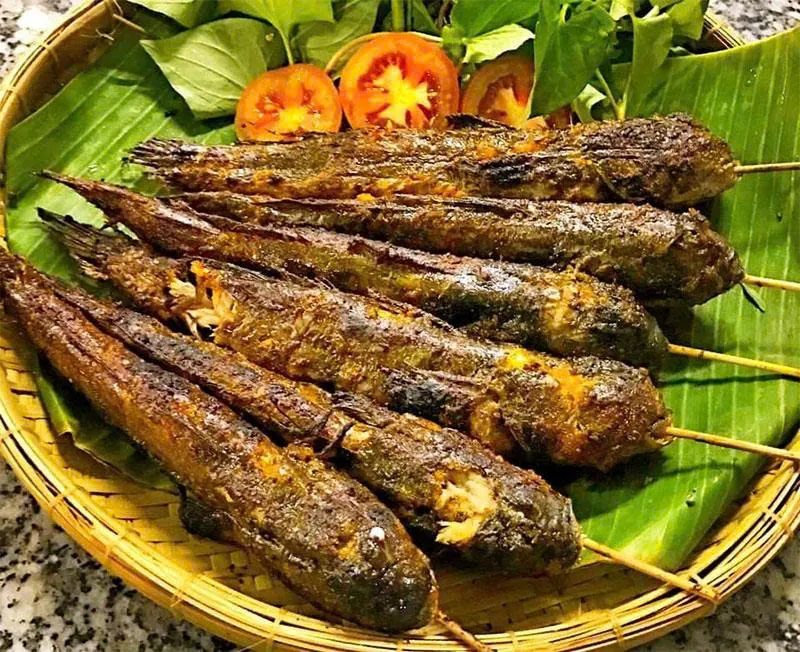
- The mudskipper (cá thòi lòi): you will see a fish with bug eyes trying to crawl out of the bucket. This is the specialty. It lives in the mud and breathes air.
- Order it: "Nướng muối ớt" (Grilled with salt and chili). The meat is white, firm like chicken, and smokey.
- The Oyster (Hàu): Can Gio is the oyster capital of the South.
- Order it: "Nướng mỡ hành" (Grilled with scallion oil, peanuts, and fried shallots). Or simply buy a kilogram of raw meat to take home.
- The cooking station: you don't take the raw food home. You hand it to the "Cooking Station" rows behind the seller.
- The fee: they charge about 30,000 - 50,000 VND per kg to grill or steam it right there.
- The feast: take your steaming styrofoam box to the beach wall or rent a canvas chair. Sit, peel shrimp, drink a cold beer, and look out at the brown water of the silt-heavy ocean. It’s not a white sand paradise, but it feels authentically Vietnamese.
CONCLUSION & FINAL CHECKLIST
If you are looking for turquoise water and white sand, Can Gio will disappoint you. Go to Phu Quoc or Con Dao.
But if you are looking for a deeper understanding of Vietnam - its war scars, its ecological resilience, and its raw, muddy beauty - then Can Gio is essential. It is the perfect antidote to the concrete jungle of Saigon. It offers a space where you can disconnect, breathe clean air, and eat some of the freshest seafood in the country.
The Smart Expat’s Checklist:
- Mosquito repellent: high DEET concentration. The swamp mosquitoes are as aggressive as Remos.
- Cash: bring 2-3 million VND. ATMs are rare inside the forest and the market is cash-only.
- Raincoat/poncho: The weather changes fast in the mangrove.
- Valid license: if driving, ensure you have your Vietnamese license to avoid the police trap.
- Patience: whether it's for the ferry or the slow service at the market, slow down. You're on "island time" now.
Other tips
- Tailored Tour District 3 Ho Chi Minh
- Tailored Tour District 1 Ho Chi Minh
- New Ward Ho Chi Minh City
- Ultimate Guide to Every Hidden Gem in Ho Chi Minh City
- International Women's Day Vietnam 2026
- Best Beaches Near Ho Chi Minh City: Distances, Transport & Where to Stay
- Lunar New Year in Ho Chi Minh: What Tourists Need to Know Before Tet 2026
- Saigon During Tet
- Valentine in Vietnam 2026
- Best Travel Agency in Ho Chi Minh City Vietnam
- Can Gio Mangrove: The Definitive Expat Guide to Saigon’s "Green Lungs"
