 Email: support@vespaagogo.com

Scooter Life
Traffic in Ho Chi Minh City: A Survival Guide to Saigon Traffic (2025)
2025-12-19
For most first-time visitors, traffic in Ho Chi Minh City is the moment Vietnam truly hits you. Before the food, before the culture, before the heat - it’s the sound of horns, the blur of motorbikes, and the realization that the street in front of you does not “pause” to let you cross.
This guide is not here to romanticize chaos or brush off real concerns. It is designed to explain how Saigon traffic actually works, how bad traffic in Vietnam really is, how to cross the street in Saigon safely, and which traffic laws in Vietnam genuinely matter for travelers - especially those who plan to walk, use Grab, or consider renting a motorbike.
How bad is traffic in Vietnam, really?
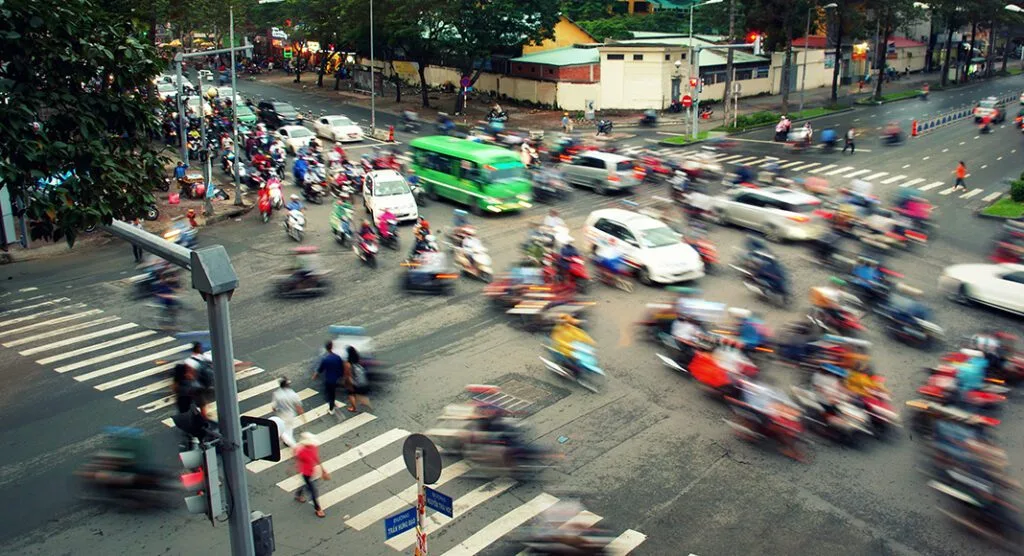
This is the question most travelers quietly Google at night: how bad is traffic in Vietnam?
The honest answer is this:
Traffic in Vietnam is dense, relentless, and mentally exhausting, but it is not as randomly violent as it appears at first glance - particularly in major city centers like Ho Chi Minh City.
What makes traffic feel “bad” is not speed. In fact, inner-city traffic often moves slowly. The stress comes from volume and proximity. Vehicles pass extremely close. Horns are constant. There is no obvious personal buffer zone. For visitors used to wide lanes and enforced pedestrian priority, this can feel overwhelming.
However, perception and risk are not the same thing.
Traffic feels worse than it often is because:
- Roads are rarely empty
- Lanes are flexible rather than fixed
- Pedestrians are expected to negotiate movement, not wait for silence
- You cannot mentally disengage while walking
In reality:
- Most inner-city traffic moves at relatively low speeds
- Drivers anticipate unpredictable behavior and adjust continuously
- Serious accidents are more common at higher speeds or on highways than in dense pedestrian areas
For travelers, one of the biggest stress factors is time distortion. A short distance can feel long because:
- Crossing streets requires full attention
- Sidewalks are inconsistent
- You are constantly scanning your surroundings
Weather makes this worse. When it rains:
- Visibility drops quickly
- Roads become slick
- Motorbikes cluster closer together
- Congestion intensifies almost immediately
So, how bad is traffic in Vietnam?
It is loud, crowded, and cognitively demanding - but it follows an internal logic. Once you understand that logic, it becomes manageable.
Understanding Saigon traffic: why it looks chaotic but still works
To survive Saigon traffic, you need to let go of one assumption common in Western cities: that traffic is primarily rule-based.
In Ho Chi Minh City, traffic is relationship-based and flow-based.
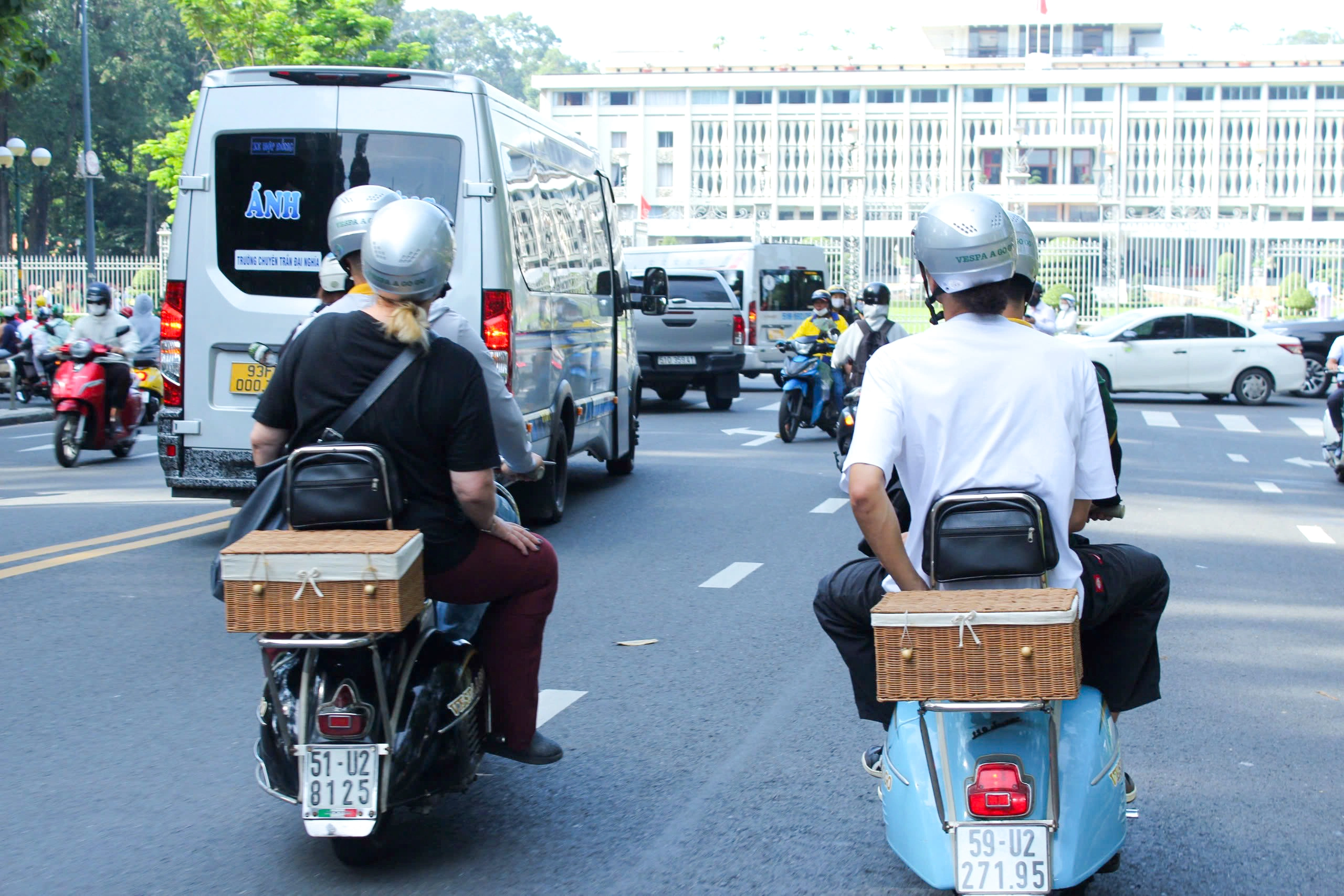
Motorbikes shape everything
Motorbikes dominate the streets. Their size, flexibility, and acceleration define how space is shared.
As a result:
- Lanes are suggestions, not strict boundaries
- Gaps open and close constantly
- Vehicles negotiate space moment by moment
Drivers expect movement, not stillness. They are scanning for intent, not legality.
Why horns never stop
Horns are part of the communication system. They usually mean:
- “I’m approaching”
- “I’m passing through”
- “Be aware of me”
They are not usually aggressive. Silence, not noise, is what makes drivers uneasy.
Why stopping suddenly is risky
Sudden stops - whether by vehicles or pedestrians - break the flow. Other road users have already predicted your path. When that prediction fails, risk increases.
This is why confidence alone does not help. Predictability does.
How to cross the street in Saigon (without panicking)
Learning how to cross the street in Saigon is the single most important skill for visitors in Ho Chi Minh City.
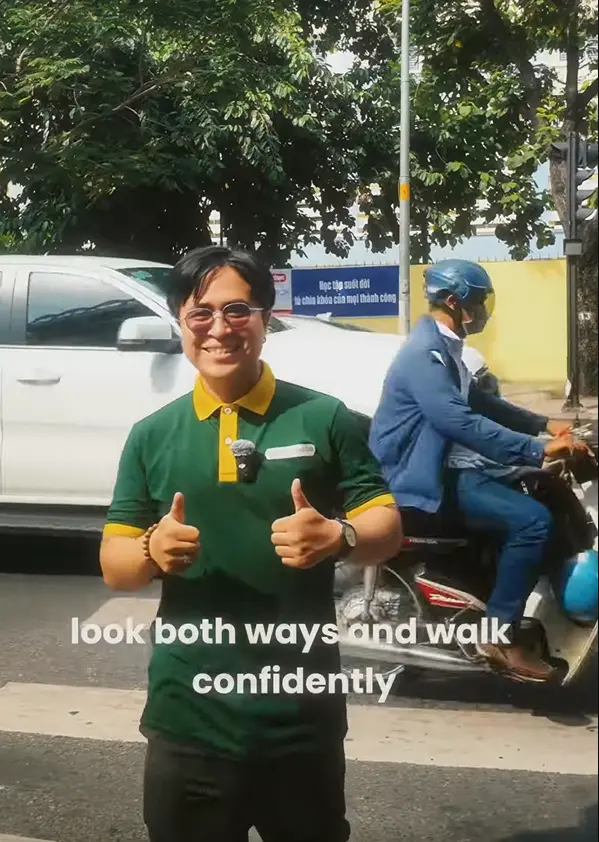
Many guides oversimplify this with “walk slowly and don’t stop.” That advice is incomplete. Safe crossing depends on context.
The core principle
Your job is not to stop traffic. Your job is to be readable.
Drivers will move around you if they understand what you are about to do.
Understand the traffic hierarchy
Different vehicles behave very differently:
- Motorbikes: adaptive, most forgiving
- Cars: slower reactions, need larger gaps
- Buses and trucks: least flexible, highest risk
Crossing in a motorbike-dominated street is very different from crossing a car-heavy boulevard.
Crossing by street type
Small alleys and residential streets
- Light traffic
- Strong eye contact
- Best place to build confidence
Two-lane streets
- Mostly motorbikes
- Steady walking usually works
- Watch for cars accelerating through gaps
Wide boulevards
- Multiple lanes
- Faster vehicles
- Continuous right turns
On large roads, patience matters. Cross in stages when possible. Use medians if they exist.
Step-by-step crossing logic
Signal intent
Step forward slightly so drivers know you intend to cross.
Commit to movement
Walk forward at a steady pace.
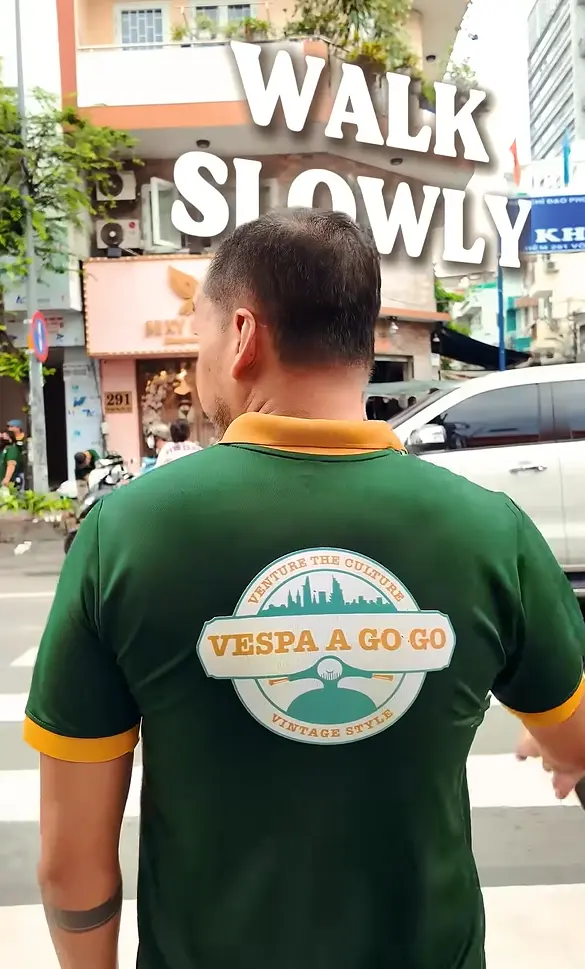
Maintain direction
Do not zigzag, hesitate, or retreat.
Let traffic flow around you
Motorbikes will adjust if your path is predictable.

Never jump backward suddenly
This is one of the most dangerous reflexes for visitors.
Watch the tutorial that we did on Youtube below:
Situations that require extra caution
At night
- Reduced visibility
- Some motorbikes lack strong headlights
- Choose bright, open crossing points
In heavy rain
- Longer braking distances
- Drivers focus on road surface
- Slow down more than usual
With children or elderly travelers
- Avoid peak hours
- Choose streets with medians
- Crossing with a local group can help
When not to cross
Avoid crossing:
- At corners with constant right turns
- Near bus stops or construction zones
- Where parked vehicles block sightlines
Locals sometimes cross in risky places because they understand traffic rhythm. Visitors should not imitate this blindly.
Traffic lights and crosswalks: what they really mean
Traffic lights exist, but they are not absolute barriers.
- Right turns often continue during red lights
- Pedestrian signals do not guarantee vehicles will stop
- Crosswalks provide guidance, not protection
Treat signals as information, not guarantees.
Sidewalk reality in Ho Chi Minh City
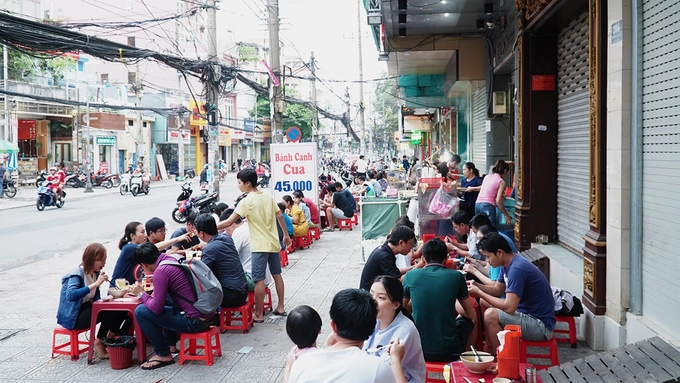
Sidewalks in Ho Chi Minh City are multi-use spaces, not pedestrian-only zones.
You may encounter:
- Parked motorbikes
- Food stalls and café seating
- Delivery vehicles
- Riders bypassing congestion
Why this matters for visitors:
- Walking often requires weaving
- Driveway entrances can be more dangerous than the road itself
- The safest walking line is often closer to buildings
This is not disorder - it is how limited urban space is shared.
Traffic laws in Vietnam: what tourists actually need to know
This section focuses on traffic laws in Vietnam that most affect travelers. It is not a full legal breakdown.
Pedestrians
- Pedestrians are expected to obey signals where present
- Jaywalking laws exist, but enforcement toward pedestrians is inconsistent
- In practice, awareness and predictability matter more than legal right-of-way
Motorbike renters
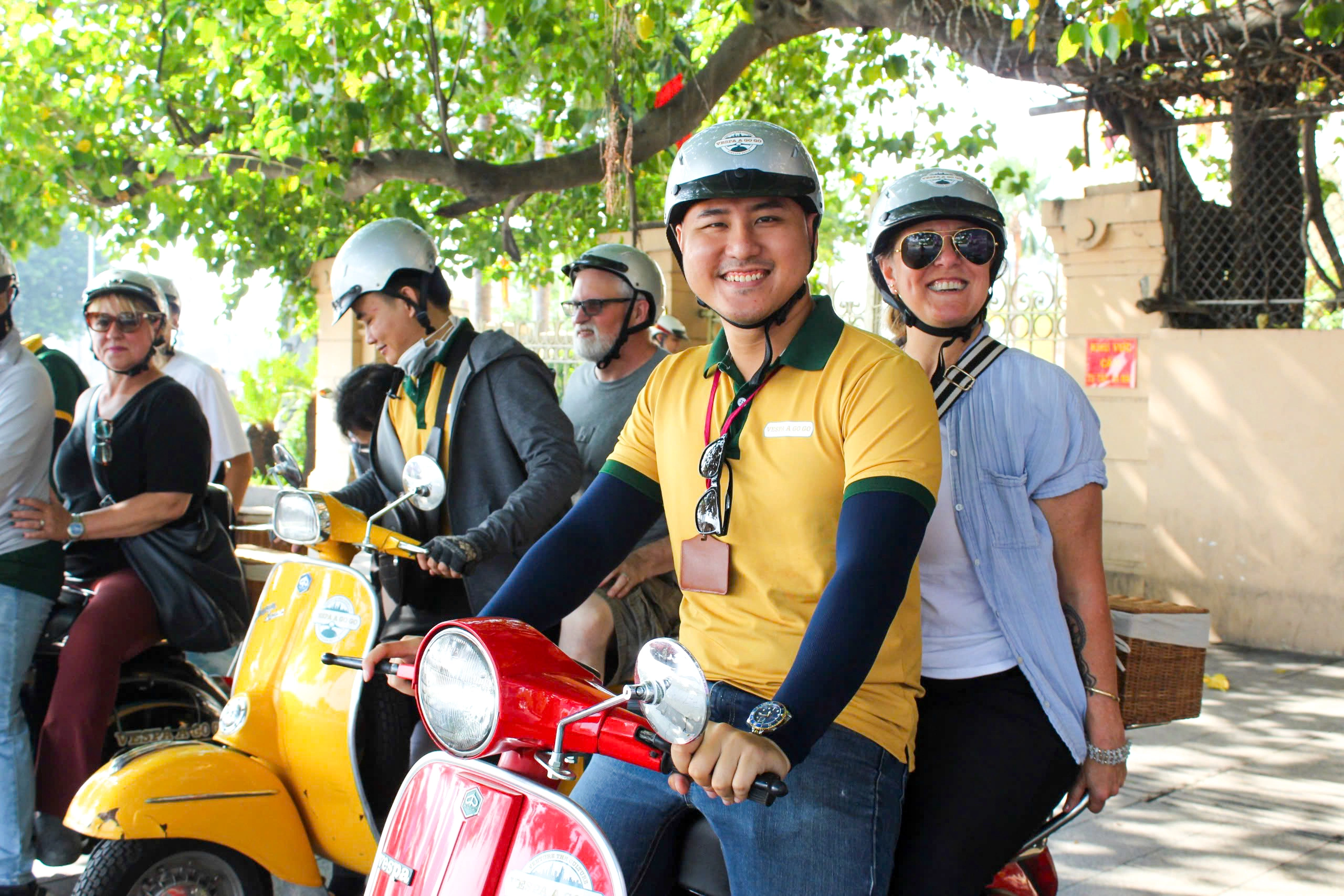
If you are considering renting a motorbike:
- Helmets are mandatory
- A valid license is required
- Many insurance policies require an International Driving Permit
- Alcohol limits are strict, with near-zero tolerance
Vietnam enforces strict drink-driving laws, and as of 01 January 2025, penalties are clearly defined under Decree 168/2024/NĐ-CP.
For motorbike riders, alcohol violations are categorized into three levels:
Level 1
Alcohol concentration up to 50 mg/100 ml of blood or up to 0.25 mg/l of breath
→ Fine: 2 - 3 million VND
→ Penalty: -4 points on driving license
Level 2
Alcohol concentration over 50 mg to 80 mg/100 ml of blood or over 0.25 to 0.4 mg/l of breath
→ Fine: 6- 8 million VND
→ Penalty: -10 points on driving license
Level 3
Alcohol concentration over 80 mg/100 ml of blood or over 0.4 mg/l of breath
→ Fine: 8-10 million VND
→ Penalty: License suspension from 22 to 24 months
In addition to fines, violations can involve license point deductions or suspension, which can seriously affect insurance validity and rental agreements.
For tourists:
If you plan to drink alcohol at all, do not ride a motorbike. Use Grab, taxis, or guided transport instead. Enforcement can vary by district and timing, but penalties are legally defined and non-negotiable.
Police checks
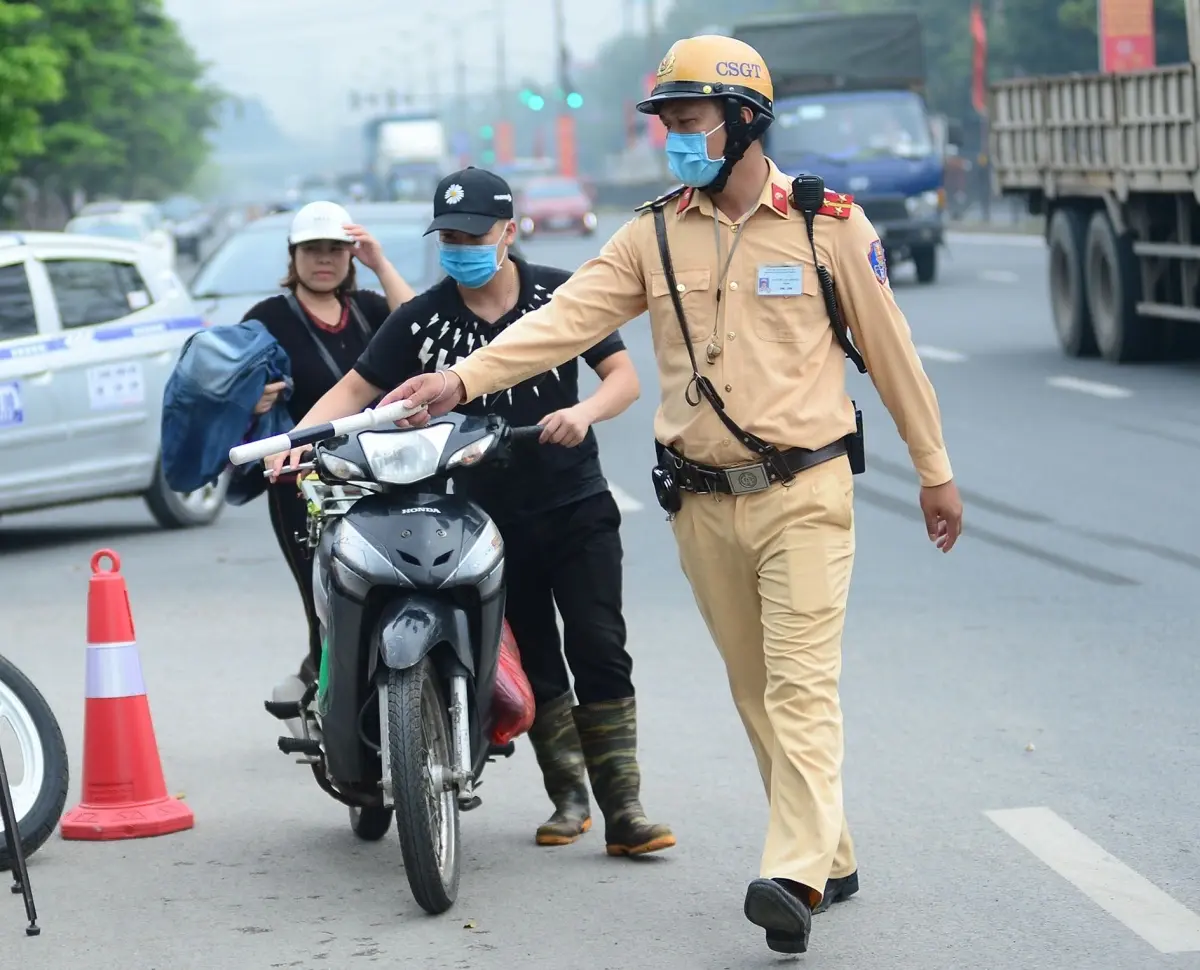
Police may stop drivers to check:
- Helmet use
- License validity
- Registration papers
Penalties vary by district and circumstances.
If you are not comfortable navigating this system, do not rent a motorbike.
So, most tourist will use Grab, taxis, and cars in Saigon traffic
Most visitors rely on ride-hailing.
Practical tips:
- Cross the street before ordering when needed
- Avoid pickup points at busy intersections
- Expect delays during peak hours, even for short distances
Cars are slower in dense areas but more comfortable during rain.
Is Saigon traffic safe for tourists?
For most travelers:
- Walking and ride-hailing are safer than self-driving
- Injury risk is lower than perceived if you stay alert
Anxiety is more common than actual danger
However:
- Traffic punishes distraction
- Children and elderly travelers need extra care
- First-time visitors should avoid riding motorbikes independently
Common mistakes first-time visitors make
- Freezing halfway across the road
- Trusting crosswalks blindly
- Running unpredictably
- Standing too close to curbs
- Underestimating rain and night conditions
Final thoughts: surviving traffic in Ho Chi Minh City
Traffic in Ho Chi Minh City is not something you “beat”. It is something you learn to read.
Once you understand that Saigon traffic is a continuous negotiation of movement, not a strict rule-based system, it becomes less intimidating. You don’t need confidence or bravery - you need patience, awareness, and predictability.
That mindset will carry you across the street and through the city far more safely than panic or overconfidence.
A calmer way to experience Saigon’s traffic

If navigating traffic on your own feels overwhelming, one of the easiest ways to experience the city without stress is to explore it from the back of a vintage Vespa.
Vespa A Go Go offers guided Vespa tours led by experienced local drivers who understand Saigon traffic inside out. Instead of worrying about crossings, lanes, or navigation, you can focus on the city itself - its neighborhoods, food, and stories - while moving through traffic confidently and safely with someone who knows the rhythm of the road.
For many first-time visitors, it’s the most relaxed way to experience Ho Chi Minh City without fighting traffic head-on.

Duy Le - Marketing Manager
I’m Duy Le, the Marketing Manager at Vespa A Go Go, with three years of experience in marketing and storytelling. My passion lies in helping both travelers and Vietnamese people discover the authentic value of our country’s history and culture. I believe Vietnam travel should be more than just sightseeing — it’s a way to truly connect with Vietnam’s heart and spirit. Through my work, I aim to inspire curiosity, respect, and appreciation for the stories that make Vietnam unique. When I’m not crafting campaigns, I love exploring Saigon’s hidden corners on my Vespa, always in search of the next story worth sharing.
Other tips
- Vietnam Scooter & Motorbike Culture: Learning to Ride the Flow (Safely) for the First Time
- Saigon Street Life: A Visual Journey Through Transport in the 1990s
- Traffic in Ho Chi Minh City: A Survival Guide to Saigon Traffic (2025)
- Vintage Vespa: How to Ride, Weight & 2-Stroke Basics
- The History of the Vespa in Vietnam: A Cultural Icon on Two Wheels
- Saigon Motorbike Tour: An Authentic Way to Experience Saigon
