 Email: support@vespaagogo.com

Vietnam Travel
Best eSIM for Vietnam (2026 Guide from a Local Perspective)
2026-02-23

If you’re searching for the best eSIM for Vietnam, you’re probably asking the same questions most travelers do: Can I use eSIM in Vietnam? Should I buy before I land? Is it actually cheaper than a local SIM?
From a local perspective, the answer isn’t just about price. It’s about coverage, reliability in rural areas like Ha Giang, and what happens when you run out of data with no WiFi in sight.
This guide breaks down everything honestly - no fluff, no hype - just what actually works in Vietnam in 2026.
Can I Use eSIM in Vietnam?
Yes, you absolutely can use eSIM in Vietnam.
Vietnam’s three major mobile networks are:
- Viettel (largest coverage nationwide)
- Vinaphone
- Mobifone
All three technically support eSIM technology. However, as a tourist, you usually access these networks through:
- International eSIM providers (Airalo, Saily, GigSky, Holafly, etc.)
- Marketplaces like Gigago
- Or physical SIM cards purchased locally
The key difference isn’t whether eSIM works. It’s which network your eSIM connects to.
If you’re going to cities only (Hanoi, Ho Chi Minh City, Da Nang), most providers work fine.
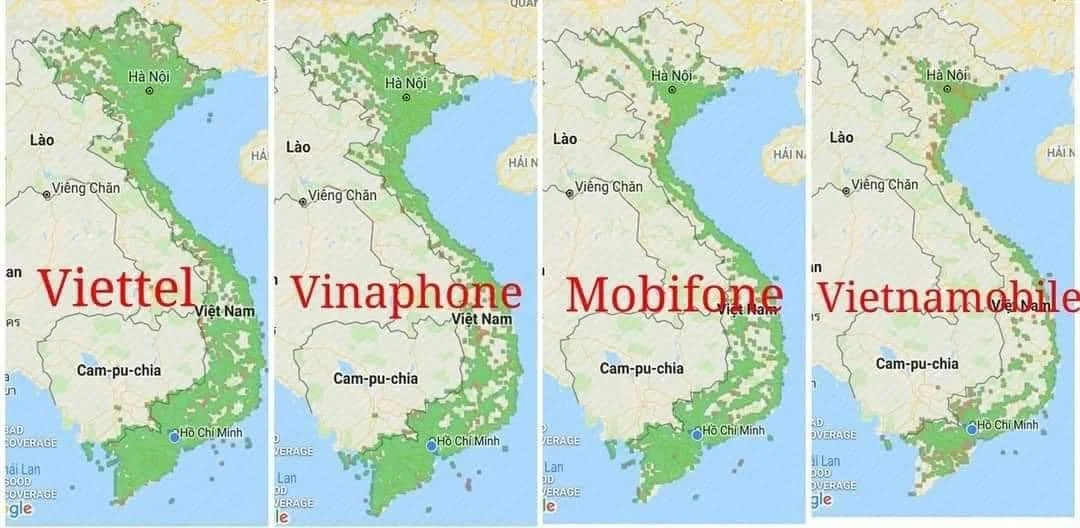
If you’re heading to Ha Giang, Sapa, Phong Nha, or the Mekong countryside - Viettel matters.
Best eSIM for Vietnam: Quick Answer by Travel Style
Here’s the fast breakdown from a local perspective:
|
Type of Traveler |
Best eSIM options |
|
City traveler (5–10 days) |
Airalo, Saily, Orbit Mobile - easy setup, reliable in cities. |
|
Rural explorer (Ha Giang, mountains, remote routes) |
Choose an eSIM that connects to Viettel or buy a Viettel SIM locally. |
|
Digital nomad (30 days) |
Gigago daily 5GB plans or Saily 20GB plan are practical. |
|
Need a local phone number (Grab, OTP, hotel calls) |
Vinaphone or Gigago with number included. |
|
Cheapest option overall |
Orbit Mobile has the lowest cost per GB among international providers. But local Viettel physical SIM is still cheaper. |
Buy eSIM Vietnam Online vs Local SIM Card
Buy eSIM Vietnam Online
Pros:
- Install before you land
- No passport required
- No airport queue
- Instant activation
Cons:
- Usually more expensive than local SIM
- Some are data-only (no phone number)
How to buy eSIM online in Vietnam you may ask?
These steps apply to almost every provider:
1. Choose Vietnam plan and duration (7/15/30 days).
2. Pay online.
3. Receive QR code or install via the provider app.
4. Install eSIM on WiFi.
5. In Vietnam, enable:
- eSIM line ON
- Data roaming ON
- Set eSIM as mobile data
6. Turn off:
- Cellular data switching (prevents accidental roaming charges on your home SIM)
If something doesn’t work, toggling airplane mode on/off often forces a network refresh.
Local SIM at Airport
Yes, you can buy one at:
- Hanoi (Noi Bai)
- Ho Chi Minh City (Tan Son Nhat)
- Da Nang Airport
Expect to pay around 200,000 VND (~8–9 USD) for a solid tourist SIM.
It works well - but:
- Some kiosks inflate prices.
- Some plans are unclear.
- Not all sellers are official.
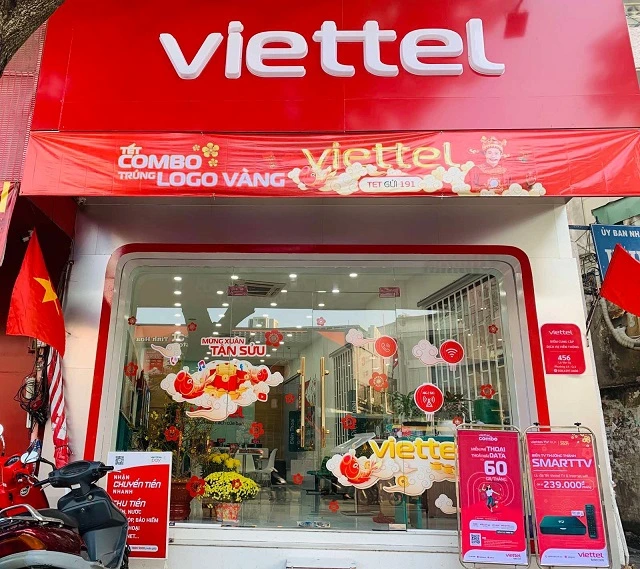
Best practice: Visit an official Viettel store (glass entrance, air-conditioned shop, branded signage) instead of small booths.
Cheapest eSIM for Vietnam - Is It Really Cheaper?
Let’s compare real numbers from current providers.
Orbit Mobile
- 10GB / 30 days – USD 9 (USD 0.90/GB)
- 20GB / 30 days – USD 22 (USD 1.10/GB)
Saily
- 10GB / 30 days – USD 19.99
- 20GB / 30 days – USD 30.99
Airalo (Xin Chao)
- 10GB / 30 days – USD 21
- 20GB / 30 days – USD 32
Holafly
- 7 days unlimited – USD 29
- 30 days unlimited – USD 75
- (Fair Use Policy applies)
Viettel Local Tourist Packages (Physical SIM)
SIM card cost: 50,000 VND
SD120
- 2GB/day for 30 days
- 120,000 VND (~5 USD)
SD150
- 3GB/day for 30 days
- 150,000 VND (~6 USD)
Now you see the difference.
If pure cost matters, local Viettel physical SIM wins.
If convenience matters, online eSIM wins.
For Rural Areas (Ha Giang Reality)

This is where most influencer guides fall short.
In Vietnam:
1. Viettel has the strongest rural coverage
2. Vinaphone is second
3. Mobifone drops first in mountains
If your eSIM connects to Mobifone only, expect weaker signal in:
- Ha Giang Loop
- Sapa outskirts
- Phong Nha countryside
- Mekong Delta villages
If you’re serious about rural travel, check which network your eSIM uses.
If unclear, Viettel is the safest choice.
eSIM If You Need a Phone Number
Most international eSIMs are data-only.
This means:
- No Vietnamese phone number
- No SMS
- No traditional calls
You’ll rely on:
- Telegram
- Messenger
If you need a local number for:
- Grab verification
- Tour operator contact
- Booking confirmations
Then choose:
Vinaphone eSIM
Gigago plan with phone number
Or physical local SIM
What Happens If You Run Out of Data? (Offline Recovery Plan)
This is where local knowledge matters.
If you run out of data and have no WiFi, you can still recover - if you have a Viettel SIM with balance inside.
You must have credit in your SIM to send SMS registration.
Monthly Viettel Plans (30 Days)
SD90 – 90,000 VND
- 1.5GB/day
- 30 days
- Send SMS:: SD90 to 191 or *098*8823#
Cancel auto-renew:
HUY to 191
Cancel package:
HUYDATA to 191
SD150 – 150,000 VND
- 3GB/day
- 30 days
- Send SMS: SD150 to 191
Short-Term Emergency Plans
ST5KM – 5,000 VND
- 1GB
- 1 day
5G10 – 10,000 VND
- 6GB
- 1 day
- SMS: Send 5G10 to 191or *098*5121#
Cancel renewal:
HUY 5G10 to 191
Cancel package:
HUYDATA 5G10 to 191
5G20 – 20,000 VND
- 6GB
- 3 days
This works even when:
- You’re on a mountain bus.
- You’re in a rural village.
- There’s zero WiFi available.
This is something most travelers only learn after they get stuck.
Or Use the My Viettel App
Install My Viettel app.
You can:
- Check balance
- Top up credit
- Buy data packages
However, you’ll need internet or WiFi to log in.
So the SMS method is the real emergency backup.
Best eSIM for Vietnam: Provider-by-Provider Setup
Below are practical setup steps that you can follow even if you’re not techy. I’m keeping them intentionally repetitive - because older audiences do better with consistency.
1. Saily (App-led, beginner-friendly)
What you install: the Saily app.
What you need: email + payment method. Typically no passport requirement for online travel eSIM purchase.
Steps:
- Download the Saily app.
- Buy Vietnam plan inside the app.
- Tap install eSIM (follow prompts).
- Name the line “Vietnam” so you don’t confuse it later.
- In Vietnam: turn data roaming on for that line and select it as mobile data.
Why older travelers like it: fewer QR-code steps, more “guided taps.”
2. Airalo (QR + app support, very common)
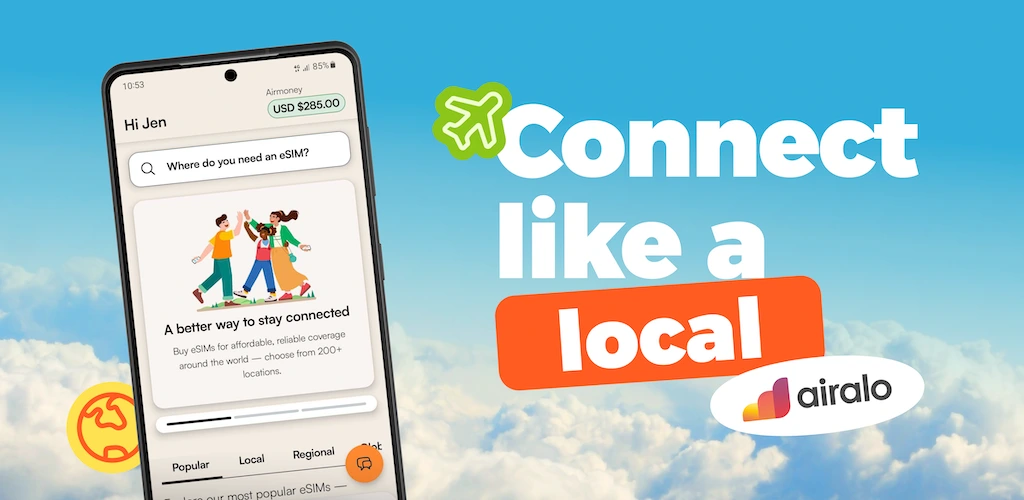
What you install: Airalo app (recommended).
What you need: email + payment. Typically no passport requirement for online eSIM purchase.
Steps:
- Create an Airalo account.
- Buy “Vietnam” plan (Xin Chao in your references).
- Install eSIM using QR code or in-app install.
- In settings: set Airalo eSIM as mobile data.
- Turn on data roaming for the eSIM line.
Local reality: great in cities. In remote areas, your experience depends on which network it connects to.
3. Holafly (Unlimited style, but check hotspot limits)
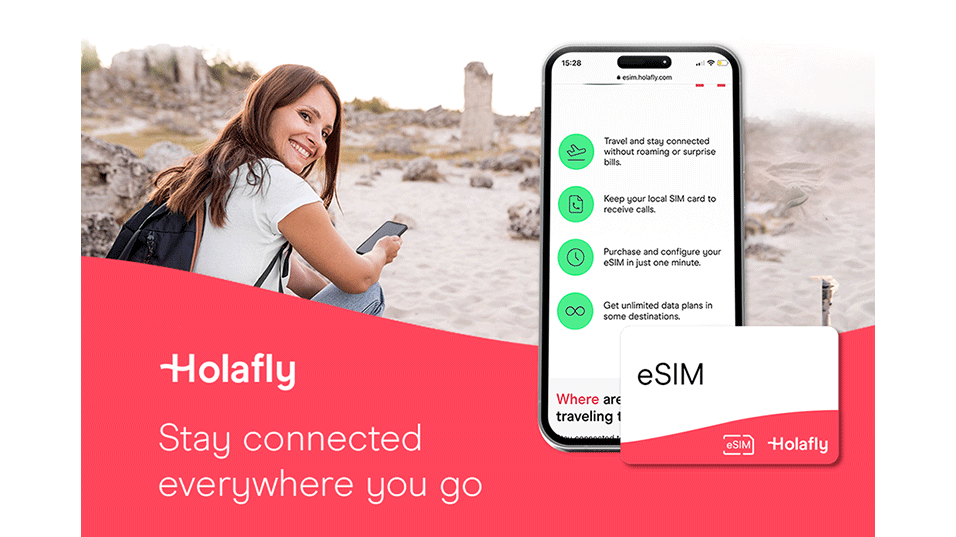
What you install: Holafly app or QR-based install depending on purchase flow.
What you need: email + payment.
Steps:
- Choose number of days (Holafly pricing is per day window in your reference extract).
- Install via QR code.
- Enable data roaming on the eSIM line.
- Use it as mobile data.
Important: your references repeatedly mention hotspot limitations and Fair Use Policy behavior. If you need laptop tethering, verify hotspot support before buying.
4. GigSky (works, but pricier per GB in refs)

What you install: GigSky app (recommended).
What you need: email + payment.
Steps:
- Download GigSky app.
- Choose Vietnam plan from the available list in-app.
- Install and label “Vietnam.”
- In Vietnam: enable data roaming + set as data line.
Who it fits: travelers who prioritize brand stability over cheapest price.
5. Orbit Mobile (best value pricing in refs)
What you install: Orbit Mobile app or QR install (depending on checkout flow).
What you need: email + payment.
Steps:
- Buy Vietnam plan (10GB/30 days and 20GB/30 days are highlighted in your references).
- Install eSIM.
- Enable data roaming and set as mobile data.
Who it fits: anyone chasing cheapest eSIM for Vietnam among international brands.
6. Gigago (local-network selector)
What you install: depends on Gigago’s delivery flow (often QR + instructions).
What you need: email + payment.
Steps:
- Choose Vietnam plan and, if available, choose network (Viettel / Vinaphone / Mobifone).
- Install via QR code.
- In Vietnam: roaming on, eSIM as mobile data.
- If you need a phone number, select a plan that includes it.
Local advantage: network choice matters in Vietnam. Viettel options are gold for rural routes.
7. Toosim (simple alternative)
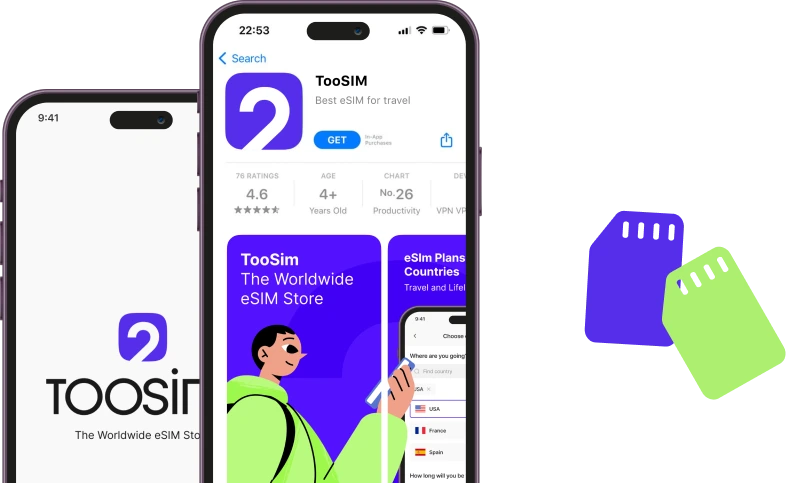
What you install: QR + instructions (exact app flow can vary).
What you need: email + payment.
Steps:
- Buy Vietnam plan.
- Install eSIM via QR.
- Set it as mobile data, enable roaming.
Local note: keep it simple - don’t stack too many eSIM profiles if you’re not comfortable switching.
Best eSIM for Vietnam: “I’m Not Techy” Setup

If you’re buying for parents or older travelers, do this:
1. Buy one plan for the full trip (7–14 days: 10GB is often plenty if you use WiFi at hotels).
2. Install before leaving home (or at departure airport WiFi).
3. Label the line clearly: “VIETNAM DATA”
4. Turn off cellular data switching to avoid accidental roaming costs.
5. Use WiFi for video streaming (YouTube, Netflix) to avoid burning data.
6. Keep WhatsApp/FaceTime for calls; don’t worry about SMS unless you truly need it.
Local tip: if something breaks, don’t panic-buy a second eSIM. Toggle airplane mode and restart the phone first.
What To Do If Your eSIM Doesn’t Work
Try these in order:
1. Confirm data roaming ON (for the eSIM line).
2. Confirm the eSIM is selected as mobile data.
3. Toggle airplane mode ON for 10 seconds, then OFF.
4. Restart phone.
5. If still dead: go to a place with WiFi and check the provider app for:
- plan activation status
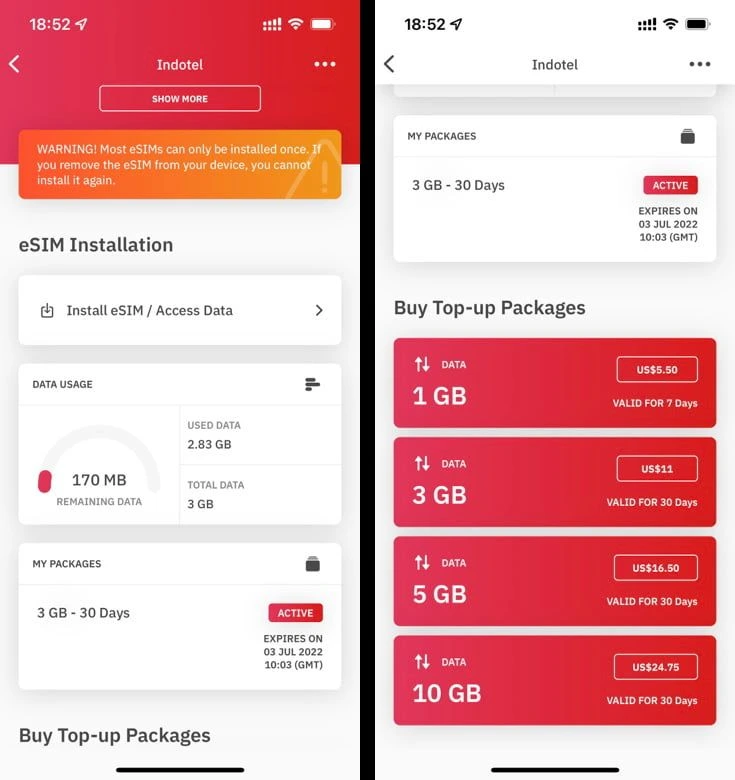
- remaining data
- top-up option
If you’re in the countryside with no WiFi and no time - this is where the Viettel SMS top-up section becomes your safety net.
Final Verdict: The Best eSIM for Vietnam in 2026
From a local perspective:
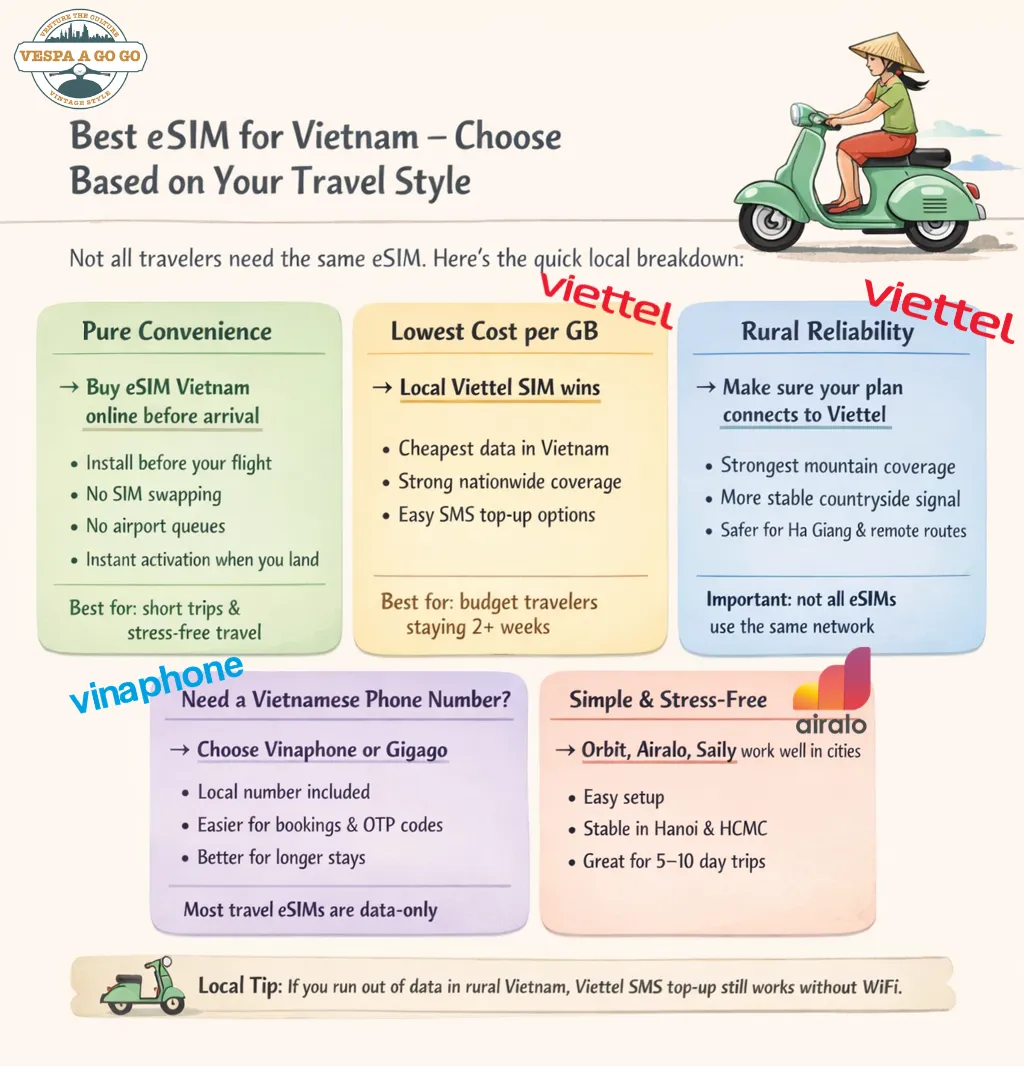
There isn’t one universal best eSIM for Vietnam.
There is only the best option for your travel style.
And now you know the difference.

Duy Le - Marketing Manager
I’m Duy Le, the Marketing Manager at Vespa A Go Go, with three years of experience in marketing and storytelling. My passion lies in helping both travelers and Vietnamese people discover the authentic value of our country’s history and culture. I believe Vietnam travel should be more than just sightseeing — it’s a way to truly connect with Vietnam’s heart and spirit. Through my work, I aim to inspire curiosity, respect, and appreciation for the stories that make Vietnam unique. When I’m not crafting campaigns, I love exploring Saigon’s hidden corners on my Vespa, always in search of the next story worth sharing.
Other tips
- 10 Best Vietnamese Clothing Brands & Local Brands Vietnam
- Beaches Near Hanoi: The Closest Beach Escapes for a Weekend Trip
- Hoi An Tailors: The Complete Insider Guide to Custom Clothes in Vietnam
- Best eSIM for Vietnam (2026 Guide from a Local Perspective)
- Da Nang International Airport Vietnam: A First-Timer Guide to Landing Calmly (DAD)
- Noi Bai International Airport Guide for First-Time Travelers to Vietnam (HAN)
- Traveling Vietnam as a Couple: What to Do, Where to Go, and How It Actually Feels
- Vietnamese Lunar New Year (Tết) 2026
- Vietnamese Mountain Guide
- Best Beaches in Vietnam: How the Coast Actually Works (and How to Choose the Right One)
- 15 Underrated Towns in Vietnam
