 Email: support@vespaagogo.com

Vietnam Travel
Vietnamese Mountain Guide
2026-01-23
Vietnam is a land defined by its dramatic topography, with hills and mountains making up three-quarters of the country’s surface area. A Vietnamese mountain offers more than just scenic views; it offers a journey into the heart of local culture, history, and biodiversity.
This guide divides 15 of Vietnam’s most spectacular peaks into three distinct regions. Whether you are an avid trekker, a cloud-hunter, or a culture enthusiast, there is a mountain in Vietnam waiting for you.
1. Northern Vietnam: The Cloud Hunters' Paradise
The northern region boasts the most spectacular and highest peaks in Vietnam. This is the domain of dramatic cliffs, sub-tropical forests, and the famous "cloud-hunting" culture.
1. Fansipan Mountain (Sapa, Lao Cai)
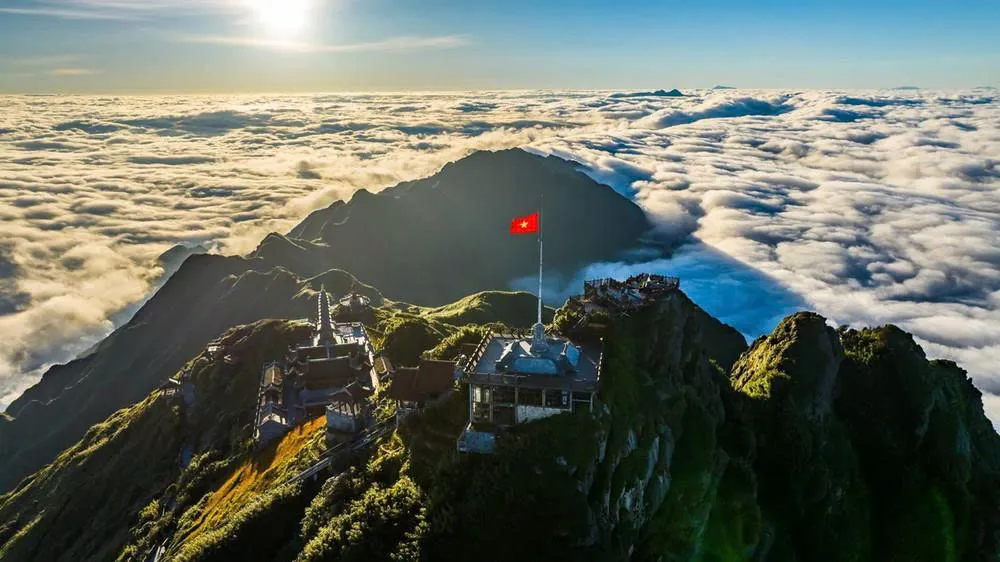
Reigning supreme as the "Roof of Indochina," Fansipan mountain towers over the Hoang Lien Son range at a breathtaking 3,143 meters (10,312 feet). Historically accessible only to seasoned mountaineers, it now offers a magnificent dual experience: an ultra-rugged adventure for trekkers or a world-class luxury sightseeing journey for leisure travelers.
- The wow factor: its true allure lies in the stark contrast between untouched, primeval nature and record-breaking modern engineering. As you ascend, sub-tropical forests gracefully transition into dense bamboo thickets, ancient dwarf azalea trees, and finally, a harsh alpine environment. The climate is famously capricious, often shifting from bright sunshine to a freezing, ethereal blanket of thick mist.
- What to do:
- Ride the cable car: board the Sun World three-rope cable car system, holding the Guinness World Record for the greatest elevation difference. The 15-minute ride floats silently above the Muong Hoa Valley, offering bird’s-eye views of emerald-green terraced rice fields and remote Hmong villages.
- Explore the spiritual complex: walk the stone pathways to visit the 15th-century Kim Son Bao Thang Pagoda and marvel at the 21.5-meter-high bronze Amitabha Buddha statue.
- Conquer the summit: climb the final 600 stone steps to touch the stainless steel pyramid marker for a breathtaking 360-degree panorama into neighboring China and Laos.
2. Ma Pi Leng Pass (Ha Giang)
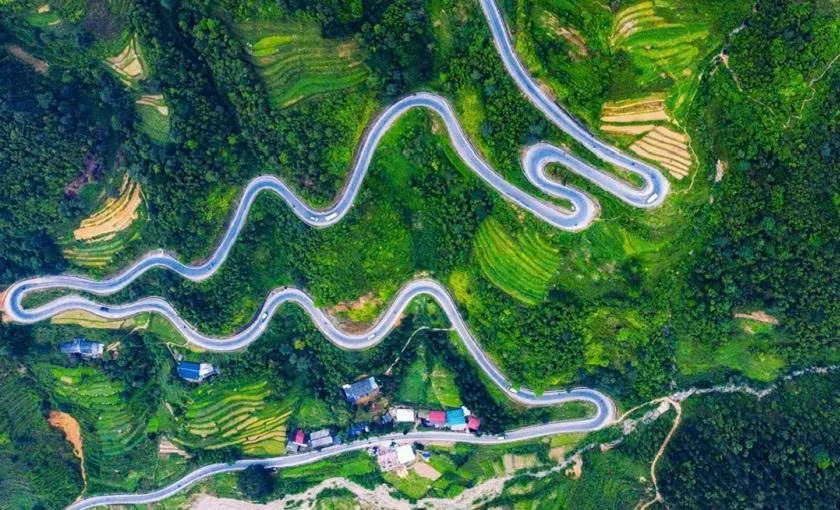
While technically a mountain pass, ma pi leng pass is carved directly into the sheer vertical cliffs of a colossal limestone mountain range. Located along the legendary "Happiness Road," it is universally acknowledged as the "King of Passes" in Vietnam.
- The raw grandeur: What sets this destination apart is its raw, prehistoric grandeur and moving human history. Lying at an altitude of 2,000 meters within a UNESCO Global Geopark, the pass was chiseled into the rock by thousands of youth volunteers in the 1960s who hung by ropes over the abyss. The vertigo-inducing, sheer vertical drop into the canyon below represents the absolute pinnacle of Vietnam's karst geology.
- What to do:
- Ride the "happiness road": rent a manual motorbike or hire an experienced local "easy-rider" to traverse this heart-stopping 20-kilometer stretch, navigating dizzying hairpin turns and cliffside edges.
- Visit the viewpoint: gaze down an 800-meter vertical drop into the deepest canyon in Southeast Asia, where the Nho Que River looks like a tiny, glowing green thread.
- Cruise the Nho Que River: descend to the base of the gorge and board a wooden sampan boat to drift through the jade-colored waters of Tu San Canyon, where cliff walls rise almost a kilometer straight up.
3. Lying Dragon Mountain (Hang Mua, Ninh Binh)
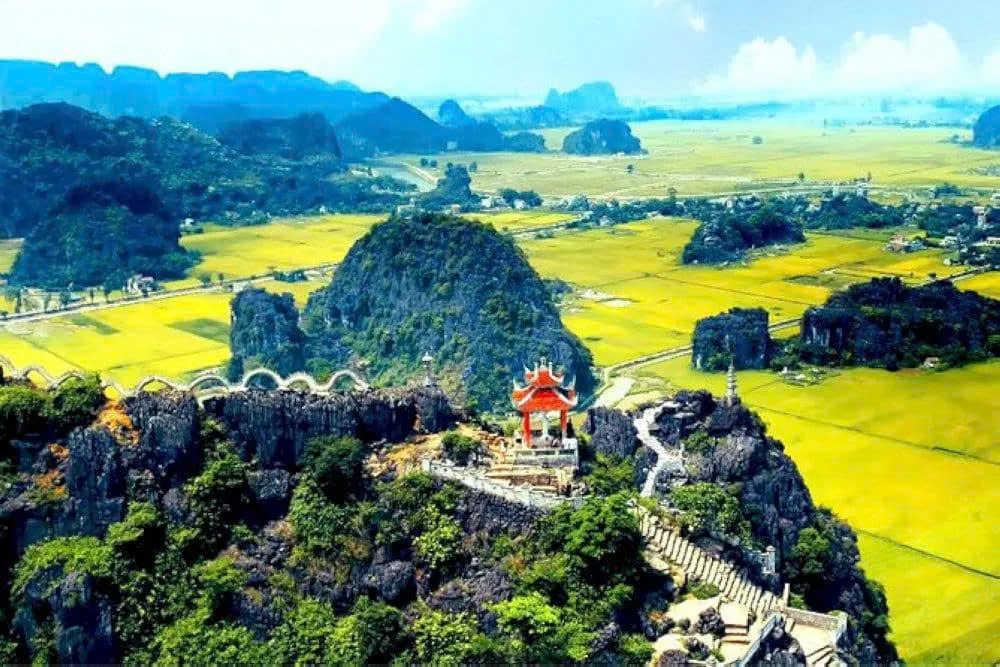
Situated within the Trang An Landscape Complex (a UNESCO World Heritage site), lying dragon mountain offers what is arguably the most photogenic vantage point in all of Northern Vietnam.
- The visual magic: this majestic Vietnamese mountain provides the perfect overlook of "Ha Long Bay on land". The crowning feature is the grueling but immensely rewarding climb of nearly 500 steep stone steps, leading to a magnificent, intricately carved stone dragon stretching along the jagged limestone ridge.
- What to do:
- Sunset photography: visit around 4:30 PM for a direct, overhead look at the Ngo Dong river winding through the golden rice fields of Tam Coc, bathed in a warm orange glow.
- Explore Mua Cave: step into the cool interior where ancient Tran Dynasty kings once came to watch imperial dance performances, and walk the wooden boardwalks through a massive lotus pond below.
4. Ta Xua Mountain (Son La)
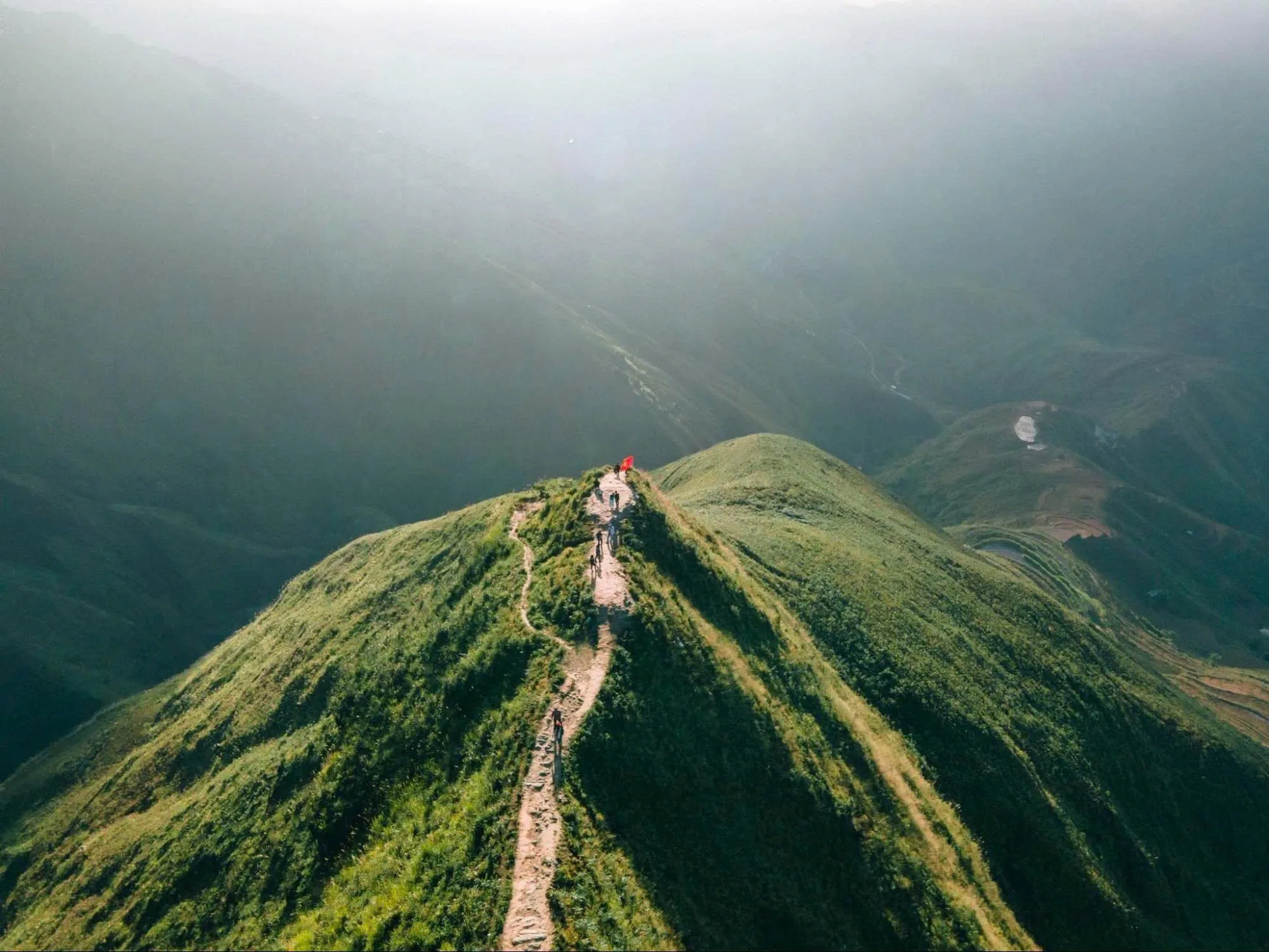
Beloved by local youth as the ultimate "cloud hunting" paradise, Ta Xua stands tall at 2,865 meters. It is a bustling hub for travelers looking to witness the surreal phenomenon of thick, rolling cloud inversions.
- The ethereal atmosphere: this Vietnamese mountain is famous for creating an optical illusion where the valleys below completely disappear under a dense, white "ocean" of clouds. The crown jewel of this landscape is the "Dinosaur Spine", a razor-thin mountain ridge that snakes its way forward, flanked by terrifying sheer drops.
- What to do:
- Walk the "Dinosaur Spine": trek this kilometer-long, razor-thin mountain ridge flanked by terrifying sheer drops on both sides at dawn.
- Sip "Cloud Coffee": order a hot cup of locally brewed coffee at rustic homestays perched precariously on the cliff edges, and watch the clouds literally drift below your feet.
5. Lao Than Mountain (Y Ty, Lao Cai)
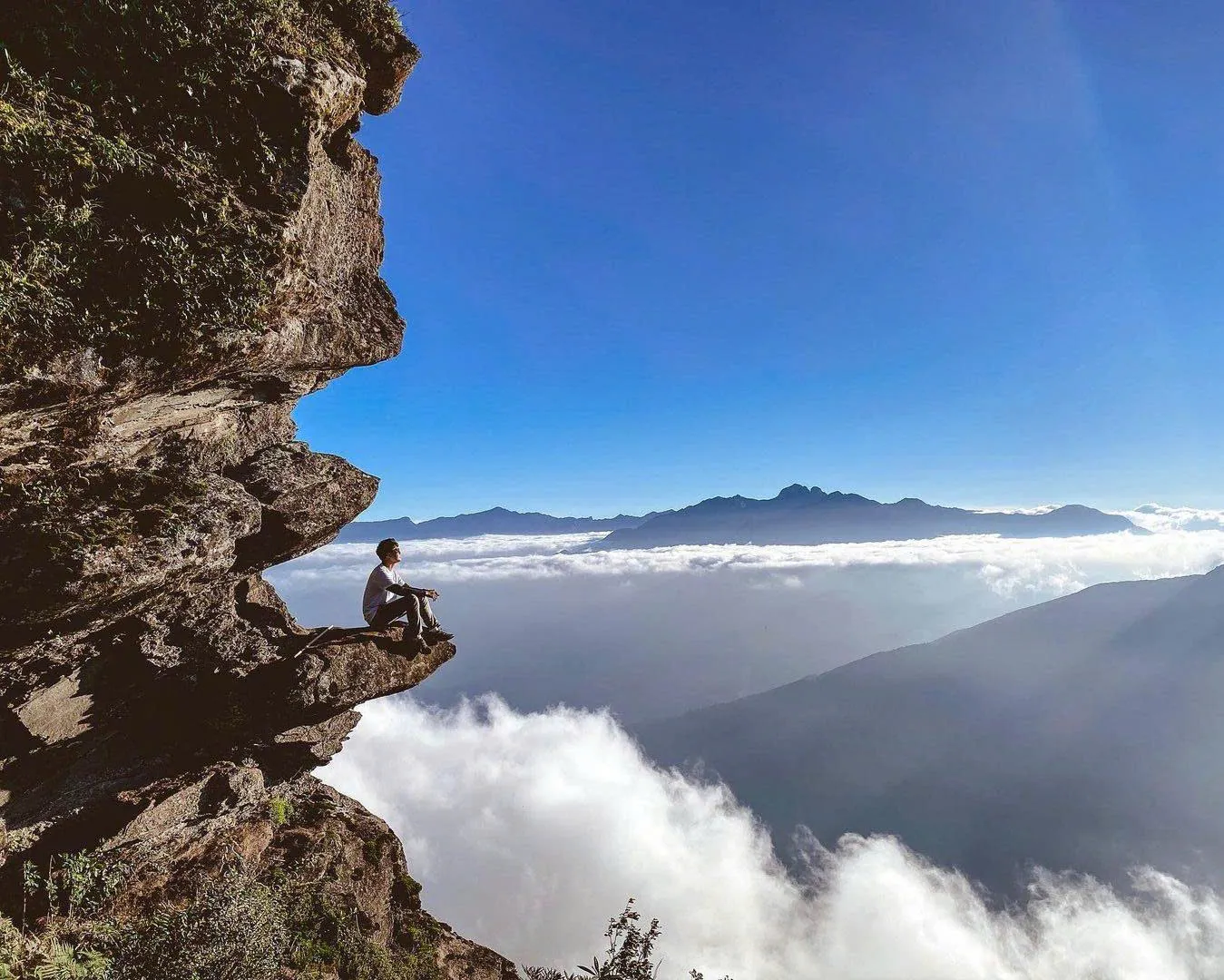
Referred to as the "Roof of Y Ty," Lao Than reaches an elevation of 2,860 meters. It rewards hikers with some of the most spectacular sunsets in the country without demanding the grueling physical toll of higher peaks.
- The sunset spectacle: the visual charm of Lao Than lies in its alien-like landscape. The trail weaves through low shrubs and eerie, wind-twisted ancient trees that have been scorched by forest fires. The summit itself is an unusually flat, grassy plateau, making it the premier destination for high-altitude camping.
- What to do:
- Camp above the clouds: pitch a tent on the plateau to watch the Milky Way at night and a blazing sunrise over a sea of clouds in the morning.
- Pose on the "Fisherman's Cliff": sit on the edge of this iconic rock slab that juts out over a massive drop, resembling the prow of a giant ship, for the ultimate illusion of floating.
6. Bach Moc Luong Tu / Ky Quan San (Lao Cai / Lai Chau)
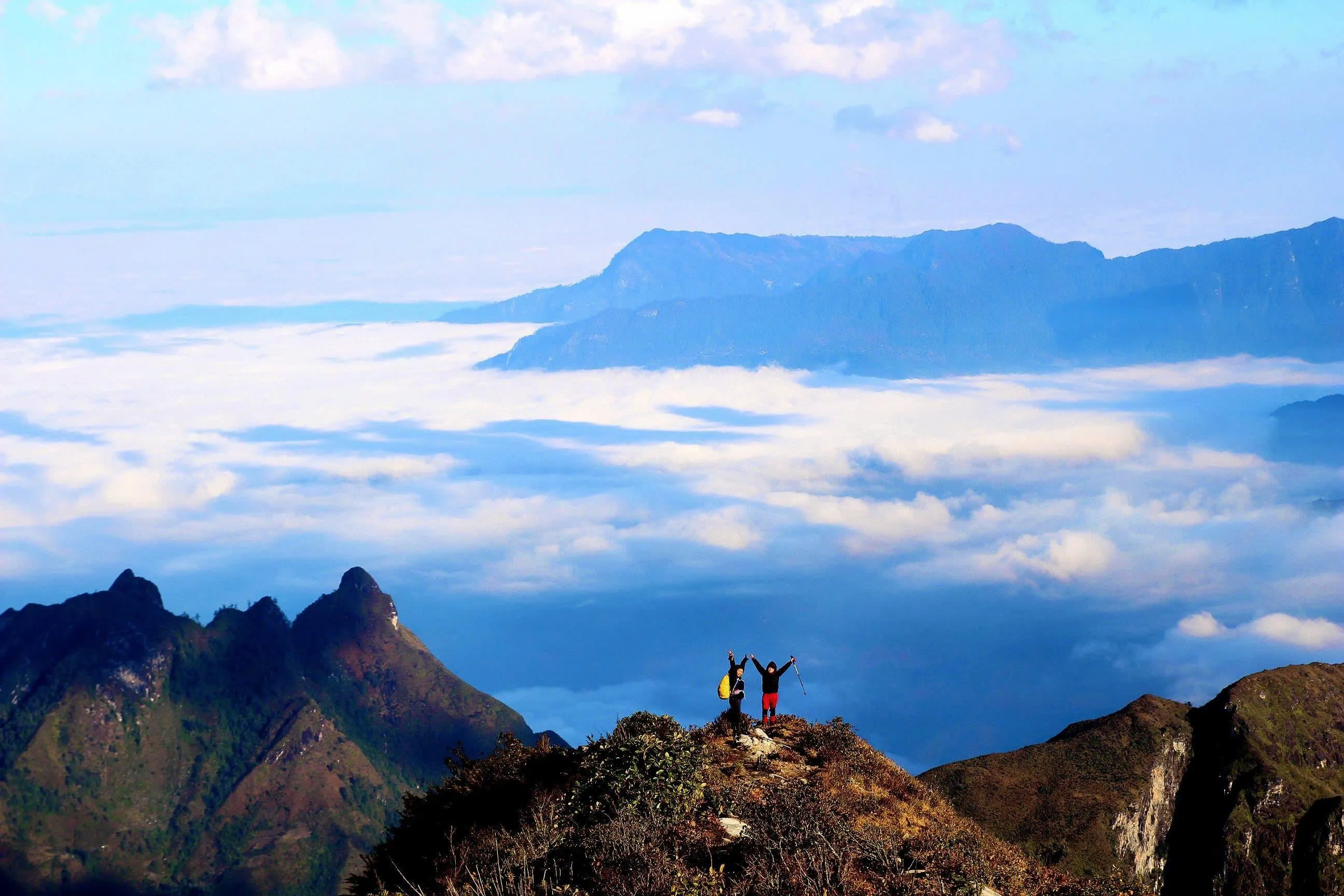
The fourth-highest peak in Vietnam at 3,046 meters, Ky Quan San remains a raw, rugged, and untamed wilderness.
- The ultimate challenge: conquering this formidable Vietnamese mountain is a badge of honor for serious trekkers. The landscape is fiercely diverse, transitioning from humid cardamom fields to barren, wind-blasted "goat cliffs" where you must pull yourself up via ropes.
- What to do:
- Challenge the 3-day trek: embark on a grueling 30-kilometer round-trip trek crossing rocky streams and near-vertical rock faces.
- Swing in the clouds: ride the famous wooden swing at the 2,100-meter Nui Muoi base camp, swinging out over the abyss with a sea of clouds beneath you.
2. Central Vietnam: Where Karsts Meet the Sea
Central Vietnam bridges the towering peaks of the North and the flatlands of the South. Here, mountains meet the sea and dominate the Central Highlands.
7. Marble Mountains (Da Nang)
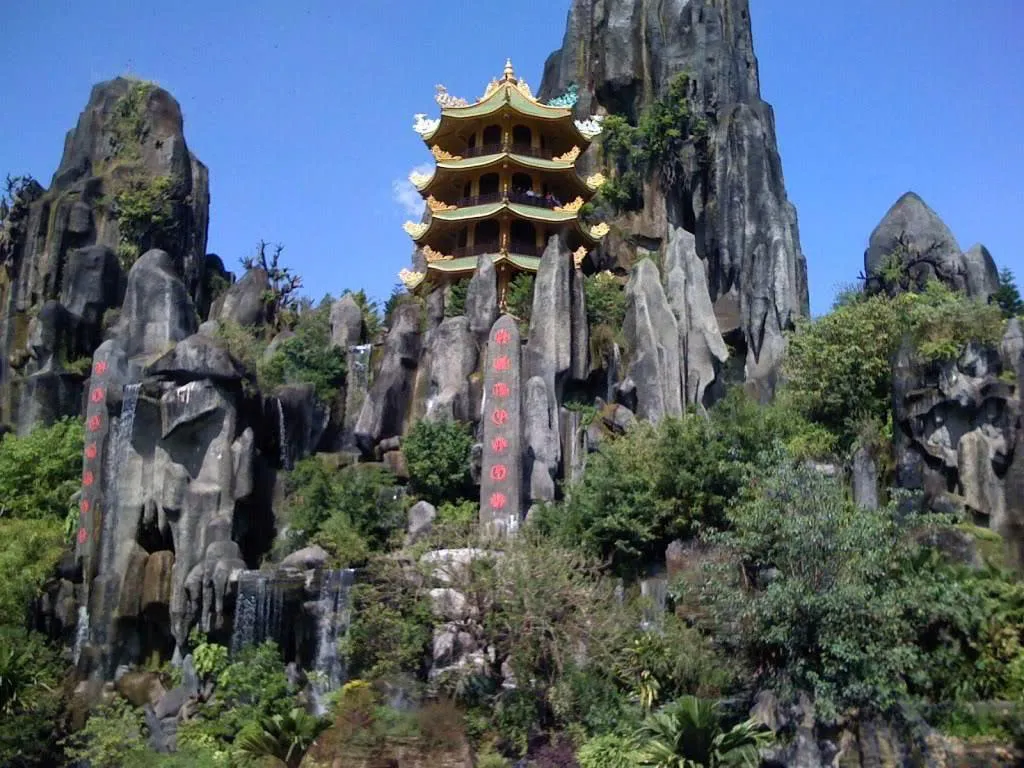
Rising abruptly from the flat, white coastal sands, the marble mountains (Ngũ Hành Sơn) are a striking cluster of five limestone and marble outcrops named after the five elements of Eastern philosophy.
- The spiritual harmony: the true magic of this unique Vietnamese mountain range lies in its seamless blend of natural geology and ancient mysticism. For centuries, Cham and Vietnamese monks have carved intricate sanctuaries directly into the natural limestone caverns.
- What to do:
- Marvel at Huyen Khong Cave: step into this massive cavern illuminated by shafts of natural sunlight piercing through a collapsed roof, highlighting a giant stone Buddha carved directly into the wall.
- Climb to Riverview Tower: navigate the stone steps of Mount Thuy to get a spectacular 360-degree view of the long Da Nang coastline.
8. Bach Ma Peak (Thua Thien Hue)
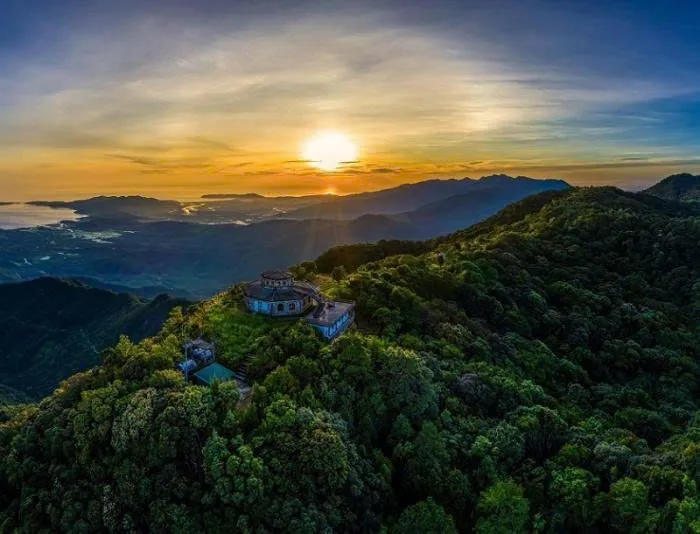
Tucked deep inside the protected Bach Ma National Park, this misty peak sits at 1,450 meters.
- The jungle oasis: Bach Ma is a paradise for eco-lovers. It holds a haunting, romantic beauty, as the jungle has slowly reclaimed the 139 abandoned French colonial villas scattered across the slopes. The mountain is home to incredibly rare species like the Red-shanked Douc langur and vibrant tropical birds.
- What to do:
- Conquer Do Quyen Waterfall: plunge down a massive 300-meter cliff face via a grueling descent of 689 stone steps to see the wild rhododendron flowers that bloom brightly in spring.
- Ring the Peace Bell: visit the Hai Vong Dai (Sea Observation Post) to look out over a breathtaking panorama stretching to the blue waters of Cau Hai Lagoon.
9. Langbiang Mountain (Da Lat)
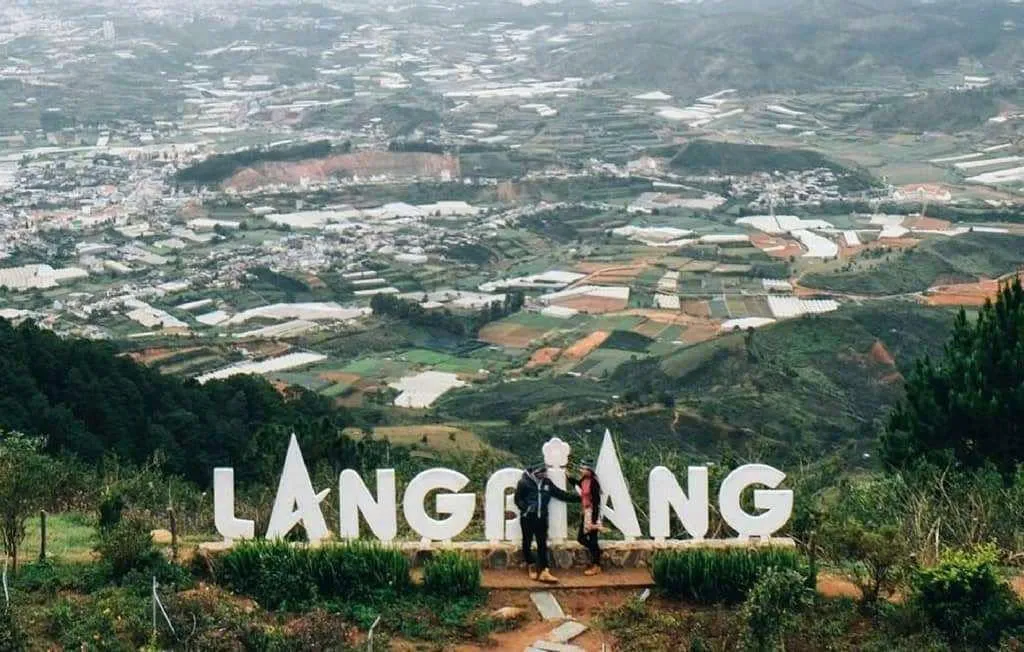
Standing proudly at 2,167 meters, Langbiang is the highest peak in the Central Highlands and the ultimate symbol of Da Lat.
- The romantic heartbeat: intertwined with the tragic Romeo-and-Juliet-style folklore of the K'Ho people, this peak offers the ultimate high-altitude, pine-scented escape. The slopes are blanketed in ancient green pine forests and wild yellow dandelions.
- What to do:
- Take the vintage jeep ride: hop into a Soviet-era UAZ jeep for a thrilling 15-minute ride up the steep asphalt road to Radar Peak.
- Experience Gong Culture: join the K'Ho people around a blazing bonfire at the base to witness the UNESCO-recognized Gong dance and drink traditional rượu cần (rice wine).
10. Nui Chua National Park (Ninh Thuan)
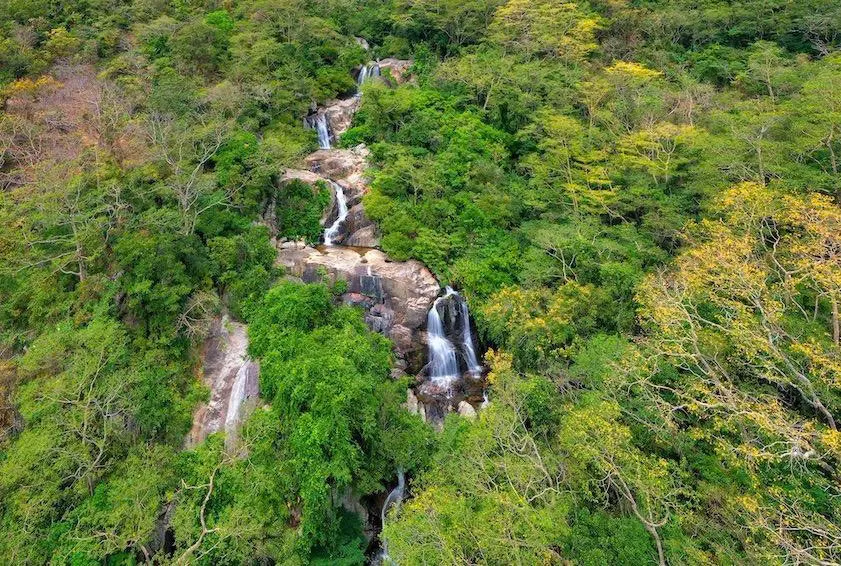
Jutting out over Vinh Hy Bay, Nui Chua is a UNESCO-recognized biosphere reserve known as "The Mini-Africa of Vietnam" due to its harsh, sub-arid climate.
- The coastal contrast: because the surrounding terrain shields it from monsoon rains, Nui Chua experiences a harsh, sub-arid climate, earning it the nickname "The Mini-Africa of Vietnam". It is the only place in Vietnam where you can trek through a thorny, cactus-filled "dry forest" ecosystem and suddenly emerge onto cliffs that plunge directly into crystal-clear ocean waters.
- What to do:
- Marvel at Hang Rai (Otter Cave): explore this geological wonder of fossilized ancient coral reefs, where rising tides create a mesmerizing "waterfall on the ocean" effect.
- Trek to the peak: hike to the 1,039-meter summit past bizarre rock formations and thorny scrublands.
11. Ngoc Linh Mountain (Kon Tum / Quang Nam)
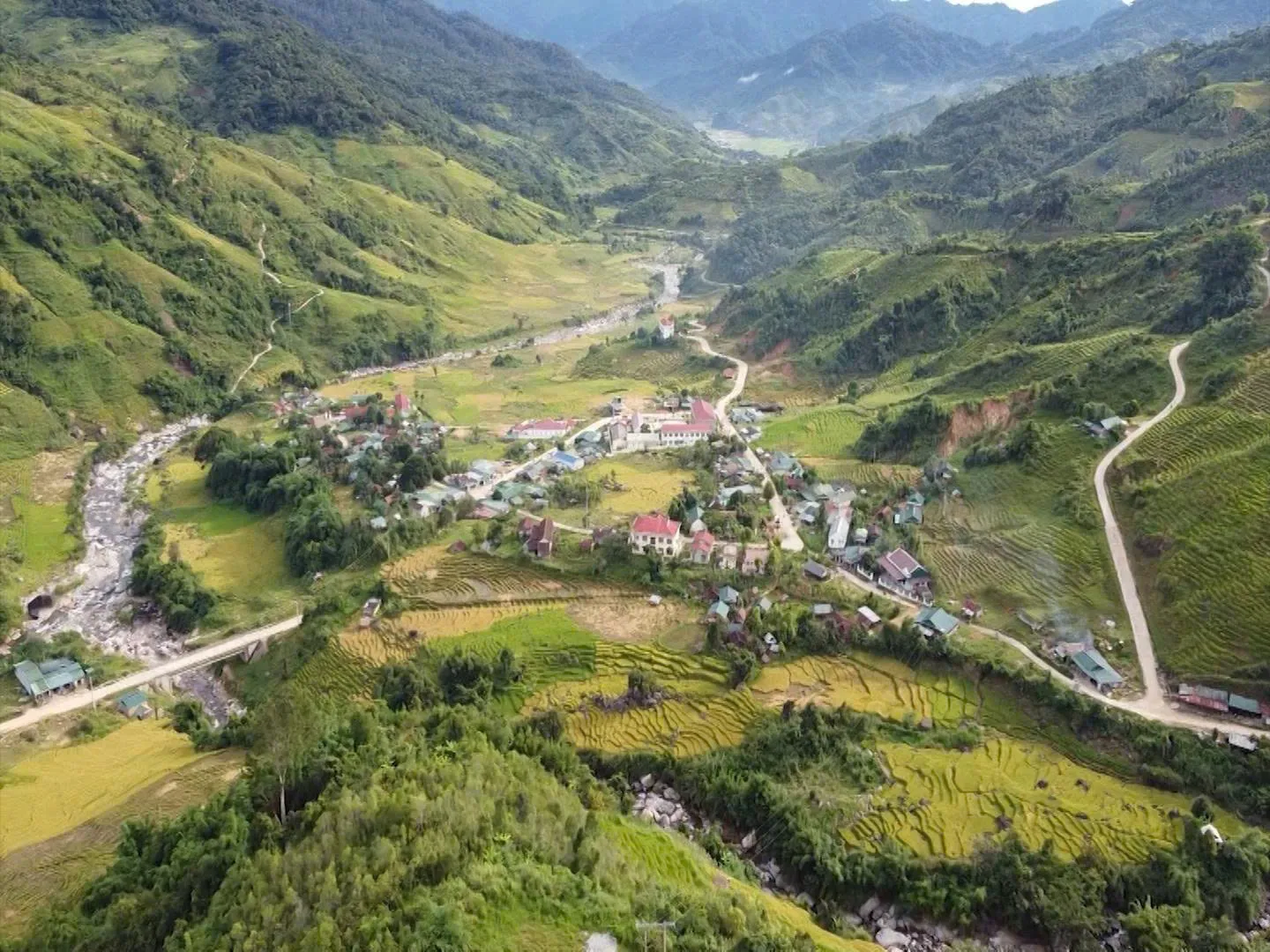
Standing at a formidable 2,598 meters, Ngoc Linh is the "Roof of the Central Highlands".
- The hidden kingdom: shrouded in perpetual mist and sacred folklore, the true allure of this majestic Vietnamese mountain lies deep within its primeval, moss-draped forests. The rich humus soil under the ancient tree canopies is the only place in the world where Sam Ngoc Linh (Vietnamese Ginseng) grows naturally.
- What to do:
- Extreme jungle trekking: embark on an off-the-beaten-path expedition for hardcore adventurers through thick, humid rainforests untouched by the modern world.
- Experience sedang culture: visit the local villages to admire stunning golden terraced rice fields and massive Rong houses built without a single metal nail.
3. Southern Vietnam: Mystical Peaks and Cultural Hubs
The geography of Southern Vietnam is dominated by the flat Mekong Delta. The standalone mountains here rise dramatically from the plains, making them highly sacred landmarks.
12. Ba Den Mountain / Black Virgin Mountain (Tay Ninh)
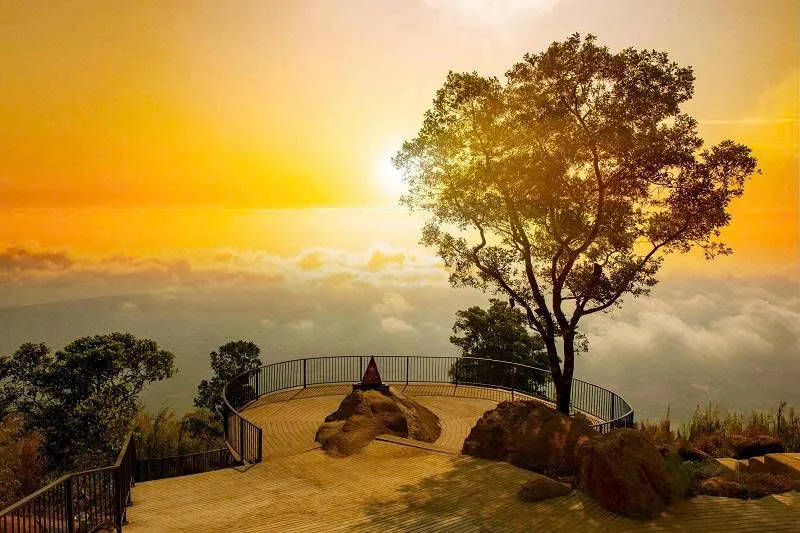
Rising 986 meters above the sun-baked plains, ba den mountain is the undisputed "Roof of Southern Vietnam". Historically known as the black virgin mountain due to its strategic height, it is now a breathtaking spiritual mecca.
- The sacred gravity: the spiritual gravity of ba den mountain is immense. Legend tells of a noblewoman named Ly Thi Thien Huong who leaped from the cliffs to protect her purity, drawing millions of pilgrims to the black virgin mountain annually. This majestic Vietnamese mountain has been transformed into a world-class religious complex, where the summit is often completely engulfed in an ethereal sea of clouds.
- What to do:
- Ride the world-record cable car: step into the Guinness World Record-certified Ba Den Station and take the Van Son line directly to the summit.
- Admire the Tay Bo Da Son Buddha: stand in awe before the 72-meter tall copper Buddha statue, the tallest on any mountain in Asia.
- Visit the sacred Pagoda complex: take the Chua Hang cable car halfway up the mountain to explore ancient pagodas and natural caves.
13. Cam Mountain / Forbidden Mountain (An Giang)
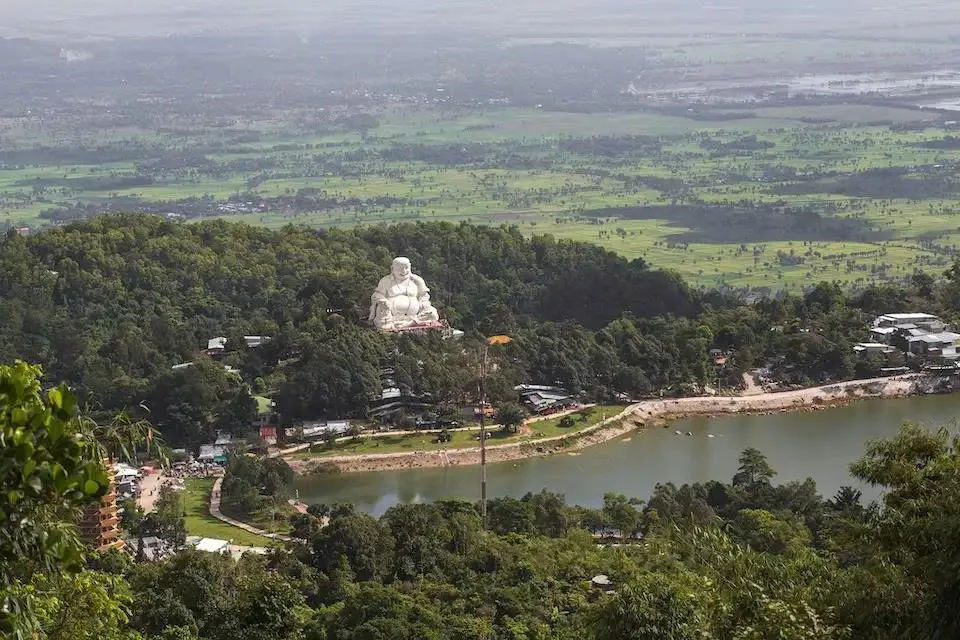
Standing at 716 meters, Cam Mountain is the highest of the mysterious "Seven Mountains" in the Mekong Delta.
- The cool oasis: Cam Mountain defies the geography of the South. While the Mekong Delta below swelters in tropical heat, the top of this mountain enjoys a permanently cool, refreshing microclimate. It is a land of myth and magic, heavily populated by monks and folklore.
- What to do:
- Marvel at the Giant Maitreya Buddha: visit the massive, 33-meter-tall laughing Buddha statue overlooking the emerald waters of Thuy Liem Lake.
- Trek the Forest Trails: hike past trickling mountain streams, lush mango orchards, and secret cave shrines.
14. Chua Chan Mountain (Dong Nai)
Located just a two-hour drive from Ho Chi Minh City, this 837-meter peak is a beloved weekend getaway for Saigonese youth.
- The mystical bond: the defining feature of Chua Chan is its profound connection to nature worship. The mountain is famous for a mystical, ancient banyan tree with three distinct trunks fused together - a sacred site where locals come to pray for luck and health.
- What to do:
- Trek the "pole path": follow the electrical poles through dense bamboo groves to a flat, breezy summit perfect for an overnight camping trip.
- Discover Buu Quang Pagoda: located 600 meters up, this extraordinary pagoda is built directly into natural rock caves.
15. Ta Cu Mountain (Binh Thuan)
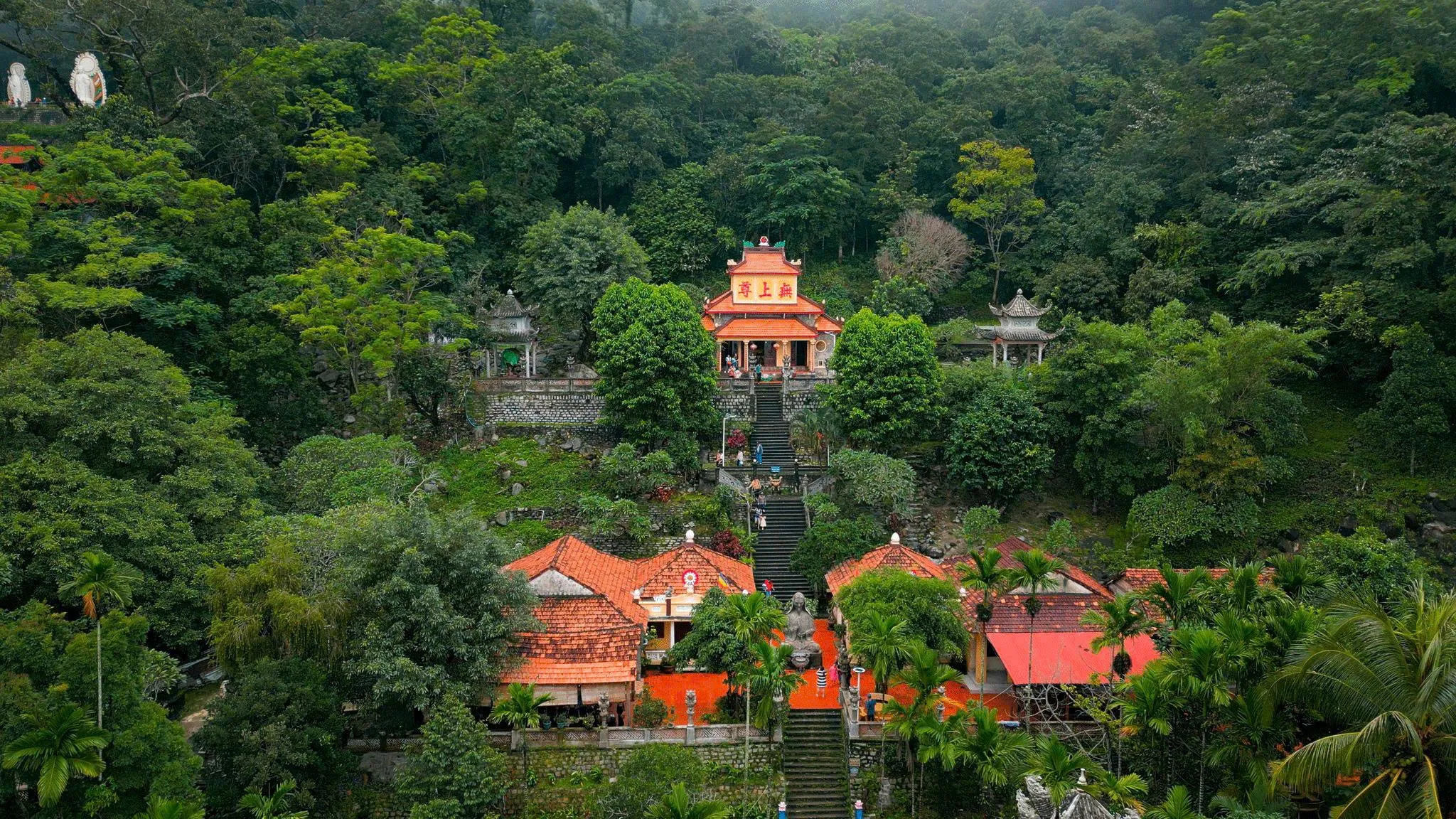
Located near the beach resorts of Mui Ne, this 649-meter peak is a primeval rainforest nature reserve.
- The serene sanctuary: Ta Cu offers a perfect, shady contrast to the hot sand dunes of Binh Thuan. Its true claim to fame lies hidden deep within the jungle canopy: a monument of absolute serenity and grand scale.
- What to do:
- Ride the canopy cable car: glide slowly over the rainforest top, keeping an eye out for exotic birds and silver langur monkeys.
- Walk to the Giant Reclining Buddha: hike to the magnificent, 49-meter-long white Sakyamuni Buddha entering Nirvana - the longest reclining Buddha on a mountain in Southeast Asia.
Conclusion: From Mountain Peaks to City Streets
After conquering the misty peaks of the North and the sacred heights of the South, your ultimate Vietnamese mountain journey inevitably leads you to the vibrant, beating heart of the country: Saigon (Ho Chi Minh City).
While the mountains offer serene isolation, Saigon offers an entirely different kind of thrill at street level. To truly capture the dynamic pulse, rich culinary heritage, and hidden alleyways of this bustling metropolis, there is no better way than hopping on the back of a vintage scooter. Trade the hiking boots for a helmet, and let a local guide whisk you through the neon-lit streets on an unforgettable Saigon Vespa Tour.

Anh Pham - General Manager
After exploring Ho Chi Minh City (or Saigon, as I love to call it) on a motorbike for over 10 years, these streets feel like my playground. I believe the best travel moments happen when you discover something unexpected. My goal is simple: to share my favorite parts of the city with you, so you can experience the real, everyday magic of my home.
Other tips
- 10 Best Vietnamese Clothing Brands & Local Brands Vietnam
- Beaches Near Hanoi: The Closest Beach Escapes for a Weekend Trip
- Hoi An Tailors: The Complete Insider Guide to Custom Clothes in Vietnam
- Best eSIM for Vietnam (2026 Guide from a Local Perspective)
- Da Nang International Airport Vietnam: A First-Timer Guide to Landing Calmly (DAD)
- Noi Bai International Airport Guide for First-Time Travelers to Vietnam (HAN)
- Traveling Vietnam as a Couple: What to Do, Where to Go, and How It Actually Feels
- Vietnamese Lunar New Year (Tết) 2026
- Vietnamese Mountain Guide
- Best Beaches in Vietnam: How the Coast Actually Works (and How to Choose the Right One)
- 15 Underrated Towns in Vietnam
