
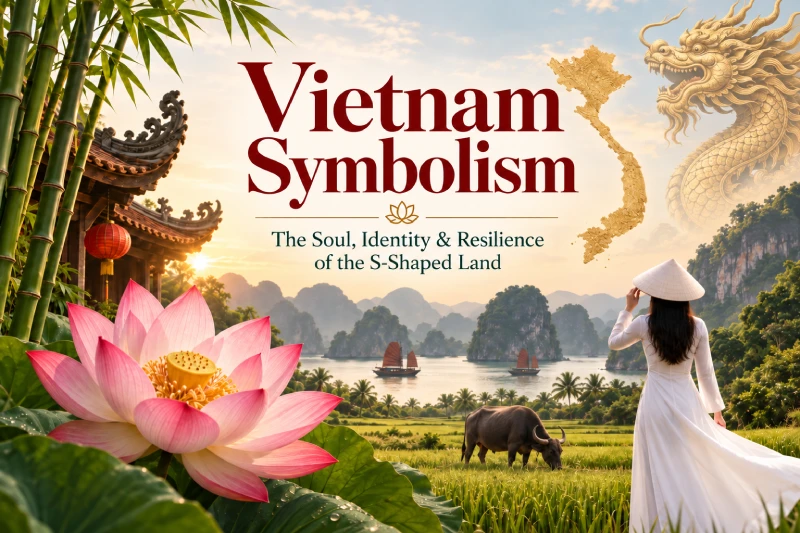
Vietnam Symbolism offers a fascinating window into the country’s identity, values and enduring spirit. From the lotus rising clean from muddy water and the dragon of ancestral legend to bamboo that bends without breaking and the hardworking water buffalo, each symbol carries a story shaped by centuries of history, belief and everyday life. More than decorative images, these symbols form a living language through which Vietnam expresses resilience, unity, heritage and national pride. This guide explores the meanings behind Vietnam’s most important symbols and what they can reveal about the culture and character of the S-shaped nation.
What Are the Most Important Symbols of Vietnam?
Quick answer: Vietnam’s key symbols include the lotus flower (purity and resilience), the dragon (divine ancestry and power), the bamboo (flexible, unbreakable strength), the water buffalo (hard work and rural life), the áo dài (national dress), the red flag with a gold star (patriotism and unity), and the Four Sacred Animals. Each reflects a core national value.
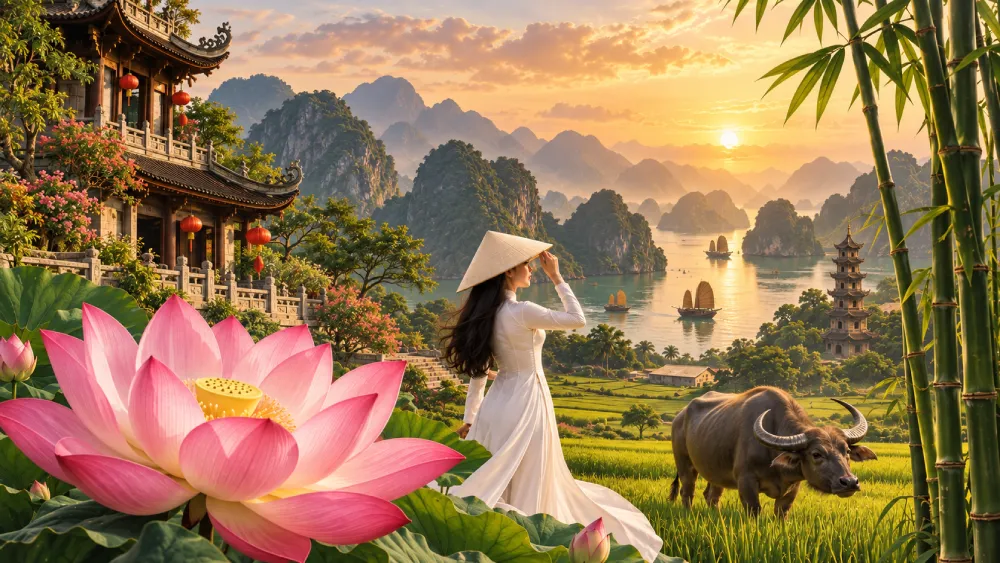
Vietnam’s identity is expressed through a rich set of symbols, each carrying deep meaning. The most significant include the lotus (the unofficial national flower), the dragon (the mythical ancestor), the bamboo (the emblem of resilience), the water buffalo (the spirit of rural labour), the áo dài (the elegant national dress), and the national flag. Together, they form a kind of visual vocabulary for the nation’s character, values and history. Underpinning many of them is a single recurring theme: resilience, the ability to endure, adapt and rise again, forged by centuries of defending the land.
Why Is the Lotus Vietnam’s Most Famous Symbol?
Quick answer: The lotus (hoa sen) is Vietnam’s beloved unofficial national flower because it embodies the nation’s spirit: it rises clean and beautiful from muddy water, symbolising purity, moral integrity and resilience. In Buddhism it represents enlightenment. It appears everywhere, from the Vietnam Airlines logo to architecture, reflecting a people who rise above hardship with dignity.
If one symbol captures the Vietnamese spirit, it’s the lotus. Its power lies in a simple, profound image: the flower grows in muddy ponds yet rises above the water to bloom immaculate and beautiful, untouched by the dirt below. This carries a deep cultural truth, that Vietnam has often been “in the mud” of war and poverty, yet has always managed to rise and bloom with dignity.
The lotus symbolises several intertwined values: purity (remaining untainted by the mud), moral integrity, and in Buddhism, the path to enlightenment. It has become a symbol of the people themselves, appearing in everything from the logo of Vietnam Airlines to national architecture. Vietnamese take pride in the lotus because it reflects their own journey: they do not choose their circumstances (the mud), but they choose their character (the bloom).
What Does the Dragon Symbolise in Vietnam?
Quick answer: The dragon represents the divine origin of the Vietnamese people, who call themselves “Con Rong Chau Tien” (Children of the Dragon, Grandchildren of the Fairy). It symbolises power, prosperity, protection and the emperor, and as a water creature, it’s tied to rain and good harvests. Unlike Western dragons, it’s benevolent, and it leads the Four Sacred Animals.
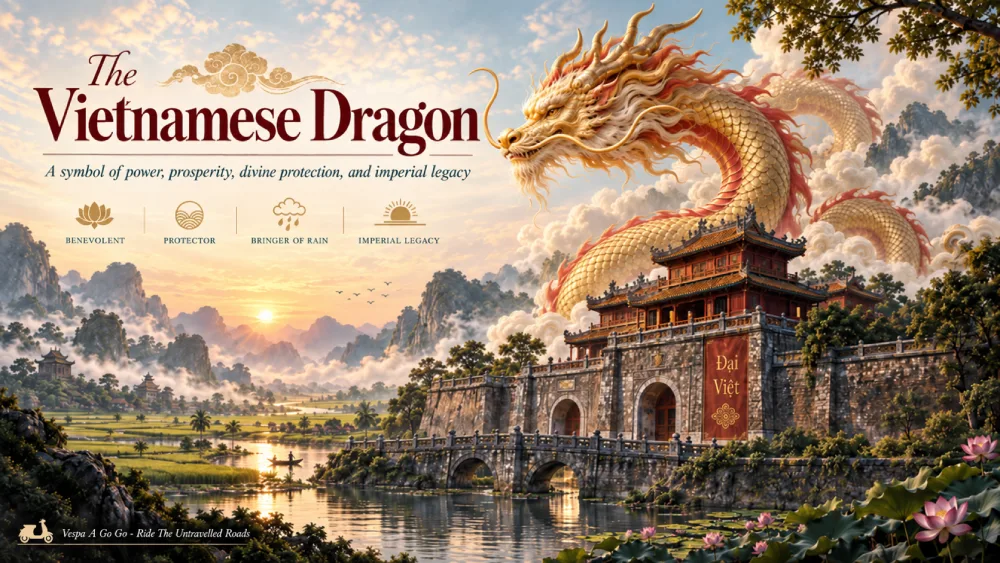
The dragon (rồng) represents the mythical and divine side of Vietnamese identity. According to the founding legend, the Vietnamese descend from the union of the sea-dragon king Lạc Long Quân and the mountain fairy Âu Cơ, which is why they proudly call themselves “Con Rồng, cháu Tiên.” This makes the dragon a literal ancestor and a powerful emblem of national unity.
Beyond ancestry, the dragon symbolises power, prosperity, divine protection and the emperor. As a creature of water, it was venerated for bringing the rains essential to rice farming. Crucially, unlike the fearsome dragons of Western legend, the Vietnamese dragon is benevolent, a protector rather than a destroyer. It’s such a rich and central symbol that we’ve devoted an entire guide to it: read more about the Vietnamese dragon and its meaning.
What Is Vietnam’s Symbol of Strength?
Quick answer: The bamboo (cây tre) is Vietnam’s enduring symbol of strength. It bends in the strongest storms without breaking, then springs back, embodying flexibility, resilience and adaptability. Growing in dense clusters, it also represents solidarity and community. The bamboo’s “soft strength” perfectly reflects how Vietnam has survived and endured throughout history.
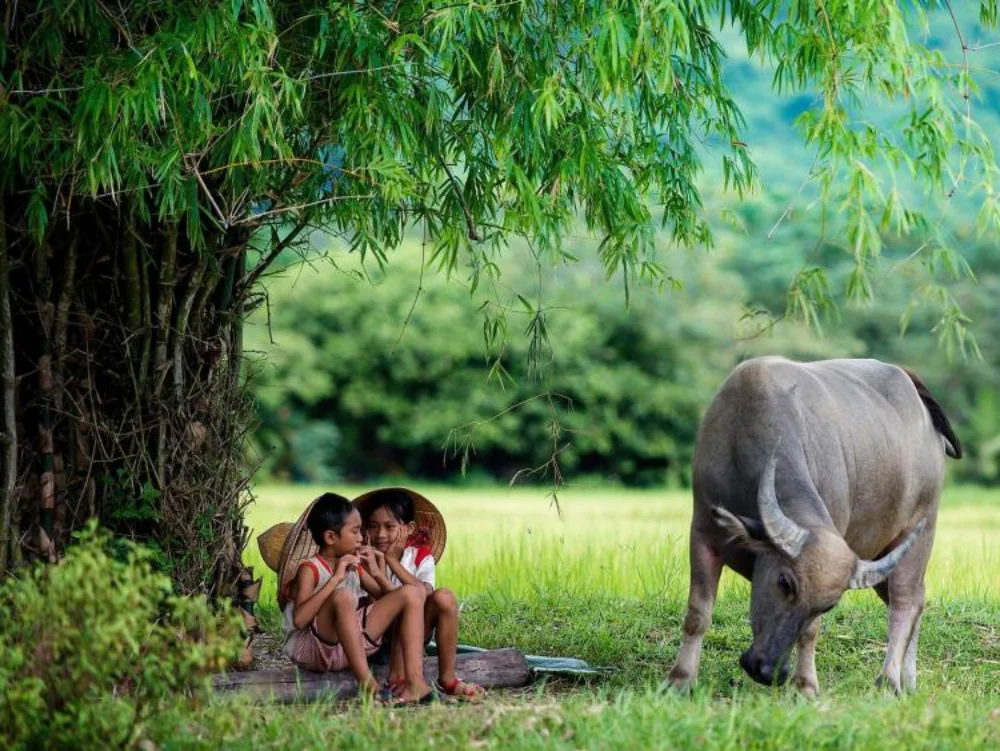
When Vietnamese think of strength, they think not of rigid force but of the bamboo. Its genius is flexibility: in a fierce storm, the bamboo bends low, yielding to the wind, yet it does not snap, and once the storm passes, it springs upright again. This is the essence of Vietnamese resilience, the ability to bend without breaking, to adapt and survive rather than resist and shatter.
The bamboo carries a second meaning too: it grows in dense, interconnected clusters, with roots tangled together, symbolising solidarity, community and the strength of standing together. This “soft strength” (a concept central to Vietnamese culture) explains how a small nation could withstand far larger powers, not through brute force, but through endurance, unity and quiet, unbreakable resolve.
What Does the Water Buffalo Represent?
Quick answer: The water buffalo (con trâu) symbolises hard work, patience, prosperity and the soul of rural Vietnam. For centuries the farmer’s most valued companion in the rice paddies, it represents the agricultural roots of the nation and the virtues of diligence and quiet strength. A peaceful image of a buffalo and a child remains an iconic emblem of the Vietnamese countryside.
While the dragon represents Vietnam’s divine, mythical side, the water buffalo represents its earthly, practical heart. For generations, the buffalo was the farmer’s most precious possession and closest working partner, ploughing the flooded rice paddies that fed the nation. As the saying goes, the buffalo is “the head of the household’s fortune.”
It symbolises hard work, patience, endurance and prosperity, the very virtues prized in Vietnamese rural life. The serene, timeless image of a buffalo grazing in a green paddy, often with a child resting on its back playing a flute, is one of the most beloved emblems of the Vietnamese countryside, evoking peace, simplicity and a deep connection to the land. Together, the dragon and the buffalo capture Vietnam’s dual nature: the mythical and the practical, the divine and the diligent.
What Does the Vietnamese Flag Symbolise?
Quick answer: The Vietnamese flag features a single gold star on a red background. The red symbolises the blood and sacrifice of those who fought for independence, while the gold star represents the nation and the unity of its people, traditionally the five classes of society (workers, farmers, soldiers, intellectuals and youth/traders). Together they express patriotism, revolution and national unity.
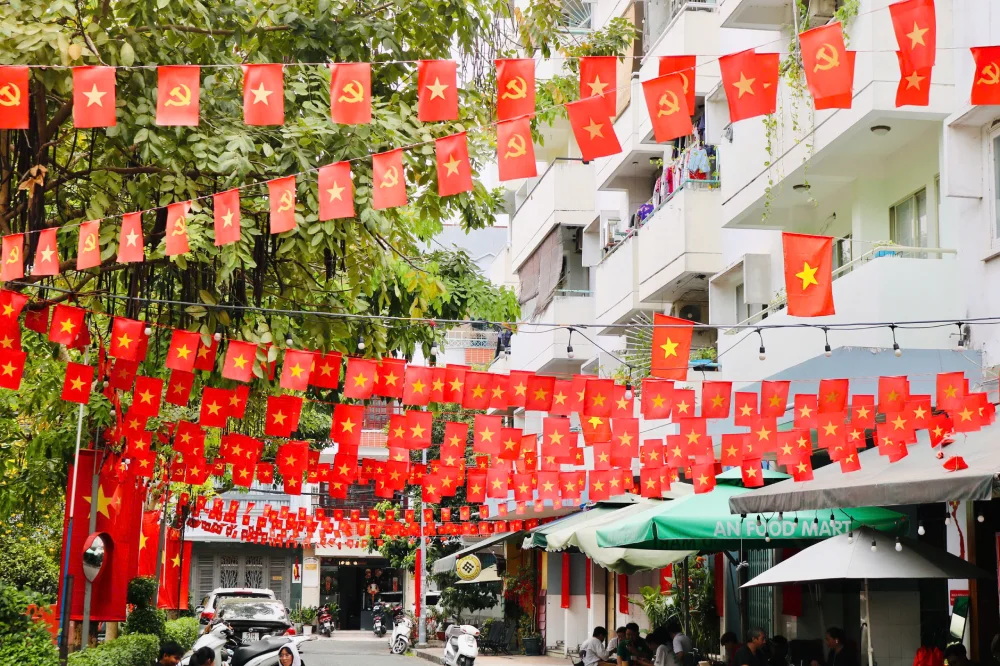
The national flag, known as “cờ đỏ sao vàng” (red flag with gold star), is one of Vietnam’s most powerful and visible symbols. Its meaning is direct and emotional. The bold red background represents the blood and sacrifice of the countless patriots who fought and died for the country’s independence and revolution. The five-pointed gold star in the centre stands for the nation and the unity of the Vietnamese people.
The star’s five points are traditionally said to represent the solidarity of the five key groups in society working together to build the nation. You’ll see this flag flying with immense pride across the country, especially around national holidays like Independence Day and Reunification Day, when it transforms entire streets into seas of red and gold. To understand the history behind it, see our guide to Vietnam’s Reunification Day.
What Are the Four Sacred Animals of Vietnam?
Quick answer: The Four Sacred Animals (Tứ Linh) are the Dragon (Long), Unicorn/Qilin (Lân), Tortoise (Quy) and Phoenix (Phụng). They symbolise power, virtue, longevity and grace respectively. Seen throughout Vietnamese art and architecture, especially temples, they represent cosmic harmony and the balance of heaven and earth, with the dragon as the most revered.
A cornerstone of Vietnamese symbolism is the set of Four Sacred Animals, or Tứ Linh, which appear throughout the nation’s art, architecture and spiritual life:
- Dragon (Long). The most revered, symbolising power, the emperor, and divine ancestry.
- Unicorn / Qilin (Lân). A gentle, auspicious creature symbolising virtue, peace and the arrival of good fortune (often seen in lion-dragon dances).
- Tortoise (Quy). The symbol of longevity, wisdom and stability, frequently depicted carrying stone stelae in temples like Hanoi’s Temple of Literature.
- Phoenix (Phụng). Representing grace, virtue and nobility, associated with the empress and appearing in times of peace and prosperity.
Together, these four create a sense of perfect balance and complete virtue, representing the harmony of sky and earth, water and air.
What Do Colours and Numbers Symbolise in Vietnam?
Quick answer: Red is the luckiest colour, symbolising good fortune, happiness and celebration, which is why it dominates Tet and weddings. Gold/yellow represents wealth, royalty and prosperity. Numbers also carry meaning: 9 is highly auspicious (linked to the dragon and longevity), while 3 and odd numbers are often favoured, and some avoid certain numbers considered unlucky.
Beyond animals and plants, colours and numbers form a quieter but ever-present layer of Vietnamese symbolism. Red is the most auspicious colour of all, representing luck, happiness, vitality and celebration. It’s why red dominates the most important occasions: the lì xì envelopes and decorations of Tết, wedding outfits, and temple offerings. Gold and yellow symbolise wealth, prosperity and royalty, historically the colour of emperors, and pair with red to create the festive palette seen everywhere during celebrations.
Numbers carry weight too. The number nine, deeply linked to the dragon and to longevity, is considered especially auspicious (think of the nine sons of the dragon, or the Nine Dragons of the Mekong Delta, “Cửu Long”). Odd numbers are often favoured in offerings and gifts, and many Vietnamese pay attention to lucky and unlucky numbers in everything from house addresses to wedding dates. These subtle symbols shape daily choices in ways visitors may not immediately notice.
What Are Vietnam’s Symbolic Foods?
Quick answer: Certain foods carry deep symbolic meaning. Bánh chưng (square sticky-rice cake) represents the earth and gratitude to ancestors, central to Tet. Round bánh giầy represents the sky. The lotus seed symbolises purity and fertility. These symbolic foods, especially during festivals, connect eating to cultural values, history and family.
In Vietnam, some foods are as symbolic as they are delicious. The most iconic is bánh chưng, the square sticky-rice cake wrapped in green leaves and eaten at Tết. Its square shape represents the Earth, and the legend behind it celebrates filial gratitude to one’s parents and ancestors, making it far more than a dish. Its round counterpart, bánh giầy, represents the sky, and together they embody the harmony of earth and heaven.
Other foods carry meaning too: the lotus seed symbolises purity and fertility and appears in sweets and teas, while many Tết foods are chosen for names that sound like words for luck or prosperity. Sharing these symbolic dishes, especially during festivals, turns a meal into an act of remembrance and connection, binding families to their heritage with every bite. It’s one more way that, in Vietnam, meaning is woven into the most everyday moments of life.
What Do the Áo Dài and Nón Lá Symbolise?
Quick answer: The áo dài (traditional long dress) and nón lá (conical leaf hat) are among Vietnam’s most recognisable cultural symbols. The áo dài represents grace, femininity and national pride, blending elegance with modesty. The nón lá symbolises rural life, hard work and the gentle character of the Vietnamese people. Together they embody traditional Vietnamese identity and beauty.
Beyond animals and plants, two everyday objects have become powerful emblems of Vietnam itself. The áo dài, the flowing, form-fitting long dress worn over trousers, is perhaps the most beloved symbol of Vietnamese grace and identity. It elegantly balances elegance with modesty, revealing nothing yet flattering everything, and has come to represent femininity, refinement and national pride. Worn at weddings, festivals, schools and formal occasions, it is Vietnam in fabric form.
Its frequent companion, the nón lá or conical leaf hat, carries a humbler but equally cherished meaning. Practical protection from sun and rain for farmers and market vendors, it has become a symbol of rural life, diligence and the gentle, humble and hardworking character of the Vietnamese people. The image of a woman in a white áo dài and nón lá is one of the most iconic representations of Vietnam, capturing the nation’s blend of beauty, modesty and quiet strength. To explore one in depth, see our guide to the elegance of the áo dài.
What Do Vietnam’s Symbolic Flowers and Plants Mean?
Quick answer: Beyond the lotus and bamboo, several plants carry deep meaning. Peach blossom (hoa đào) and apricot blossom (hoa mai) symbolise the Lunar New Year (Tết), luck and renewal, pink in the north, yellow in the south. Rice represents sustenance, prosperity and the agricultural soul of the nation. Each plant connects Vietnamese identity to nature, the seasons and the cycle of life.
Vietnam’s symbolic world is rich with meaningful plants beyond the famous lotus and bamboo. Most beloved are the blossoms of Tết, the Lunar New Year: in the north, the pink peach blossom (hoa đào) is essential, believed to ward off evil and bring good fortune, while in the south, the yellow apricot blossom (hoa mai) takes its place, its five petals symbolising luck, happiness and prosperity for the year ahead. These flowers turn every Tết home into a statement of hope and renewal.
Equally fundamental is rice, the literal and symbolic sustenance of Vietnam. As the staple that has fed the nation for millennia and the crop at the heart of its agricultural society, rice represents prosperity, fertility, hard work and life itself. Golden rice paddies are an enduring image of the Vietnamese countryside and soul. Together with the lotus and bamboo, these plants root Vietnamese identity firmly in nature, the seasons and the timeless rhythms of farming life.
Why Do Symbols Matter So Much in Vietnamese Culture?
Quick answer: Symbols matter because they carry Vietnam’s identity, values and history across generations. Forged by centuries of resistance, they teach moral lessons (the buffalo’s diligence, the bamboo’s resilience, the lotus’s integrity), connect modern Vietnamese to their ancestors, and explain how a small nation maintained a distinct soul against overwhelming odds. They are the nation’s living memory.
Vietnam’s symbols endure because they do real cultural work. Their history is inseparable from the history of resistance: for centuries, the Vietnamese defended their land against northern expansionism and later Western colonialism, and this created a culture that prizes unity, resilience and “soft strength.” The symbols crystallise these values into images everyone can understand.
They are also deeply pedagogical, teaching each generation how to live: the buffalo shows how to work hard, the bamboo how to be strong yet flexible, the lotus how to keep a pure character, and the dragon where the people come from. In this way, the symbols connect a young, tech-savvy generation to ancestors who lived a thousand years ago, ensuring cultural continuity. To explore one of the most beloved living traditions that brings these symbols to life on stage, see our guide to Vietnamese water puppetry.
Where Can Travellers See Vietnam’s Symbols?
Quick answer: Vietnam’s symbols are everywhere once you know to look. You’ll find dragons and the Four Sacred Animals carved into temples and pagodas, lotuses in ponds and architecture, áo dài and nón lá on the streets, the flag flying proudly nationwide, and symbolic foods and flowers during festivals like Tết. Markets, temples and museums are especially rich places to spot them.
For travellers, learning Vietnam’s symbols transforms an ordinary walk into a treasure hunt of meaning. Once you know what to look for, you’ll start seeing them everywhere:
- Temples and pagodas. Dragons coil around pillars and roofs, while the Four Sacred Animals, tortoises, phoenixes, unicorns and dragons, appear in carvings, statues and altars.
- Architecture and ponds. The lotus motif adorns buildings, while real lotus ponds bloom in parks and the countryside.
- The streets. The áo dài and nón lá are living symbols worn daily, especially by students and at special events.
- Festivals. During Tết, peach and apricot blossoms, symbolic foods like bánh chưng, and the colours red and gold fill homes and public spaces.
- Everywhere. The red flag with its gold star flies from buildings, shops and homes across the entire country.
Markets, historic temples and cultural museums are particularly rewarding places to spot and understand these symbols up close. Travelling with a knowledgeable local guide brings them to life, turning silent carvings and customs into rich stories about the Vietnamese soul.
The Living Soul of Vietnam
Vietnam’s symbols are far more than images on flags and in temples. They are the distilled essence of a national character, resilient, unified, hardworking and proud. The lotus teaches dignity in hardship, the bamboo teaches flexible strength, the buffalo teaches honest labour, and the dragon reminds every Vietnamese of their shared, divine origin. Understanding these symbols is the key to understanding the soul behind the S-shaped land, and the people who have shaped it. They are not relics of the past but living expressions of a national character that continues to endure, adapt and inspire, as alive today in the heart of a young Vietnamese person as they were a thousand years ago.
The best way to feel these symbols come alive is up close, in the temples, markets and hidden corners of the city, with a local guide. Explore Saigon’s living heritage on the Saigon’s Untold Stories »
Vietnam Symbolism FAQs
What is Vietnam’s national symbol? Vietnam has no single official national symbol, but the lotus flower is widely regarded as the unofficial national flower, symbolising purity and resilience rising from the mud. The dragon (national ancestry) and the red flag with a gold star (the official state flag) are also powerful national symbols.
What is the symbolic animal of Vietnam? Vietnam has two key symbolic animals reflecting its dual nature: the noble dragon, representing divine ancestry and power, and the hardworking water buffalo, representing rural life and diligence. Among mythical creatures, the dragon leads the Four Sacred Animals (Dragon, Unicorn, Tortoise, Phoenix).
What does the Vietnamese flag symbolise? The red background symbolises the blood and sacrifice of those who fought for independence, while the gold star represents the nation and the unity of the Vietnamese people, traditionally the five classes of society. Together, the “red flag with gold star” expresses patriotism, revolution and national unity.
What is the Vietnamese symbol of strength? The bamboo is Vietnam’s symbol of strength. It bends in storms without breaking and springs back, embodying flexibility and resilience, while growing in dense clusters that represent solidarity. This “soft strength” reflects how Vietnam has endured and survived throughout its history.
Why is the lotus important in Vietnam? The lotus rises clean and beautiful from muddy water, making it a powerful symbol of purity, moral integrity and resilience, and in Buddhism, of enlightenment. It reflects the Vietnamese spirit of rising above hardship with dignity, and it appears everywhere, from the Vietnam Airlines logo to national architecture.