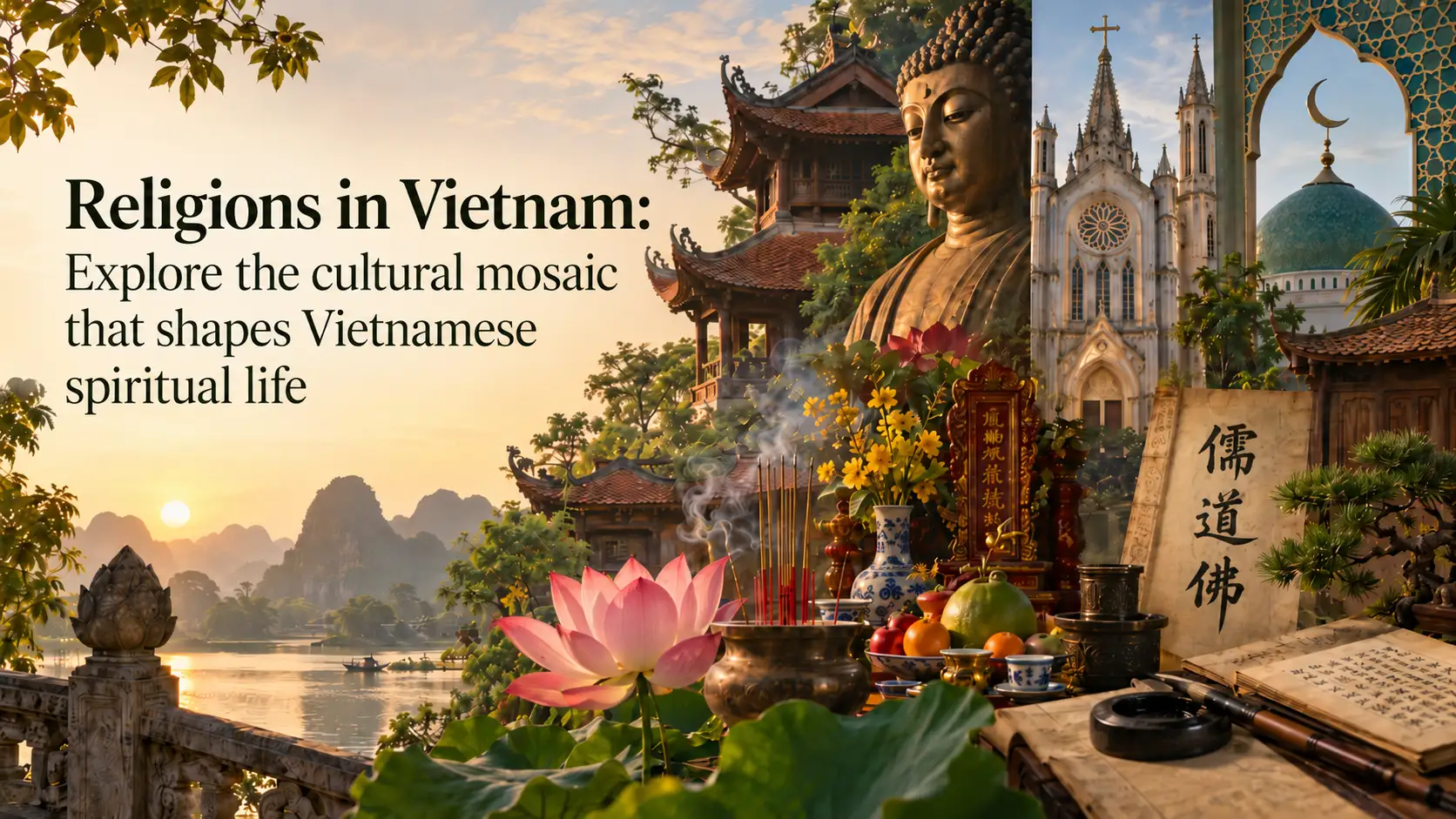
Religions in Vietnam is one of the most fascinating in Asia: a rich mosaic where ancient folk beliefs, the Three Teachings of Buddhism, Confucianism and Taoism, and global faiths like Catholicism and Islam all coexist. Shaped over thousands of years by indigenous traditions, neighbouring cultures and colonial history, Vietnamese religion is defined less by exclusive membership than by a remarkable spirit of blending and tolerance. This guide explores that cultural mosaic, the major faiths, the folk beliefs at its heart, and the harmonious coexistence that makes Vietnamese spirituality so distinctive. Understanding it is not just an academic exercise; it’s a key that unlocks the deeper meaning behind the temples, altars, festivals and customs you’ll encounter everywhere in Vietnam.
What Religions Are Practised in Vietnam?
Quick answer: Vietnam’s spiritual landscape includes folk religion (the most widespread, centred on ancestor worship), Buddhism (the most influential organised faith), Catholicism and Protestantism, Islam (mainly among the Cham), and the homegrown faiths Cao Dai and Hoa Hao. Most Vietnamese blend several traditions rather than following one exclusively, with no official state religion.
Vietnam is a genuinely multi-religious society, but it works differently from many countries. Rather than belonging exclusively to one faith, most Vietnamese practise a blend of traditions. The main threads of the mosaic are:
- Folk religion, the most widespread set of practices, centred on ancestor veneration and local spirits.
- Buddhism, the most influential organised religion, deeply woven into culture.
- Christianity (Catholicism and Protestantism), a significant and growing presence.
- Islam, practised mainly by the Cham ethnic community.
- Cao Dai and Hoa Hao, two faiths founded in Vietnam in the 20th century.
Vietnam has no official state religion, and its constitution guarantees freedom of belief, creating a landscape of remarkable diversity and coexistence.
What Are the “Three Teachings” (Tam Giao)?
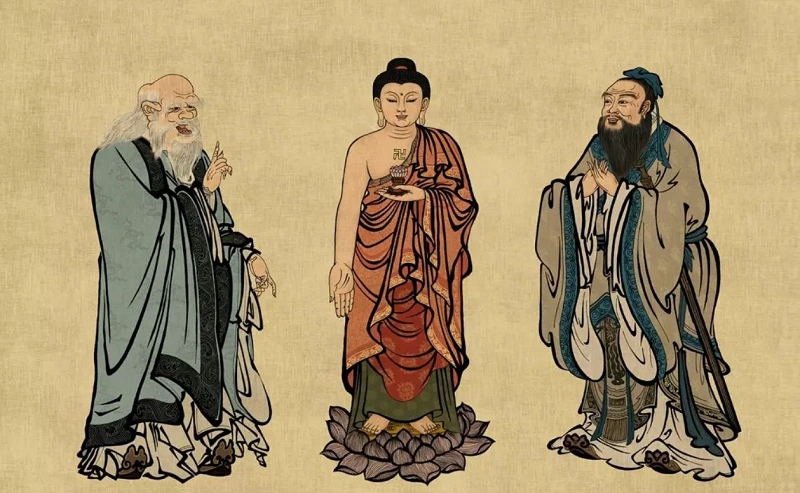
Quick answer: The “Three Teachings” (Tam Giao) refers to the blending of Buddhism, Confucianism and Taoism into a single, harmonious worldview that has shaped Vietnam for centuries. Rather than competing, the three are seen as complementary: Buddhism offers spiritual enlightenment, Confucianism provides social and moral order, and Taoism brings mysticism and harmony with nature.
Central to understanding Vietnamese spirituality is the concept of Tam Giáo, the “Three Teachings” or “triple religion.” For centuries, three doctrinal systems have intertwined so closely that many Vietnamese draw on all three without seeing any contradiction:
- Buddhism provides the philosophical framework, focused on enlightenment, compassion and ethical living.
- Confucianism shapes society, emphasising filial piety, respect for hierarchy, education and moral duty, the glue of family and community life.
- Taoism contributes mysticism and ritual, addressing the balance of yin and yang and harmony with the natural world.
Blended with indigenous folk practices, these three create a uniquely Vietnamese ethos. This “cultural additivity,” the ability to absorb and combine rather than replace, is the defining feature of religion in Vietnam, and explains why a single person might honour Confucian values, pray at a Buddhist pagoda, and observe Taoist-influenced rituals all at once.
What Is Vietnamese Folk Religion?
Quick answer: Vietnamese folk religion isn’t a structured system but a collection of practices centred on ancestor worship, nature spirits, and local deities. The most widespread is veneration of ancestors, found in nearly every home and business. It also includes worship of mother goddesses (Dao Mau) and protective spirits, reflecting deep indigenous roots predating organised religion.
At the very heart of the mosaic lies folk religion, the most widely practised spiritual tradition in Vietnam, even among those who identify as non-religious. It isn’t an organised system with a single doctrine, but a living collection of practices rooted in the land’s ancient past. Its core elements include:
- Ancestor veneration. The most universal practice, found in nearly every Vietnamese home and business through the family altar. It’s so central that we explore it fully in our guide to ancestor worship in Vietnam.
- Nature and spirit worship. Reverence for natural forces, sacred trees, and the spirits believed to inhabit the world, a legacy of early animism.
- Mother Goddess worship (Đạo Mẫu). An indigenous tradition honouring mother goddesses and legendary figures, sometimes through spirit-medium rituals (lên đồng).
These folk practices form the bedrock of Vietnamese spirituality, blending seamlessly with the organised religions layered on top. They are also the most universal: even Vietnamese who say they follow no religion will almost always keep an ancestor altar and observe the key folk customs, making folk religion the quiet, common thread running through the entire nation, regardless of any other faith a person may hold.
How Important Is Buddhism in Vietnam?
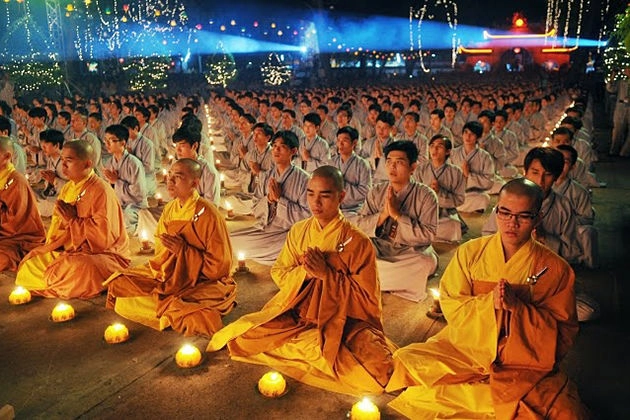
Quick answer: Buddhism is the most influential organised religion in Vietnam, arriving around the 2nd century CE and shaping the nation’s culture, ethics and art for nearly 2,000 years. Predominantly Mahayana (with Theravada among the Khmer community), it blends with folk beliefs and the Three Teachings. Pagodas, festivals and Buddhist concepts permeate everyday Vietnamese life.
Buddhism holds a special place as the most influential organised faith in Vietnam. Arriving from India and China around the 2nd century CE, it put down roots that now stretch back nearly two millennia, and during the Lý and Trần dynasties it flourished as effectively a state religion. Most Vietnamese Buddhism is of the Mahayana school, though the Theravada tradition is central to the Khmer community in the Mekong Delta.
What makes Vietnamese Buddhism distinctive is its flexibility: from the beginning it blended with indigenous folk beliefs and the other Teachings rather than displacing them. Its influence reaches far beyond temples, shaping the language (everyday words like “duyên” for karmic connection), moral outlook (the concept of “nghiệp,” or karma), and countless small acts of compassion in daily life. We explore this rich tradition in depth in our guide to Buddhism in Vietnam.
What Is the History of Christianity in Vietnam?
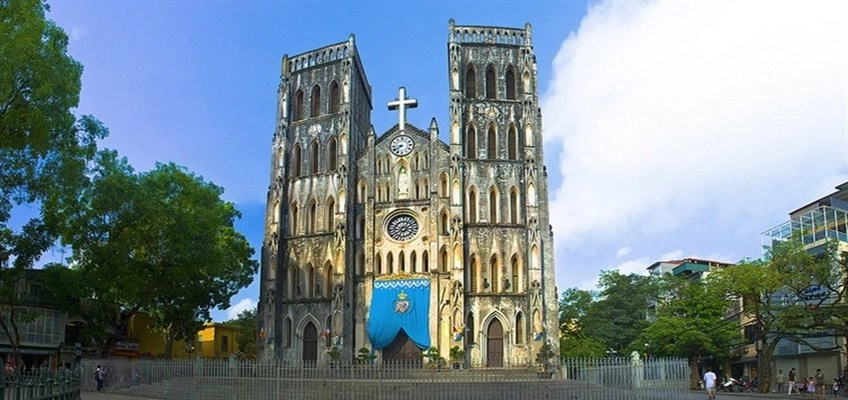
Quick answer: Christianity arrived with European missionaries from the 16th century, growing especially under French colonial rule. Catholicism is now one of the largest organised religions in Vietnam, with around 6 to 7 million followers, one of the biggest Catholic communities in Asia. Protestantism, though smaller, has grown notably among ethnic minorities in the Central Highlands.
Christianity adds a vivid thread to Vietnam’s religious fabric. <a href=”https://en.wikipedia.org/wiki/Religion_in_Vietnam”>Catholicism was introduced by European missionaries, with Portuguese and French missionaries especially influential, and grew significantly during the French colonial period</a>. Today, Vietnam is home to roughly 6 to 7 million Catholics, making it one of the largest Catholic communities in Asia, with a character all its own (many Vietnamese Catholics still honour their ancestors, blending faith with tradition).
Protestantism, introduced in the early 20th century, is smaller but has grown notably, particularly among ethnic-minority communities in the Central Highlands. From grand colonial cathedrals like Saigon’s Notre-Dame to neighbourhood churches, Christianity is now firmly part of the cultural landscape, with Christmas celebrated joyfully even by non-Christians. For more, see our guide to Christianity in Vietnam and its iconic churches.
Is There Islam in Vietnam?
Quick answer: Yes. Islam in Vietnam is practised mainly by the Cham ethnic minority, who first encountered it centuries ago through trade and the historic Champa kingdom. Vietnamese Islam has developed unique local characteristics, blending Islamic practice with Cham cultural traditions. Though a small community, it adds another distinctive layer to the country’s religious diversity.
Islam is one of Vietnam’s smaller but most distinctive faiths, practised predominantly by the Cham people, an ethnic minority descended from the historic Champa kingdom of central Vietnam. The Cham encountered Islam centuries ago through maritime trade, and over time developed a form of practice with unique local characteristics, blending Islamic faith with longstanding Cham cultural traditions.
Vietnamese Muslims, following the Sunni tradition, gather at mosques that serve as focal points for both worship and community life, and observe major festivals like Ramadan and Eid. Though small in number, the community has preserved its faith and cultural identity across generations, contributing meaningfully to Vietnam’s religious diversity. Because it differs in fascinating ways from Islam elsewhere in the world, we cover it in detail in our guide to Islam in Vietnam.
What Are Vietnam’s Homegrown Religions?
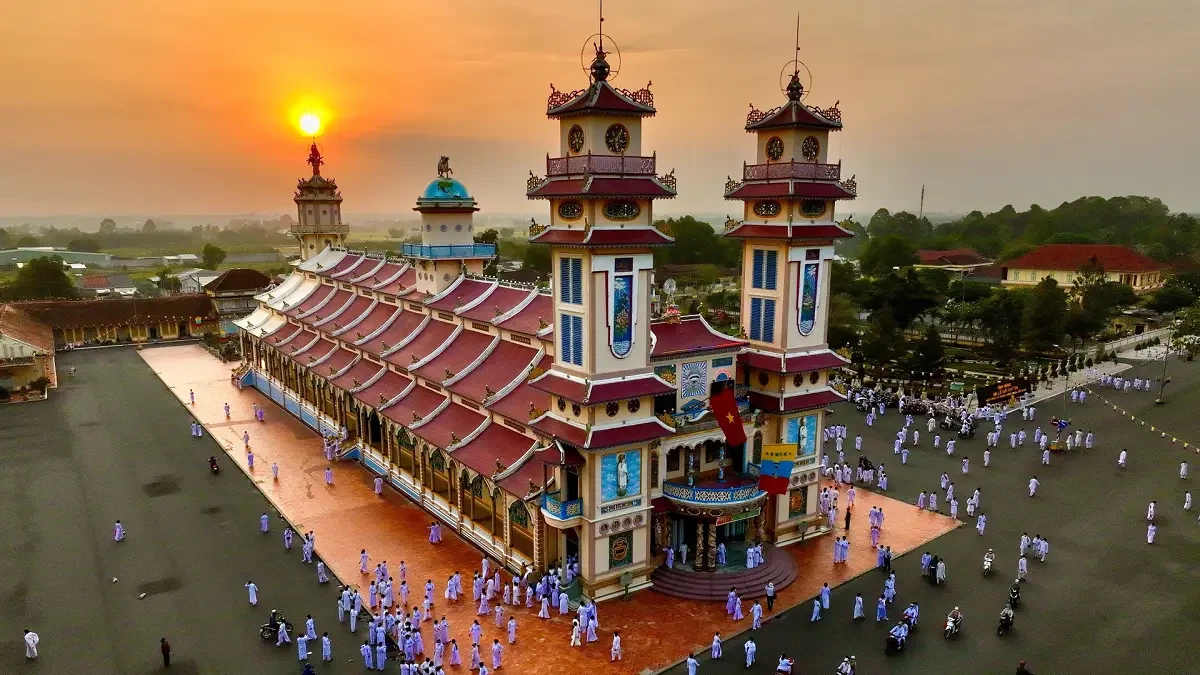
Quick answer: Vietnam is home to two major indigenous religions founded in the 20th century. Cao Dai (Caodaism) is a syncretic faith that blends elements of Buddhism, Christianity, Confucianism, Taoism and more, seeking to unite world religions. Hoa Hao is a reformist Buddhist movement from the Mekong Delta emphasising simple faith, community and good works. Both have substantial followings in southern Vietnam.
Beyond the world religions, Vietnam has produced its own unique faiths, both born in the 20th-century south:
- Cao Dai (Đạo Cao Đài). A remarkable syncretic religion founded in the 1920s that seeks to unite all the world’s great faiths under one truth, blending Buddhism, Confucianism, Taoism, Christianity and more. Its colourful Holy See in Tay Ninh is famous for its striking architecture and ceremonies.
- Hoa Hao (Phật giáo Hòa Hảo). A reformist Buddhist movement founded in 1939 in the Mekong Delta, emphasising simple, personal faith practised at home, community service and good works over elaborate ritual.
These homegrown religions, with substantial followings particularly in the south, are a testament to Vietnam’s spiritual creativity and its enduring impulse to blend and adapt. Cao Đài in particular is one of the most fascinating religions in the world: it venerates an eclectic mix of figures from across human history as saints, and its Holy See in Tây Ninh, with its dragon-wrapped pillars and vibrant colours, draws visitors from around the globe who come to witness its mass ceremonies. Hòa Hảo, meanwhile, reflects a very Vietnamese practicality, stripping religion back to personal faith and good deeds, which resonated deeply with the farming communities of the Mekong Delta. Together, these two faiths show that Vietnam’s spiritual story is not just one of absorbing outside influences, but of actively creating new traditions of its own.
How Has Religion in Vietnam Evolved Over Time?
Quick answer: Vietnam’s religious landscape was built in layers over millennia. Indigenous folk beliefs and ancestor worship came first, followed by Buddhism, Confucianism and Taoism arriving from around the 2nd century. Christianity came with European missionaries from the 16th century, and homegrown faiths like Cao Dai and Hoa Hao emerged in the 20th century. Each layer blended with what came before.
To understand Vietnamese spirituality, it helps to see it as a series of layers added over thousands of years, each absorbed rather than replacing the last. The foundation is the oldest: indigenous animism, nature worship and ancestor veneration, beliefs that predate any organised religion and still underpin everything today.
From around the 2nd century CE, the “Three Teachings” arrived: Buddhism from India and China, alongside Confucianism and Taoism, which intertwined with the existing folk beliefs over the following centuries, flourishing especially during the Lý and Trần dynasties. Much later, from the 16th century, European missionaries introduced Christianity, which grew significantly under French colonial rule. Finally, the turbulent early 20th century gave rise to entirely new, homegrown faiths, Cao Đài and Hòa Hảo, born in the south. This layering, with each tradition blending into the mix rather than erasing the others, is precisely what created Vietnam’s uniquely tolerant, syncretic religious character.
How Do Vietnam’s Religions Coexist in One Family?
Quick answer: It’s common for a single Vietnamese family, or even one person, to practise elements of several traditions at once. Someone might honour ancestors at a home altar, pray at a Buddhist pagoda, follow Confucian family values, and observe Taoist-influenced customs, all without contradiction. This blending, rather than exclusive membership, is the everyday reality of religion in Vietnam.
Perhaps the best way to grasp Vietnamese religion is to look at how it plays out within a single household. Rather than belonging exclusively to one faith, many Vietnamese weave several traditions seamlessly into daily life. The same person may light incense at the family ancestor altar each morning, visit a Buddhist pagoda to pray for peace at the new year, live by Confucian values of filial piety and respect, and consult Taoist-influenced beliefs when choosing an auspicious date.
This isn’t seen as confusing or contradictory; it’s simply how spirituality works here. Each tradition serves a different purpose, Buddhism for compassion and the afterlife, Confucianism for social and family order, Taoism for harmony and ritual, and folk religion for connection to ancestors and the local world. Even families with members of different faiths, such as a Catholic married into a Buddhist family, typically navigate this with mutual respect, often sharing in each other’s important occasions. This everyday harmony, lived out in millions of homes, is the true heart of Vietnam’s religious mosaic.
How Does Religion Shape Daily Life in Vietnam?
Quick answer: Religion in Vietnam is woven into everyday life rather than confined to places of worship. Most homes and businesses have an altar for ancestors or deities, incense is offered regularly, and many religious festivals have become national celebrations. Spiritual concepts shape language, ethics and customs, from karma to filial piety, making belief a quiet but constant presence.
In Vietnam, spirituality isn’t a separate, weekly activity but a thread running through ordinary life. Walk down any street and you’ll see its presence: small altars in shops and homes, incense smoke curling from doorways, and offerings of fruit and flowers left for ancestors and deities. Faith here is practical and intimate, woven into the rhythm of daily existence.
This integration shows up in many ways. Major religious occasions, like Tết, the Lunar New Year, and the Mid-Autumn Festival, have become national celebrations enjoyed by everyone. Spiritual concepts shape the very language and moral outlook, from karma (“nghiệp”) to filial piety. And countless small customs, choosing auspicious dates, visiting pagodas at the new year, honouring the dead, reflect a worldview where the spiritual and the everyday are inseparable. For visitors, recognising this makes the culture far richer to experience.
What Should Travellers Know About Visiting Religious Sites?
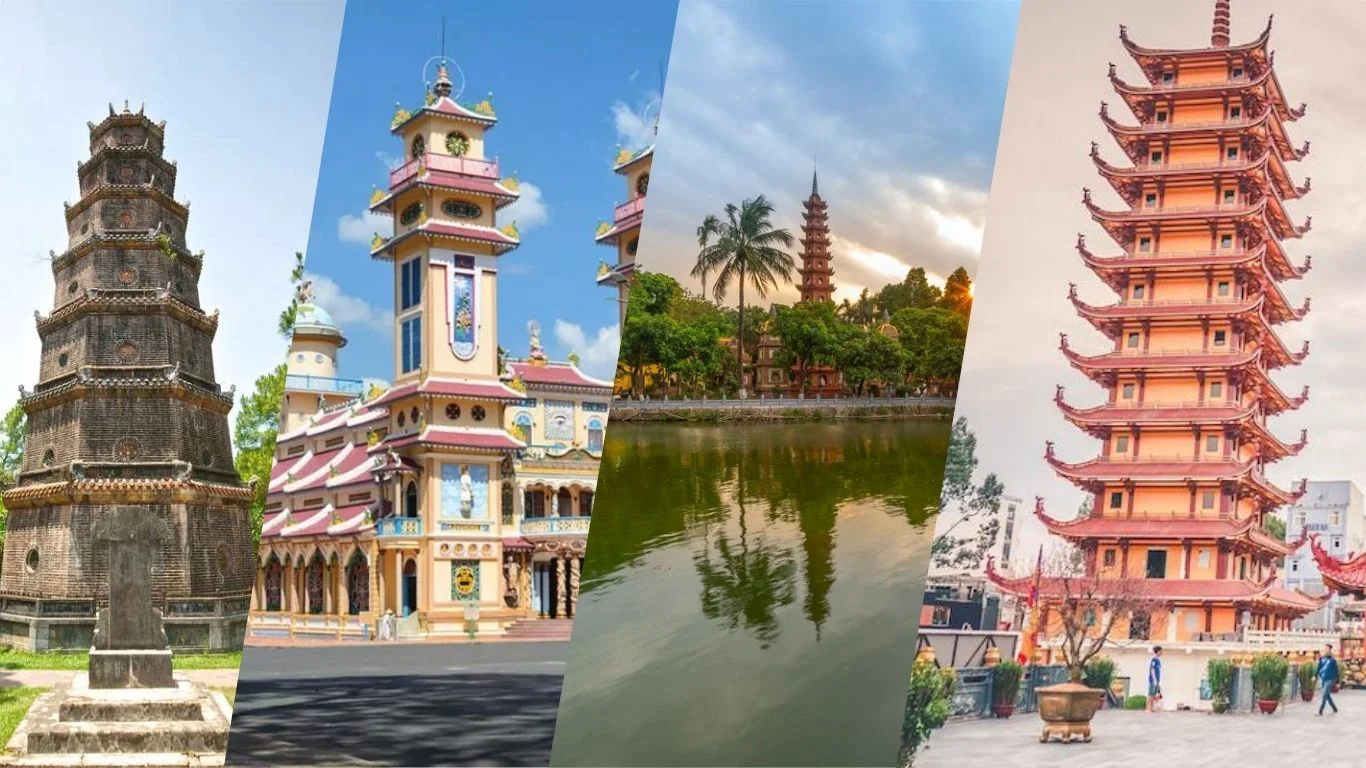
Quick answer: Dress modestly at temples, pagodas, churches and mosques, covering shoulders and knees, and remove shoes where required. Behave respectfully: keep your voice low, ask before photographing people at worship, don’t touch altars or sacred objects, and step over (not on) thresholds at pagodas. A little awareness shows respect and is always warmly appreciated.
Vietnam’s religious sites are among its most rewarding places to visit, and a few simple courtesies ensure you’re a welcome guest:
- Dress modestly. Cover your shoulders and knees at all religious sites, temples, pagodas, churches and mosques alike. Carrying a light scarf or shawl is handy for this. For more, see our guide to Vietnamese culture and etiquette.
- Remove your shoes where indicated, especially in temple and pagoda interiors and at mosques.
- Be quiet and respectful. Keep your voice low, switch your phone to silent, and never interrupt people who are praying.
- Ask before photographing. Always seek permission before photographing worshippers, and look for signs indicating where photography is not allowed.
- Mind sacred objects. Don’t touch altars, statues or offerings, and at traditional pagodas, step over the raised wooden thresholds rather than on them.
These small gestures of respect are always noticed and appreciated, and they open the door to a deeper, warmer experience of Vietnam’s spiritual life.
Why Is Vietnam So Religiously Tolerant?
Quick answer: Vietnam’s religious tolerance flows from its blending tradition. Because most Vietnamese already combine multiple beliefs (Buddhism, Confucianism, Taoism, folk practices) without conflict, exclusive religious identity is less common, and coexistence comes naturally. This “cultural additivity,” absorbing rather than replacing, has allowed diverse faiths to flourish side by side for centuries.
The defining feature of Vietnamese religion is its harmony, and it stems directly from the culture’s habit of blending rather than choosing. Because the average person already weaves together several traditions without any sense of contradiction, praying at a pagoda, honouring Confucian values, and lighting incense for ancestors, the very idea of exclusive, competing religious identities is softened.
This deep-rooted syncretism creates fertile ground for tolerance: when faith is seen as something you add to rather than something that defines you against others, diverse beliefs can coexist comfortably. The result is a society where, as it modernises, religious communities continue to adapt, evolve and flourish side by side, an integral part of Vietnamese national identity built on respect for ancestral roots and openness to new ideas.
The Living Soul of Vietnamese Spirituality
Vietnam’s religious mosaic is not a museum piece but a living, breathing part of daily life, visible in the incense smoke of a family altar, the bells of a colonial cathedral, the call to prayer at a Cham mosque, and the lanterns of a Buddhist festival. What unites this diversity is the Vietnamese genius for blending and tolerance, the ability to hold many traditions at once and let them flourish together. For any traveller, understanding this spiritual landscape is the key to understanding the soul of the country itself. To witness it is to see a nation that has, over thousands of years, learned the rare art of holding many beliefs together in peace, a quiet, enduring wisdom woven into the rhythm of everyday Vietnamese life.
The best way to feel Vietnam’s living spiritual heritage is up close, in its temples, churches and hidden corners, with a local guide. Discover the city’s sacred sites on the Saigon’s Secrets tour »
Frequently Asked Questions
What is the main religion in Vietnam? Folk religion, centred on ancestor worship, is the most widely practised tradition, while Buddhism is the most influential organised religion. However, most Vietnamese blend several traditions, Buddhism, Confucianism, Taoism and folk beliefs, rather than following one exclusively. Vietnam has no official state religion.
What are the Three Teachings (Tam Giao)? Tam Giao refers to the blending of Buddhism, Confucianism and Taoism into one harmonious worldview that has shaped Vietnam for centuries. Rather than competing, they’re complementary: Buddhism offers enlightenment, Confucianism provides social and moral order, and Taoism brings mysticism and harmony with nature.
Is Vietnam a Buddhist country? Buddhism is the most influential organised religion and has shaped Vietnamese culture for nearly 2,000 years, so it’s often called Buddhist. But the reality is more complex: most Vietnamese blend Buddhism with folk beliefs, Confucianism and Taoism, and folk religion centred on ancestor worship is actually the most widespread practice.
Are there Christians in Vietnam? Yes. Catholicism, introduced by European missionaries from the 16th century, is one of the largest organised religions, with around 6 to 7 million followers, one of the biggest Catholic communities in Asia. Protestantism is smaller but growing, especially among ethnic minorities in the Central Highlands.
Is Vietnam religiously tolerant? Yes. Vietnam’s tradition of blending multiple beliefs without conflict makes coexistence natural, and its constitution guarantees freedom of belief. Because most people already combine several traditions, exclusive religious identity is less common, allowing Buddhism, Christianity, Islam, folk religion and homegrown faiths to flourish peacefully side by side across the country.