
Islam in Vietnam has deep roots in Cham history, shaped over centuries by maritime trade and cultural exchange. From the south-central coast to the Mekong Delta and Ho Chi Minh City, Muslim communities continue to practise their faith and pass on their traditions. This guide explores that history, introduces Cham Bani and Sunni traditions, and looks at mosques as places of worship and community gathering. For Muslim travellers planning a visit, it also includes practical information on halal food and places to pray.
An Introduction to Islam in Vietnam
Quick answer: Yes. Islam is a small but long-established faith in Vietnam, practised mainly by the Cham ethnic minority. Around 160,000 to 190,000 Muslims live in the country (roughly 0.2% of the population), worshipping at more than 90 mosques nationwide, with a notable community in Ho Chi Minh City. Though small, the community is vibrant, visible and culturally distinctive.
Most people don’t expect to find Islam in a country shaped so heavily by Buddhism and Confucianism, but it has been part of Vietnam’s fabric for centuries. Islam in Vietnam is primarily associated with the Cham ethnic minority, and while the community is small, it’s far from invisible.
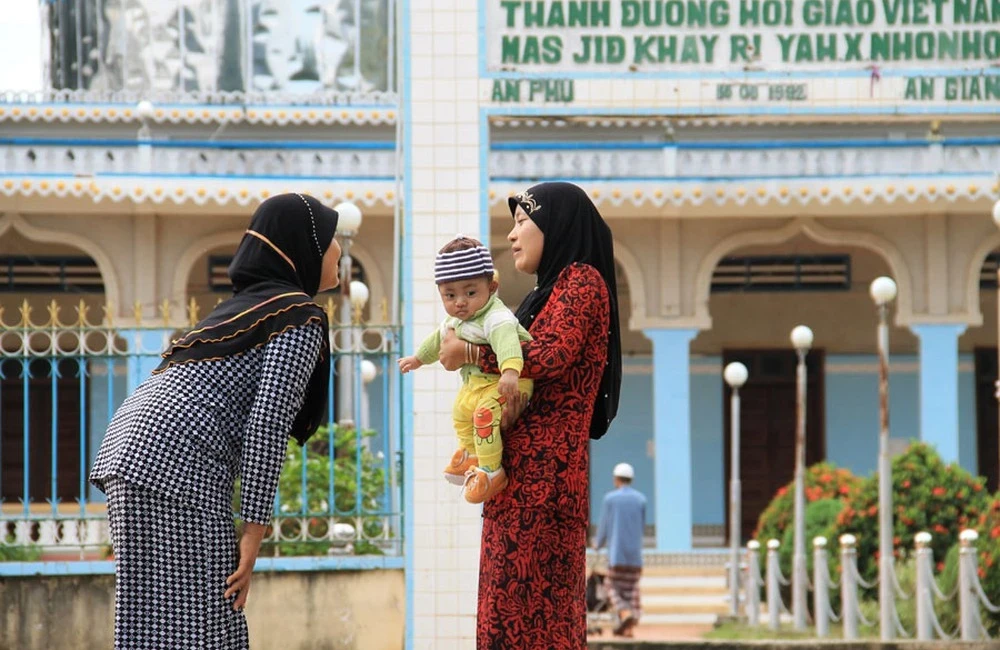
By the numbers, Vietnam is home to an estimated 160,000 to 190,000 Muslims, making up around 0.2% of the population, with the figure expected to grow in the coming years. They worship at more than 90 mosques across the country. Although tiny compared with the Buddhist or Catholic communities, Vietnamese Islam remains vibrant and visible, with a rich heritage and traditions that set it apart from Islam almost anywhere else in the world. It’s one of six religions officially recognised by the state, as covered in our overview of religions and beliefs in Vietnam.
The History of Islam in Vietnam
Quick answer: Islam arrived centuries ago through maritime trade. From around the 9th to 12th centuries, Muslim traders from the Middle East, India, Persia and Malaysia sailed Southeast Asian routes and stopped along the Cham coastline of central Vietnam. Through trade, intermarriage and cultural exchange, Islam took root among the Cham of the historic Champa Kingdom.
The story of Islam in Vietnam begins on the sea routes that once connected the world. Centuries ago, Muslim traders from the Middle East, India, Persia and Malaysia sailed the great Southeast Asian trade routes, and from around the 9th to 12th centuries, many docked along the Cham coastline in what is today central Vietnam. They came to trade spices, silk and pottery, and as so often in history, they also exchanged culture, married into local communities, and planted the first Islamic roots.
Vietnam’s ancient Champa Kingdom, which stretched across the central coast, was remarkably well connected internationally, and those connections allowed Islam not just to appear but to flourish. For a time, in certain regions, it grew strong among the Cham. Over the following centuries, shifting dynasties, the decline of the Champa Kingdom and a series of regional conflicts reshaped Vietnam’s cultural map, but the Cham preserved their faith, carrying it through profound historical change.
Cham Bani and Sunni Traditions in Vietnam
Quick answer: Centuries of relative isolation from the wider Islamic world led part of the Cham community to develop “Bani Islam,” a localised, syncretic form of the faith. It blends Islamic belief with indigenous Cham traditions, and differs in practice: followers may pray mainly on Fridays, observe a shortened Ramadan, and perform some rituals symbolically. About 70% of Vietnamese Muslims follow Bani Islam, with around 30% following mainstream Sunni Islam.
This is where Vietnamese Islam becomes truly distinctive. Because the Cham were, for long periods, relatively isolated from the mainstream Islamic world, part of the community developed a uniquely localised form of the faith known as Bani Islam (or Cham Bani). Roughly 70% of Vietnamese Muslims follow this tradition, while about 30% follow mainstream Sunni Islam.
What sets Bani Islam apart is its syncretism, the way it blends Islamic faith with longstanding indigenous Cham beliefs and customs. As a result, some practices differ from those elsewhere in the Muslim world: followers traditionally pray mainly on Fridays rather than five times daily, observe a shortened, symbolic Ramadan, and perform certain rituals in a symbolic rather than literal way. Far from a deviation, this reflects the Cham’s remarkable ability to preserve their identity while weaving faith into their distinct culture, exactly the kind of blending that defines Vietnamese spirituality as a whole.
Muslim Communities Across Vietnam
Quick answer: The Cham Muslim heartland is in the south-central coastal provinces (like Ninh Thuan and Binh Thuan), historic Champa territory, along with the Mekong Delta (notably An Giang). Ho Chi Minh City has the most diverse Muslim community, blending Cham locals with Muslims from Malaysia, Indonesia, India and the Middle East, giving its mosques and halal restaurants an international atmosphere.
Vietnam’s Muslim communities are concentrated in a few key areas, each with its own character:
- The south-central coast. Provinces like Ninh Thuan and Binh Thuan are the heart of Bani Islam, still carrying the ancient Cham cultural spirit. Festivals, rituals and mosques here are unlike anywhere else in the world.
- The Mekong Delta. Communities here, notably in An Giang, tend toward more orthodox Sunni practice, with historic ties to Malay Muslim traders.
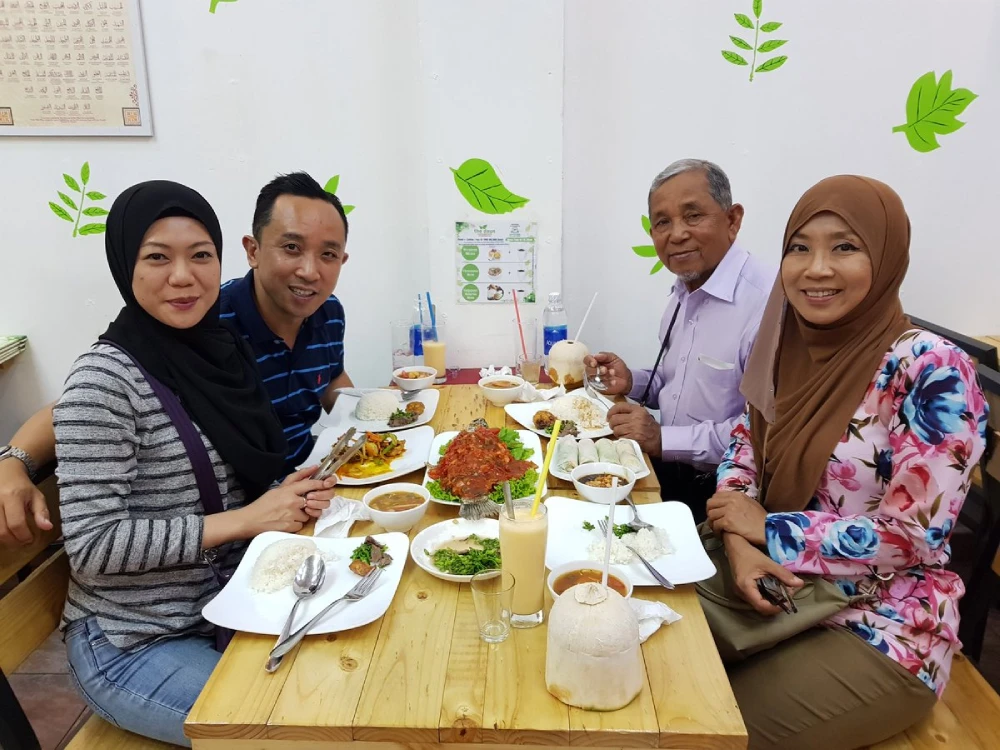
- Ho Chi Minh City. The most multicultural Muslim community in the country. Here you’ll meet Cham Muslims alongside people from Malaysia, Indonesia, India and the Middle East who have come for work, business or study, giving Saigon’s mosques and halal restaurants a lively, international feel.
This geographic spread, from traditional coastal villages to cosmopolitan Saigon, is part of what makes Vietnamese Islam so fascinating to explore.
Cham Communities: Religious Observances and Cultural Traditions
Quick answer: Cham Muslims observe the major Islamic festivals, including Ramadan and Eid, though Bani communities often mark them in their own distinctive, localised way. They also maintain unique Cham cultural traditions, ceremonies, dress and music passed down through generations. Religious leaders (imams) guide community life, and festivals are vibrant focal points that blend Islamic faith with Cham heritage.
The festival life of Vietnam’s Muslim communities is a beautiful illustration of how faith and culture intertwine. Like Muslims worldwide, they observe the central occasions of the Islamic calendar, including Ramadan and Eid al-Fitr, which bring communities together for prayer, reflection and celebration. Among the Bani communities, however, these are often marked in a distinctive, localised form, reflecting the syncretic nature of Cham Bani practice.
Alongside the religious calendar, the Cham maintain a wealth of their own cultural traditions: ceremonies, traditional dress, music and customs that have been passed down through generations and woven together with their faith. Religious leaders play a central role in guiding both worship and community life. For a visitor lucky enough to witness one, a Cham festival is a vivid, moving window into a culture that has preserved its identity through centuries of change, a living heritage found nowhere else.
The Cultural Heritage of the Cham People
Quick answer: The Cham are an ethnic minority descended from the historic Champa Kingdom, which flourished along central Vietnam’s coast for over a thousand years. Their heritage includes remarkable architecture (like the UNESCO-listed My Son temples), distinctive crafts such as weaving and pottery, music and dance. Today’s Cham Muslims carry forward this rich identity alongside their faith.
To understand Vietnamese Islam, it helps to understand the Cham people who carry it. The Cham are descendants of the Champa Kingdom, a sophisticated, internationally connected civilisation that flourished along the central Vietnamese coast for more than a thousand years. Their legacy is visible across the region, most famously in the UNESCO-listed My Son sanctuary, an evocative complex of ancient temples that speaks to the kingdom’s artistic and architectural brilliance.
Beyond monuments, Cham heritage lives on in distinctive crafts, the community is known for its weaving and pottery traditions, as well as in its music, dance and language. Today’s Cham Muslims carry this deep cultural identity forward alongside their faith, making them a living link to one of Southeast Asia’s great historic kingdoms. This blend of ancient heritage and enduring religion is precisely what makes their community so culturally significant within Vietnam.
Mosques in Vietnam: Architecture, Worship and Community
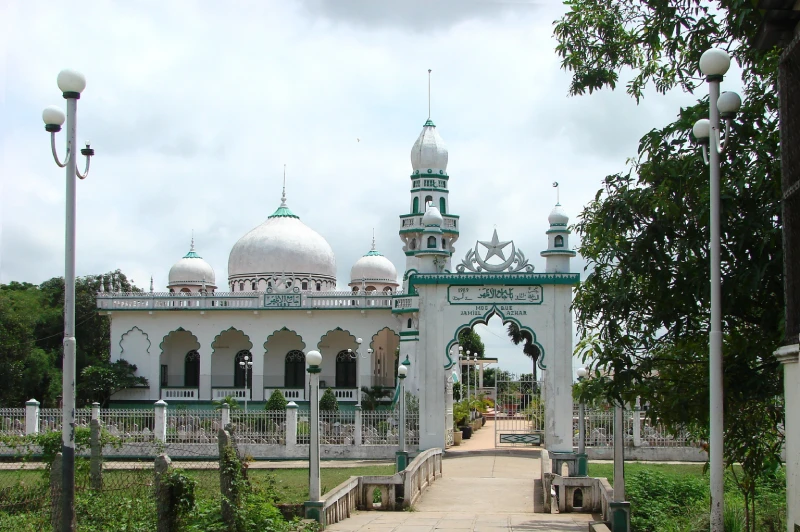
Quick answer: Vietnam’s mosques range from cosmopolitan city mosques in Ho Chi Minh City to the strikingly beautiful Cham mosques of the south. Cham mosques in particular are famous for their distinctive architecture, often white-and-green with intricate geometric patterns, making them both spiritually significant and highly photogenic. They serve as focal points for worship and community life.
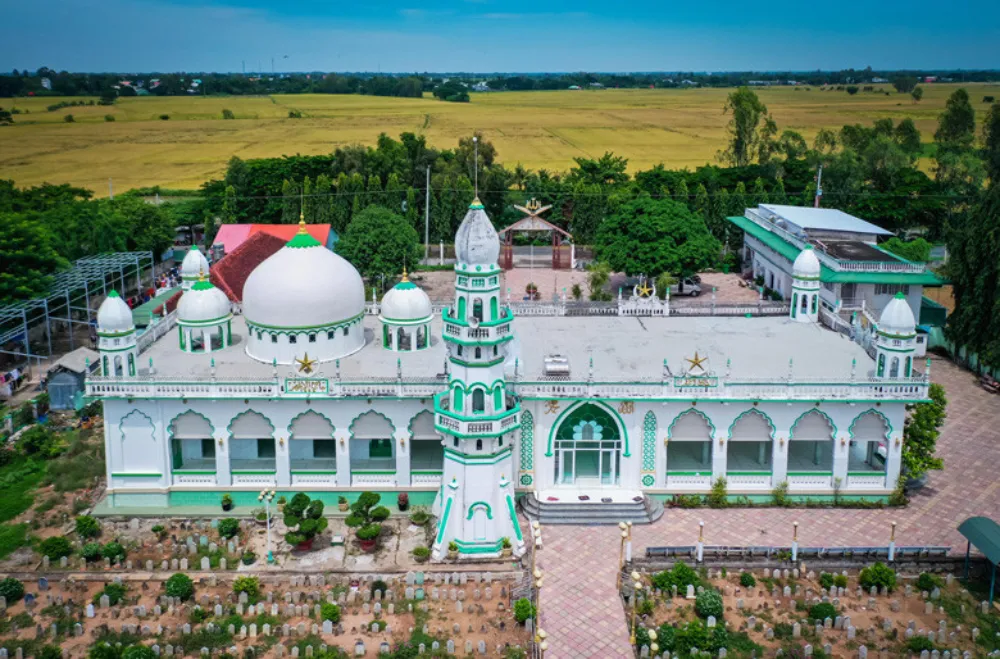
For travellers interested in architecture and culture, Vietnam’s mosques offer something special. In Ho Chi Minh City, the mosques reflect the community’s international makeup, serving as gathering points for a diverse, multicultural congregation. But it’s the Cham mosques of the south that are most visually striking.
Many southern Cham mosques are beautifully designed, often in white and green with intricate geometric patterns, set against rural or riverside backdrops that make them wonderfully photogenic. Beyond their beauty, these mosques are the beating heart of community life, serving as focal points for worship, social gatherings and the celebration of major festivals. Visiting one (respectfully, and dressed modestly) offers a peaceful, eye-opening glimpse into a side of Vietnam few travellers ever see.
Muslim Travel in Vietnam: Halal Food and Places to Pray
Quick answer: Yes, Vietnam is an increasingly Muslim-friendly destination. Halal food is widely available in Ho Chi Minh City and other areas with Muslim communities, and halal food tours are popular. Mosques across the country welcome worshippers, and the multicultural Muslim community in Saigon makes it easy to find halal restaurants and a sense of community.
Vietnam has become a genuinely welcoming destination for Muslim travellers. In Ho Chi Minh City especially, the diverse Muslim community supports a good range of halal restaurants, and halal food tours have grown popular as a delicious way to explore the city’s international flavours. With more than 90 mosques nationwide, and a notable cluster in Saigon, finding a place to pray is straightforward in the main areas.
The warmth of the local Muslim community adds to the experience: many Cham and international Muslims are happy to share their culture with curious or fellow-Muslim visitors. While smaller towns and rural areas will naturally have fewer halal options, a little planning goes a long way, and the cosmopolitan hubs make Vietnam an easy and rewarding place for Muslim travellers to enjoy.
Islam and Vietnam’s Religious Diversity
Quick answer: Islam is one thread in Vietnam’s broader tapestry of faiths, which includes Buddhism, Catholicism, folk religion and homegrown faiths like Cao Dai and Hoa Hao. Like the others, Vietnamese Islam has adapted to local culture while preserving its identity, embodying the country’s defining spirit of blending and coexistence among diverse beliefs.
Islam is a small but meaningful part of Vietnam’s remarkable religious mosaic. Rather than standing apart, it reflects the same dynamic that shapes all faith in the country: the ability to take root, adapt to local culture, and coexist peacefully alongside very different traditions. The Cham community’s blending of Islam with indigenous custom mirrors how Vietnamese Buddhism absorbed folk beliefs, and how Vietnamese Catholicism developed its own local character.
Understanding Islam enriches the bigger picture of Vietnamese spirituality, a landscape where a Cham mosque, a Buddhist pagoda, a Catholic cathedral and a family ancestor altar can all exist within the same country, and sometimes the same neighbourhood. To explore the full picture, see our guides to Christianity in Vietnam and the wider world of religions and beliefs in Vietnam.
Appreciating Vietnam’s Muslim Heritage
Islam in Vietnam is one of the country’s best-kept cultural secrets: a centuries-old faith, carried by the resilient Cham people, that blended with local tradition to become something found nowhere else on Earth. From the photogenic mosques of the southern coast to the international halal scene of Saigon, it offers a window into a Vietnam far richer and more diverse than most visitors imagine. For the curious traveller, seeking it out is a deeply rewarding way to understand the true breadth of Vietnamese culture.
The best way to discover Saigon’s multicultural soul, including its hidden communities, is up close with a local guide. Explore the city’s stories on the Saigon’s Untold Stories tour »
Frequently Asked Questions
Does Vietnam have established Muslim communities?
Yes. Islam has been part of Vietnam’s religious life for centuries, and many Muslim communities have close ties to Cham history and culture. Ho Chi Minh City is also home to a diverse community of Cham Muslims and Muslims from other countries.
How did Islam become part of Vietnam’s history?
Islam reached the Cham coast through maritime trade and cultural exchange. Muslim traders travelling through Southeast Asia formed ties with communities in the historic Champa Kingdom. Over time, trade, intermarriage and ongoing contact helped Islam take root among the Cham.
What is the Cham Bani tradition?
Cham Bani is a religious tradition practised by some Cham communities, combining Islamic beliefs with longstanding Cham customs. It is particularly associated with the south-central coast. Sunni Islam is also practised in Vietnam, including among Cham communities in the Mekong Delta.
Can Muslim travellers find halal food and mosques in Vietnam?
Yes. Ho Chi Minh City and other areas with Muslim communities have halal restaurants and mosques. Smaller towns and rural areas may have fewer options, so it helps to plan meals and places to pray before travelling.
Where are Cham mosques located in Vietnam?
Cham mosques can be found along the south-central coast and in the Mekong Delta, including An Giang. They serve as places of worship and community gathering. Ho Chi Minh City also has mosques serving Cham Muslims and international congregations.