

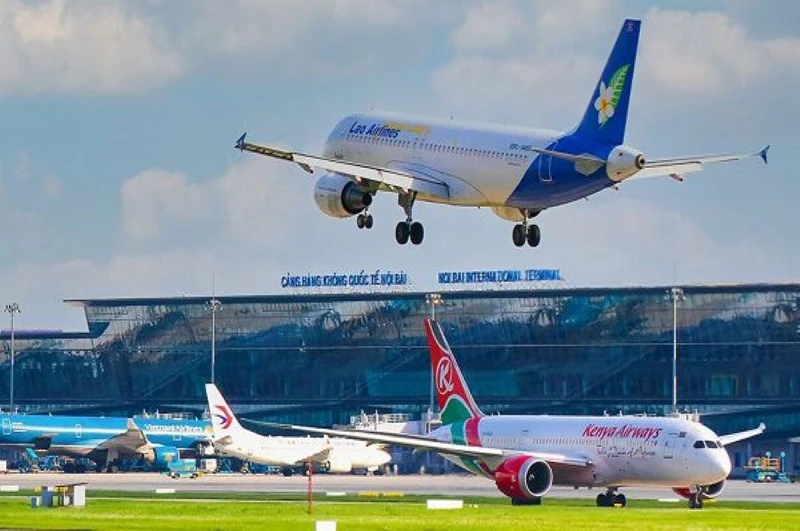
For most travellers, Noi Bai Airport is not just an airport. It’s the first breath of Vietnam. You step off the plane and feel the humidity shift, the language changes, the signage is bilingual but unfamiliar, and you hear Vietnamese tones for the first time. You’re tired, maybe slightly disoriented, and now you have to navigate immigration, baggage claim, SIM cards, taxis and traffic. If this is your first time in Vietnam, this guide will make that first hour calm instead of chaotic, covering the terminals, getting to Hanoi, money, SIM cards and how to avoid the common pitfalls.
Where Is Noi Bai International Airport?
Quick answer: Noi Bai (HAN) is located in Soc Son, about 27 to 30 km north of Hanoi’s Old Quarter (city centre). The drive takes roughly 45 to 60 minutes depending on traffic. It’s the largest airport in northern Vietnam and the country’s second-busiest, after Tan Son Nhat in Ho Chi Minh City.
Noi Bai sits well outside the city, to the north of Hanoi, so factor in travel time when you plan. The journey to the Old Quarter, the historic heart of Hanoi where most visitors stay, covers around 27 to 30 km and usually takes 45 to 60 minutes, longer during rush hour. As the main gateway to northern Vietnam, Noi Bai handles millions of passengers a year, far more than it was originally built for, which explains why it can feel crowded during peak arrival waves. It’s Vietnam’s second-busiest airport, after Saigon’s Tan Son Nhat.
A Brief History of Noi Bai Airport
Quick answer: Noi Bai began as a military airfield used by the Vietnamese Air Force, before opening to civilian flights in 1978. It has expanded steadily since, with the international Terminal 2 opening in 2014. Today it’s the largest airport in northern Vietnam and a key hub for the region’s tourism and economy.
Noi Bai’s story reflects Hanoi’s growth as a capital. The airport originated as a military airbase before beginning civil operations in 1978, in the years after the country’s reunification. For decades it operated with limited capacity, but as Vietnam opened up and tourism grew, demand soared.
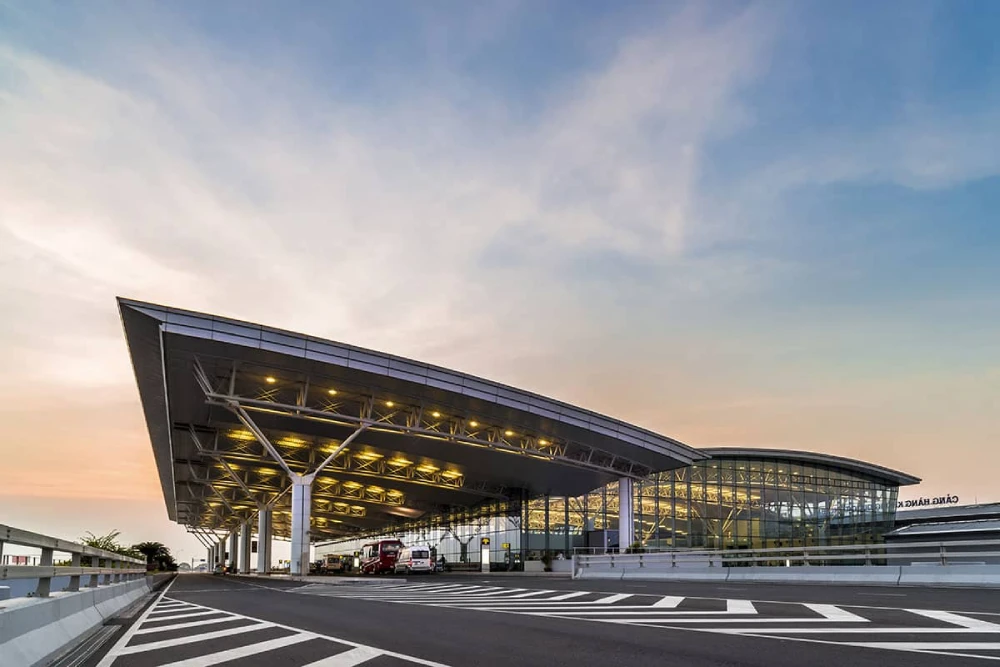
The opening of the modern Terminal 2 in 2014 marked a major upgrade, dramatically increasing the airport’s international capacity and giving long-haul travellers a brighter, better-equipped arrival experience. Today, Noi Bai still retains both civil and military functions, with separate areas for each, and serves as the principal gateway to Hanoi and the entire north of the country, connecting the capital to destinations across Asia, Europe, the Middle East and beyond. Even so, it remains practical and functional rather than flashy, a no-nonsense gateway that does its job well.
What Are the Terminals at Noi Bai Airport?
Quick answer: Noi Bai has two terminals. Terminal 1 (T1) handles domestic flights, and Terminal 2 (T2), opened in 2014, handles all international arrivals and departures. They are separate buildings connected by a free shuttle bus, so if you’re transferring between a domestic and international flight, allow time to move between them.
Understanding the two-terminal layout prevents a stressful mistake:
- Terminal 1 (T1) – Domestic. Serves domestic carriers like Vietnam Airlines and VietJet for flights within Vietnam. It can get crowded during local holidays.
- Terminal 2 (T2) – International. Opened in 2014, this newer, airier terminal handles all international arrivals and departures, with modern amenities designed for long-haul travellers.
The two terminals are separate buildings linked by a free shuttle bus. This matters most if you’re connecting between an international and a domestic flight: you’ll need to clear immigration, collect your bags, and transfer by shuttle, so allow plenty of time (at least three hours for such a connection).
How Do You Get from Noi Bai Airport to Hanoi?
Quick answer: The best options are ride-hailing apps (Grab) for fixed, transparent fares, or official metered taxis (Mai Linh, Noi Bai Taxi, G7). A ride to the Old Quarter typically costs around 280,000 to 350,000 VND ($11 to $14). Budget airport buses (like Bus 86) run into the city very cheaply. Avoid drivers who approach you inside the terminal.

Getting into Hanoi is straightforward once you know the options:
- Ride-hailing apps (recommended). Grab offers the most transparent experience, with fares fixed in the app and no haggling. A ride to the Old Quarter starts around 280,000 VND. Set up the app before you land.
- Official metered taxis. Trusted brands include Mai Linh, Noi Bai Taxi and G7. Use the official taxi ranks outside the terminal and insist the meter runs from the start. Expect around 300,000 to 350,000 VND ($12 to $14) to the Old Quarter.
- Airport buses. Budget routes like Bus 86 connect to the Old Quarter and Hanoi Railway Station for a few tens of thousands of dong, ideal if you’re travelling light. Airline minibuses are another cheap option.
Insider warning: ignore anyone offering you a ride inside the terminal. These touts overcharge and are best avoided. Stick to the official ranks or your booked Grab.
What Should You Do First When You Land at HAN?
Quick answer: After immigration and baggage claim, sort three essentials: cash, connectivity and your ride. Withdraw a moderate amount of VND from an ATM or exchange a little money, grab a local SIM or activate an eSIM, and open your ride-hailing app. Then head to the official transport area and you’re off to Hanoi.
A smooth arrival comes down to handling a few things in the right order in the Terminal 2 arrivals hall:
- Money. ATMs (Vietcombank, BIDV and others) and exchange counters are in the arrivals hall. Airport rates are poorer than in the city, so withdraw a moderate amount (around 2 to 4 million VND) for transport and first expenses, then exchange more in Hanoi. For the full rundown, see our guide on how to exchange money in Vietnam.
- Connectivity. SIM-card counters (Viettel, Mobifone, Vinaphone) sit just after customs and set up in under 10 minutes, or you can arrange an eSIM for Vietnam before you land. Free airport Wi-Fi (“NoiBaiFreeWiFi”) is also available.
- Your ride. Open Grab, book your car, and follow signs to the official pick-up point.
What Facilities Does Noi Bai Airport Have?
Quick answer: Noi Bai offers the essentials: currency exchange, ATMs, SIM-card counters, free Wi-Fi, duty-free shopping, restaurants and cafés (Highlands Coffee, Burger King, local pho and banh mi), lounges with showers for layovers, and free drinking-water stations in Terminal 2. It’s practical rather than luxurious, but it covers what travellers need.
Noi Bai is modern and functional, if not on the scale of Singapore’s Changi. Its facilities cover the basics well:
- Dining. A mix of local and international options, from Highlands Coffee and Vietnamese snack counters (pho, banh mi) to Burger King and other fast food.
- Shopping. Duty-free shops in the international departures area, plus convenience and souvenir stores. Good for last-minute Vietnamese coffee or silk.
- Lounges. Several in both terminals, accessible with Priority Pass, business-class tickets or paid day-passes, offering food, Wi-Fi, showers and quiet seating, useful for early departures or layovers.
- Essentials. Free Wi-Fi throughout, free drinking-water stations at the T2 gates, clean restrooms and plenty of seating.
What Do You Need to Know About Immigration and Visas at HAN?
Quick answer: Most visitors need a visa or e-visa, arranged before arrival, though some nationalities enjoy visa exemptions. Vietnam’s e-visa is the easiest route for most. At Noi Bai, have your passport (valid at least six months), your visa or e-visa printout, and onward travel details ready. Immigration queues can be long during peak arrival waves, so be patient.
Clearing immigration at Noi Bai is usually smooth with the right preparation. Most travellers need either a visa or an e-visa arranged in advance, while citizens of certain countries can enter visa-free for a set period. Vietnam’s online e-visa is the simplest option for most nationalities, valid for stays of up to 90 days, so apply through the official government portal well ahead of your trip and print a copy.
At the airport, immigration is in Terminal 2. Have your passport (valid for at least six months beyond your stay), your visa or e-visa printout, and details of your onward or return travel ready. Lines can be long on busy mornings when multiple long-haul flights land together, so a little patience helps. Because entry rules change, always verify the current requirements for your nationality before booking.
How Do You Avoid Scams and Problems at Noi Bai?
Quick answer: Stick to official transport, avoid drivers who approach you inside the terminal, and use the official taxi ranks or Grab. Exchange only a small amount at the airport, choose to be charged in VND at ATMs, keep small notes for taxis, and watch your belongings in crowded areas. Build in extra time during Tet and holidays.
A few simple precautions keep your arrival stress-free:
- Avoid terminal touts. Drivers approaching you inside arrivals are usually unlicensed and overcharge. Use the official ranks outside or your booked Grab.
- Exchange smartly. Change only a small amount at the airport’s poorer rates, and always select “charge in VND” (not your home currency) at ATMs to avoid bad conversion rates.
- Keep small notes. Have 50,000 and 100,000 VND notes ready for taxis and small purchases.
- Mind peak times. Immigration and traffic are worse during Tet, summer holidays and major public holidays, so build in extra time, especially for onward connections.
- Check your baggage. If your bag hasn’t appeared after about 40 minutes, ask at the baggage service desk before exiting.
What Should You Know About Departing from Noi Bai?
Quick answer: Arrive 3 hours before international flights and 2 hours before domestic ones, adding 30 to 60 minutes during peak periods. Check-in usually opens 3 hours before departure and closes 45 to 60 minutes prior. Confirm your terminal (T1 domestic, T2 international), and allow extra time given Hanoi’s unpredictable traffic.
Leaving Hanoi smoothly takes a little planning. For international departures from Terminal 2, arrive at least three hours ahead; for domestic flights from Terminal 1, two hours is a safe buffer, more during busy travel periods. Check-in desks typically open three hours before departure and close 45 to 60 minutes prior, so don’t cut it fine.
Given how unpredictable Hanoi’s traffic can be, it’s wise to leave the city early, especially for international flights. Online check-in saves time at the counter during peak windows, and security queues can be slow in the busy morning and evening departure periods. Confirm which terminal your flight uses before you set off, and remember the two terminals are separate buildings.
Where Can You Travel To From Noi Bai Airport?
Quick answer: Noi Bai is the gateway to northern Vietnam and beyond. From Hanoi you can reach iconic northern destinations like Ha Long Bay, Sapa, Ninh Binh and Ha Giang by road, or connect by air to Da Nang, Hoi An, Nha Trang, Phu Quoc and other domestic spots. It also links Hanoi to major international hubs across Asia, Europe and the Middle East.
Noi Bai opens the door to some of Vietnam’s most spectacular regions. By road from Hanoi, you’re within reach of the limestone seascape of Ha Long Bay, the misty mountains and rice terraces of Sapa, the river-and-karst scenery of Ninh Binh, and the dramatic loops of Ha Giang, all classic northern Vietnam experiences. For destinations further afield, the airport’s domestic network connects to central and southern hotspots like Da Nang (for Hoi An), Nha Trang, Da Lat and Phu Quoc.
Internationally, Noi Bai is served by Vietnam Airlines, VietJet Air and Bamboo Airways alongside major foreign carriers, linking Hanoi to regional hubs such as Bangkok, Singapore, Seoul and Tokyo, as well as long-haul routes to Europe, the Middle East and Australia. This connectivity makes Hanoi an easy starting point for exploring both Vietnam and the wider region.
From the Airport into Hanoi
Noi Bai is more than a transit point, it’s your introduction to northern Vietnam. Once you’ve cleared the terminal, sorted your cash and SIM, and booked your ride, the energy shifts the moment you’re on the road: the city begins to unfold, motorbikes multiply, and the atmospheric streets of the Old Quarter await. And while Hanoi has its own rhythm, if your journey also brings you to other parts of the country, the same calm-arrival approach applies at Da Nang in Central Vietnam and Tan Son Nhat in Saigon.
Heading to Saigon next? Discover the southern capital from the back of a vintage Vespa. Explore the city on the Saigon Vibes & Bites tour »
Frequently Asked Questions
How far is Noi Bai Airport from Hanoi city centre? Noi Bai (HAN) is about 27 to 30 km north of Hanoi’s Old Quarter, a drive of roughly 45 to 60 minutes depending on traffic. It’s the largest airport in northern Vietnam and the country’s second-busiest, after Tan Son Nhat in Ho Chi Minh City.
How many terminals does Noi Bai Airport have? Two. Terminal 1 handles domestic flights, and Terminal 2 (opened in 2014) handles all international arrivals and departures. They’re separate buildings connected by a free shuttle bus, so allow time to transfer if you’re connecting between domestic and international flights.
What’s the best way to get from Noi Bai to Hanoi? Ride-hailing apps (Grab) are the most transparent, with fixed fares of roughly 280,000 to 350,000 VND ($11 to $14) to the Old Quarter. Official metered taxis (Mai Linh, Noi Bai Taxi, G7) are similar. Budget buses like Bus 86 are very cheap. Avoid drivers who approach you inside the terminal.
Can I get a SIM card and exchange money at Noi Bai? Yes. SIM-card counters (Viettel, Mobifone, Vinaphone) and currency exchange counters plus ATMs are in the Terminal 2 arrivals hall. Airport exchange rates are poorer than in the city, so change only a small amount there, and you can also set up an eSIM before you arrive.
How early should I arrive at Noi Bai for my flight? Arrive 3 hours before international departures and 2 hours before domestic flights, adding 30 to 60 minutes during Tet, summer and major holidays. Check-in usually opens 3 hours before and closes 45 to 60 minutes prior to departure. Allow extra time for Hanoi’s unpredictable traffic.