

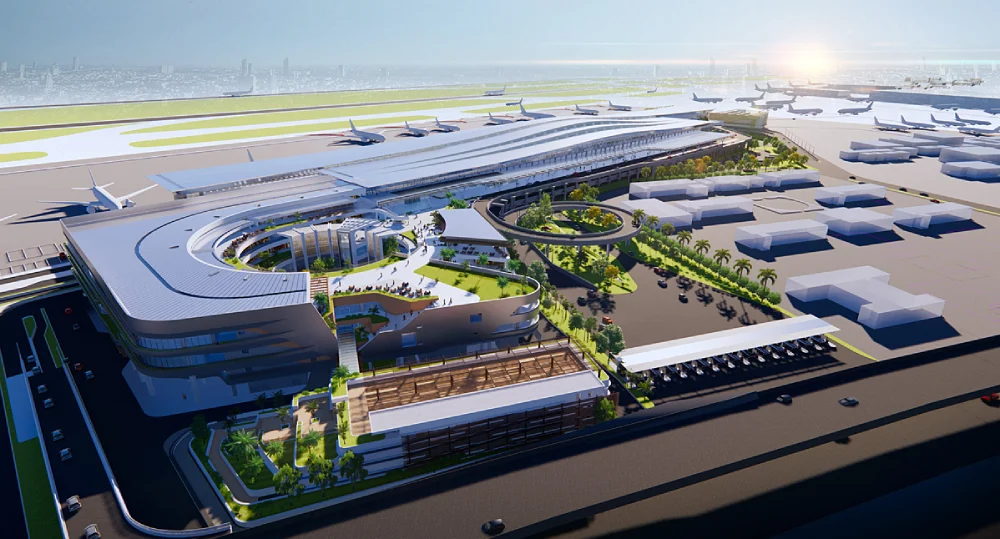
The moment you step off the aircraft and feel the warm, humid Saigon air, you realise you’ve arrived somewhere alive, the distant hum of motorbikes, the smell of strong Vietnamese coffee drifting from the terminal cafés. Tan Son Nhat International Airport (SGN) may not be the biggest in Asia, but it’s one of the most spirited, a gateway that mirrors the energy of the city beyond. As Vietnam’s busiest airport, it’s the first impression for most travellers to southern Vietnam. This guide covers everything you need: the terminals, how to get to the city, taxis versus Grab, money and SIM cards, and how to avoid the common scams.
Where Is Tan Son Nhat Airport?
Quick answer: Tan Son Nhat (SGN) sits right inside Ho Chi Minh City, in the Tân Bình area about 6 km north of the city centre. That makes it unusually close to downtown, a ride to District 1 takes roughly 20-45 minutes depending on traffic, so you can go from landing to a bowl of phở remarkably fast.
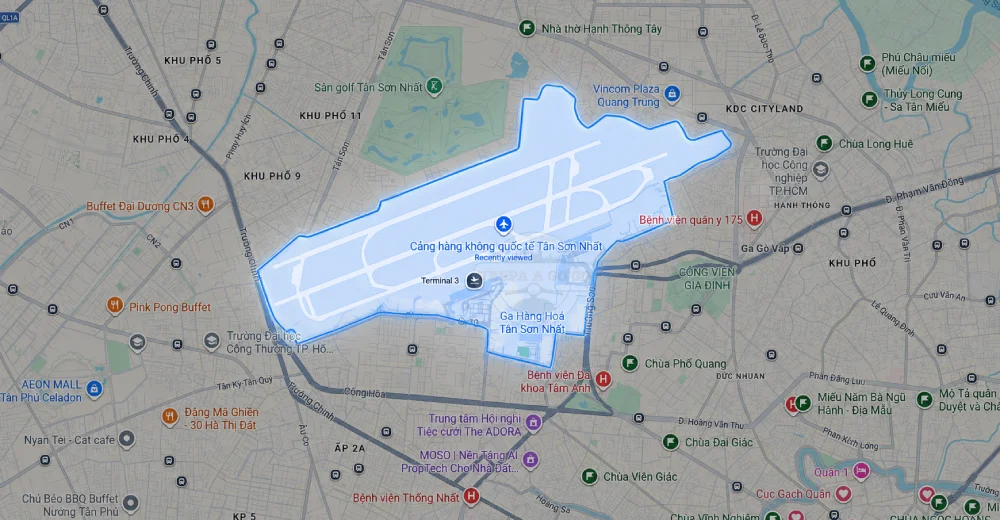
One of SGN’s biggest advantages is its location: unlike many major airports stranded far from the city, Tan Son Nhat is practically in town, about 6 km north of central District 1. Depending on traffic, you’ll reach downtown in 20-45 minutes. Key areas relative to the airport: District 1 (the downtown business and nightlife core) lies to the southeast; Phú Nhuận sits in between, full of leafy cafés and small hotels; and Thảo Điền (in Thủ Đức City), Saigon’s trendy expat east-side, is roughly 45+ minutes away.
What Are the Terminals at Tan Son Nhat Airport?
Quick answer: Tan Son Nhat now has three passenger terminals. T1 and T2 are adjacent (T1 for some domestic flights, T2 for all international flights) and connected landside within a few minutes’ walk. The new Terminal 3, opened in 2025, handles domestic flights for Vietnam Airlines and VietJet and sits about 850 m away, reached by shuttle.
This is the most important recent change to know about. Tan Son Nhat now operates three passenger terminals:
- Terminal 1 (T1), Domestic: serves domestic carriers. Adjacent to T2 and connected landside.
- Terminal 2 (T2), International: handles all international arrivals and departures. T1 and T2 are close enough to walk between in under five minutes.
- Terminal 3 (T3), Domestic (new): opened in April 2025 to ease congestion, it now handles major domestic flights for Vietnam Airlines and VietJet Air. Critically, T3 is separate from T1/T2, about 850 m away, so allow 15-20 minutes by shuttle bus or taxi to transfer between them.
The opening of T3 raised the airport’s total capacity to around 50 million passengers a year. The first commercial flight from Terminal 3 operated in April 2025. If you’re flying domestically, always check which terminal your flight uses, ending up at the wrong one is a common, stressful mistake.
What Do You Need to Know About Visas and Immigration at SGN?
Quick answer: Most visitors need a visa or e-visa to enter Vietnam, arranged before arrival. Vietnam’s e-visa now covers most nationalities and is the easiest route, while some countries enjoy visa exemptions for short stays. At Tan Son Nhat, have your passport, visa or e-visa printout, and onward travel details ready for immigration in Terminal 2.
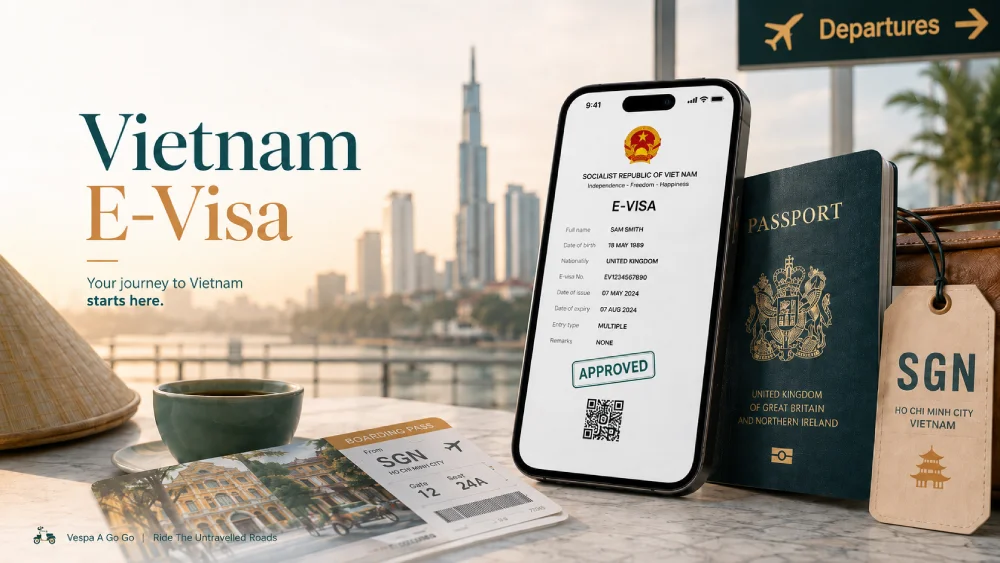
Clearing immigration smoothly starts before you fly. Vietnam’s entry rules have become much more traveller-friendly in recent years, but you still need the right paperwork:
- E-visa (easiest for most). Vietnam’s online e-visa is open to citizens of most countries, valid for stays of up to 90 days, and should be applied for in advance through the official government portal. Print a copy to show at immigration.
- Visa exemptions. Citizens of some countries can enter visa-free for a set number of days; check whether yours qualifies and for how long, as the rules are updated periodically.
- Visa on arrival. A pre-approved “visa on arrival” letter is another route, though the e-visa has largely replaced it for independent travellers.
- At the airport. Immigration is in Terminal 2 (international). Have your passport (valid at least six months), your visa or e-visa printout, and details of your onward or return travel ready. Queues are longest at peak arrival times, so patience helps.
Because entry requirements change, always verify the current rules for your nationality on Vietnam’s official immigration channels before booking.
A Brief History of Tan Son Nhat Airport
Quick answer: Tan Son Nhat began as a small French colonial airfield in the 1930s, grew into one of the world’s busiest air bases during the Vietnam War in the 1960s, 70s, and was handed to Vietnam after 1975 to become the country’s main civilian gateway. Today it serves over 40 million passengers a year.
The airport’s story mirrors Vietnam’s own. It started as a small French-built airfield in the 1930s, then expanded dramatically under the U.S. military in the 1960s and early 1970s, becoming one of the busiest air bases in the world during the Vietnam War. After 1975 it was transferred to the Vietnamese government and gradually repurposed for civilian use. Today, handling more than 40 million passengers a year, it connects Ho Chi Minh City to over 100 destinations across Asia, Europe, Australia and the Middle East, a long way from its dusty origins, and a fitting first chapter for travellers about to discover a country defined by exactly this kind of transformation.
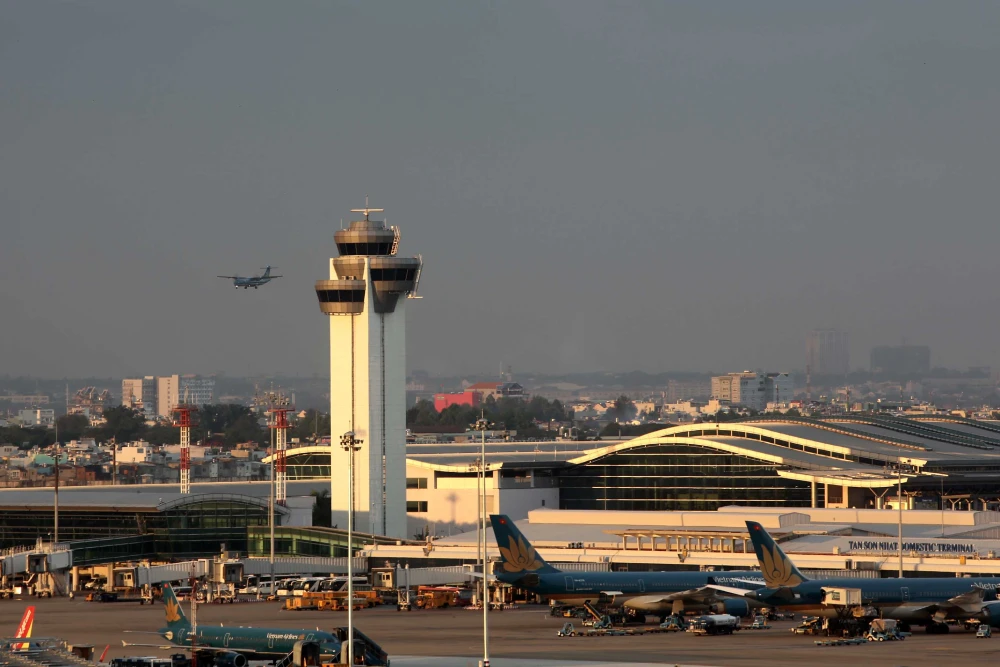
Will a New Airport Replace Tan Son Nhat?
Quick answer: Not replace, but relieve. A major new airport, Long Thanh International, is being built about 40 km east of Ho Chi Minh City in Dong Nai province to ease congestion at the overcrowded Tan Son Nhat. Once operational, Long Thanh is expected to handle many international flights, while Tan Son Nhat continues serving domestic and regional routes.
Tan Son Nhat has long operated beyond its comfortable capacity, which is why Vietnam is building Long Thanh International Airport, roughly 40 km east of the city in Dong Nai province. Designed to become a major regional hub, Long Thanh is intended to take pressure off Tan Son Nhat by absorbing a large share of future international traffic. For now, and for the foreseeable future of most trips, Tan Son Nhat remains the gateway to Saigon, and its unbeatable closeness to the city centre will keep it relevant even after Long Thanh opens. If you’re planning a trip further ahead, it’s worth checking which airport your international flight uses, since the picture will gradually shift as the new airport comes online.

How Do You Get from Tan Son Nhat Airport to the City?
Quick answer: The best options are ride-hailing apps (Grab, Be, Xanh SM) for fixed, transparent fares, or official metered taxis (Mai Linh, Vinasun). A ride to District 1 typically costs 150,000-250,000 VND ($6-10) and never more than ~300,000 VND. Always avoid drivers who approach you inside the terminal.

Getting into the city is easy if you know the options:
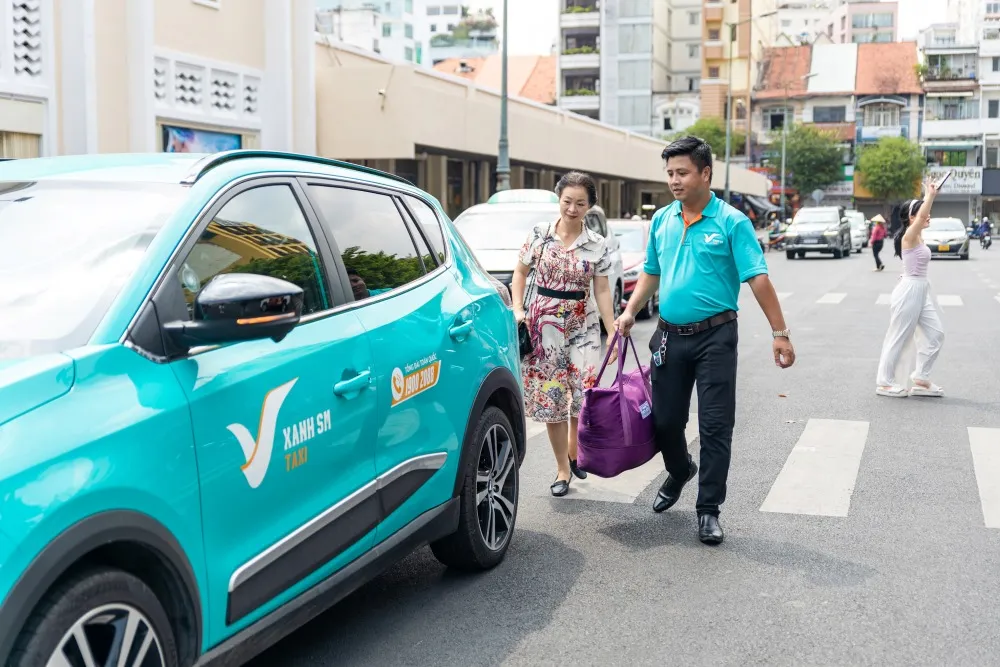
- Ride-hailing apps (recommended), Grab, Be and Xanh SM (electric) are the safest, most transparent choice. Fares are calculated and fixed in the app, you pay by cash or card, and there’s no haggling. A ride to District 1 runs roughly 150,000-250,000 VND ($6-10). Download the app and set it up before you land.
- Official metered taxis, trusted brands are Mai Linh and Vinasun. Use the official taxi queues outside the terminals, and insist the driver runs the meter from the start, if they refuse, walk away. Fare to District 1: about 200,000-250,000 VND, never more than ~300,000 VND ($12).
- Airport bus, budget routes (like Bus 152) run into the city for a few thousand dong, ideal if you’re travelling light.
Insider warning: ignore anyone offering you a ride inside the terminal, these unsolicited “taxi” touts overcharge and are best avoided. Stick to the official queues or your booked Grab.
What Should You Do First When You Land at SGN?
Quick answer: After immigration and baggage claim, sort three things: cash, connectivity and your ride. Exchange a small amount of money or withdraw VND from an ATM, grab a local SIM or activate an eSIM, and open your ride-hailing app. Then head to the official transport area, and you’re off into Saigon.
A smooth arrival comes down to handling a few essentials in the right order:
- Money, there are currency exchange counters and ATMs in the arrival halls. Airport rates are poorer than in the city, so exchange just enough for your ride and immediate needs, then change more downtown. For the full rundown, see our guide on how to exchange money in Ho Chi Minh City.
- Connectivity, telecom counters (Viettel, Vinaphone, Mobifone) sell tourist SIM cards in the arrival halls, or you can set up an eSIM for Vietnam before you even land. Free airport Wi-Fi is also available.
- Your ride, open Grab/Be, book your car, and follow signs to the official pick-up point.
Can You Leave the Airport During a Layover?
Quick answer: Yes, and it’s well worth it. Because Tan Son Nhat is only 6 km from the city centre, a layover of five hours or more leaves enough time to pop into District 1 for a meal or a quick look around. Just factor in immigration (you’ll need a valid visa or exemption to enter), traffic, and the recommendation to be back three hours before an international flight.
One of the perks of such a central airport is that a long layover doesn’t have to mean hours staring at a departure board. If you have roughly five hours or more between flights and are eligible to enter Vietnam (with a valid visa or visa exemption), you can hop in a Grab, be downtown in 20-45 minutes, and squeeze in a bowl of phở, an iced coffee, or a quick wander around Bến Thành Market and the Notre-Dame area. Keep a close eye on the clock and traffic, Saigon’s roads are unpredictable, and head back with enough buffer to clear security and immigration, ideally three hours before an international departure. For an organised taste of the city in a tight window, a short guided tour can pack a lot into a few hours.
What Facilities Does Tan Son Nhat Airport Have?
Quick answer: SGN offers the full range, currency exchange, ATMs, SIM-card counters, free Wi-Fi, duty-free shopping, restaurants and cafés (from phở to Starbucks), several lounges with showers, 24/7 medical services, baby-care rooms, and short-term luggage storage. The international Terminal 2 has the widest selection.
Tan Son Nhat is well-equipped for travellers:
- Dining, both terminals offer a mix of local and international food, from Phở 24 and Highlands Coffee to Burger King and Starbucks.
- Shopping, duty-free shops (in the international departure airside), plus souvenir, handicraft and convenience stores.
- Lounges, several in Terminal 2’s international area, with refreshments, Wi-Fi and shower facilities; most offer paid day-passes even without a business-class ticket.
- Essentials, 24/7 medical services, baby-care rooms, and short-term luggage storage in the international terminal (typically open ~07:00, 23:00).
When Is Tan Son Nhat Airport Busiest?
Quick answer: Immigration and baggage areas are busiest in the early mornings (around 5-8 AM) and late evenings (7-11 PM), when most international flights land, queues can exceed an hour. It’s also far more crowded around Tet and major holidays, when you should arrive earlier and pre-book your ride.
Tan Son Nhat is notorious for queues at peak times. International flights cluster in the early morning and late evening, so immigration can take over an hour then. The airport is also at its most chaotic around Tết (Lunar New Year) and major public holidays, when both passenger numbers and traffic spike. During those periods, arrive earlier than usual for departures, and pre-book your ride into the city. As a general rule, aim to arrive at least two hours before domestic flights and three hours before international departures.
What Should You Know About Departing from Tan Son Nhat?
Quick answer: For departures, arrive 2 hours early for domestic and 3 hours for international flights. Check your terminal in advance (T1, T2 or the separate T3), allow extra time during peak hours and holidays, and complete any tax refund or duty-free shopping airside. Online check-in saves time at busy periods.
Leaving Saigon smoothly takes a little planning, since Tan Son Nhat can get congested. A few departure tips:
- Confirm your terminal. International flights leave from T2; domestic flights depart from T1 or the newer T3, which is a separate building about 850 m away, so double-check and allow transfer time.
- Arrive early. Two hours ahead for domestic, three for international, and more during the early-morning and evening peaks or around Tết, when queues swell.
- Use online check-in. Checking in via your airline’s app or website and downloading your boarding pass saves time at the counter during busy periods.
- Plan for security and immigration. International departures involve passport control and security screening, which can be slow at peak times, so don’t cut it fine.
- Shop and refund airside. Duty-free shopping and any VAT refund counters are past security, so factor in time if you plan to use them.
Which Airlines and Routes Use Tan Son Nhat?
Quick answer: Tan Son Nhat is the hub for Vietnam’s major carriers, Vietnam Airlines, VietJet Air, Bamboo Airways and others, plus dozens of international airlines. It connects Saigon to destinations across Asia (Bangkok, Singapore, Seoul, Tokyo), Australia, the Middle East and Europe, and the domestic Saigon-Hanoi route is one of the world’s busiest.
As Vietnam’s busiest airport, Tan Son Nhat offers an extensive route network. Domestically, it links Saigon to every major Vietnamese city, and the Ho Chi Minh City to Hanoi route is consistently ranked among the busiest air corridors in the world. Internationally, the major Vietnamese carriers, Vietnam Airlines (full service), VietJet Air (budget) and Bamboo Airways, are joined by dozens of foreign airlines connecting Saigon to regional hubs like Bangkok, Singapore, Kuala Lumpur, Seoul, Tokyo, Hong Kong and Taipei, as well as long-haul links to Australia, the Middle East and Europe. This breadth makes Saigon an easy and well-connected entry point for a Southeast Asia trip, whether you’re flying budget within the region or arriving long-haul from the other side of the world.
From the Airport into Saigon
Tan Son Nhat is more than a transit point, it’s your first taste of Saigon’s rhythm: compact, chaotic and charming all at once. Once you’ve cleared the terminal, sorted your cash and SIM, and booked your ride, the city is waiting just minutes away. And when you’re ready to truly dive in, the best way to understand Saigon is from the back of a Vespa, weaving through its maze of alleys and street-food corners. And if your travels also take you elsewhere in Vietnam, the same calm-arrival approach applies at Noi Bai in Hanoi and Da Nang in Central Vietnam.
Turn your arrival into an adventure, explore Saigon the local way. Discover the city by Vespa on the Saigon Vibes & Bites tour »
Frequently Asked Questions
How many terminals does Tan Son Nhat Airport have? Three. Terminal 1 (domestic) and Terminal 2 (international) are adjacent and connected landside. The new Terminal 3, opened in 2025, handles domestic flights for Vietnam Airlines and VietJet and sits about 850 m away, reached by shuttle, so check your terminal carefully for domestic flights.
What’s the best way to get from SGN to the city? Ride-hailing apps (Grab, Be, Xanh SM) are the safest and most transparent, with fixed fares of roughly 150,000-250,000 VND ($6-10) to District 1. Official metered taxis (Mai Linh, Vinasun) are also reliable. Avoid any driver who approaches you inside the terminal.
How much should a taxi from Tan Son Nhat to District 1 cost? Expect about 150,000-250,000 VND ($6-10) by Grab or a metered taxi, and never more than around 300,000 VND ($12). Always insist taxi drivers use the meter from the start, and walk away if they refuse or quote a high fixed price.
Where can I exchange money or get a SIM card at the airport? Both terminals have currency exchange counters and ATMs in the arrival halls, plus SIM-card counters from Viettel, Vinaphone and Mobifone. Airport exchange rates are poorer than in the city, so change just a little there. You can also set up an eSIM before you arrive.
Can I leave the airport during a layover at SGN? Yes, if you have around five hours or more and are eligible to enter Vietnam with a valid visa or exemption. The airport is just 6 km from District 1, so you can Grab into the city for a meal or quick look around. Allow for traffic and aim to be back three hours before an international departure.