

Tailoring in Saigon is one of the city’s most rewarding and underrated experiences, a chance to walk away with high-quality, custom-made clothes that fit you perfectly, often at a fraction of what you’d pay back home. Whether you’re a tourist after a unique souvenir, a traveller wanting a bespoke suit, or simply someone who loves well-made clothes, Ho Chi Minh City offers a full spectrum of options for every style and budget. From hands-on fabric shopping in bustling markets to full-service bespoke tailors, here’s everything you need to know to get it right.
Is Saigon Good for Getting Clothes Tailored?
Quick answer: Yes. Saigon is an excellent and affordable place for custom tailoring, with a deep garment-industry heritage, skilled tailors, and a huge range of fabrics. While Hoi An is Vietnam’s most famous tailoring town, Saigon offers comparable quality with more choice and often better value, especially for those already in the city.
Vietnam has long been a global garment-manufacturing powerhouse, and that expertise runs deep in Saigon. The city is home to skilled tailors, abundant fabric markets, and a culture of custom-made clothing that locals have relied on for generations. For visitors, this means access to genuine craftsmanship at prices well below those in Western countries. While the town of Hoi An gets most of the international fame for tailoring, Saigon quietly offers the same quality with greater variety and convenience, particularly if it’s already part of your itinerary. The key, as with anywhere, is knowing how the process works and allowing enough time to do it properly.
Why Is Vietnam So Good for Tailoring?
Quick answer: Vietnam combines a deep textile heritage with a modern garment-manufacturing industry. The country has long produced silk and clothing, skills passed down through generations, and today it’s one of the world’s largest garment exporters. This means abundant skilled labour, easy access to quality fabric, and low costs, a perfect recipe for affordable custom tailoring.
Understanding why tailoring thrives here adds to the experience. Vietnam’s relationship with textiles stretches back centuries, with silk weaving and garment-making long-established crafts in trading towns and villages. In the modern era, the country has become one of the world’s leading garment exporters, supplying major international brands. According to Vietnam’s garment and textile sector, it is among the country’s largest export industries, employing millions of skilled workers.
For travellers, this industrial depth translates directly into a great tailoring experience: a large pool of experienced tailors, ready access to a huge range of fabrics (both domestic and imported), and labour costs far below those in Western countries. The result is custom-made clothing of genuine quality at prices that feel almost too good to be true, which is why tailoring has become one of Vietnam’s signature traveller experiences.
What Are Your Tailoring Options in Saigon?
Quick answer: There are two main routes. The hands-on option is to buy your own fabric at a market, then take it to a tailor to be made up, giving you maximum control and value. The full-service option is to visit a bespoke tailor who handles everything from fabric to fitting, which is more convenient and guided but typically costs more.
Saigon’s tailoring scene broadly splits into two approaches, and choosing the right one depends on how involved you want to be:
The Hands-On Route: Buy Fabric, Then Tailor
For travellers who enjoy being part of the process, start by exploring the fabric markets of Cholon, Saigon’s historic Chinatown, where you can browse a vast selection of colours, patterns, and materials before taking your chosen fabric to a tailor. Buying the material yourself gives you greater control over the quality, style, and overall budget, as fabric and labour are paid for separately. It takes a little more time and clear communication, but it also turns the tailoring process into a more immersive way to experience the city.
The Full-Service Route: Bespoke Tailors
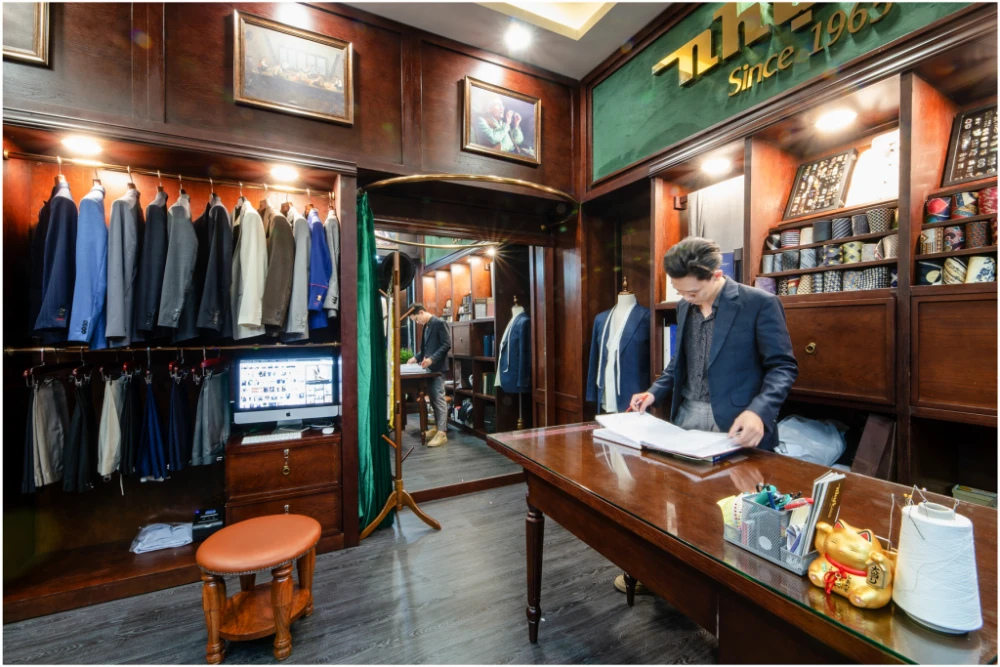
If you prefer convenience and professional guidance, a full-service tailor handles everything: they help you choose fabric, take your measurements, advise on style, and manage the fittings. This is the easier, more polished experience, ideal for important garments like suits, and the higher price reflects the end-to-end service.
Where Can You Buy Fabric in Saigon?
Quick answer: The top fabric destinations are Soái Kình Lâm Market (District 5, in Cholon), the largest and most famous fabric market with everything from cotton to luxury silk, and Tân Định Market (District 1). Prices range from about 50,000 to 500,000 VND per metre depending on quality, and bargaining is expected.
Fabric shopping is where the magic begins, and Saigon has some outstanding places to do it:
- Soái Kình Lâm Market (District 5). Located in the heart of Chinatown (Cholon), this is the largest and most renowned fabric market in the city, a vast indoor maze of stalls selling everything from simple cotton to luxurious silks and high-end imported fabrics.
- Tân Định Market (District 1). A more central, traditional market also well known for its fabric section, convenient if you’re based downtown.
Prices typically range from 50,000 to 500,000 VND per metre (around $2 to $20), depending on the quality. When buying silk, ask for “lụa tơ tằm” (pure silk) for the genuine article. Bargaining is part of the experience at these markets, so don’t accept the first price, and check our guide to bargaining in Vietnam before you go.
How Much Does Tailoring Cost in Saigon?
Quick answer: Costs vary by garment and fabric. As a rough guide, a custom shirt runs around 1,000,000 to 2,000,000 VND ($40 to $80), and a tailored suit from about 5,000,000 to 10,000,000 VND ($200 to $400) or more for premium fabrics. Buying your own fabric and paying only for labour can reduce these figures noticeably.
Pricing depends heavily on the garment type, the fabric, and the tailor’s reputation, but some general guidelines help you budget:
- Custom shirt: roughly 1,000,000 to 2,000,000 VND ($40 to $80).
- Tailored suit: approximately 5,000,000 to 10,000,000 VND ($200 to $400), rising for premium wool or designer-level work.
- Dresses and other garments: vary widely with complexity and fabric.
These figures are for full-service tailoring. If you take the hands-on route and supply your own fabric, you’ll often pay less overall, since you’re only paying the tailor for their labour. Either way, the value compared to bespoke tailoring in Western countries is excellent, which is exactly why so many travellers build a tailoring stop into their trip.
How Long Does Tailoring Take in Saigon?
Quick answer: Allow 3 to 7 days for simple garments like shirts, and 7 to 14 days for suits or complex pieces, including time for fittings. Some tailors offer express services completing garments in as little as 24 to 48 hours for an extra fee, but rushing leaves no room for adjustments, so more time means a better fit.
Timelines are one of the most important things to plan around, because a good fit depends on having enough time:
- Simple garments (shirts, simple dresses): usually 3 to 7 days.
- Suits and complex designs: typically 7 to 14 days, allowing for multiple fittings.
- Express service: some tailors can turn garments around in 24 to 48 hours for an additional fee.
The crucial point is to allow time for fittings and adjustments. A quality garment almost always requires at least one fitting, and often two, to get the fit exactly right. Be wary of any promise of a perfect suit overnight with no fittings, as the result is rarely as precise. If you’re visiting Saigon for only a few days, start your tailoring on day one so there’s room to perfect it before you leave.
Waiting for your clothes? Don’t just sit there. Uncover the city’s hidden history on the Saigon’s Untold Stories while you wait.
How Do You Get the Best Results from a Saigon Tailor?
Quick answer: Communicate clearly, bring a reference garment that already fits you well, choose quality fabric, allow time for fittings, and check reviews before choosing a tailor. Being specific about what you want, ideally with photos, and trying on the garment at each fitting are the keys to a result you’ll love.
A great tailoring experience comes down to a few smart habits:
- Bring a sample. If you have a favourite garment that fits perfectly, bring it as a reference. Tailors can copy a fit far more reliably from a physical example than from a description.
- Communicate clearly. Use photos of the exact style you want, and be specific about details like collar shape, trouser break, or sleeve length. Don’t assume anything is “standard.”
- Don’t skip fittings. Attend every fitting and speak up about anything that feels off, this is your chance to perfect the fit before the work is finished.
- Choose fabric wisely. Better fabric makes a noticeable difference to how a garment looks, feels and lasts, so don’t over-economise on material.
- Read reviews first. Check recent reviews with photos to gauge a tailor’s quality and consistency before committing.
What Should You Get Made in Saigon?
Quick answer: Popular choices include bespoke suits and blazers, custom shirts, dresses, and traditional Vietnamese áo dài. Suits and shirts offer the clearest value versus Western prices, while a custom áo dài makes a uniquely Vietnamese, wearable souvenir. Think about what you’ll actually wear and what’s hard to get well-fitted at home.
Deciding what to have made helps you make the most of the opportunity. The most rewarding options:
- Suits and blazers. The classic tailoring choice, offering the biggest saving versus Western bespoke prices and a genuinely personal fit.
- Shirts. Quick, affordable, and a great way to test a tailor before committing to a bigger piece, order several in different fabrics.
- Dresses. From cocktail dresses to formal gowns, custom-made to your exact measurements.
- Áo dài. The elegant Vietnamese national dress makes a beautiful, meaningful souvenir. For more on its history and significance, see our guide to the áo dài, Vietnam’s traditional dress.
If you love discovering local fashion more broadly, pair your tailoring with a look at the city’s independent labels in our guide to the best Vietnamese clothing brands.
How Do You Get a Custom Áo Dài Made in Saigon?
Quick answer: Choose a tailor experienced with áo dài (the fitted silhouette demands real skill), select a quality silk, and allow time for at least one or two fittings, as the áo dài must fit closely to look its best. Decide between a traditional or modern style, and expect a rewarding, uniquely Vietnamese keepsake.
The áo dài deserves special mention, because having one custom-made is one of the most meaningful things you can do in Saigon. This elegant national dress, a long fitted tunic worn over flowing trousers, is defined by its precise, body-skimming fit, which is exactly why it must be tailored rather than bought off the rack. A few tips for getting it right:
- Pick an áo dài specialist. Not every tailor excels at the áo dài’s demanding cut, so choose one with clear experience and good reviews for it.
- Invest in good silk. The áo dài is all about graceful drape, so quality “lụa tơ tằm” (pure silk) makes a world of difference. Patterned and embroidered silks create especially striking results.
- Allow for fittings. Because the fit is so close, expect one or two fittings to perfect it. Don’t rush this step.
- Traditional or modern. Decide whether you want a classic style or a contemporary take with updated cuts, colours or fabrics, many tailors happily do both.
A custom áo dài is more than a garment, it’s a wearable piece of Vietnamese culture, and one of the most treasured souvenirs a traveller can bring home.
What Mistakes Should You Avoid When Tailoring in Saigon?
Quick answer: The biggest mistakes are leaving it too late in your trip, skipping fittings, choosing a tailor on price alone, being vague about what you want, and over-economising on fabric. Rushing the process is the single most common reason travellers end up disappointed, so give yourself enough days and attend every fitting.
A little awareness saves you from the pitfalls that catch out first-time visitors:
- Starting too late. The most frequent error. If you order on your last day, there’s no time for fittings or fixes. Begin early in your stay.
- Skipping fittings. A garment made without a try-on rarely fits as well. Always attend fittings and be honest about what needs adjusting.
- Choosing on price alone. The cheapest quote often means lower-grade fabric or rushed work. Balance cost against reviews and the feel of the material.
- Being vague. “Make me a nice suit” leaves too much to interpretation. Bring photos, a reference garment, and specifics about fit and details.
- Cheap fabric, expensive regret. Skimping on material undermines even great craftsmanship. Spend a little more on fabric you’ll be happy wearing for years.
Avoiding these comes down to one principle: treat tailoring as a collaborative process that needs your time and input, not a quick transaction. The travellers who plan ahead and communicate well are the ones who leave delighted.
Which Areas of Saigon Are Known for Tailoring?
Quick answer: Tailors cluster around central District 1, with streets like Pasteur and Hai Bà Trưng known for full-service shops, while the fabric markets sit in District 5 (Soái Kình Lâm) and District 1 (Tân Định). A practical approach is to buy fabric in Cholon, then take it to a District 1 tailor.
Knowing the geography helps you plan an efficient tailoring trip. The fabric markets are concentrated in two areas: Soái Kình Lâm in District 5 (Cholon) for the widest selection, and Tân Định in District 1 for a central option. Full-service tailors are spread across the city but cluster in central District 1, including along streets like Pasteur and Hai Bà Trưng, convenient to most hotels and sights. A smart, classic strategy is to spend a morning fabric-hunting in Cholon, where variety and value are best, then carry your chosen material to a trusted tailor in District 1 to be made up. This combines the best of both worlds: market choice and central convenience.
Saigon or Hoi An: Where Should You Get Tailoring Done?
Quick answer: Both are excellent. Hoi An is the more famous “tailoring town,” with hundreds of shops packed into a small area and a charming, lantern-lit setting. Saigon offers comparable quality with more fabric variety, a big-city convenience, and often better value, ideal if it’s already on your route. Choose based on your itinerary.
This is a common dilemma for travellers, and the honest answer is that both deliver great results. Hoi An has built a global reputation as Vietnam’s tailoring capital, with an extraordinary concentration of shops and a picturesque atmosphere that makes the experience feel special. Saigon, on the other hand, offers the same craftsmanship with greater fabric variety, the convenience of a major city, and frequently better value, with less of the tourist markup that fame can bring. If you’re spending time in Ho Chi Minh City anyway, there’s little reason to wait for Hoi An. For a full breakdown of the Hoi An scene, see our guide to Hoi An tailors.
Making the Most of Your Saigon Tailoring Experience
Custom tailoring is one of those rare travel experiences that leaves you with something lasting, a garment made just for you, carrying the memory of the city where it was crafted. With a little planning, clear communication, and enough time for fittings, you can leave Saigon with high-quality, personalised clothes that fit both your style and your budget perfectly. And while you wait between fittings, there’s a whole city to explore.
Frequently Asked Questions
Is Saigon a good place to get clothes tailored? Yes. Saigon offers skilled tailors, abundant fabric markets, and excellent value thanks to Vietnam’s deep garment-industry heritage. While Hoi An is more famous, Saigon provides comparable quality with more fabric variety and big-city convenience, making it ideal if you’re already in the city.
How much does a tailored suit cost in Saigon? A custom suit typically costs around 5,000,000 to 10,000,000 VND ($200 to $400), rising for premium fabrics or designer-level work. A custom shirt runs about 1,000,000 to 2,000,000 VND ($40 to $80). Supplying your own fabric can reduce the total, as you only pay for labour.
How long does it take to get clothes tailored in Saigon? Allow 3 to 7 days for simple garments like shirts and 7 to 14 days for suits or complex pieces, including fittings. Some tailors offer express service in 24 to 48 hours for an extra fee, but allowing more time produces a noticeably better fit.
Where can I buy fabric in Saigon? The top spot is Soái Kình Lâm Market in District 5 (Cholon), the city’s largest fabric market, with everything from cotton to luxury silk. Tân Định Market in District 1 is another good option. Prices range from about 50,000 to 500,000 VND per metre, and bargaining is expected.
Is tailoring in Saigon better than Hoi An? Both are excellent. Hoi An is the famous tailoring town with a charming setting and hundreds of shops, while Saigon offers comparable quality with more fabric variety, big-city convenience, and often better value. The best choice usually comes down to which is already on your itinerary.