
Amidst the fast pace of Ho Chi Minh City, one district stands apart, Cholon (Chợ Lớn), Saigon’s historic Chinatown, centred on District 5. For over three centuries, the Hoa (Chinese-Vietnamese) community has shaped this maze of incense-filled temples, century-old assembly halls, herbal-medicine streets and some of the best dim sum in the country. This guid23e walks you through Cholon’s history, its must-see temples and markets, what to eat, and the new ward names you’ll see in 2026.
A quick note on names (2026): Since 1 July 2025, District 5 is no longer an official unit on paper, it’s been reorganised into three new wards: Chợ Lớn (which now holds most of Chinatown’s famous temples and the herbal-medicine street), An Đông (the fabric-market area) and Chợ Quán. Note that Cholon also spreads into the former District 6, where Bình Tây Market now sits in Bình Tây Ward. Locals still say “Cholon” and “District 5,” so this guide does too.
What Is Cholon (District 5) Known For?
Quick answer: Cholon is Saigon’s Chinatown, the largest in Vietnam, known for its 300-year-old Hoa community, ornate Chinese temples and assembly halls (Thiên Hậu, Nghĩa An, Quan Âm), the wholesale Bình Tây Market, herbal-medicine streets, lantern-making lanes, and outstanding Cantonese dim sum and roast meats.
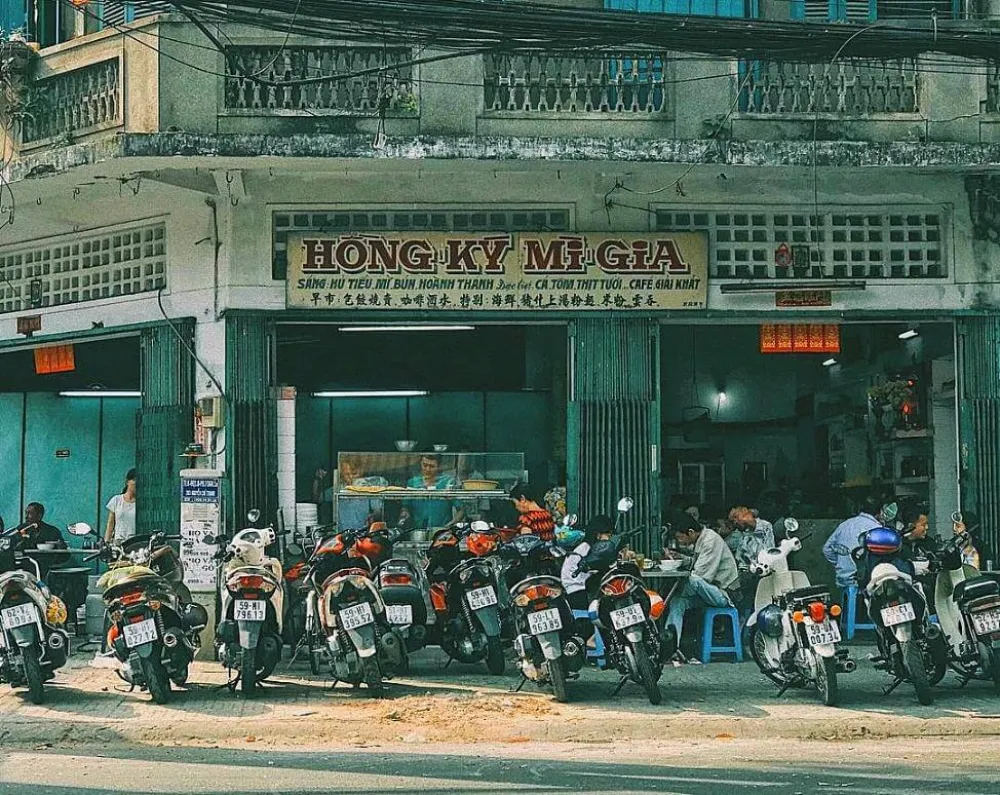
Stepping into Cholon is like walking through a living museum, where Chinese and Vietnamese cultures have intertwined for hundreds of years. Its charm comes from daily life: vendors unloading goods, incense smoke rising from temple courtyards, motorbikes weaving through narrow streets, and old shop signs standing beside modern storefronts. While the centre sits in District 5’s Chợ Lớn Ward, the wider Chinatown spreads into Districts 6, 10 and 11, best explored slowly, on foot or by Vespa.
What Is the History of Cholon?
Quick answer: Cholon traces back to the late 1700s, when Hoa people (mainly from Guangdong and Fujian) settled in southern Vietnam after upheaval in China. The name “Chợ Lớn” means “Big Market.” By 1879 it was its own city, merging with Saigon in 1931, and it remains the largest Chinatown in the world.
Cholon’s roots reach back to the late 17th-18th century, when waves of Chinese immigrants, known as the Hoa people, sought refuge in southern Vietnam due to instability back home. These early settlers took residence in what is now District 5, growing a small settlement into the largest Chinatown not only in Vietnam but the world. The name “Chợ Lớn” (“Big Market”) fits its historical role as a trading powerhouse in rice, textiles and traditional Chinese goods. The Hoa community’s influence is still vivid in the area’s architecture, cuisine and rituals today.
What Are the Best Temples in Cholon?
Quick answer: Start with Thiên Hậu Temple (the most famous, dedicated to the sea goddess Mazu), then Nghĩa An Assembly Hall (Quan Công), Quan Âm / Ôn Lăng Assembly Hall, and Cha Tằm Church. Most cluster within a few blocks along Nguyễn Trãi and Lão Tử streets in Chợ Lớn Ward.
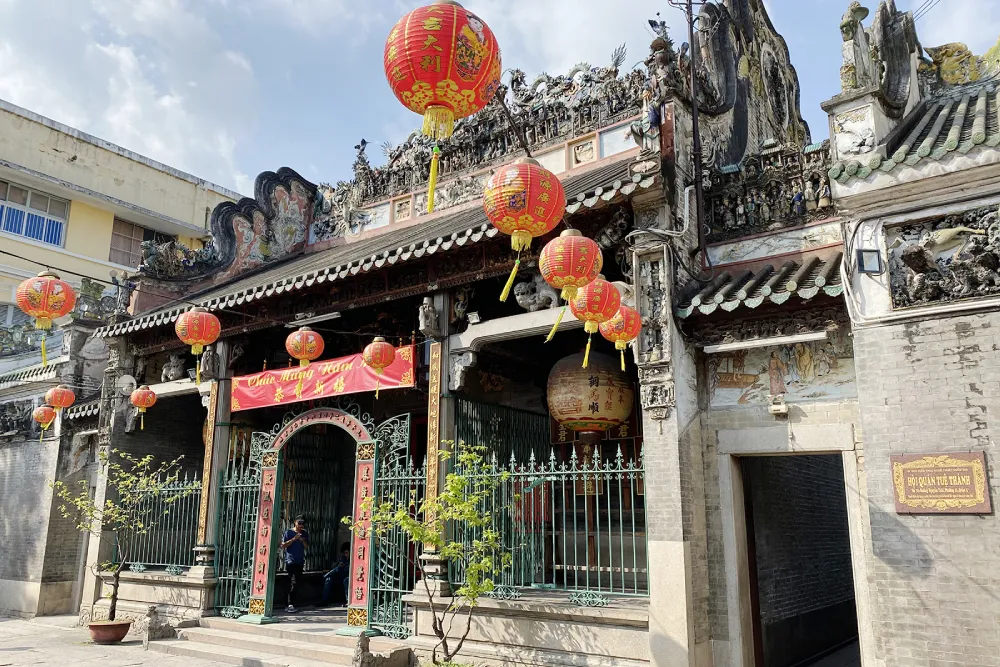
Cholon’s temples and assembly halls (hội quán) are its soul, built by different Chinese provincial communities, each honouring different deities.
- Thiên Hậu Temple (Tuệ Thành Assembly Hall), 710 Nguyễn Trãi. Built by the Cantonese community in the 18th century, dedicated to Mazu, goddess of the sea. Famous for hanging incense coils, ceramic roof dioramas and intricate wood carvings, the single most visited site in Cholon.
- Nghĩa An Assembly Hall, 678 Nguyễn Trãi. A spectacular Teochew hall dedicated to Quan Công (the red-faced general), with majestic carvings, bronze statues and a giant lacquered boat.
- Ôn Lăng Assembly Hall, Lão Tử Street. A Fujian hall worshipping 16 deities including Lady Thiên Hậu and the God of Wealth, atmospheric and less crowded.
- Quan Âm (Phước An) Assembly Hall, dedicated to Guanyin, the Goddess of Mercy, blending Chinese and Vietnamese styles.
- Cha Tằm Church (St. Francis Xavier Parish), the first Catholic church for Cholon’s Chinese community (early 1900s), and a footnote in history as President Ngô Đình Diệm’s last refuge in 1963.
Want to step inside these temples with a guide who knows their stories? Explore “Saigon’s Secrets” »
What Are the Hidden Gems & Streets of Cholon (District 5)?
Quick answer: Beyond the temples, wander Hào Sĩ Phường (a photogenic century-old alley), Lương Nhữ Học (the lantern-making street, magical before Mid-Autumn), and Hải Thượng Lãn Ông (the aromatic traditional-medicine street lined with herb shops).
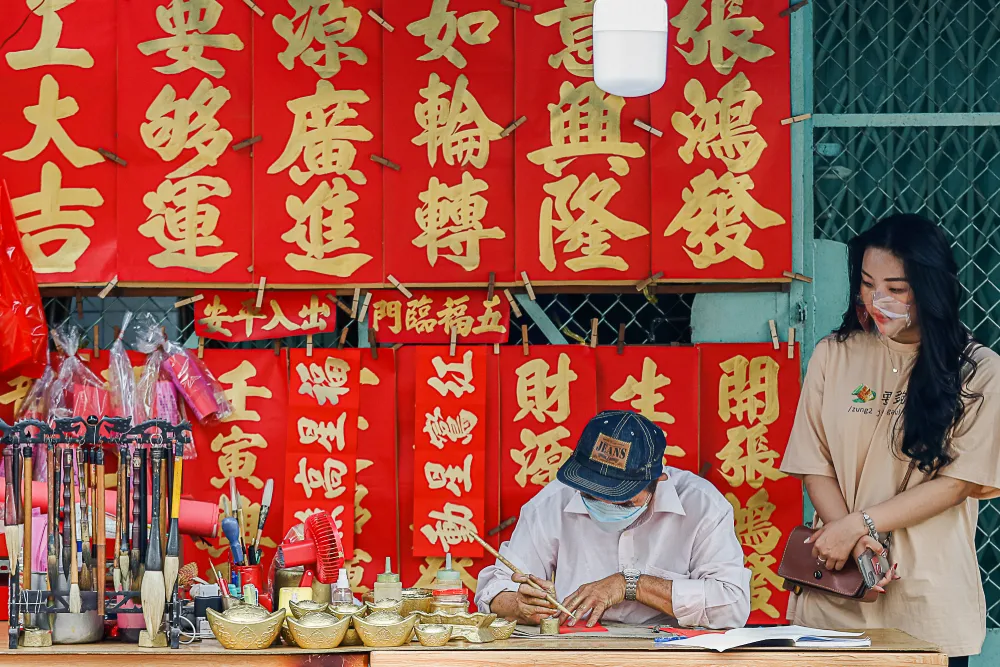
Half the magic of Cholon is getting pleasantly lost in it:
- Hào Sĩ Phường Alley, off Trần Hưng Đạo, a colourful century-old residential alley fusing French, Chinese and Vietnamese architecture. One of Saigon’s most photogenic spots, like stepping into 1930s Hong Kong.
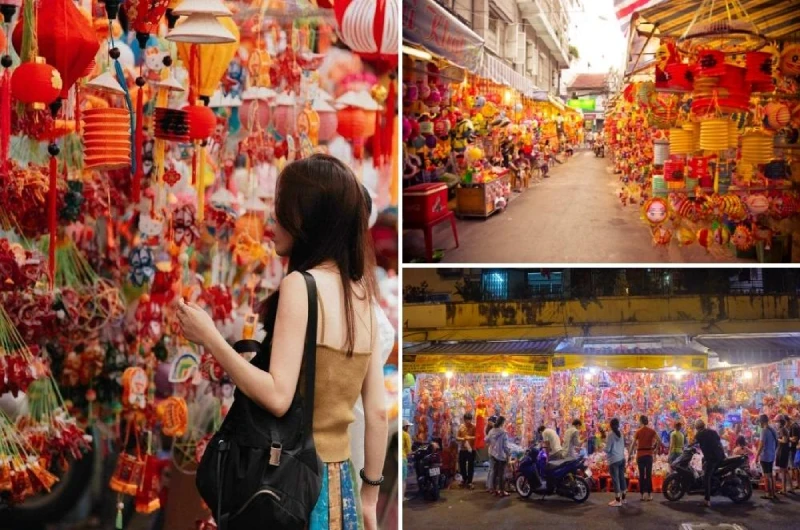
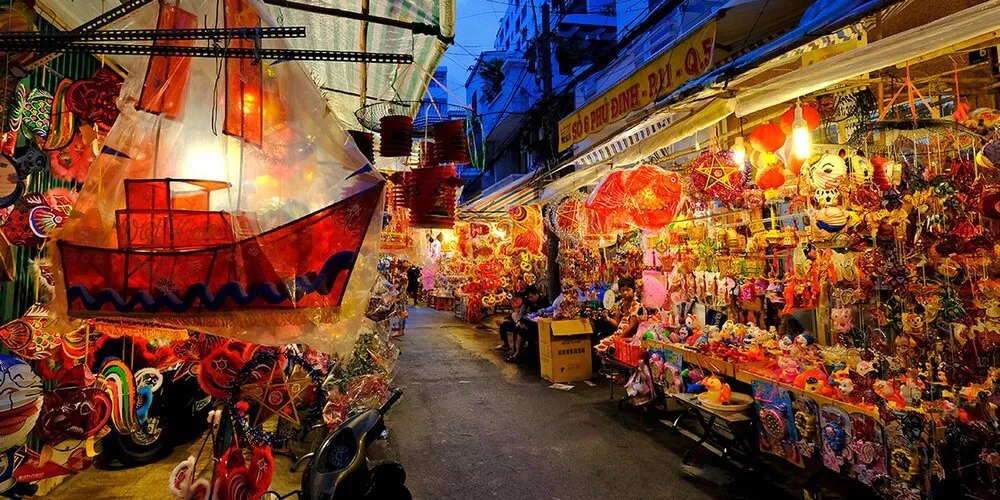
- Lương Nhữ Học Lantern Street, generations of handmade lantern makers; it glows with colour and crowds before the Mid-Autumn Festival.
- Hải Thượng Lãn Ông Street, the heart of traditional Chinese medicine, lined with apothecaries selling dried herbs, mushrooms and roots; the air is thick with their scent.
What Should You Eat in Cholon?
Quick answer: Dim sum, Cantonese roast meats (char siu, Peking duck), and hủ tiếu noodle soup are the essentials. Cholon is also the birthplace of the Chinese-Vietnamese fusion you’ll taste across Saigon, from roast-duck bánh mì to Teochew-style phá lấu.
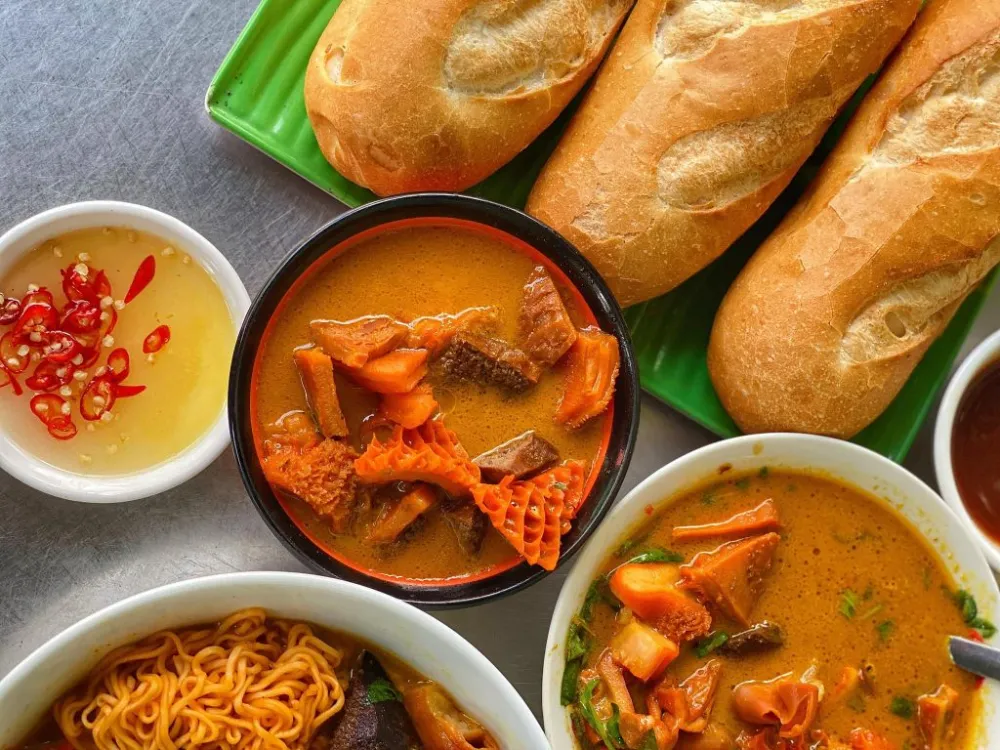
Cholon is a foodie’s paradise where Chinese and Vietnamese traditions blend on every corner. Don’t miss:
- Dim sum, steamed dumplings, buns and rolls, from roadside steamers to old institutions; the Cantonese art form Cholon does best.
- Roast meats, glossy char siu (barbecue pork) and Peking duck, served with rice or stuffed into a bánh mì, made by families guarding generations-old recipes.
- Hủ tiếu, the rice-noodle soup with deep Chinese roots; for the full story see our guide to hủ tiếu vs phở.
- Teochew phá lấu, five-spice braised offal, famously paired with crispy bánh mì at a 60-year-old Nguyễn Trãi vendor.
- Old coffee, pause at a traditional Hoa café like Ba Lư for strong, charcoal-roasted Vietnamese coffee.
Hunt down the best Chinese-Vietnamese street food with a local. Taste the real Saigon Vibes & Bites »
What Markets Should You Visit in Cholon?
Quick answer: Bình Tây Market (now in Bình Tây Ward, the old District 6) is the iconic wholesale heart of Cholon, famous for its yellow clock tower. An Đông Market in District 5 is the go-to for fabric and wholesale goods.
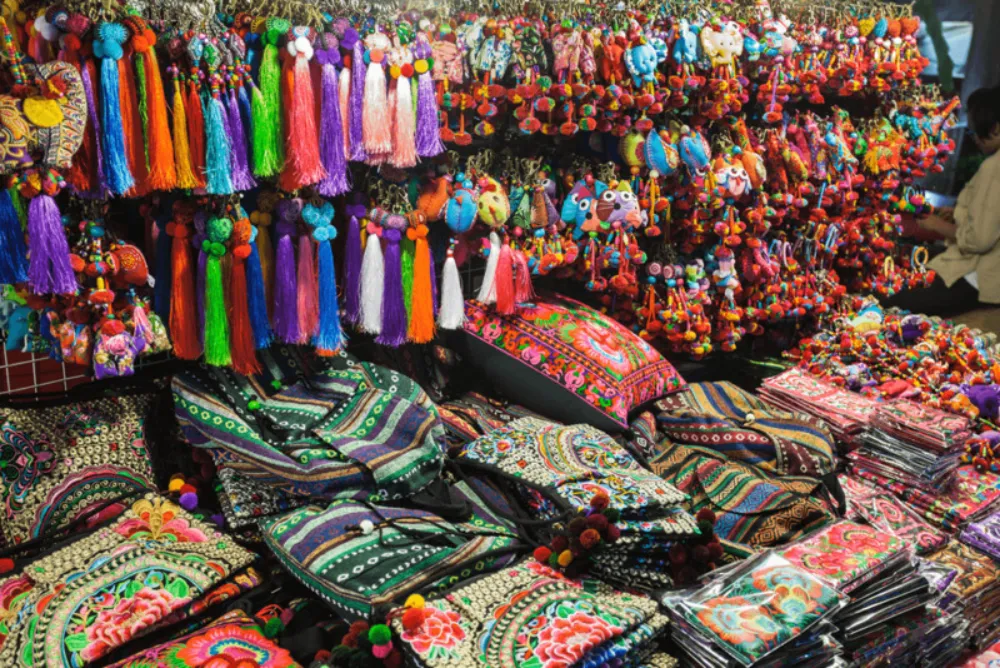
Like much of Saigon, Cholon runs on its markets. Bình Tây Market is the grand one, built in 1928 by Chinese merchant Quách Đàm, with over 1,400 stalls under its landmark yellow clock tower. Unlike District 1’s souvenir markets, Bình Tây is a genuine wholesale hub, piled high with dried spices, textiles and herbs. Nearby, An Đông Market (An Đông Ward) and the Soái Kình Lâm fabric market serve traders and bargain-hunters alike. Walking through them is an immersive plunge into the working rhythm of the Hoa community.
When Are Cholon’s (District 5) Festivals?
Quick answer: The biggest is the Nguyên Tiêu (Lantern) Festival around the 15th day of the first lunar month, a recognised national heritage event with lion dances and parades. The Mid-Autumn Festival lights up the lantern street, and the Thiên Hậu Festival (23rd day of the 3rd lunar month) draws crowds to the temple.
Cholon’s calendar is rich with colour. The Nguyên Tiêu (Lantern) Festival is the highlight, lion dances, parades and prayer ceremonies fill streets like Châu Văn Liêm and Lương Nhữ Học. Tết (Lunar New Year) turns the temples into the heart of festivities, with families lighting incense at Thiên Hậu to pray for prosperity, while the Mid-Autumn Festival floods the lantern street with light. For visitors, timing a trip to these dates turns a great neighbourhood into an unforgettable one.
Quick Tips for Visiting Cholon
- Getting there: about 15-30 minutes from District 1 by Grab; or bus 1 (from Bến Thành) and bus 56.
- Best route: start at Bình Tây Market, then walk to Thiên Hậu and the nearby assembly halls, most cluster within a few blocks.
- Timing: mornings are best for markets and temples (cooler, more active).
- Etiquette: dress modestly at temples, speak softly, and ask before photographing worshippers.
- Cash: bring small notes, markets and old eateries rarely take cards.
Why Cholon Still Feels Like Another World
Cholon doesn’t reinvent itself for visitors. Its temples still fill with incense and prayer, its markets still trade at wholesale pace, and its kitchens still cook recipes passed down for generations. To walk through Cholon is to see how Chinese and Vietnamese life have woven together over three centuries, and why it remains one of the most rewarding corners of Saigon to explore slowly.
FAQ
Where is Chinatown (Cholon) in Ho Chi Minh City? Cholon is centred on District 5 (now Chợ Lớn Ward), with parts extending into the former Districts 6, 10 and 11. From District 1 it’s about a 15-30 minute Grab ride. The main sights cluster around Nguyễn Trãi and Trần Hưng Đạo streets.
What is Cholon famous for? Cholon is Saigon’s historic Chinatown, the largest in Vietnam, known for its 300-year-old Hoa community, ornate temples like Thiên Hậu and Nghĩa An, the wholesale Bình Tây Market, herbal-medicine streets, lantern lanes, and excellent Cantonese dim sum and roast meats.
Is District 5 still called that in 2026? In everyday use, yes. Officially, District 5 was reorganised in July 2025 into three wards, Chợ Lớn, An Đông and Chợ Quán. Most Chinatown temples now sit in Chợ Lớn Ward, but locals and tour operators still widely say “District 5” and “Cholon.”
What’s the difference between Cho Lon Market and Bình Tây Market? People use the names interchangeably, but Bình Tây Market is the actual landmark building with the yellow clock tower, now in Bình Tây Ward (old District 6). It’s a wholesale hub for spices, textiles and medicine, not a tourist souvenir market.
How much time do you need in Cholon District 5 ? A half-day is ideal. That’s enough to see Bình Tây Market, two or three temples, the lantern and medicine streets, and stop for dim sum, all at the relaxed pace Cholon rewards. Add a festival date and you could easily spend longer.