

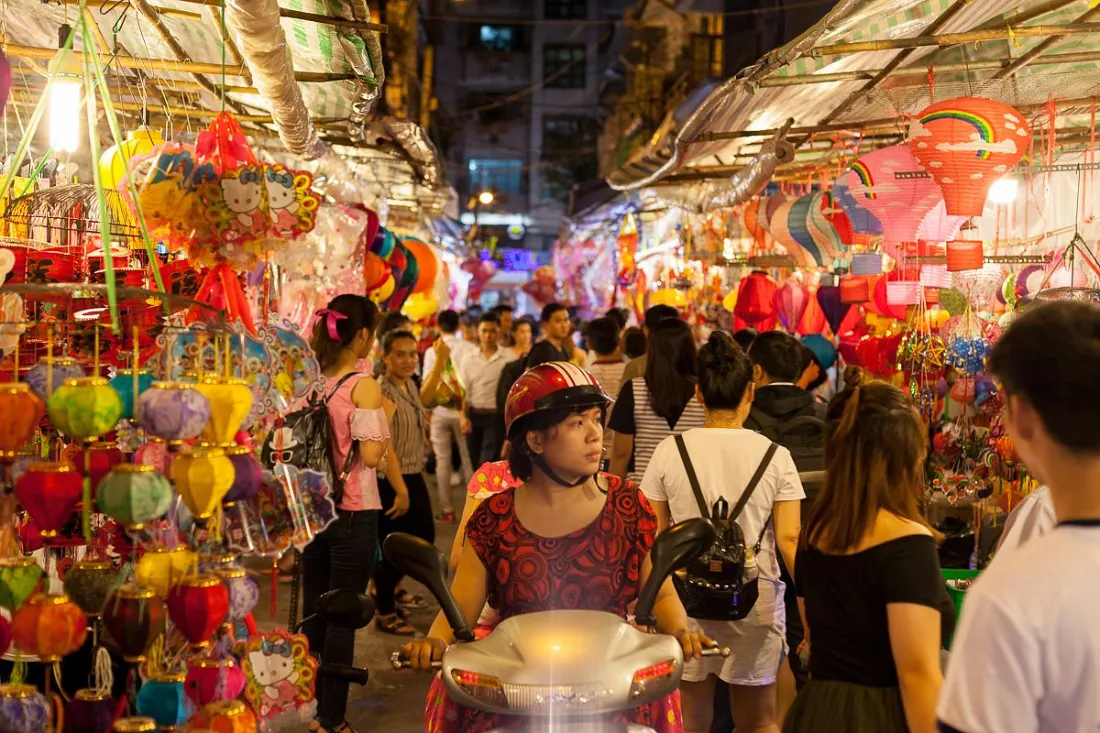
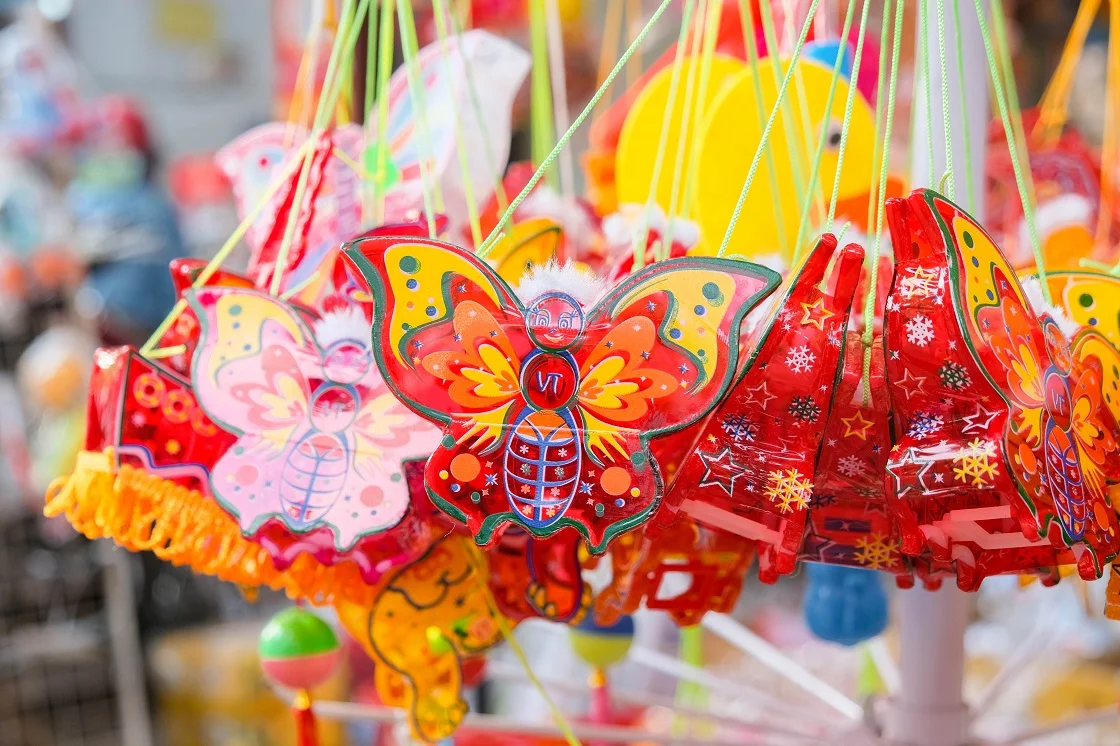
There’s a moment, usually in early to mid autumn, during September, when Saigon changes: The lion-dance drums start echoing from side streets as troupes practise for their big night, shops fill with cellophane lanterns, and beautifully boxed mooncakes appear on every counter. This is Tết Trung Thu, the Mid-Autumn Festival, and Ho Chi Minh City throws itself into it with a high-energy blend of deep tradition and dazzling modernity. As a Saigonese who grew up with this festival, here’s how to experience its real heart: when to go, where to go, what to eat, and the stories behind it all.
When Is the Mid-Autumn Festival in 2026?
Quick answer: In 2026, the Mid-Autumn Festival falls on Friday, 25 September (the 15th day of the 8th lunar month). In Saigon, the liveliest, most crowded night is usually the evening before, Thursday, 24 September, when families pour onto the streets, though lantern areas like Cholon stay festive for the week or two leading up to it.
Mid-Autumn is not a public holiday in Vietnam, but it’s one of the most visually spectacular times to be in the city. The celebrations build for one to two weeks beforehand, so you don’t have to be here on the exact date to enjoy them, the lantern streets, mooncake stalls and lion-dance practices are in full swing well before the full moon itself.
Where Is the Best Place to Experience Mid-Autumn in Saigon?
Quick answer: Cholon’s Lương Nhữ Học lantern street (District 5) is the historic epicentre, while Nguyễn Huệ Walking Street (District 1) offers the modern, light-installation version. For something quieter, try the District 5 Children’s House lion-dance competitions or a moonlit Saigon Waterbus ride.
Saigon celebrates with a unique mix of old and new. Here’s where to head, depending on the mood you’re after.
The Epicentre: Cholon’s Lantern Street (District 5)
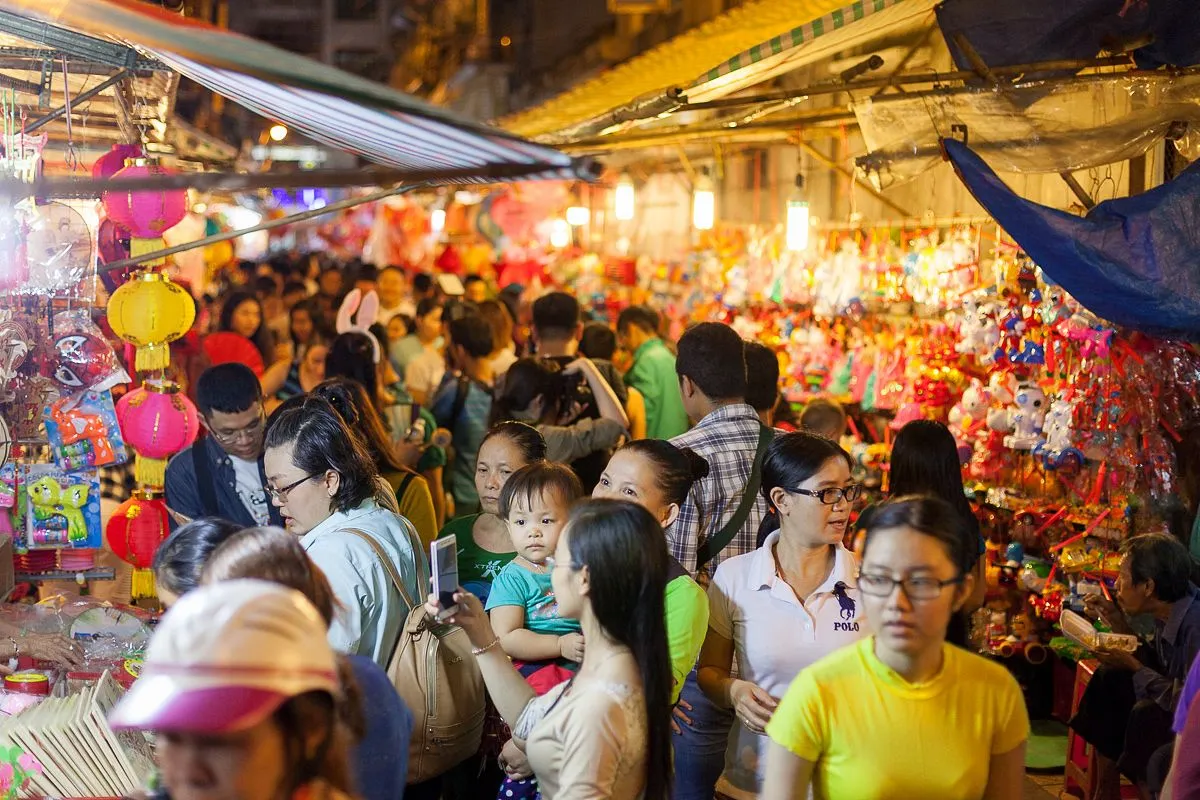
This is the historical heart of the festival in Saigon. In the city’s Chinatown, the main lantern street is Lương Nhữ Học, with the atmosphere spilling into parallel streets like Trần Hưng Đạo B and Nguyễn Án. Just 500 metres away, Hải Thượng Lãn Ông street offers a smaller, more local-focused lantern scene, perfect if you want to avoid the heaviest crowds. People flock here for vibrant photos, street food and lanterns priced from around 25,000-150,000 VND. While you’re in the area, it’s worth stepping into the historic Thiên Hậu Temple and the rest of Cholon’s Chinatown, which is magical during the festival.
Saigonese tips: take a Grab rather than driving (Cholon’s one-way streets are confusing), explore the side alleys where lion-dance troupes practise, and bring a raincoat for sudden downpours.
The Modern Soul: Nguyễn Huệ Walking Street (District 1)
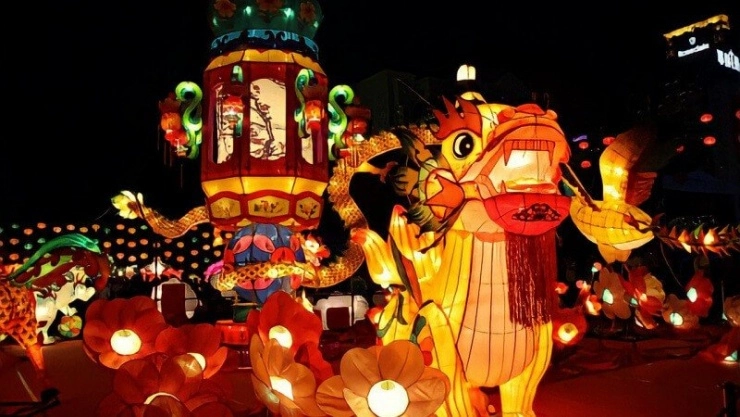
If Cholon is tradition, Nguyễn Huệ is the modern reinterpretation. The whole boulevard is dressed in large-scale light installations, giant lanterns and miniature landscapes reimagining Mid-Autumn symbols like the full moon, carp and lotus in a contemporary style. People gather here to stroll under the moonlight in a classy public space, a modern version of the old village communal yard.
Saigonese tip: for the best view, head up to a café in the 42 Nguyễn Huệ Café Apartment and look down over the sea of people and lanterns.
For Authentic Local Energy: District 5 Children’s House
To feel the festival’s original community spirit, don’t miss the Children’s Houses, especially in District 5, famous for its lively lion-dance competitions. You’ll be immersed in the rapid drumbeats, believed to ward off evil spirits, as teams perform acrobatic moves on tall poles. Arrive early; these events pack out with cheering local families.
For a Romantic Twist: The Saigon Waterbus
For a unique “moon-gazing” experience, take an evening Saigon Waterbus ride. Instead of fighting crowds, you glide along the breezy river and watch the full Mid-Autumn moon rise over the city. Tickets are cheap (around 15,000 VND one way), but book ahead for festival-weekend evenings. The ideal departure is around 5:30-6:00 PM, catching both sunset and moonrise on the Bạch Đằng-Bình An route.
What Do You Eat During the Mid-Autumn Festival?
Quick answer: Mooncakes (bánh) are the star, either baked (bánh nướng) or soft sticky-rice (bánh dẻo), often with a salted egg yolk for the full moon. Pair them with hot tea. In Saigon, seek out heritage bakeries like Như Lan, Đồng Khánh and Hỷ Lâm Môn.
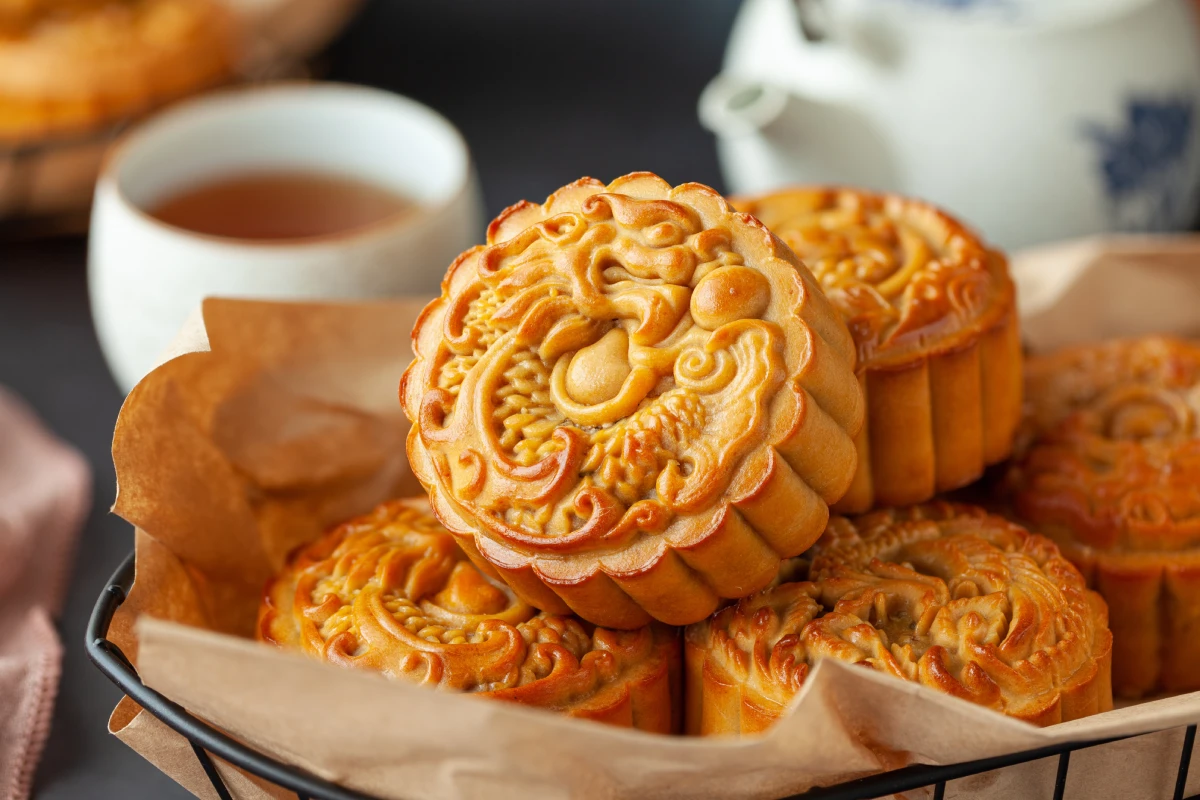
Mooncakes are the heart of the festival. The two main types are bánh nướng (baked) and bánh dẻo (soft, sticky rice), many with a salted egg yolk in the centre to represent the full moon. For the most authentic, generations-loved flavour, look to Saigon’s heritage bakeries:
- Như Lan (64-66 Hàm Nghi, District 1), a Saigon culinary institution, famous for its savoury mixed-nut mooncakes.
- Đồng Khánh (Brodard Bakery), a long-established brand with a French-Vietnamese-Chinese fusion style, known for thin crust and quality fillings.
- Hỷ Lâm Môn, another heritage name blending traditional flavours with modern variations.
Single cakes run about 70,000-200,000 VND, and a standard box of four around 400,000-800,000+ VND. The proper way to enjoy them is with hot tea, Phúc Long is a reliable spot for quality jasmine, lotus or oolong to brew at home or give as a gift.
Want to taste the festival the way locals do, weaving between lantern-lit streets? Join the Saigon Foodie Feast food tour »
What Is the History & Meaning of the Mid-Autumn Festival?
Quick answer: Mid-Autumn began as a harvest and moon-worship festival tied to Vietnam’s wet-rice civilisation, grandly celebrated as far back as the Lý Dynasty. Today it’s known as the “Children’s Festival,” wrapped in the beloved legend of Chú Cuội and the Moon Lady Chị Hằng.
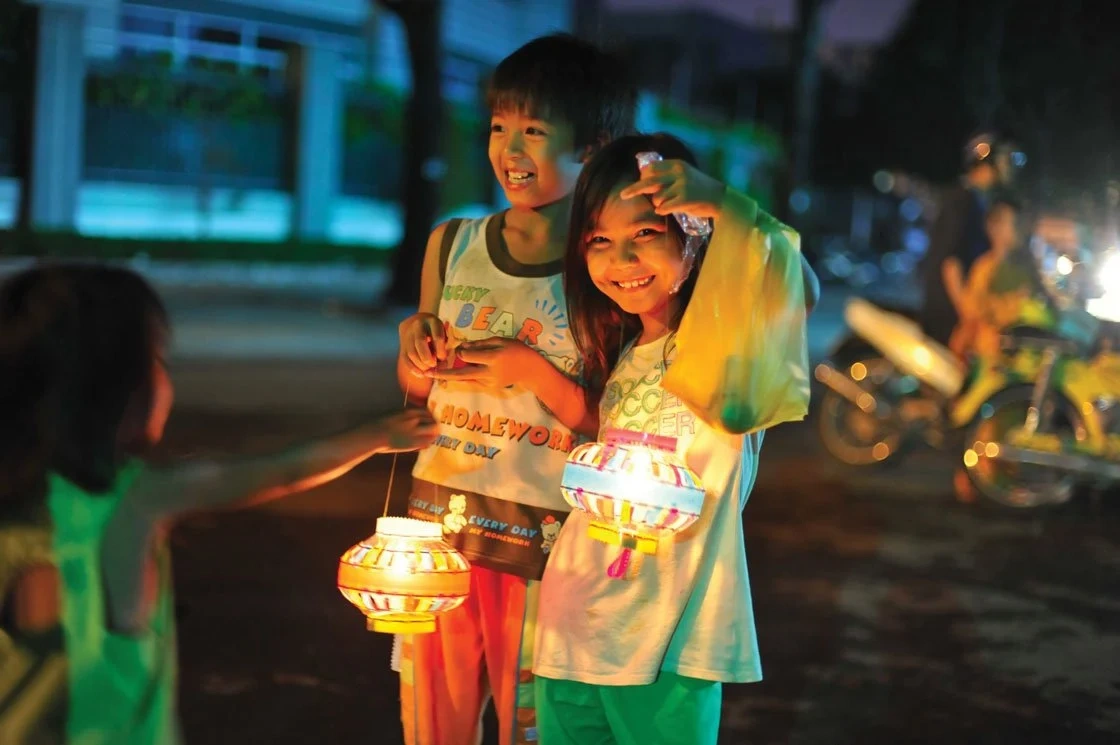
Understanding why Vietnamese celebrate enriches the experience. The most familiar story is the legend of Chú Cuội, a woodcutter pulled to the moon while clinging to a magical banyan tree. It’s said children parade lanterns on Mid-Autumn night to light Cuội’s way home, which is why the festival is so centred on children.
Beyond folklore, the festival is linked to the wet-rice civilisation and royal tradition. During the Lý Dynasty, Mid-Autumn was celebrated grandly at the Thăng Long Imperial Citadel, with kings thanking the Dragon God for good harvests through boat races and water puppetry. The ancients also practised moon-gazing to predict destiny, a golden moon meant a good silk year, a clear orange moon promised peace and prosperity. These layers of meaning are why Mid-Autumn feels less like a party and more like a quiet act of gratitude and reunion.
Local Tips for Enjoying Mid-Autumn in Saigon
- Timing: lantern streets are most crowded 7:30-9:30 PM. Come at 5-6 PM to shop in peace, or after 9:30 PM as crowds thin.
- Transport: use a ride-hailing app, not a motorbike, parking near the lantern streets is chaotic, and expect surge pricing at peak.
- Photography: smile and make eye contact before close-up portraits, especially of elders and children; a nod usually earns a yes.
- Weather: late September is hot, humid and prone to sudden downpours, carry water, light clothes and a small raincoat.
- Safety: use a zipped bag worn in front, mind your phone in crowds, and bring a power bank for all the photos.
Vietnamese Phrases to Win Hearts
A little effort goes a long way:
- Tết Trung Thu: Mid-Autumn Festival
- Đèn lồng: lantern
- Đẹp quá!: So beautiful!
- Bánh ngon quá!: The cake is delicious!
- Chúc mừng Trung Thu!: Happy Mid-Autumn Festival!
Experience Mid-Autumn Like a Local
The Mid-Autumn Festival is a symphony of light, flavour and community joy, and the best way to feel it is the way a true Saigonese does: weaving through the lantern-lit streets with a local who knows where the magic hides. On a Vespa food tour like Saigon Foodie Feast or the evening Saigon Night Life, a local guide leads you straight into the festive heart, past brightly lit lanterns, into the food corners only locals know. Don’t just watch the celebration; become part of it.
FAQ
When is the Mid-Autumn Festival in 2026? In 2026, Tết Trung Thu falls on Friday, 25 September, the 15th day of the 8th lunar month. In Saigon, the busiest celebration is usually the night before (Thursday, 24 September), though lantern streets are festive for one to two weeks beforehand.
Where is the best place to see lanterns in Ho Chi Minh City? Lương Nhữ Học street in Cholon (District 5) is the city’s most famous lantern street, with the nearby Hải Thượng Lãn Ông street offering a quieter alternative. Nguyễn Huệ Walking Street in District 1 hosts large modern light installations.
Is the Mid-Autumn Festival a public holiday in Vietnam? No, Mid-Autumn is not an official public holiday, so shops, restaurants and attractions stay open as normal. It’s widely celebrated with street events, lantern displays, lion dances and family gatherings, especially in the evenings.
What do people eat during the Mid-Autumn Festival? Mooncakes are the centrepiece, baked (bánh nướng) or soft sticky-rice (bánh dẻo), often with a salted egg yolk symbolising the moon, traditionally enjoyed with hot tea. In Saigon, heritage bakeries like Như Lan, Đồng Khánh and Hỷ Lâm Môn are local favourites.
Is Mid-Autumn a good time to visit Saigon? Yes, if you enjoy a festive atmosphere. The lantern streets, lion dances and mooncake culture make it one of the most colourful times to visit, though expect heat, humidity, occasional rain and large evening crowds in the lantern districts.