

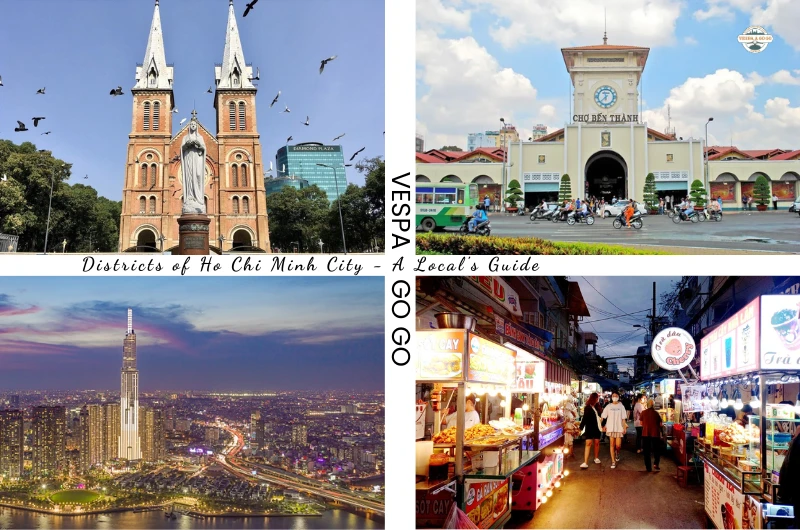
Ho Chi Minh City, formerly Saigon, is a vibrant, colourful megacity that reinvents itself while holding tightly to its heritage, and each of its neighbourhoods tells a different story. There’s even an old Vietnamese saying that captures the city’s character: “eat in District 5, sleep in District 3, party in District 1.” This guide is your map to the most important districts of Ho Chi Minh City, what each is known for, who it suits, and the new 2026 ward names, with links to in-depth local guides for every one.
A quick note on names (2026): Since 1 July 2025, Vietnam abolished the district system, and Ho Chi Minh City is now organised by wards. Familiar names like “District 1” and “District 3” are no longer official units on paper, but locals, hotels, signs and tour listings still use them everywhere. This guide keeps the familiar district names and notes the new wards where helpful.
How Many Districts Does Ho Chi Minh City Have?
Quick answer: The old Ho Chi Minh City had 22 districts, but since July 2025 the district level was dissolved into a streamlined system of wards. In practice, travellers still navigate by the well-known district names, District 1 for the centre, Cholon (District 5) for Chinatown, and so on, which is how this guide is organised.
For travellers, the practical map hasn’t really changed: the same neighbourhoods, the same landmarks, the same food streets, just new administrative labels underneath. Below, we cover the seven districts most worth knowing, from the colonial core to the riverside enclaves, each with a link to its own detailed guide.
Saigon’s Districts at a Glance
Quick answer: District 1 is the central hub; District 3 is the leafy, local heart; District 2 (Thảo Điền) is the cosmopolitan riverside enclave; District 4 is the gritty street-food island; Cholon (District 5) is historic Chinatown; District 7 is the modern, planned oasis; and Bình Thạnh blends Landmark 81 with ancient ground.
| District | Best known for | New 2026 wards |
| District 1 | Central core, landmarks, nightlife | Sài Gòn, Bến Thành, Tân Định, Cầu Ông Lãnh |
| District 3 | Leafy, local, French villas, food | Bàn Cờ, Xuân Hòa, Nhiêu Lộc |
| District 2 (Thảo Điền) | Expat riverside, international dining | An Khánh (Thủ Đức City) |
| District 4 | Street-food island, seafood, alleys | Vĩnh Hội, Khánh Hội, Xóm Chiếu |
| Cholon (District 5) | Historic Chinatown, temples, dim sum | Chợ Lớn, An Đông, Chợ Quán |
| District 7 | Modern oasis, “Little Seoul,” parks | Tân Mỹ, Tân Hưng, Tân Thuận, Phú Thuận |
| Bình Thạnh | Landmark 81 + ancient ground + food | Gia Định, Bình Thạnh, Bình Lợi Trung, Thạnh Mỹ Tây, Bình Quới |
Think of these districts as a spectrum, from the polished, high-energy core of District 1 to the laid-back, local character of areas like District 3 and Bình Thạnh. No single district defines Saigon; rather, the city’s magic lies in the contrast between them. A traveller who only sees District 1 misses the gritty street-food soul of District 4, the centuries-old heritage of Cholon, and the relaxed riverside calm of District 2. The sections below walk through each district in turn, so you can decide which ones match the trip you want.
District 1: The Beating Heart of Saigon
Under French rule, District 1 was built to look like a miniature Paris, and parts of it still do, from Notre-Dame Cathedral to a Central Post Office with an unexpected connection to the Eiffel Tower. Today those colonial icons sit in the shadow of skyscrapers, luxury malls and the city’s loudest nightlife, a striking collision of old and new that defines the district’s energy.
But the District 1 most visitors see, the landmarks, Bùi Viện, Bến Thành, is only the surface. Locals slip past the backpacker street to rooftop bars hidden behind unmarked doors and speakeasies that need a secret knock. Which sights are actually worth your time, where to eat between them, and how to find the quiet corners? That’s where the full guide comes in.
→ Read the full guide: Things to do in District 1, Ho Chi Minh City
District 3: Charm, Culture & Old Saigon Vibes
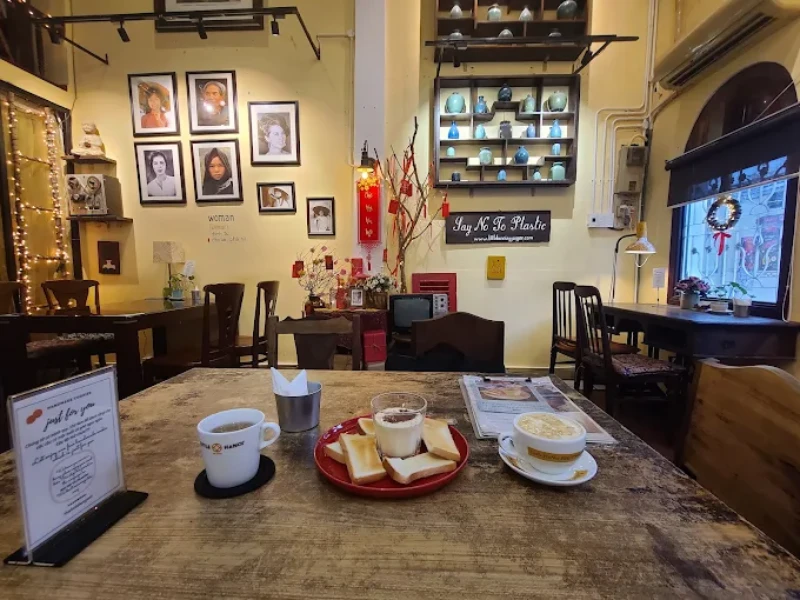
Time Out once named District 3 one of the coolest neighbourhoods in the world, yet most tourists walk straight past it. Just west of the centre, it hides the city’s most beautiful French villas on tree-lined streets, the pastel-pink Tân Định Church, and a wartime secret most visitors never hear about: a hidden weapons bunker beneath an ordinary house.
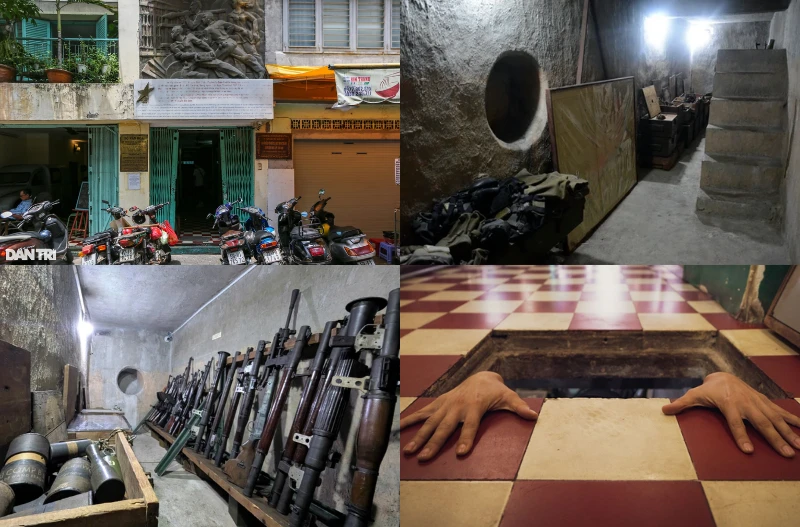
This is the district locals mean when they say “sleep in District 3”, leafy, lived-in, and serious about food, at prices friendlier than next-door District 1. It rewards slow exploration on foot, with a residential calm and authentic local rhythm that the busier centre simply can’t offer. The alleys, the bunker, the best local eats, the full guide maps them out.
→ Read the full guide: District 3, Ho Chi Minh City: A Local’s Guide
→ Comparing the two? District 1 vs District 3: Which to Choose
District 2 (Thảo Điền): The Cosmopolitan Riverside Enclave
Twenty years ago this was rice paddies and stilt houses. Today, Thảo Điền is where you can have French brunch, a Korean BBQ dinner and a riverside cocktail without crossing a single major road, one of nearly 900 places to eat packed into a few square kilometres, a scene that earned it a spot on Time Out’s list of the world’s coolest neighbourhoods.
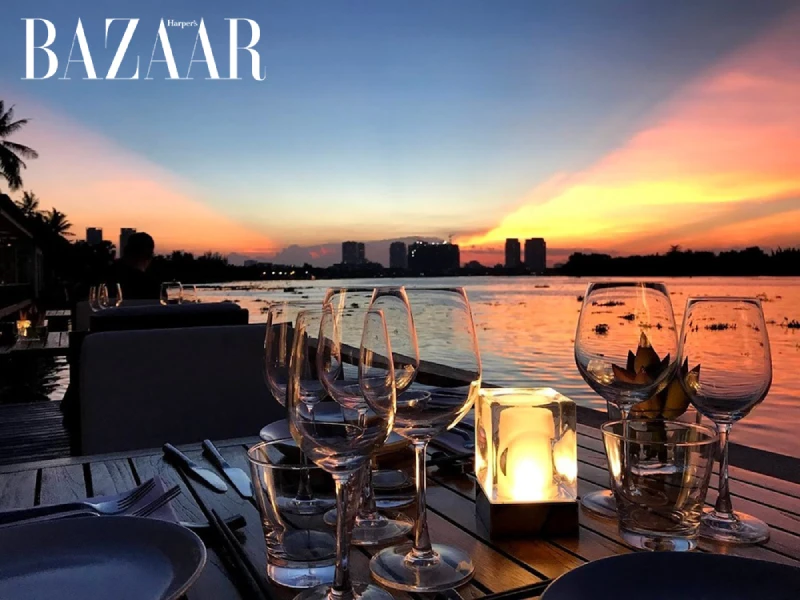
It’s the “expat bubble,” but the truth underneath is more interesting: luxury condos backing onto muddy market lanes, the new Metro gliding past old fishing-village corners. Where to eat, drink and find that contrast, the full guide has the map.
→ Read the full guide: District 2 (Thảo Điền): A Local’s Guide
District 4: The Street-Food Island
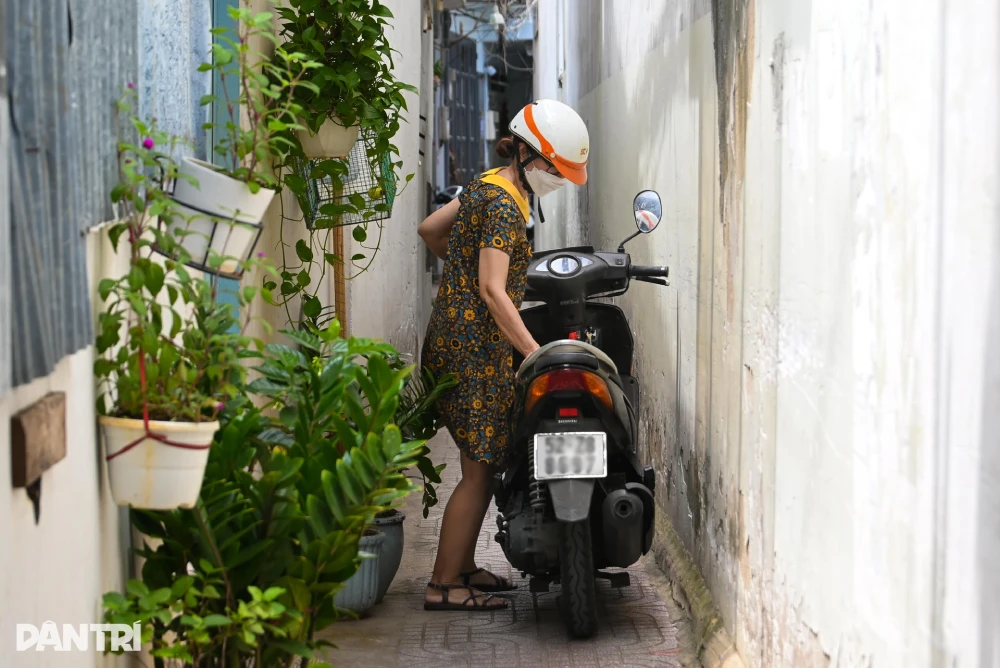
For decades, Saigonese said one thing about District 4 in a low voice: “Quận 4 used to be intense.” This compact island between two canals was the city’s gritty dock district, home to dockworkers, traders, and one of Vietnam’s most notorious gangsters, whose old alley you can still walk down today.
Now it’s safe, warm, and one of the best places in Saigon to eat: the Vĩnh Khánh seafood street firing up at night, snail stalls and grilled scallops on plastic stools, plus the historic wharf where a young Hồ Chí Minh sailed away in 1911. Its transformation from a feared dock zone into a beloved, close-knit food neighbourhood is one of Saigon’s most remarkable district stories, and its tight network of alleys still pulses with a fierce, independent local spirit. The stories, the stalls, the route, all in the full guide.
→ Read the full guide: District 4 Saigon: Food, Alleys & Its Wild Past
Cholon (District 5): The Historical Heart of Chinatown
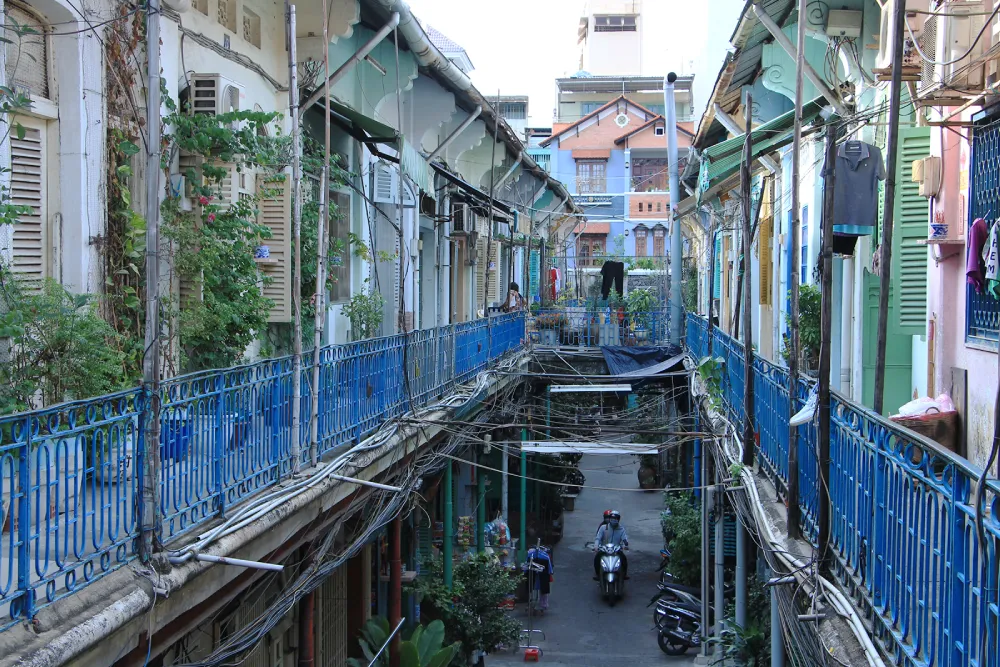
Step into Cholon and you’ve entered the largest Chinatown in the world, a place where 300-year-old temples hang heavy with spiral incense, where a colourful century-old alley feels like 1930s Hong Kong, and where a market with a yellow clock tower still trades at wholesale pace before dawn.
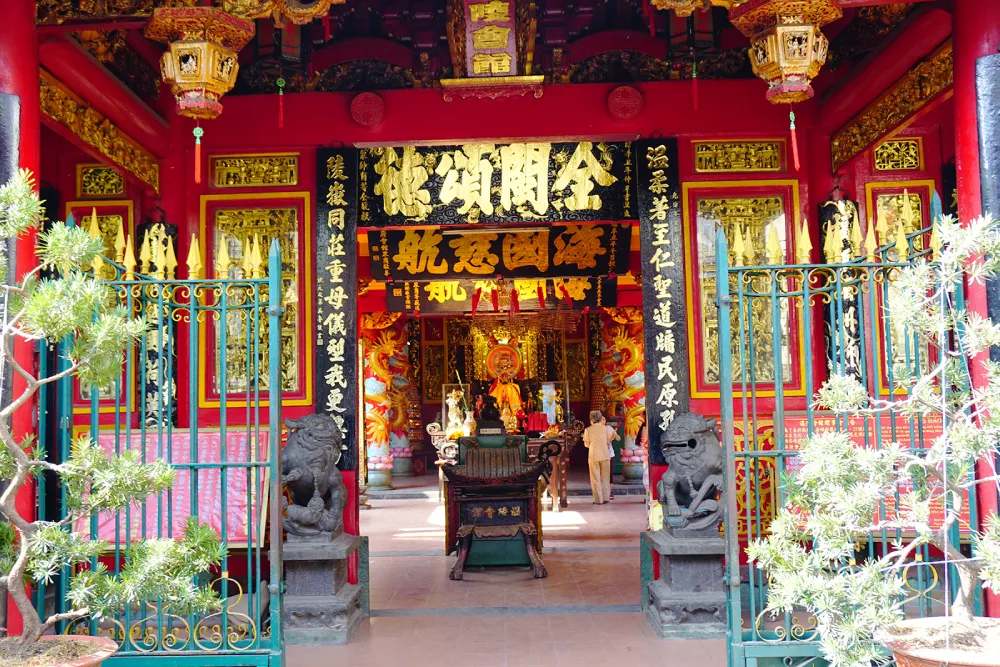
Founded by Hoa migrants in the late 1700s, this is Saigon’s most atmospheric district to get lost in: assembly halls to each Chinese province, a street that smells entirely of dried herbs, and dim sum recipes guarded for generations. It operates on its own cultural rhythm, distinct from the rest of the city, where Chinese-Vietnamese traditions, festivals and cuisine have thrived side by side with Vietnamese life for centuries. Where to start and what not to miss, the full guide lays out the walking route.
→ Read the full guide: Cholon (District 5): Saigon’s Historic Chinatown
District 7: The Modern Urban Oasis
There’s a bridge in District 7 that lights up after dark and makes you feel like you’re walking on a path of stars, just one reason this master-planned district feels like a different city entirely. Built on former marshland, Phú Mỹ Hưng is nicknamed “Little Seoul” for its Korean community, and “the Singapore of Saigon” for its clean, green, orderly streets.
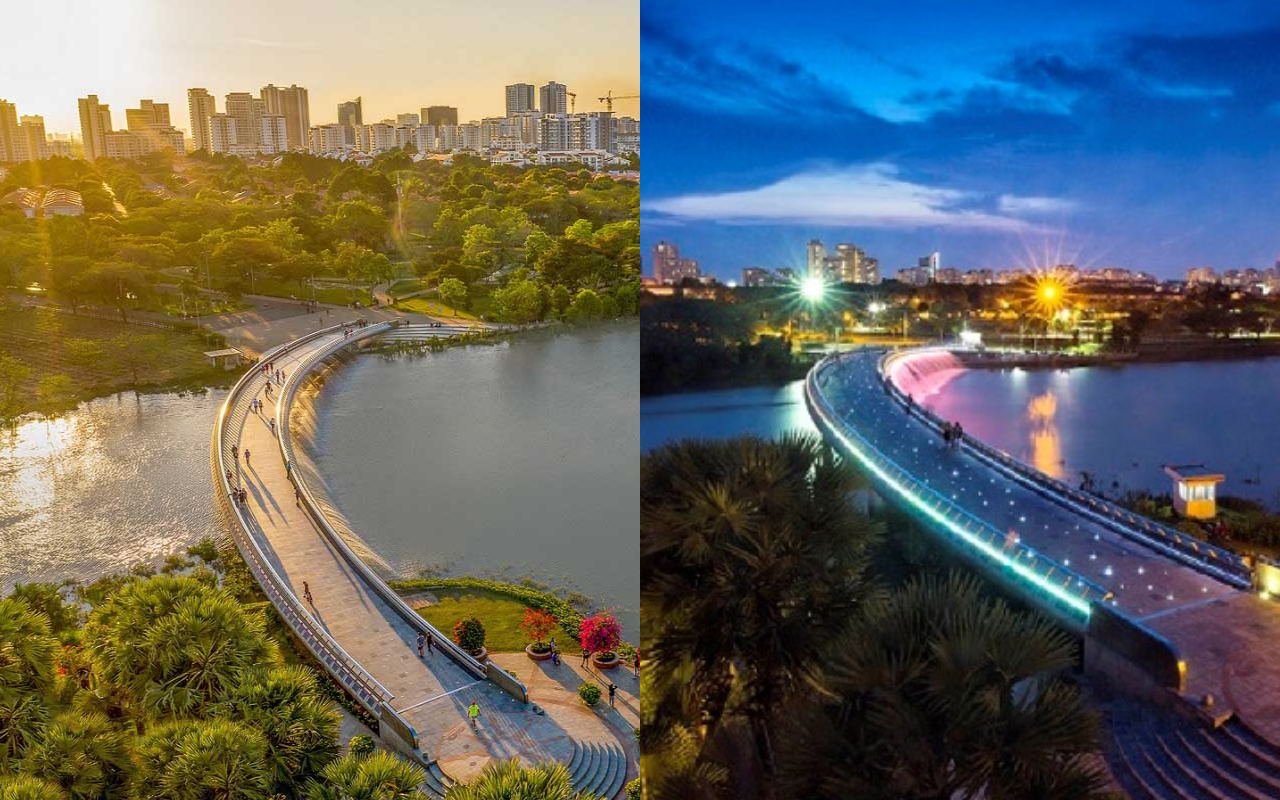
It’s the district that makes visitors say “I could live here”, wide boulevards, lakeside parks, and a food scene running from authentic Korean BBQ to Michelin-listed phở. For families and those seeking a calmer, more spacious base, it offers a polished, international side of Saigon far removed from the inner-city bustle. What to do, where to eat, and how to spend an evening here, the full guide has it.
→ Read the full guide: District 7: Modern Oasis, Food & Things to Do
Bình Thạnh: Landmark 81 Meets Ancient Ground
Everyone knows Bình Thạnh for one thing: Landmark 81, Vietnam’s tallest tower. What almost nobody realises is that it stands on some of Saigon’s oldest ground, and the new ward beneath it carries the name Gia Định, once an entire province older than Saigon itself.
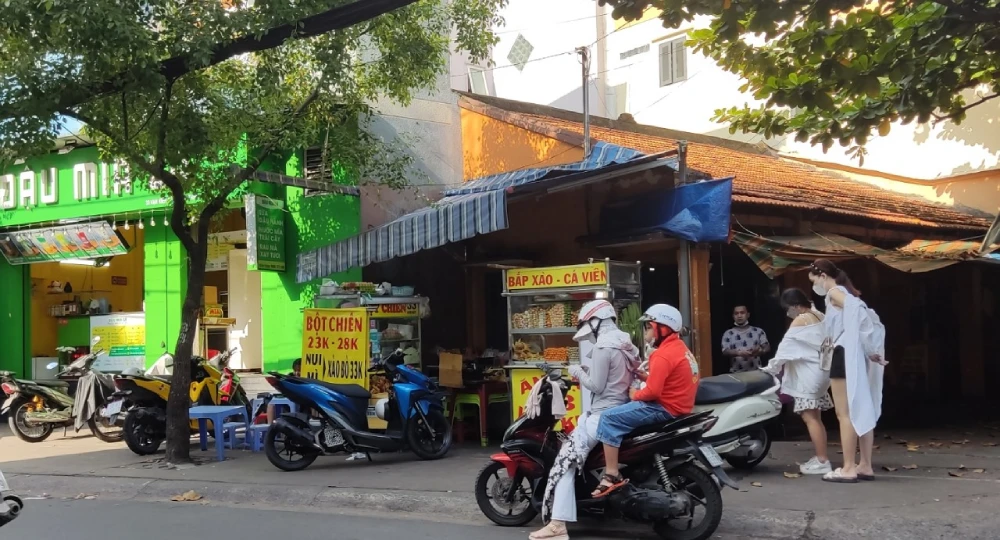
Step away from the skyline and you find a working temple where locals still pray, a market humming since dawn, and two food streets that quietly serve some of the city’s best, and most underrated, street food at local prices. This contrast, gleaming modern tower above, deeply traditional neighbourhood life below, makes Bình Thạnh one of the most fascinating districts to explore. Where the skyline meets the old city, and where to eat in between, is all in the full guide.
→ Read the full guide: Bình Thạnh District: Saigon’s Underrated Food Area
How Are Saigon’s Districts Organised?
Quick answer: Ho Chi Minh City was historically organised into numbered districts (Quận 1, 3, 4, etc.) and named districts (like Bình Thạnh). Since July 2025, the official structure has shifted to wards, but the familiar district names remain the practical way locals and visitors navigate. The lower-numbered districts form the historic urban core, with District 1 at the centre.
Saigon’s layout can seem confusing at first, but it follows a logic. Historically, the city was divided into a mix of numbered districts (Quận 1, Quận 3, Quận 4 and so on) and named districts (such as Bình Thạnh, Phú Nhuận and the sprawling Thủ Đức City). The lower-numbered districts, especially District 1, form the dense historic heart, with the others radiating outward toward the suburbs. Even with the 2025 shift to a ward-based system, these district identities remain how people actually talk about and navigate the city.
This structure is partly a legacy of the city’s growth over the past century, from a compact colonial centre into a vast metropolis of millions. Each district developed its own character through waves of history: French administration, Chinese settlement in Cholon, port trade in District 4, and rapid modern development in areas like District 2 and District 7. While the recent administrative changes have redrawn the official map, the districts themselves remain the practical, intuitive way to understand Saigon. Knowing roughly where each sits, and what it’s known for, transforms how you experience the city.
How Do You Get Around Saigon’s Districts?
Quick answer: The easiest way to move between districts is by Grab (motorbike or car), which is cheap, app-based and avoids haggling. Taxis from reputable companies are also reliable. The central districts (1, 3) are walkable within themselves, and most inner districts are only a 5 to 20-minute ride apart, making it easy to base in one and explore the others.
Getting around Saigon’s districts is straightforward once you know the options. The city is large and the heat is real, so most visitors rely on app-based rides rather than walking long distances:
- Grab. The dominant ride-hailing app, offering both motorbike (GrabBike) and car (GrabCar) options. It’s affordable, avoids price haggling, and is the go-to way to hop between districts.
- Taxis. Reputable taxi companies are reliable; use these or Grab rather than flagging unmarked vehicles.
- Walking. Within a single district, especially Districts 1 and 3, walking is pleasant and rewarding, letting you discover alleys and street life.
- Motorbike. For the confident, renting or riding pillion is the most authentic way to move, though traffic takes some getting used to.
Crucially, the inner districts sit close together, often just 5 to 20 minutes apart, so you’re never far from the next neighbourhood. This is why you can comfortably base yourself in one district and explore the rest on day trips or guided rides without ever feeling stuck.
Which Saigon District Should You Stay In?
Quick answer: First-timers should stay in District 1 for the sights and convenience, or District 3 for a calmer, local feel close to the centre. Choose District 2 (Thảo Điền) for an expat-style riverside base, or District 7 for a quiet, family-friendly stay, though both sit further from the historic core.
For most visitors, the decision comes down to centre-versus-calm. District 1 keeps you walking distance from the landmarks; District 3 offers the same proximity with a more local, residential feel and better value. District 2 and District 7 suit longer stays and travellers who prioritise space, dining and a relaxed pace over being in the thick of the action. Whichever you choose, Saigon’s districts sit close enough that you can base in one and explore the rest with ease.
Which District Is Best for What?
Quick answer: Match the district to your goal. For sightseeing and nightlife, choose District 1. For local culture and cafes, District 3. For street food, District 4. For Chinese heritage and temples, Cholon. For an upscale expat vibe, District 2 (Thảo Điền) or District 7. For underrated food on historic ground, Bình Thạnh. Each district excels at something different.
One of the best ways to plan a Saigon trip is to think in terms of what each district does best, then build your days around your interests:
- For first-time sightseeing and nightlife: District 1, home to the major landmarks, walking street and backpacker area.
- For local life, cafes and old-Saigon charm: District 3, central yet calmer and more residential.
- For street food and gritty authenticity: District 4, the compact “street-food island.”
- For Chinese heritage, temples and markets: Cholon (District 5), the historic Chinatown.
- For an upscale, international, leafy vibe: District 2 (Thảo Điền), the expat enclave across the river.
- For modern, spacious, family-friendly living: District 7, with its wide boulevards and parks.
- For underrated food and Landmark 81: Bình Thạnh, blending modern skyline with ancient ground.
This approach means you can prioritise the districts that match your travel style, while knowing the others are only a short ride away if you want to explore further. The beauty of Saigon is that its districts are distinct enough to feel like different worlds, yet close enough to combine into one rich trip.
Seeing Saigon’s Districts by Vespa
With the districts spreading out across the city, the easiest way to experience the contrast between them, colonial District 1, the alleys of District 4, the temples of Cholon, the local rhythm of District 3, is on a guided ride. Our Saigon city tour links the highlights of several districts into one smooth route, while the evening food tour dives into the street-food heart of neighbourhoods like District 4. You don’t just see the city, you feel how its districts fit together. Exploring several neighbourhoods in a single guided ride is the best way to grasp the contrasts that make Saigon so endlessly fascinating, from grand boulevards to hidden alleys, all in one genuinely unforgettable journey through the city.
FAQ
How many districts does Ho Chi Minh City have in 2026? The old city had 22 districts, but the district level was officially dissolved in July 2025 in favour of a streamlined ward system. In daily life and for travel, people still navigate by the familiar district names like District 1, District 3 and Cholon (District 5).
Which district is the best to stay in for first-time visitors? District 1 is the most convenient base, with major landmarks, hotels and nightlife within walking distance. District 3 is a great alternative for a calmer, more local feel while staying close to the centre.
Which district is Chinatown in Ho Chi Minh City? Chinatown, known as Cholon, is centred on District 5 (now Chợ Lớn Ward) and spreads into the former District 6. It’s home to historic temples, the Bình Tây Market, and the city’s best Chinese-Vietnamese food.
Are the old district names still used after the 2025 reform? Yes. Although districts are no longer official administrative units, names like “District 1,” “Thảo Điền” and “Cholon” remain in everyday use on signs, in hotels and in tour listings. Official paperwork may show the new ward names.
Which district has the best street food? District 4 and Bình Thạnh are local favourites for affordable, authentic street food, while Cholon (District 5) is unbeatable for Chinese-Vietnamese dishes. District 1 has the widest overall range, from street stalls to fine dining.
Thanks for finally writing about > Districts of Ho Chi Minh City: A
Local's Guide 2026