

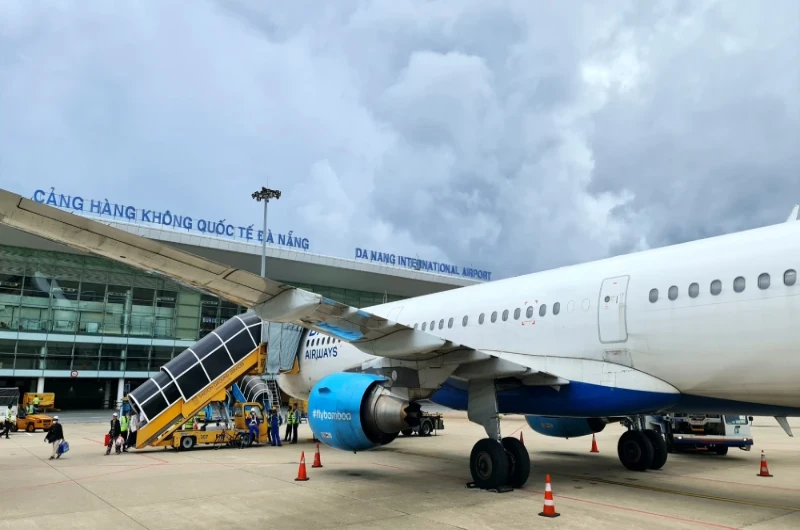
Da Nang Airport (DAD) is close to the city centre and within easy reach of Hoi An, making it a convenient starting point for exploring Central Vietnam. Before heading to your hotel, it helps to know which terminal you’ll use, where to withdraw cash or buy a SIM card, and how to arrange your ride. This guide covers those arrival essentials, along with immigration, airport facilities and tips for your departure, so you have the practical details in one place.
Where Is Da Nang International Airport?
Quick answer: Da Nang Airport (DAD) is unusually central, just about 5 km from Da Nang city centre, a 10 to 15-minute drive. Hoi An is roughly 29 to 30 km away (about 45 minutes). It’s Vietnam’s third-busiest airport, after Hanoi and Ho Chi Minh City, but it rarely feels overwhelming.
One of DAD’s biggest advantages is how close it sits to the city, right on the edge of central Da Nang, only about 5 km from the centre, so you can be at your hotel in 10 to 15 minutes. The popular old town of Hoi An, a major draw for visitors to the region, is around 29 to 30 km away, roughly a 45-minute drive. As Vietnam’s third-busiest airport after Noi Bai and Tan Son Nhat, Da Nang handles substantial traffic, yet unlike those two it rarely feels chaotic, making for one of the calmer arrivals in the country.
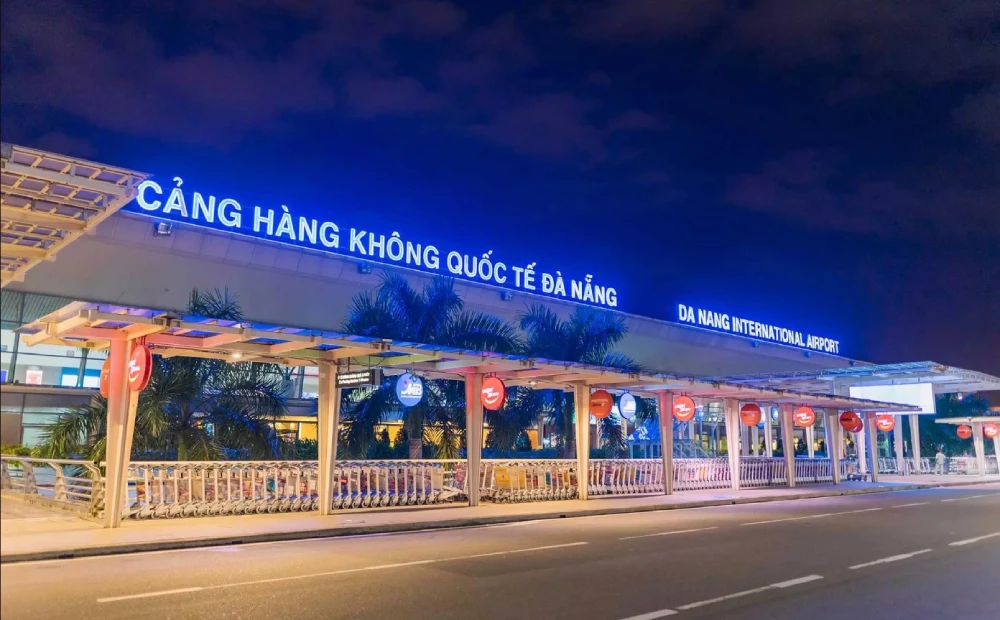
How Da Nang Airport Became a Gateway to Central Vietnam
Quick answer: Da Nang Airport has roots as a major airbase, playing a significant role during the Vietnam War, when it was one of the busiest airfields in the world. After the war it transitioned to civilian use, and major upgrades, including a modern international terminal, have since turned it into Central Vietnam’s key gateway and a driver of the region’s tourism boom.
The airport’s history mirrors the region’s transformation. During the Vietnam War, Da Nang Air Base was one of the world’s busiest airports, a strategic hub given the city’s coastal position. After the war, like other former military airfields, it was gradually converted to civilian use.
As Vietnam opened up and Central Vietnam’s beaches and heritage towns drew growing numbers of visitors, Da Nang invested heavily in its airport. A modern international terminal and ongoing upgrades transformed it into a comfortable, efficient gateway capable of handling the region’s tourism boom. Today it stands as a symbol of Da Nang’s emergence as one of Vietnam’s most dynamic and liveable cities, a far cry from its wartime past.
Da Nang Airport Terminals: Domestic and International Flights
Quick answer: Da Nang has two terminals. Terminal 1 handles domestic flights and Terminal 2 handles international arrivals and departures. They sit within walking distance of each other via a covered walkway, and both are modern and easy to navigate. The airport is linear and clearly signed in Vietnamese and English.
DAD’s layout is refreshingly simple, which is part of what makes it feel so manageable:
- Terminal 1 – Domestic. Handles flights within Vietnam.
- Terminal 2 – International. Handles all international arrivals and departures, modern and well-equipped.
The two terminals are within walking distance of each other via a covered walkway, so transfers are easy. The airport is linear and clearly signed in both Vietnamese and English, so you can forget complex diagrams: think of it in three simple moves, disembark, clear immigration (in Terminal 2 for international arrivals), then collect your bags and exit. One important detail to note: there is no ATM inside the immigration zone, so if you need funds for a visa payment on arrival, prepare USD or VND beforehand.
Getting from Da Nang Airport to the City and Hoi An
Quick answer: For Da Nang city, a Grab or taxi takes 10 to 15 minutes and costs little given the short distance. For Hoi An (about 45 minutes), use Grab, a metered taxi, or a pre-booked private transfer, expect roughly 350,000 to 450,000 VND by car. Avoid drivers who approach you inside the terminal; use the official ranks or book via app.
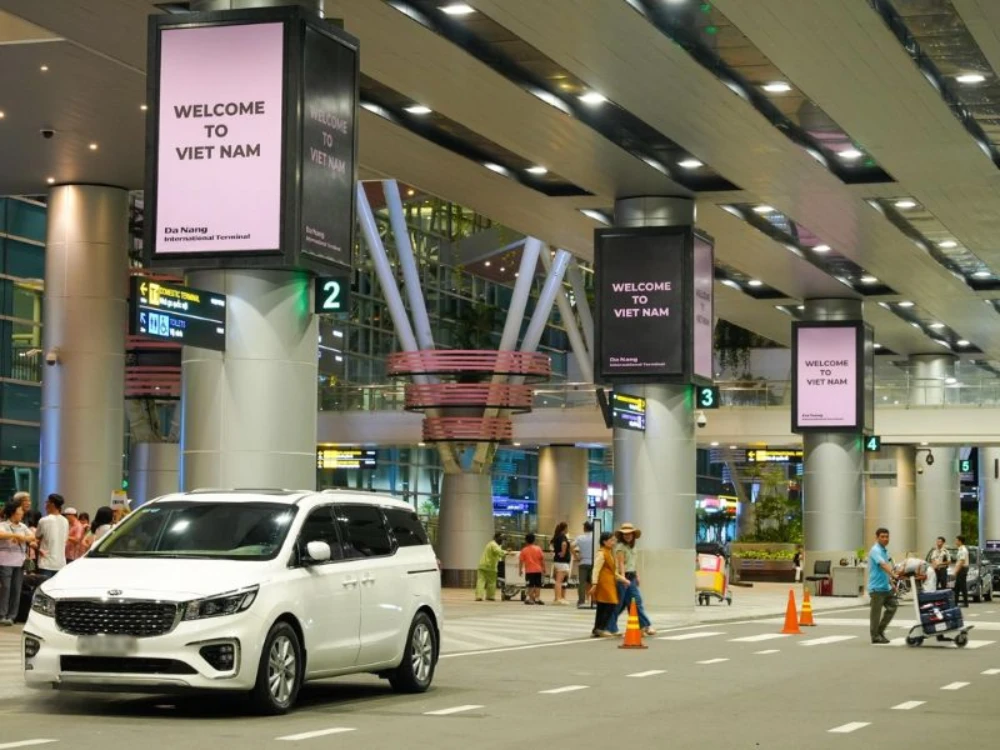
Getting to your destination is easy thanks to the airport’s central location:
- To Da Nang city. A Grab or metered taxi covers the short 5 km in 10 to 15 minutes for a modest fare, the simplest option.
- To Hoi An. Around 45 minutes by road. Options include Grab, a metered taxi, or a pre-booked private transfer (often the most comfortable with luggage), typically 350,000 to 450,000 VND by car. Some travellers also pre-arrange hotel pickups.
- Ride-hailing. Grab gives transparent, app-fixed fares for both, and is the easiest way to avoid haggling.
Insider warning: as at any airport, ignore drivers who approach you inside the terminal. Use the official taxi ranks outside or your booked Grab for a fair price.
After Landing: Cash, SIM Cards and Your Airport Pickup
Quick answer: After immigration and baggage claim, handle three essentials: cash, connectivity and your ride. Withdraw VND from an ATM in the arrivals area (remember there’s none inside the immigration zone), grab a local SIM or activate an eSIM, and open Grab. Then head to the official transport area and you’re on your way.
A smooth start comes down to sorting a few things in order, once you’re past immigration and into the arrivals area:
- Money. ATMs are available in both terminals (most accept Visa and Mastercard, with withdrawal limits typically 2 to 5 million VND per transaction), along with exchange counters. Airport rates are weaker than in town, so withdraw enough for transport and first expenses, then exchange more in the city. See our guide on how to exchange money in Vietnam. Crucially, there’s no ATM inside the immigration zone, so carry some USD or VND if you need on-arrival visa funds.
- Connectivity. SIM-card counters (Viettel, Mobifone, Vinaphone) are in the arrivals hall, or arrange an eSIM for Vietnam before you land. Free airport Wi-Fi is available.
- Your ride. Open Grab, book your car, and follow the signs to the pick-up point.
International Arrivals: Immigration and Travel Documents
Quick answer: Compared to Hanoi and Ho Chi Minh City, immigration at Da Nang is usually faster and less chaotic. International arrivals are processed in Terminal 2, with separate lanes for Vietnamese and foreign passports. Have your passport (valid 6+ months), visa or e-visa printout, and onward travel details ready. Most travellers need a visa or e-visa arranged in advance.
Da Nang’s smaller scale makes for one of the country’s smoother immigration experiences. You disembark and follow clear signs for “Arrivals / Immigration,” with separate lanes for Vietnamese and foreign passports. Processing times fluctuate with flight waves, but overall it’s known to be efficient and rarely as congested as the larger airports.
As elsewhere in Vietnam, most visitors need a visa or e-visa arranged before arrival, while some nationalities enjoy visa exemptions. The e-visa is the easiest route for most: apply through the official government portal in advance and print a copy. Have your passport (valid at least six months), your visa or e-visa printout, and onward travel details ready. Because rules change, verify the current requirements for your nationality before booking.
Airport Facilities: Dining, Shopping, Wi-Fi and Lounges
Quick answer: Da Nang Airport offers the essentials: ATMs, currency exchange, SIM-card counters, free Wi-Fi, duty-free shopping, restaurants and cafés, and lounges with refreshments and showers for those with access or a day-pass. It’s modern and comfortable, well-suited to its role as a relaxed coastal gateway.
Da Nang Airport is modern and traveller-friendly, covering what you need without the sprawl of a mega-hub:
- Dining. A selection of cafés and restaurants serving Vietnamese and international food, handy for a meal before or after a flight.
- Shopping. Duty-free shops in the international departures area, plus convenience and souvenir stores, good for local coffee or last-minute gifts.
- Lounges. Available for travellers with lounge memberships, eligible tickets or paid day-passes, offering refreshments, Wi-Fi and showers, useful for layovers or early flights.
- Essentials. Free Wi-Fi, ATMs and exchange, SIM counters, clean restrooms and comfortable seating throughout.
What Should You Know About Departing from Da Nang?
Quick answer: Arrive 3 hours before international flights and 2 hours before domestic ones, adding extra time during Tet and holidays. Confirm whether you depart from Terminal 1 (domestic) or Terminal 2 (international), complete any duty-free shopping airside, and allow for the short but occasionally busy security and check-in process.
Departing from Da Nang is generally relaxed, but a little planning keeps it stress-free. Arrive at least three hours before international departures (Terminal 2) and two hours before domestic flights (Terminal 1), with extra buffer during Tet, summer and public holidays when traffic and passenger numbers rise. Check which terminal your flight uses, since the two are separate (though close).
Online check-in saves time at the counter, and because the airport is so close to the city, the journey there is short, though still worth timing to avoid any local traffic. Duty-free shopping and refreshments are available airside once you’ve cleared security, so factor in a little time if you’d like to browse before your flight.
Where Can You Go From Da Nang Airport?
Quick answer: Da Nang is the gateway to Central Vietnam’s highlights. Within easy reach are Da Nang’s own My Khe Beach and Marble Mountains, the UNESCO-listed ancient town of Hoi An (45 minutes), the imperial city of Hue (about 2 to 2.5 hours), and the Ba Na Hills with the famous Golden Bridge. It also connects by air across Vietnam and the region.
Few airports place you so close to so much. Right around Da Nang you’ll find the long sweep of My Khe Beach, the cave-temples of the Marble Mountains, and the city’s photogenic bridges. A short drive south brings you to Hoi An, the lantern-lit, UNESCO-listed ancient town that draws visitors from around the world, perfect for tailoring, food and riverside charm.
Heading north, the imperial city of Hue (about 2 to 2.5 hours, via the scenic Hai Van Pass) offers citadels, royal tombs and deep history. Inland, the Ba Na Hills resort is home to the viral Golden Bridge, held aloft by giant stone hands. For destinations further afield, Da Nang’s domestic network links to Hanoi, Ho Chi Minh City, Nha Trang and Phu Quoc, while international routes connect to regional hubs across Asia. It’s an ideal base for exploring the centre of the country.
Beyond the Airport: Exploring Central Vietnam
Da Nang Airport is the gateway to one of Vietnam’s most rewarding regions: the city’s own beaches and bridges, the lantern-lit ancient town of Hoi An, the imperial history of Hue, and the dramatic Marble Mountains and Ba Na Hills nearby. Its calm, central setting makes it the easiest of Vietnam’s major airports to arrive at, setting a gentle tone for the slower coastal pace ahead. And if your travels also take you to the big cities, the same calm-arrival mindset serves you well at Noi Bai in Hanoi and Tan Son Nhat in Saigon.
Frequently Asked Questions
How far is Da Nang Airport from Da Nang city centre and Hoi An?
Da Nang Airport is approximately 5 km from Da Nang city centre and around 29–30 km from Hoi An. Allow about 10–15 minutes to reach central Da Nang or around 45 minutes to reach Hoi An, depending on traffic and your exact destination.
What are the transport options from Da Nang Airport to Hoi An?
You can travel to Hoi An by Grab, metered taxi or a pre-booked private transfer. Some hotels also arrange airport pickups. A car transfer typically costs around VND 350,000–450,000. To organise your pickup, book through the app, use the official taxi rank or arrange a transfer before arrival.
Which terminal will I use at Da Nang Airport?
Terminal 1 serves domestic flights, while Terminal 2 handles international arrivals and departures. The terminals are within walking distance of each other via a covered walkway, with signs in Vietnamese and English to help you find your way. Check the terminal details on your booking before travelling.
Can I withdraw cash at Da Nang Airport?
Yes. ATMs are available in the arrivals areas of both terminals, with options that accept Visa and Mastercard. There is no ATM inside the immigration area, so prepare cash in advance if your entry arrangements require a visa payment there.
What should I prepare for immigration at Da Nang Airport?
For international arrivals at Terminal 2, have your passport, visa or e-visa where required, and onward travel details ready. Check the entry requirements that apply to your nationality before travelling. Processing times vary depending on arriving flights, so it helps to have your documents ready before you reach the counter.